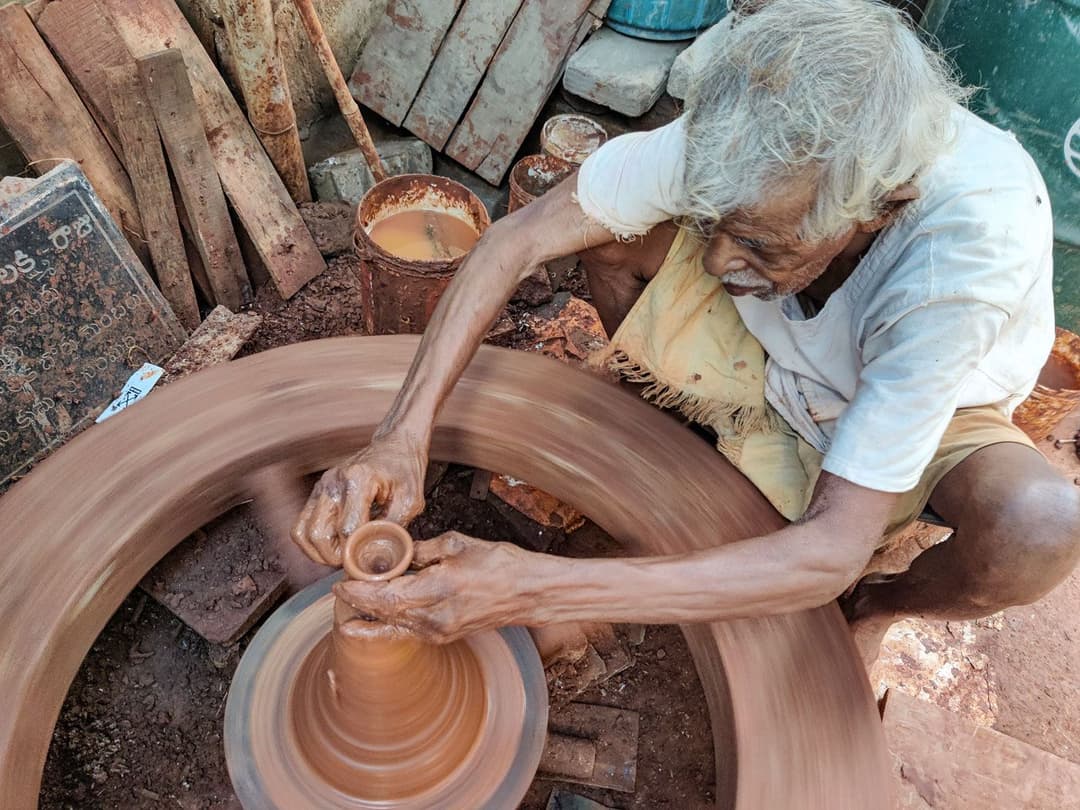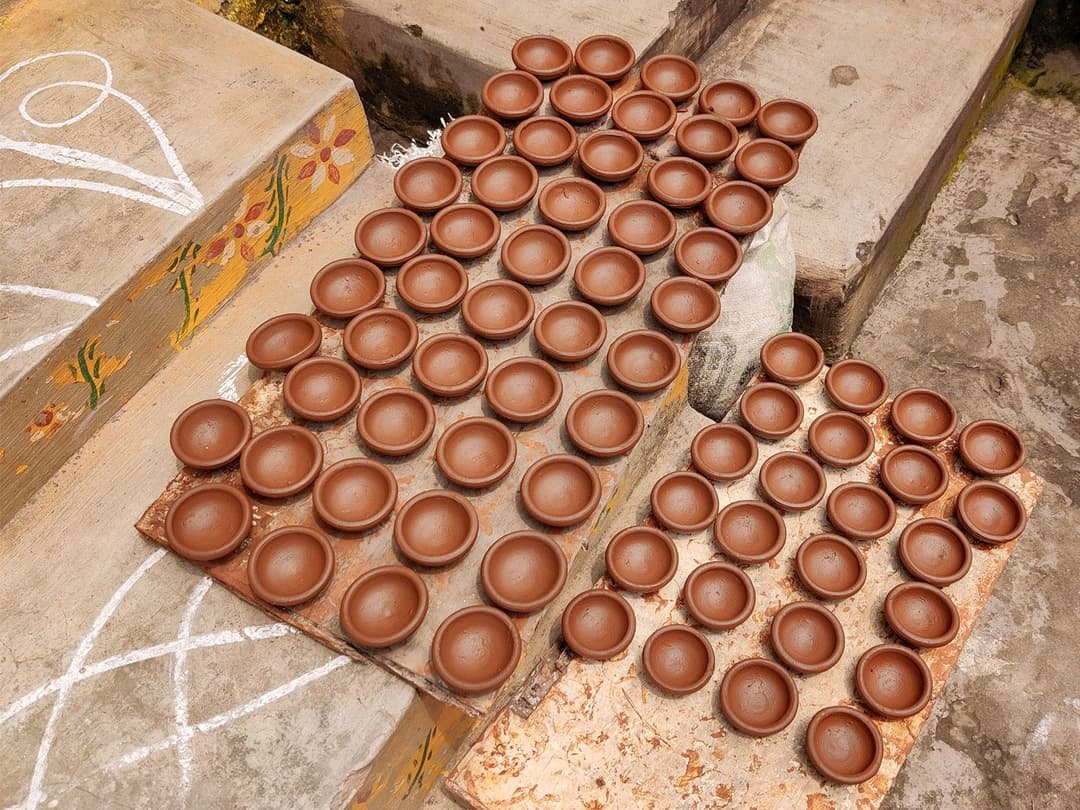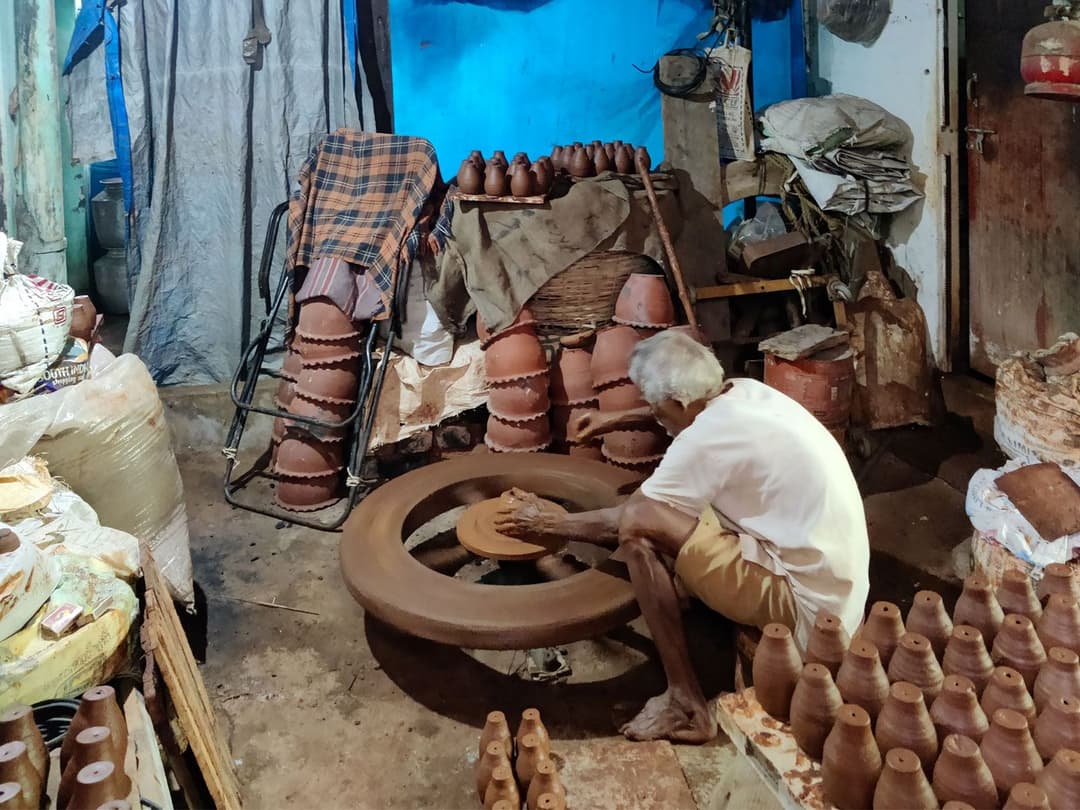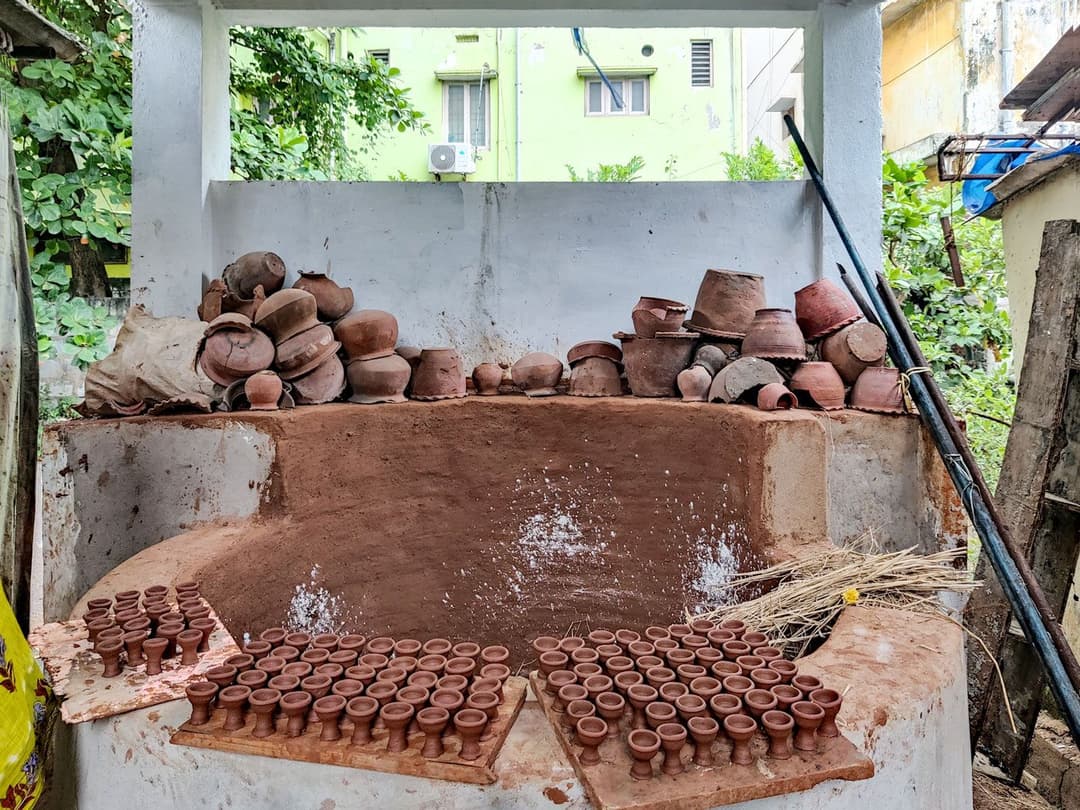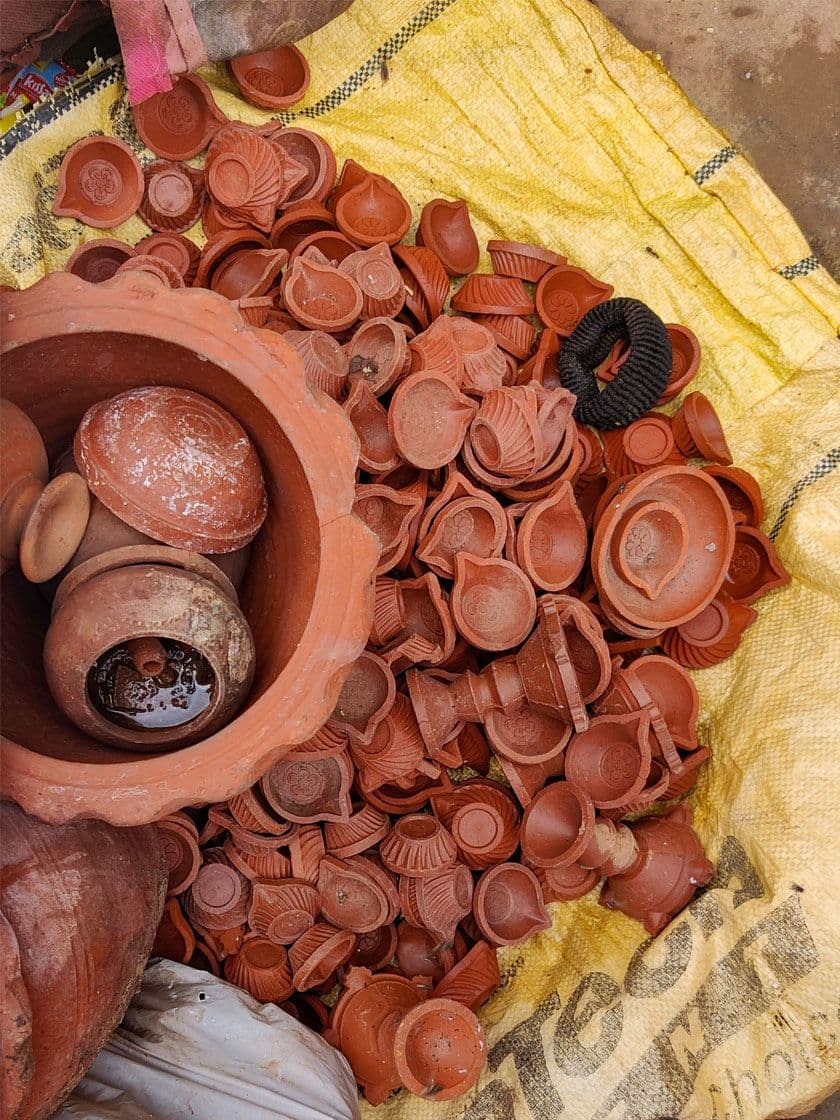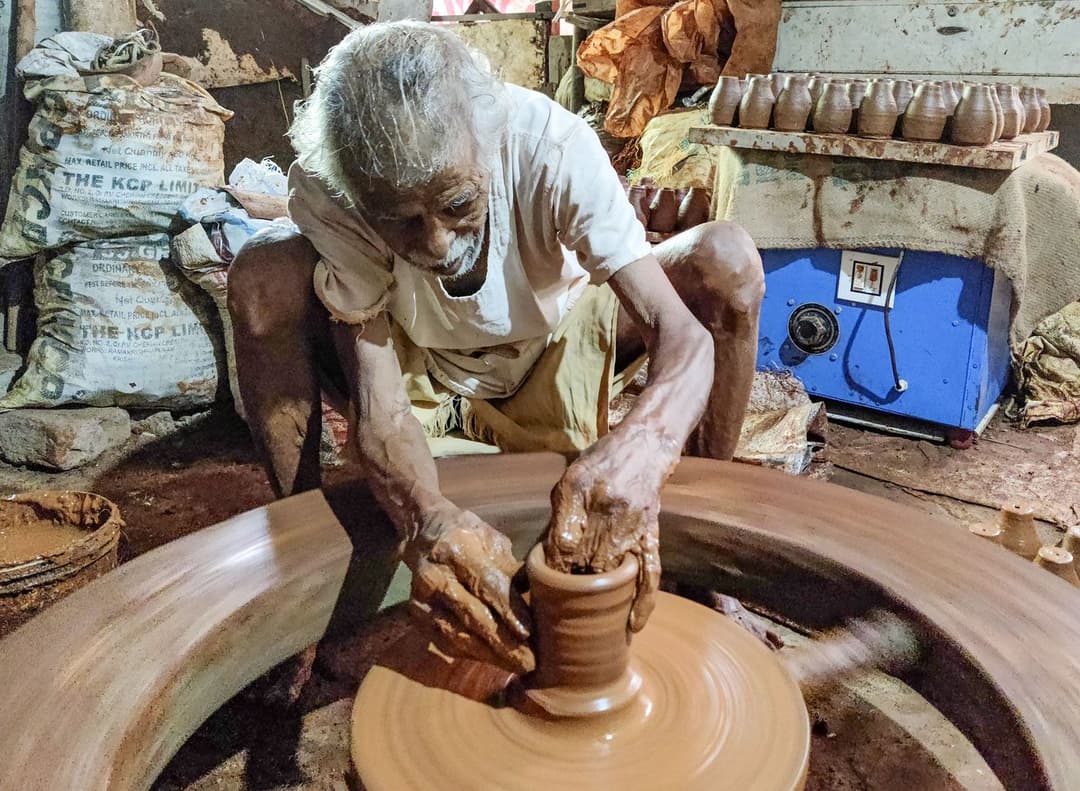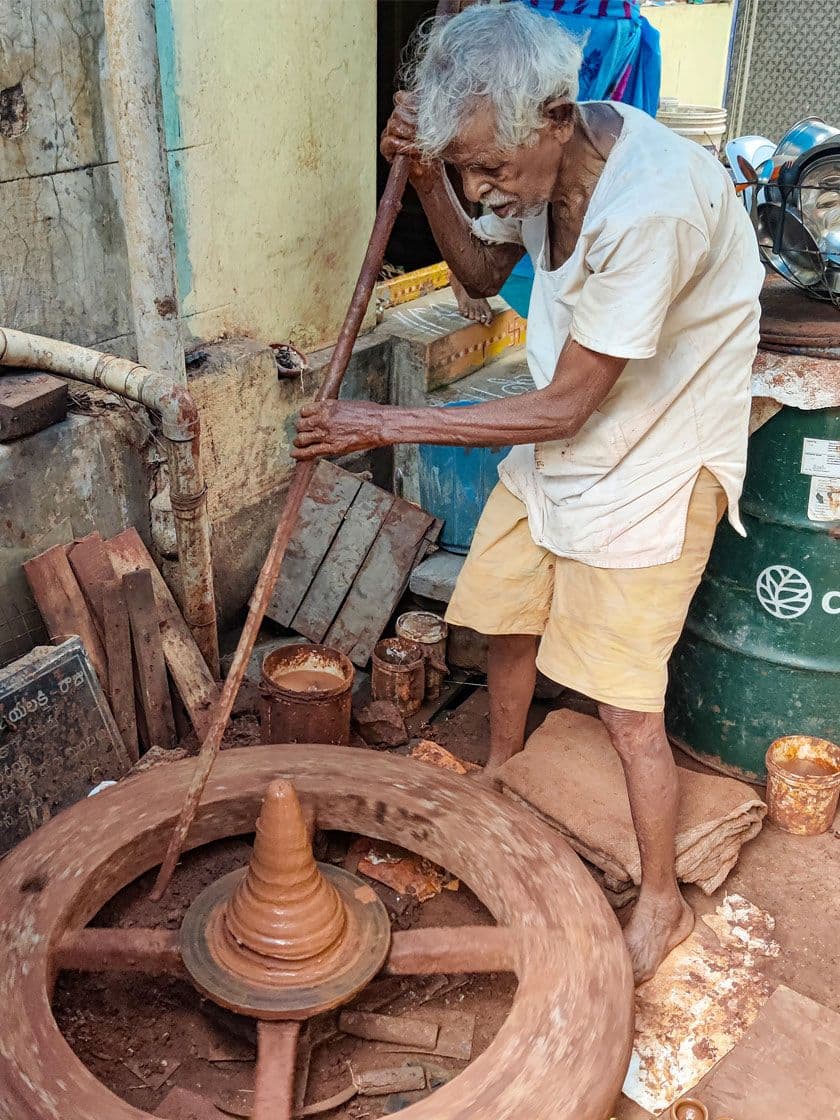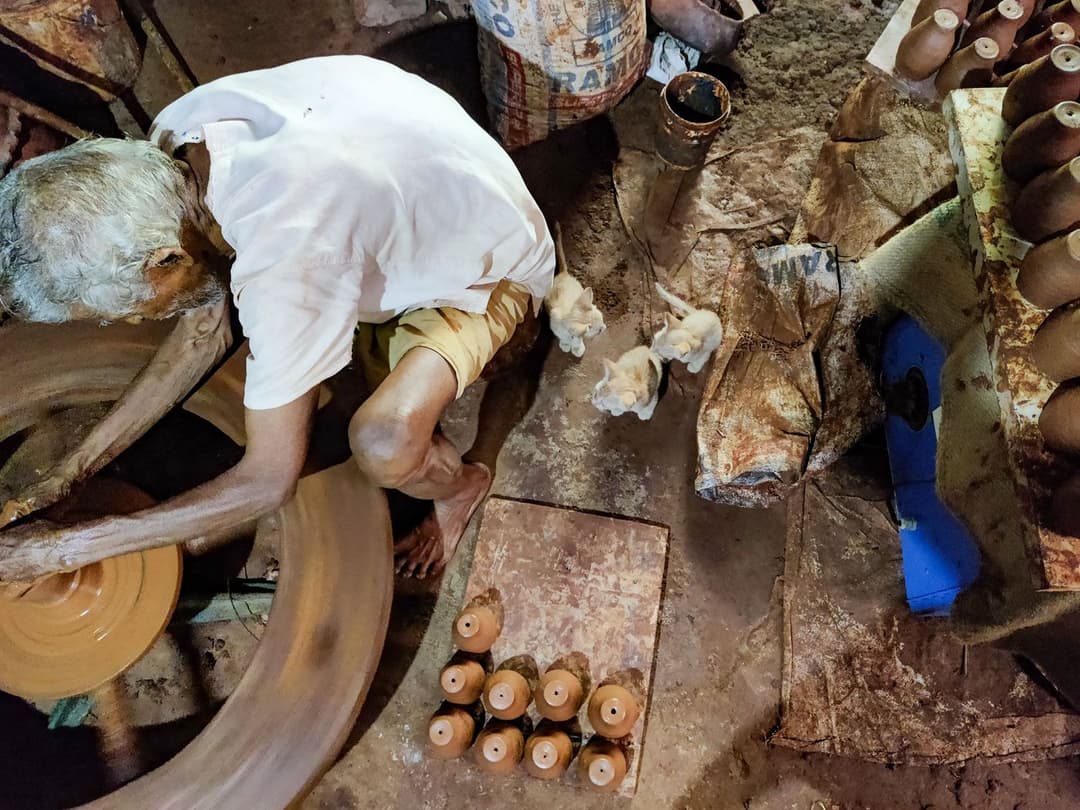

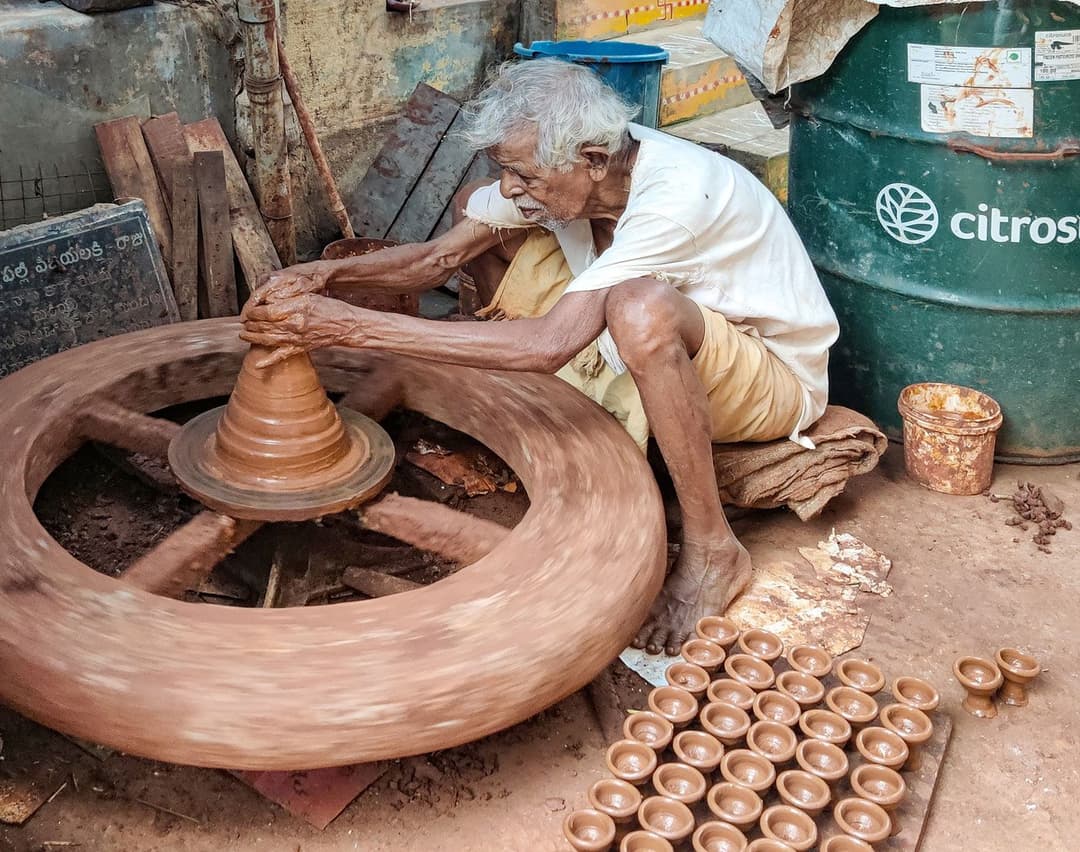
Srikakulam Paradesam says he has made nearly 10,000-12,000 diyas this Diwali. The 92-year-old potter started more than a month before the festival being celebrated this week. Every day he would begin working at 7 a.m. after a cup of tea and continue until late evening with just a couple of breaks.
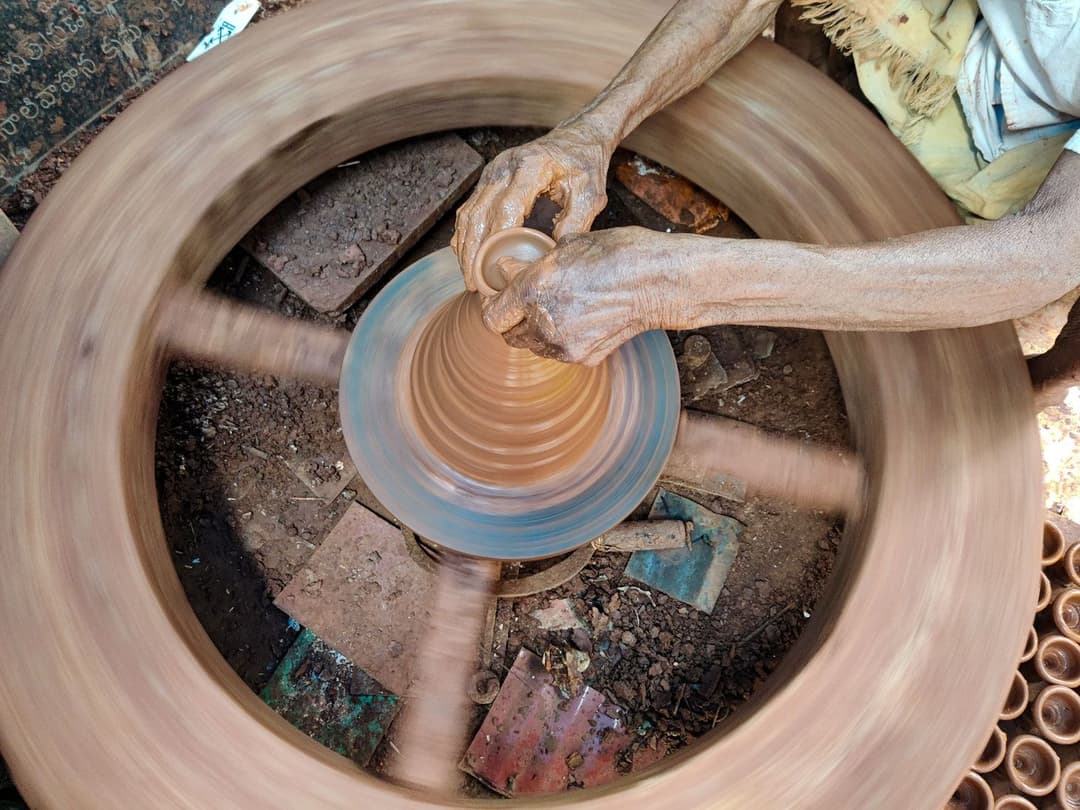
A few weeks ago in early October, Paradesam tried his hand at making diyas with a small stand. “These are slightly more difficult to make. One has to get the thickness of the stand right,” he says. A stand prevents the cup-shaped lamp filled with oil from toppling over, and the burning wick from going out. It also takes him five minutes to make one as compared to the two minutes in which he spins out a regular one. But in order to not lose customers, he charges only a rupee more than the regular diya that sells for Rs. 3.
Paradesam’s enthusiasm and fondness for his craft has kept the potter’s wheel spinning for over eight decades in his home in Visakhapatnam’s Kummari Veedhi. In this time he has made lakhs of diyas or deepams that have lit up homes celebrating Diwali. “Shapeless mud turns into an object using just our hands, energy and a wheel. It is a kala [an art],” says the nonagenarian who lives with his family and doesn’t move around much as his hearing is slightly impaired.
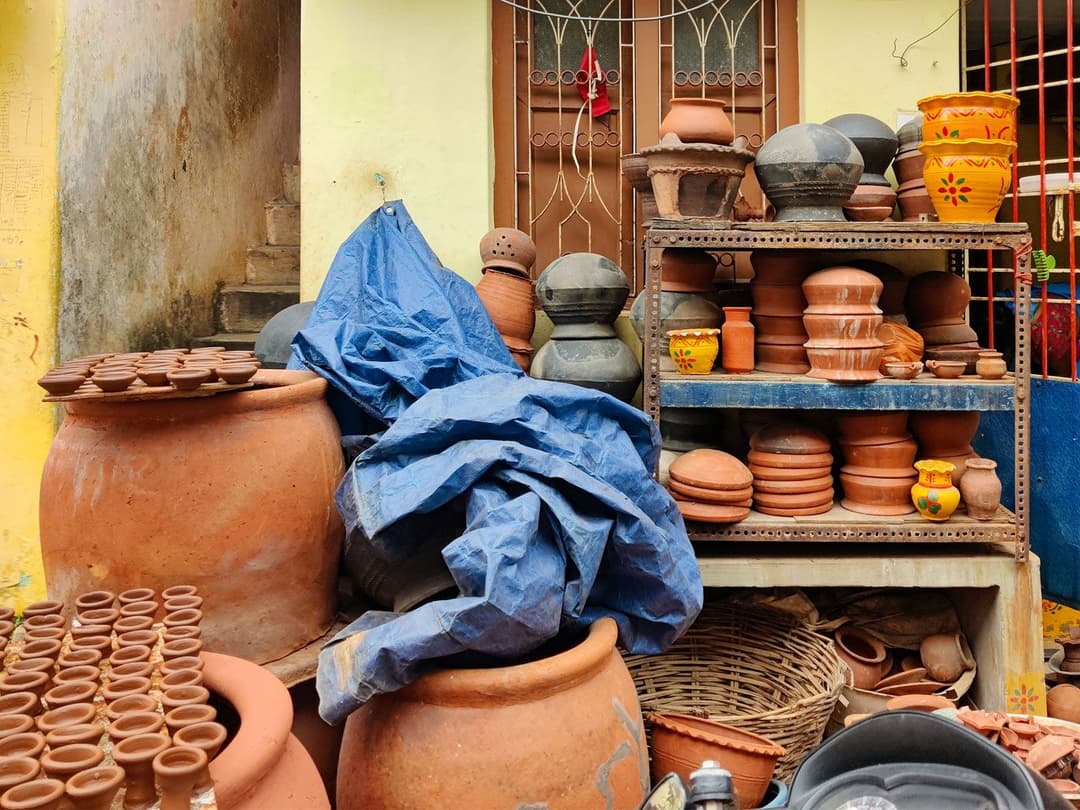
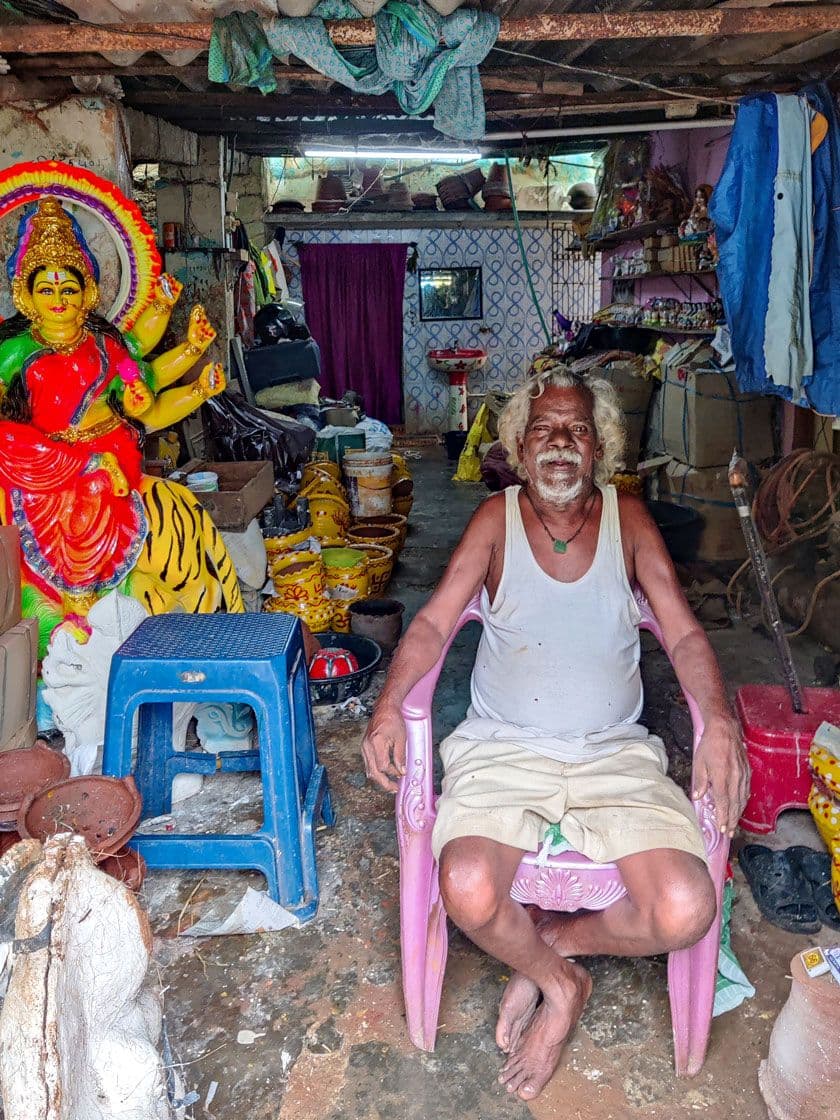
Kummari Veedhi is a narrow street close to the busy market area of Akkayyapalem in Visakhapatnam city. A majority of the residents in the street are Kummara – a potter community traditionally engaged in the making of clay items including idols. Paradesam’s grandfather migrated to the city from Potnuru village in Padmanabhan mandal also in Visakhapatnam district looking for work. He remembers a time when he was younger and the 30 Kummara families on this potters' street would all be making diyas, pots for plants, ‘piggy banks', mud jars, cups and other clay items including idols.
Today, Paradesam is the last craftsman of diyas in what is regarded as the only home of potters in Visakhapatnam. Other potter families here have switched to making only idols and other clay items that are more profitable, or completely left the craft. Until a decade ago, he too made idols for festivals but slowly stopped: Idol making is more physically arduous work and he says he finds it hard to sit on the ground for hours.