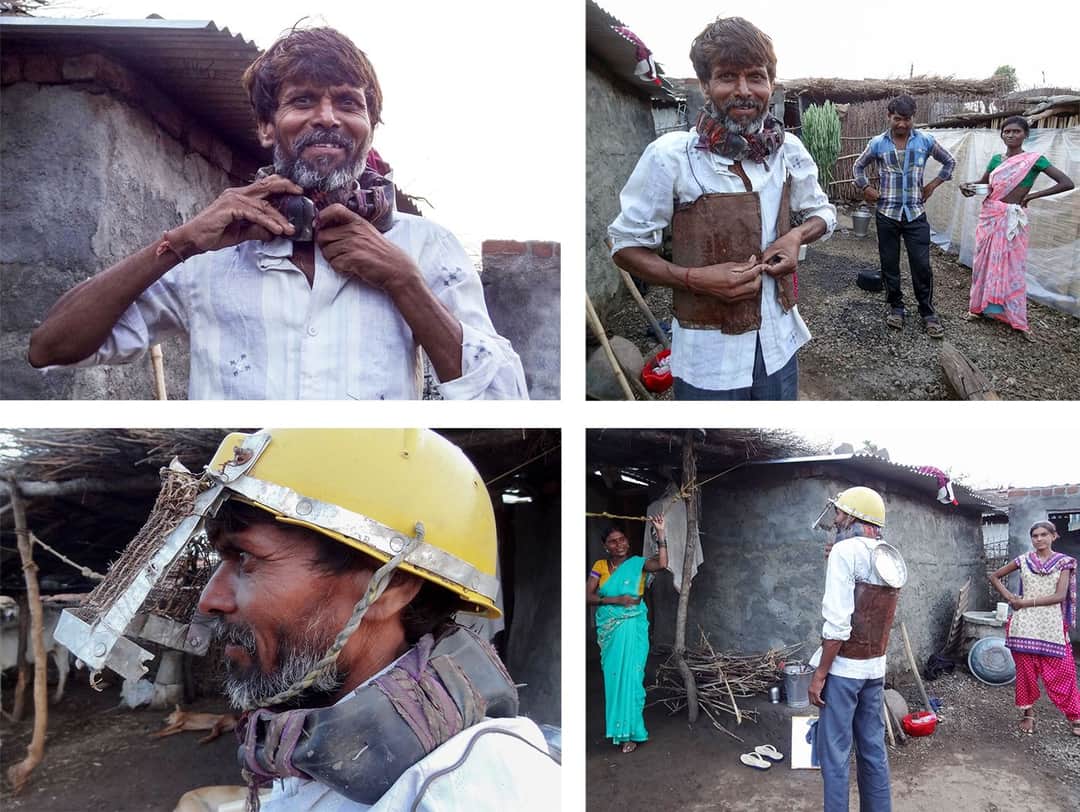
In mid-2016, an elderly Sonabai Bhosale of Borati village was mauled by a full-grown tiger on her farm, adjoining a forest patch barely 500 metres from the village’s houses. Borati depends on forests for its firewood, for minor forest produce, for cattle grazing.
“We live in fear and anxiety since then,” says Ramesh Khanni, a local social and political activist, who has led a delegation of villagers to the forest officials, district collector and local political leaders. “Wild animals devour our crops – now the tigers.”
50 cows and a tiger
For years, Atram’s routine has been much the same. He starts his day by washing the cows and then herds them into the forests near his village for grazing.
He returns at dusk, and starts all over again the next day. He charged Rs. 100 per cow per month earlier. “We demanded that this wage be hiked due to the risks he takes,” Sulochana says. The villagers now pay him Rs. 150 per cow per month – a jump of Rs 50, he says, as a risk cover! “I usually have 50 cows to tend to,” he tells one evening when he’s just returned home from the forests. “If I stop doing this, what else would I do?”
The villagers have made it clear to Atram: “Don’t bother about our cows if you are in trouble.” That is a big relief, he says, it shows how considerate they are. “The tiger has killed many cows from the herd in the last two years,” he says. “I feel sad when I lose my cow and happy that I am alive.”
Atram never went to school, neither did his wife. But their three children are studying. He wants them to study, no matter if he has to risk his life to make a living. Disha has just finished her first year BA in a nearby college, Vaishnavi passed her Class 10 this year, and Anoj, the youngest, is in Class 9 at a residential school.
Sulochana adds around Rs. 3,000 to the family earnings working as an assistant at the village anganwadi assistant. “Every morning, I pray for him to return safe,” she says. “Every evening, when I see him back home hale and hearty, I thank the tiger.”