
"Bandar ki pheri lao, bandar ki pheri lao... [Bring alms for the monkeys…]"
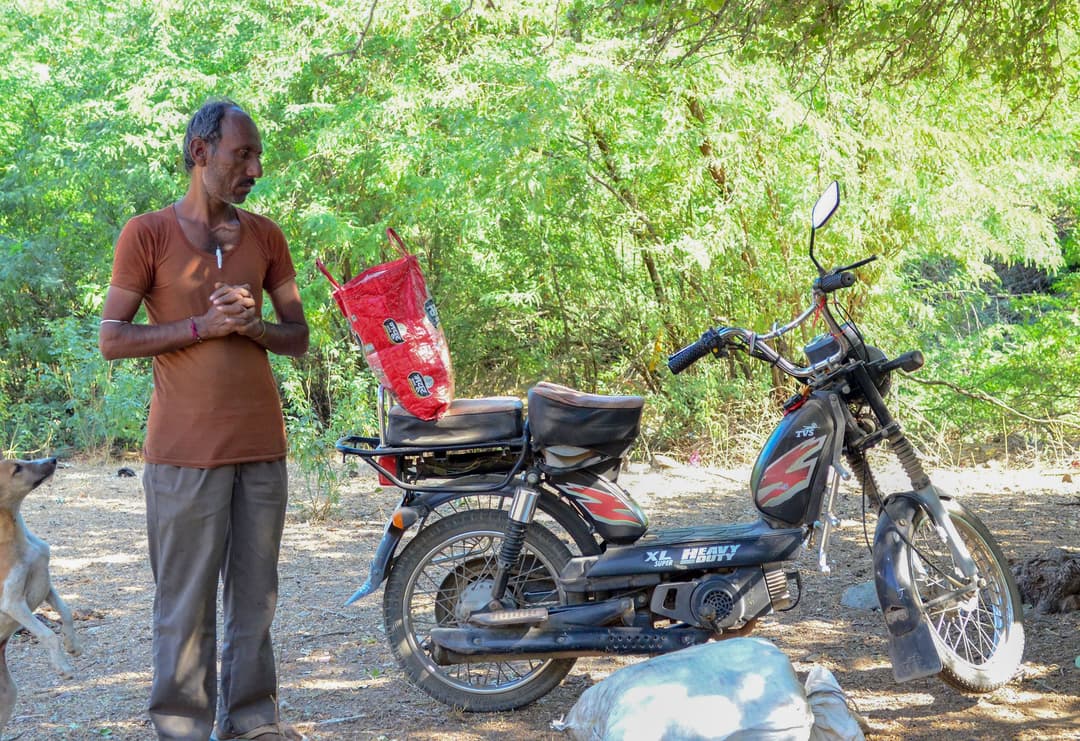
Jhujaram Dharmiji Sant chants this as he cycles through the alleys of Sheoganj town in Rajasthan’s Sirohi district. “People always give away leftovers such as rotis, and both raw and cooked vegetables quite readily,” he remarks. “And by the time I collect [food from] about six to seven alleys, I manage to fill up a sack.” He uses a plastic sack which packs in 15 to 20 kilos.
For eight months each year, Jhujaram gets busy from 8.30 every morning collecting meals for the monkeys. Once the sack is full, he switches from the cycle to his moped for the eight-kilometre journey to Gankeshwar Mahadev Mandir, a small temple surrounded by hills, southeast of Palri village in Sirohi tehsil, off national highway 62.
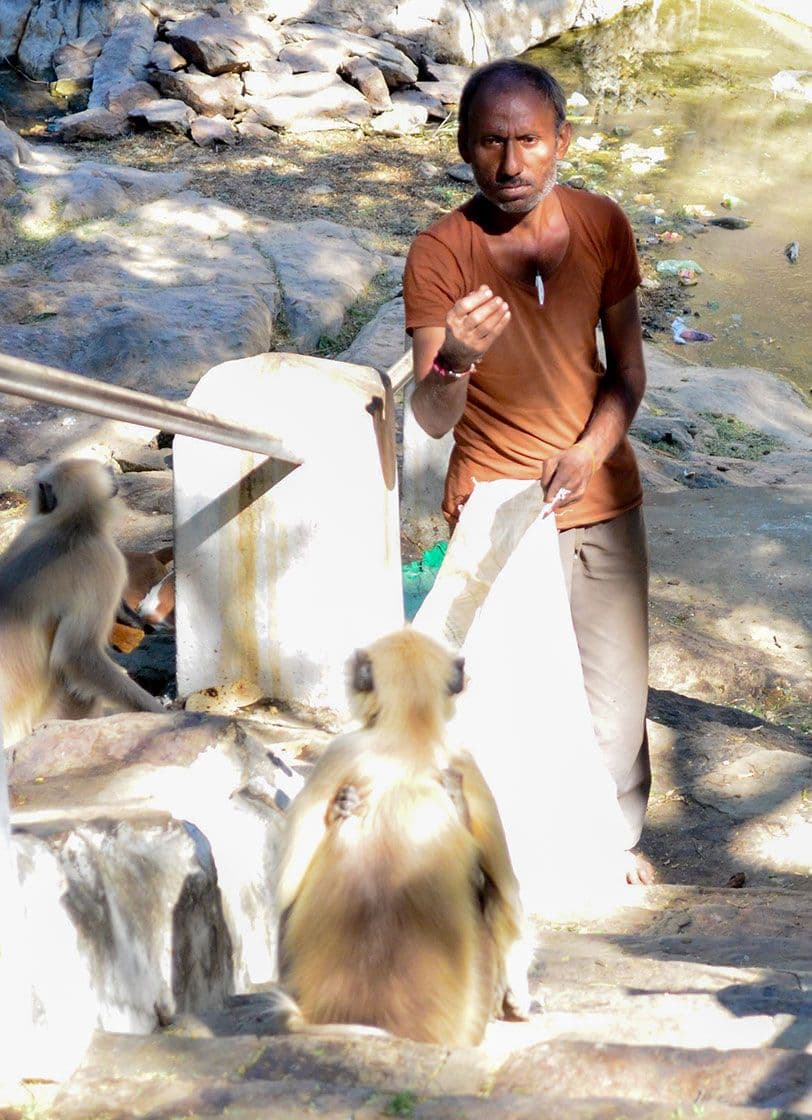
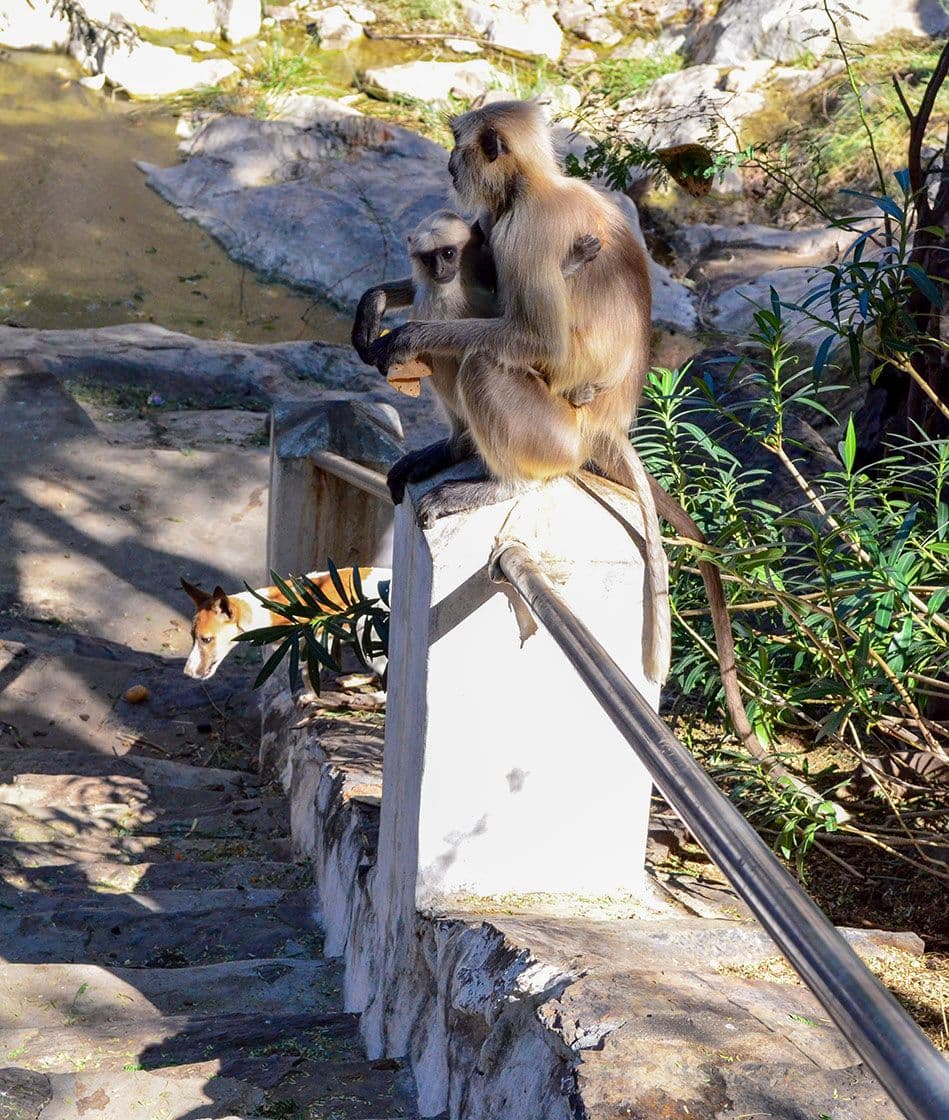
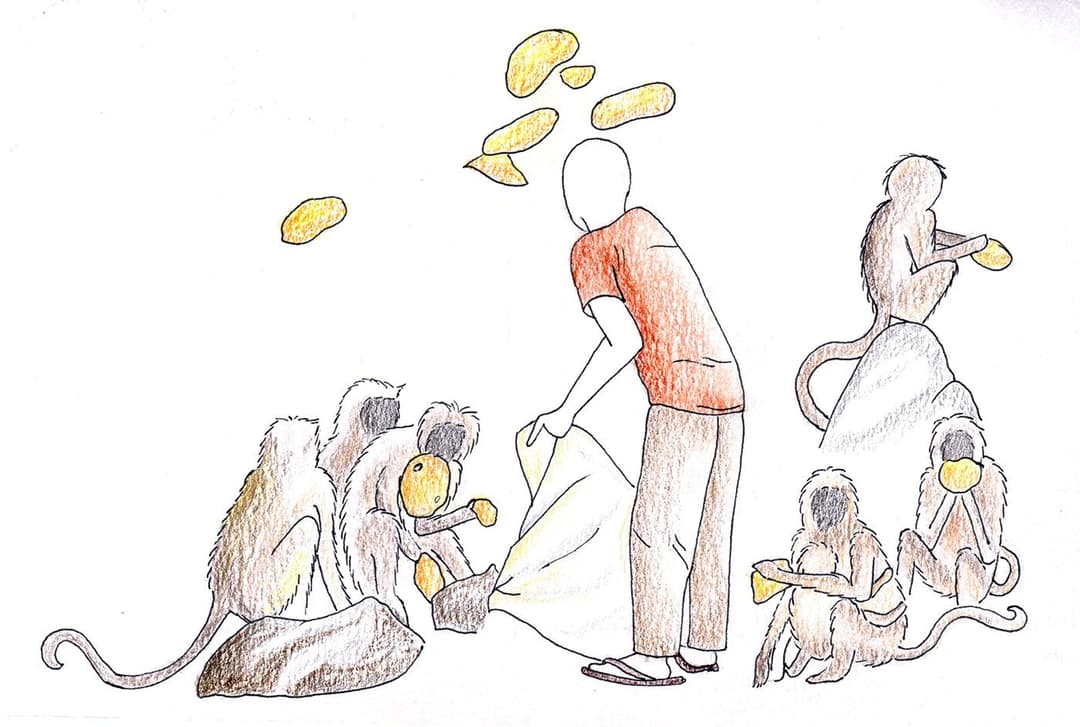
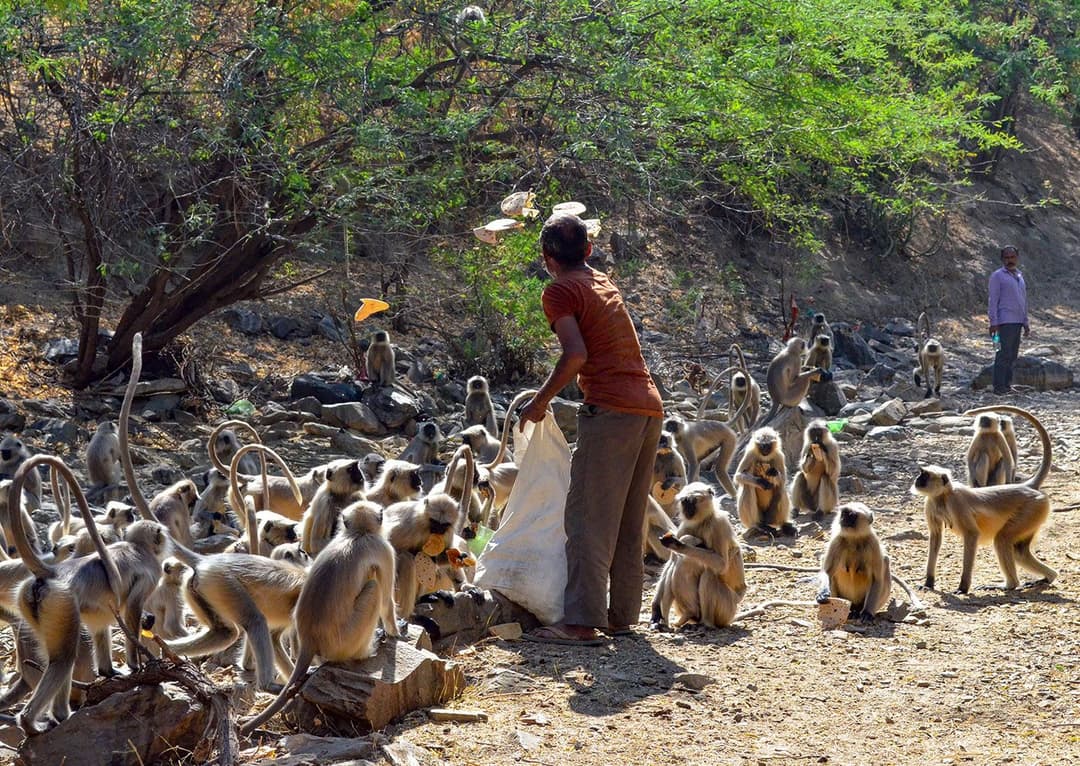
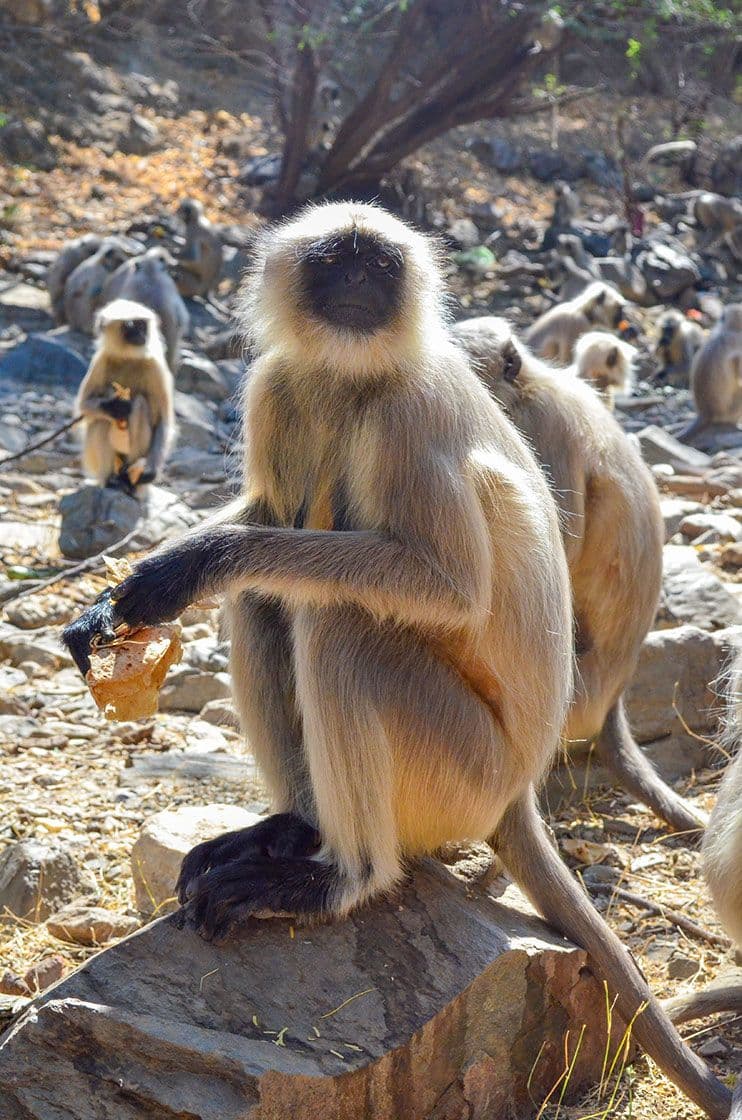
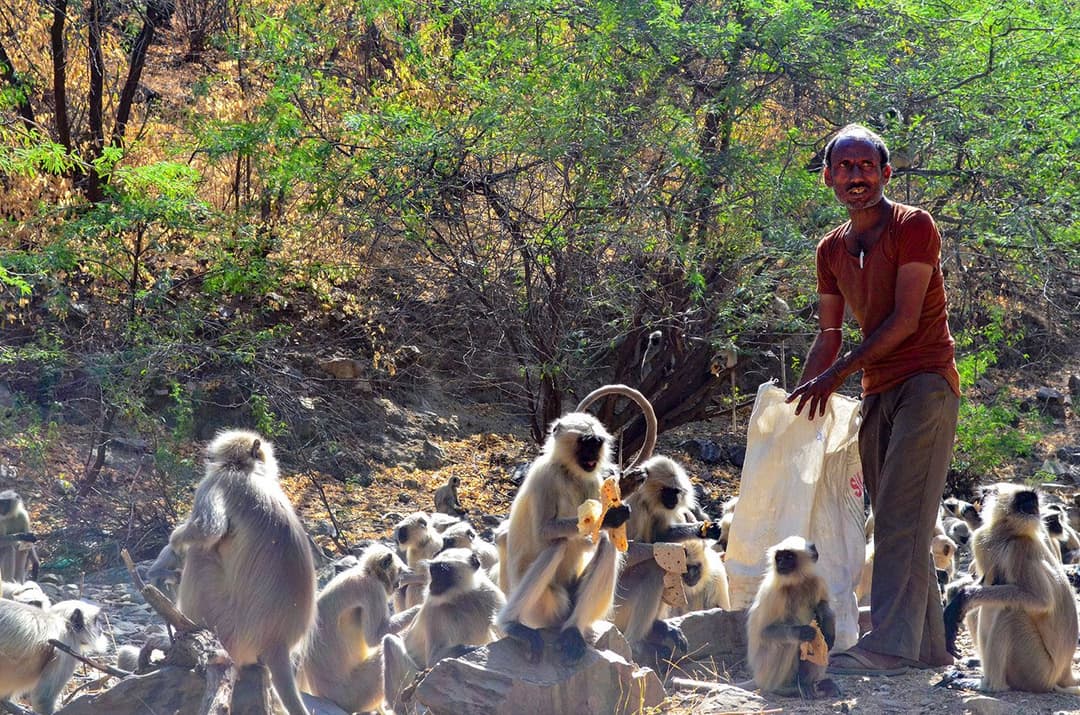
He reaches the temple by about 11 a.m. and shouts “aao, aao” ("come, come") calling the monkeys. As if by magic, 200 to 300 langurs (Semnopithecus priam) appear immediately, all staring at him, waiting for the treat like well-mannered children. But the manners vanish as he flings the rotis into the air. The animals quickly rush around and gobble up everything they can grab even as more langurs swiftly join in. Jhujaram estimates he feeds all the 700 monkeys he says there are in this forest, in half an hour. “They like potatoes, biscuits, bottlegourd and carrots in the summer, roti and even chickoo,” he says.
Others who try feeding them are met with an aggressive scowl, he says. “They are terrified of outsiders – they’ve often had people throwing stones and hurting them. It’s sad that people hurt them, why they do that?” he asks.