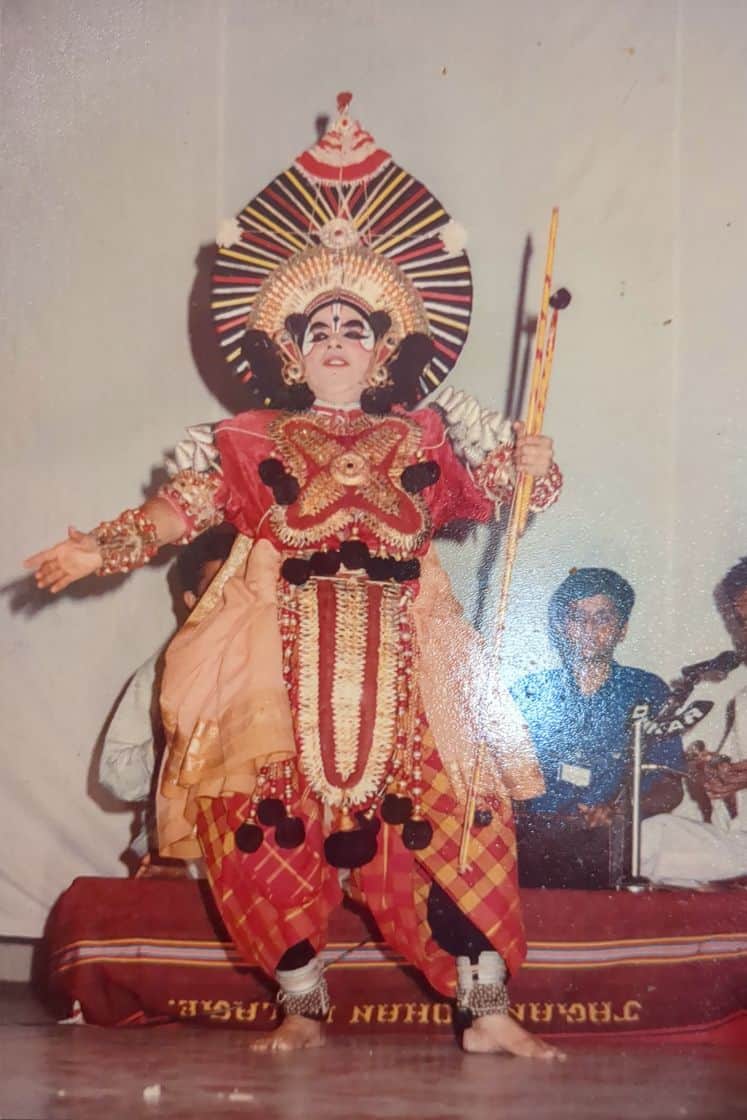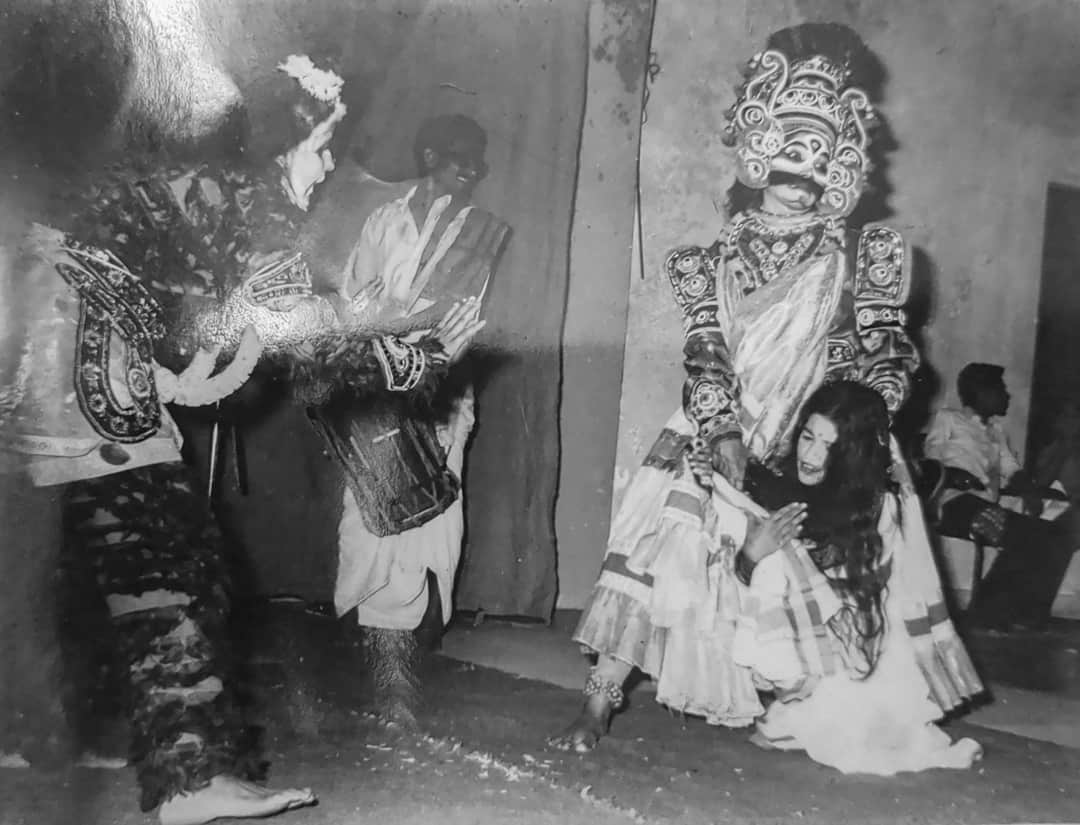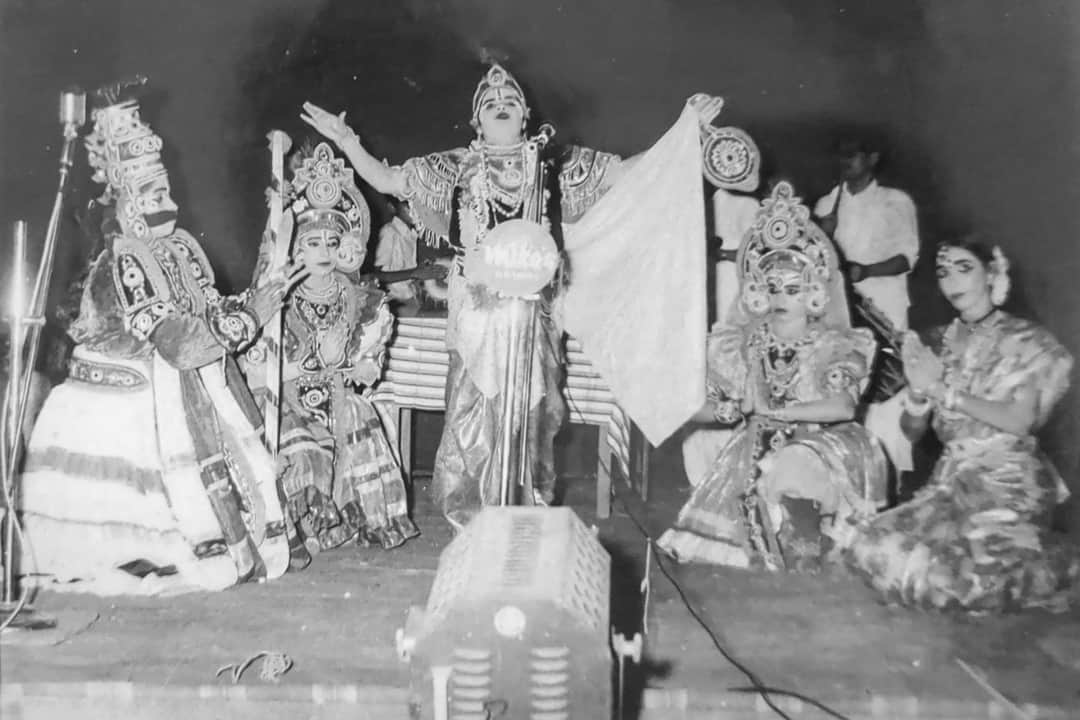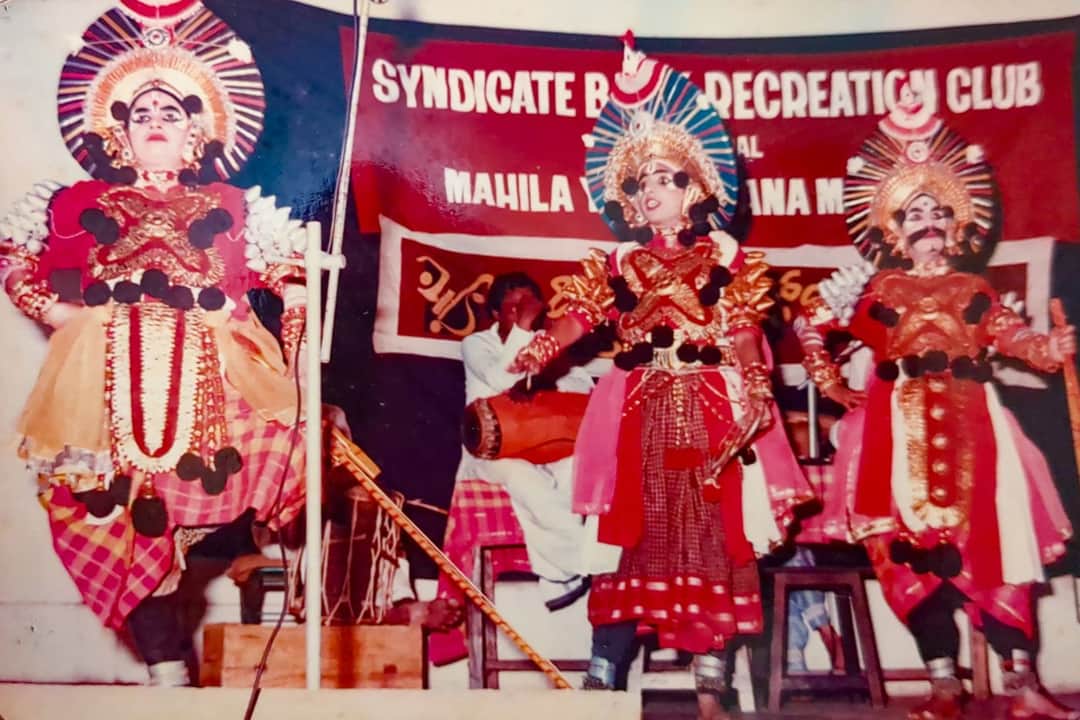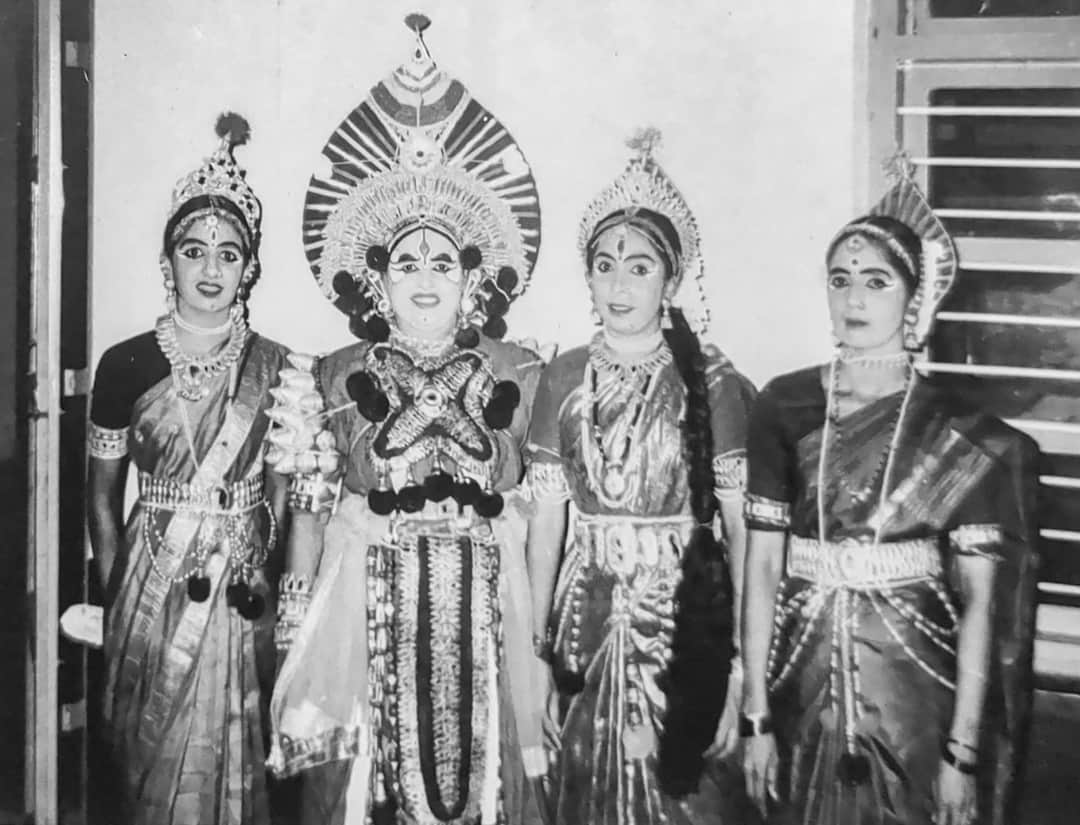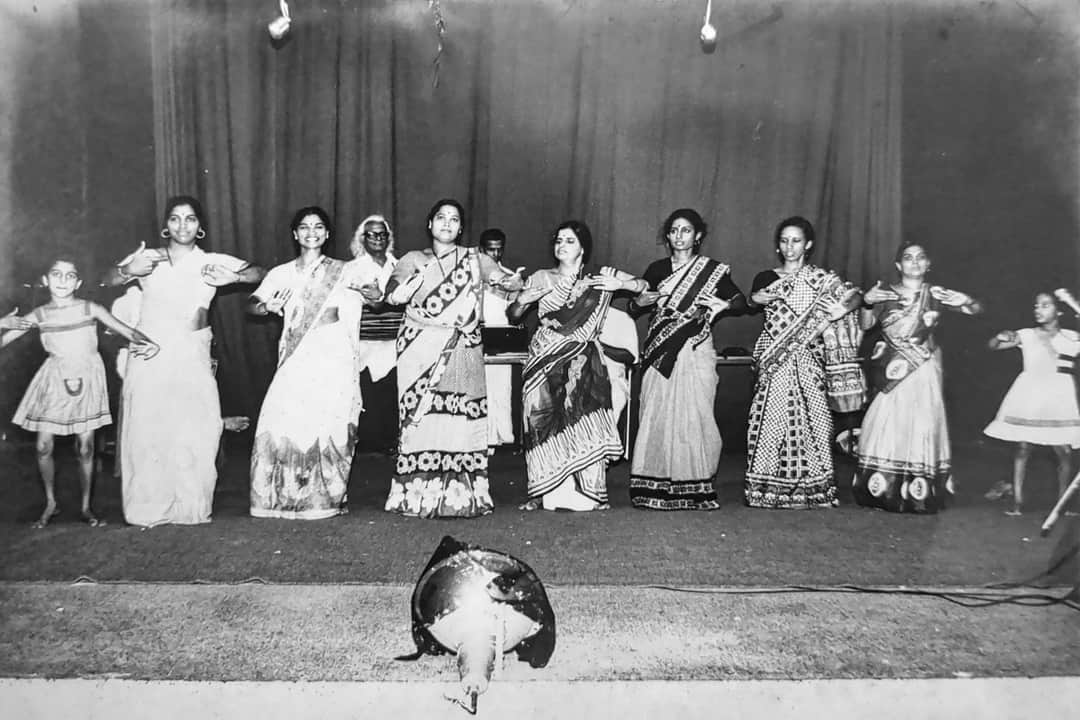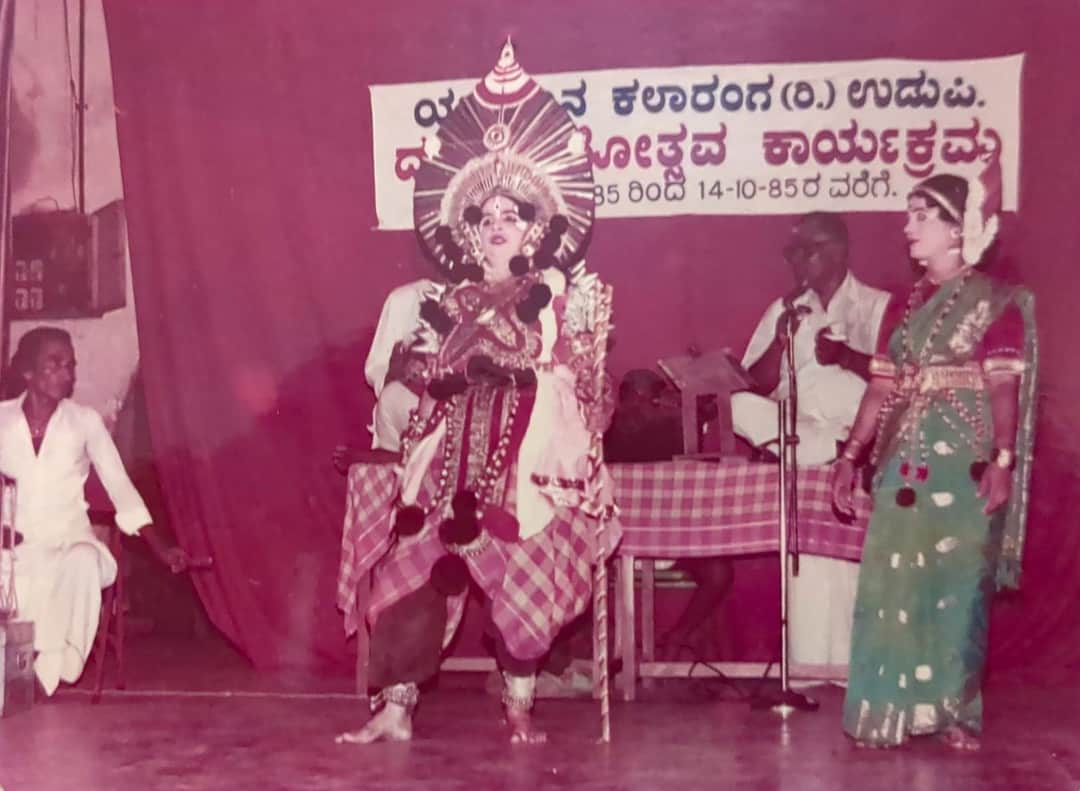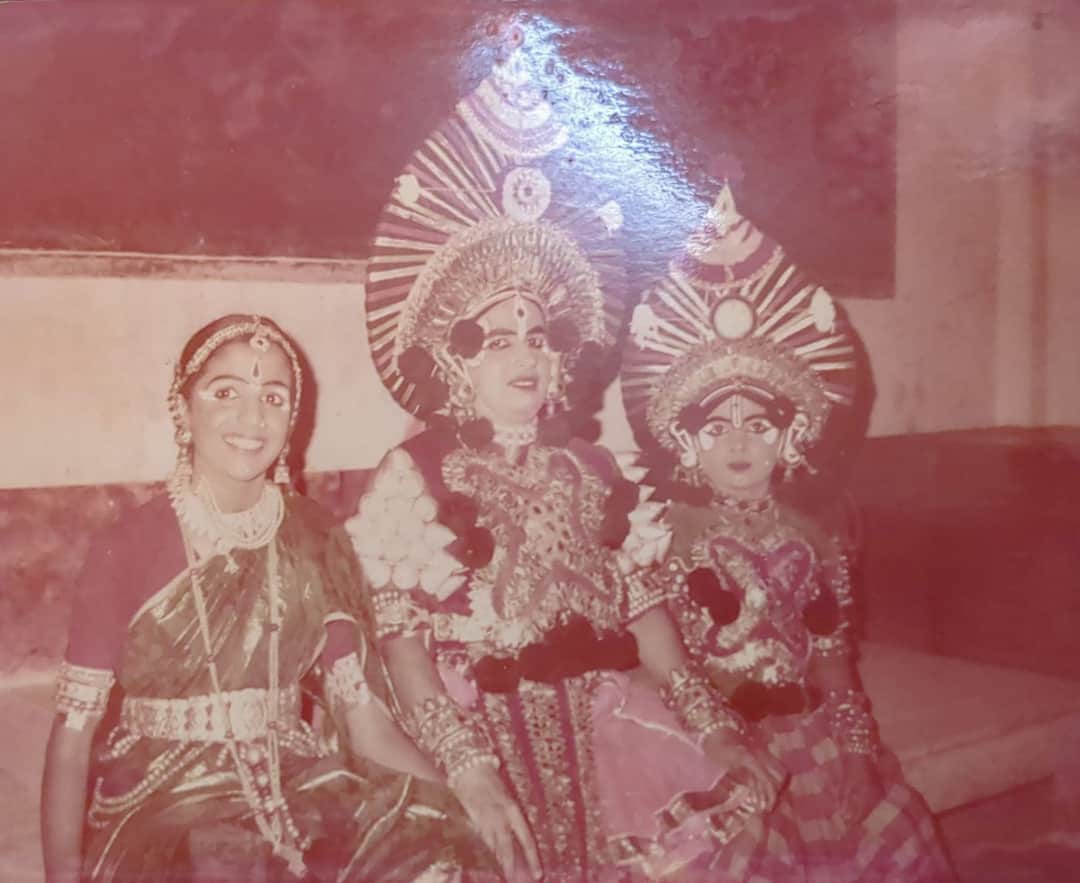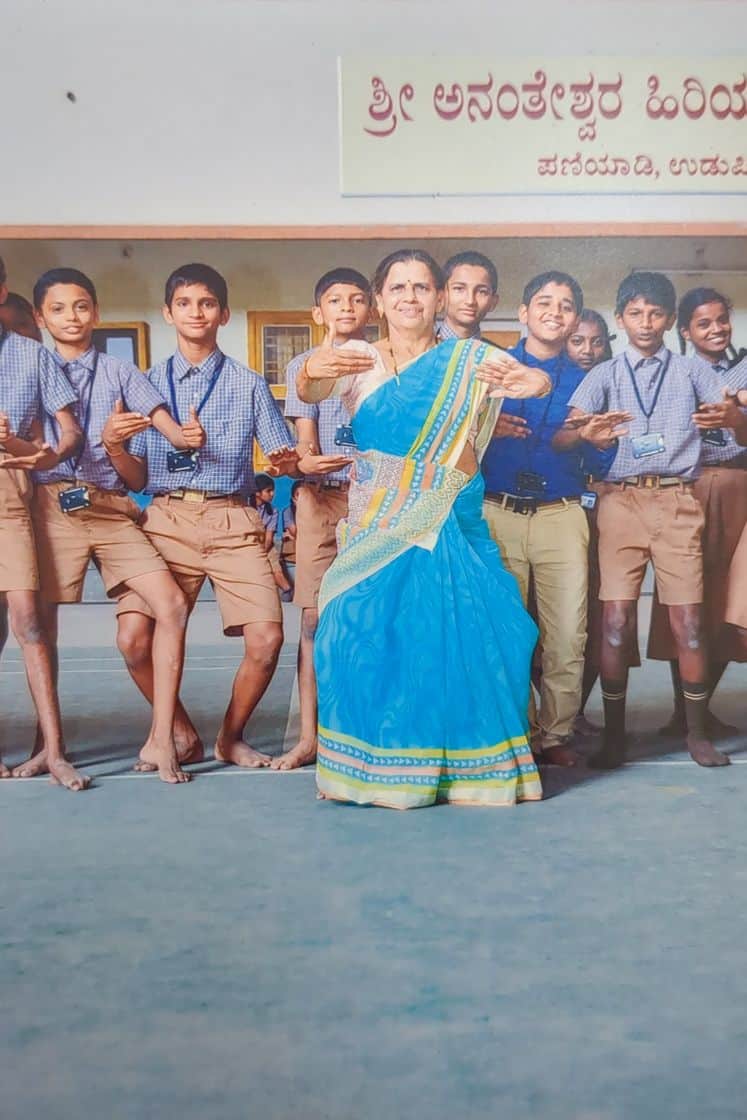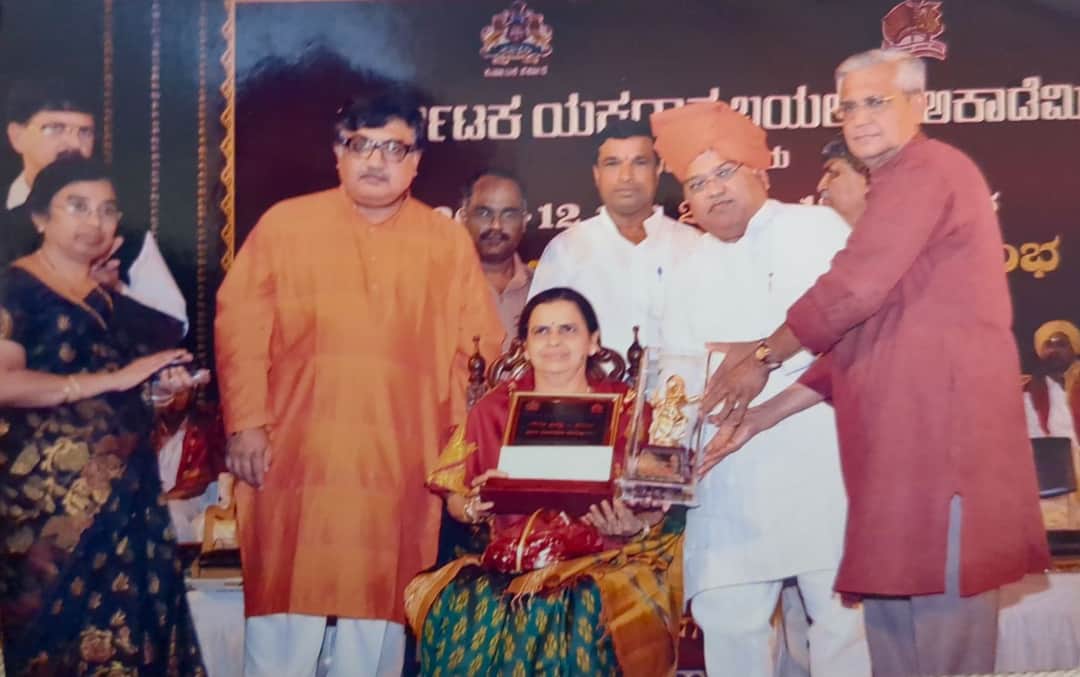

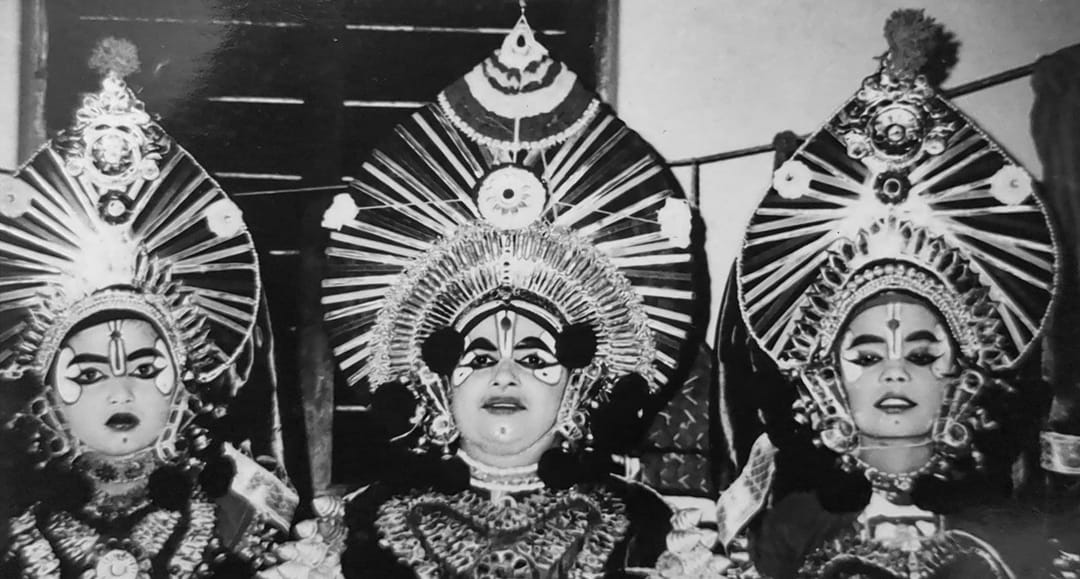
When Mookambika’s grandfather caught her imitating Yakshagana movements, “he was very upset and scolded me.” He cautioned the teenage girl saying that women were not allowed to perform this folk-dance theatre from coastal Karnataka and Kasargod in Kerala.
As a young girl, Mookambika Varamballi, now 75, was drawn to Yakshagana performances in her village, Marvi in Udupi district. These dance dramas here often stretched from dusk to dawn, and she recalls walking long distances with large groups of women, family and neighbours to watch. The following day, she would gather friends in her front yard, imitating the dance moves using bed sheets or towels as costumes for the prasanga (drama).
“We used to perform in the front yard but only when my grandfather was not around” she says. “He believed Yakshagana was not meant for girls.”
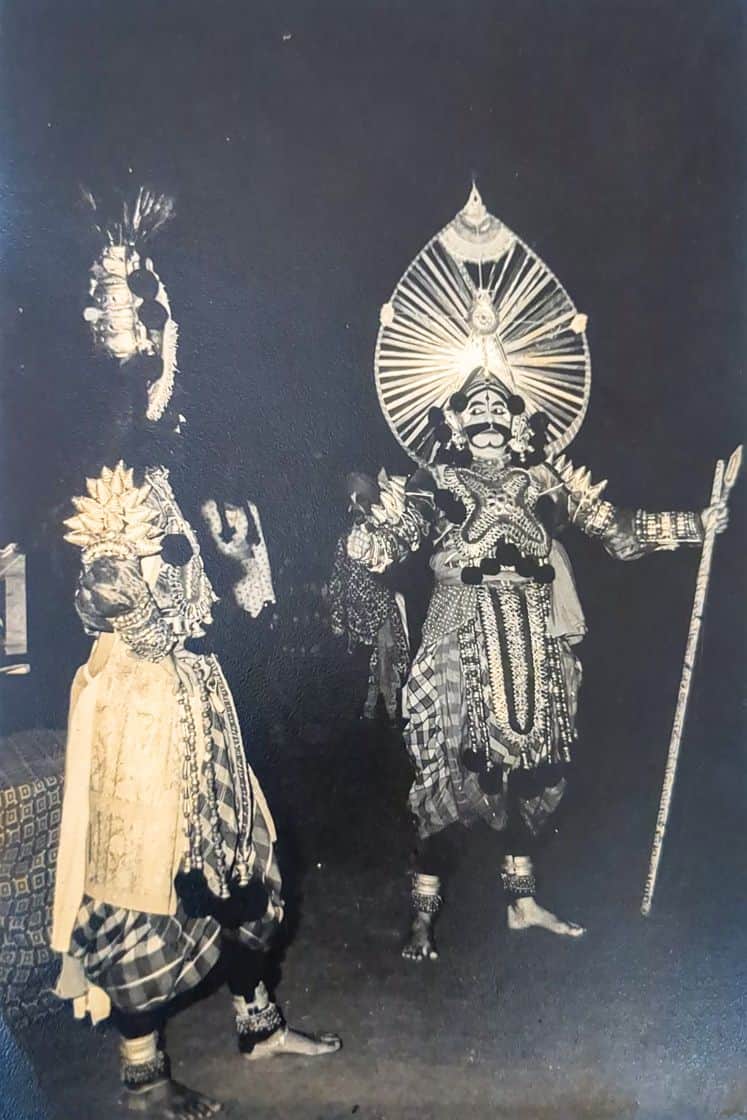
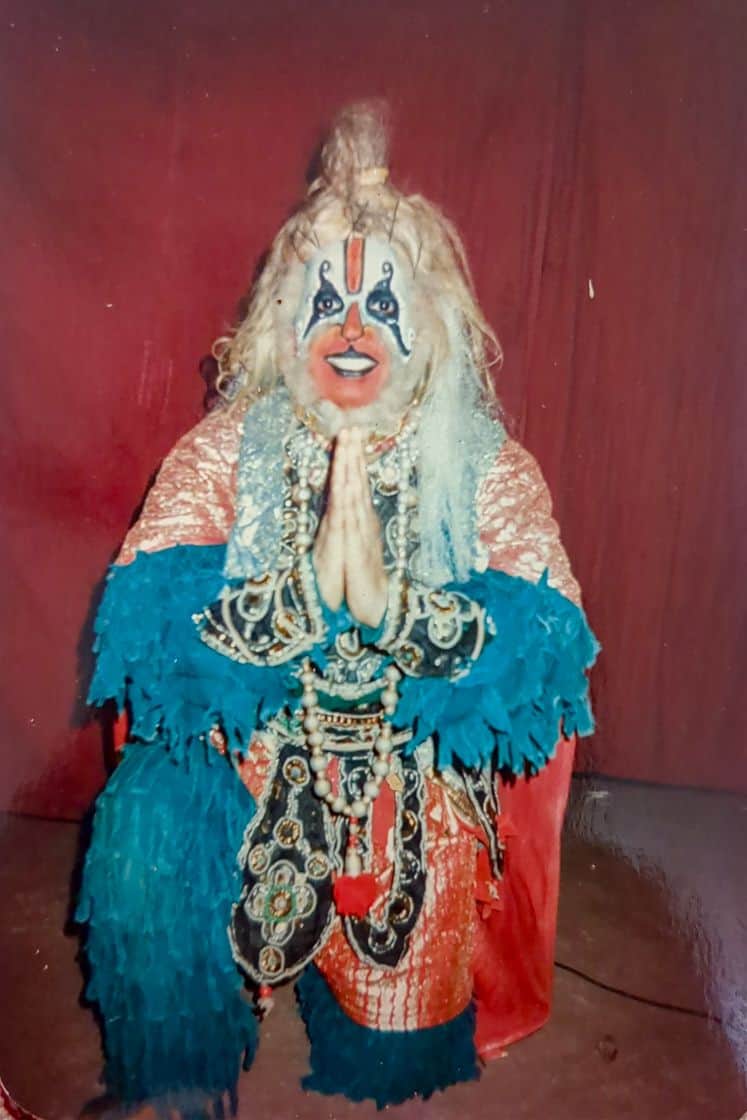
Yakshagana literally translates to ‘songs of the gods’ and has been performed across Coastal Karnataka, and in Kasaragod district of Kerala, for centuries. Using music, dance, dialogue and narration, the performance draws on stories from mythology and epics such as the Ramayana and Mahabharata. Yakshagana melas were often patronised by the prominent temples of the region.
A physically vigorous art form, it is known locally as Gandu kale which literally translates to 'male art form.' The dance calls for high leaps and twirls which demand agility and fitness, typically considered the domain of men. When female characters had to be played, men stepped in.
“The audience already knows the dramas and the stories,” says M.L. Samaga, veteran Yakshagana performer and former president of the Yakshagana Academy. “But they see it in a new light with every performance, and relive the experience each time. What draws them in is how an actor interprets a character differently.”