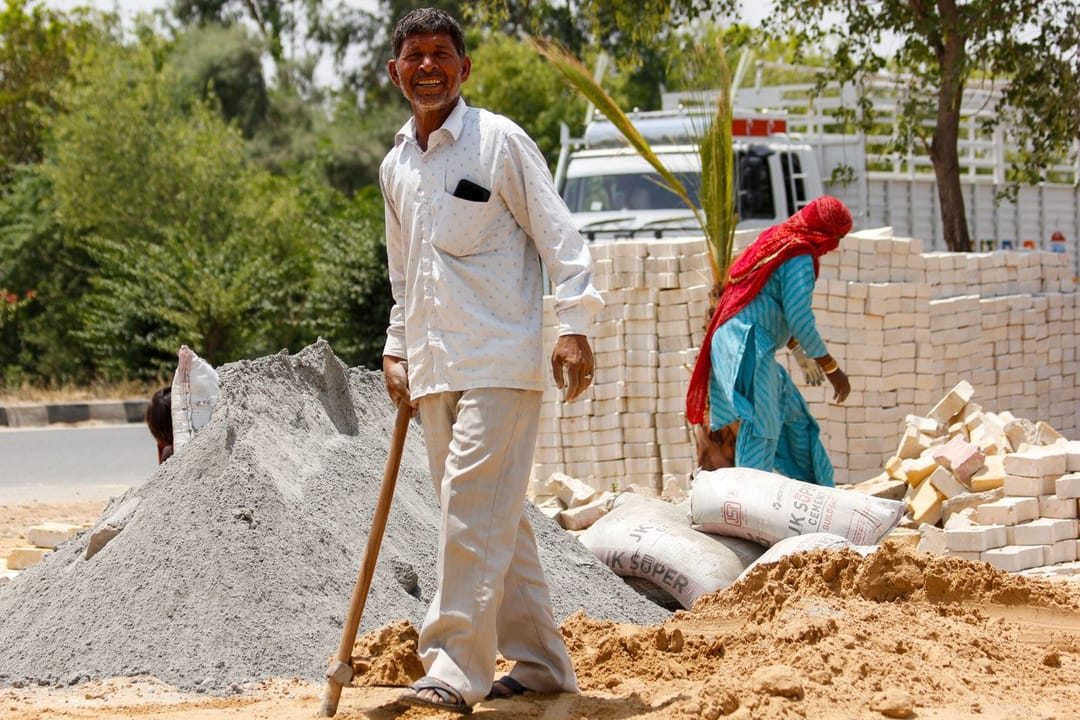
Just six kilometres from Nigana, at Kahnaur, for Kesu Prajapati, the rise in prices remains the most important issue in these elections. Kesu, 44, fits tiles on the flooring in houses and buildings. He measures inflation through prices of staples such as salt and sugar. A daily-wage labourer and a member of Bhawan Nirman Karigar Mazdoor Union, a labour union in Rohtak, Kesu says that a decade ago, milk cost Rs. 30 - Rs. 35 a litre. Now, it’s Rs. 70. A kilogram of salt then cost Rs. 16 , now it’s Rs. 27.
“Ration was our right. Now, it feels like a government dole, for which we have to bow down.” Presently, a yellow card holder gets five kilos wheat, one kilo sugar and cooking oil, while a pink card holder gets 35 kilos wheat a month. “Earlier, the government used to provide kerosene on ration. That’s been stopped and it’s hard to refill the LPG [liquified petroleum gas] cylinders. We also got chana [Bengal gram] and salt,” he says, which is no longer supplied.
With salt no longer on the list, he says “at least, we can say ‘humne sarkar ka namak nahi khaya’ [we did not eat the salt given by the state and therefore do not need to be loyal to the ruling government].”
The ‘double engine’ government in Haryana with BJP in power at both centre and state, has not done enough for someone like Ramrati, a cook in Kahnaur’s government school. Ramrati, 48 prepares mid-day meals at a government school. “In such heat, where a minute in front of the fire is unbearable, I make around 6,000 rotis a month.” She gets Rs. 7,000 as monthly wages for this work. She feels that half her labour goes unpaid. Inflation has made it very difficult to manage her family of six. She is not even counting her own domestic work. “I work longer than the sun hours,” she says.