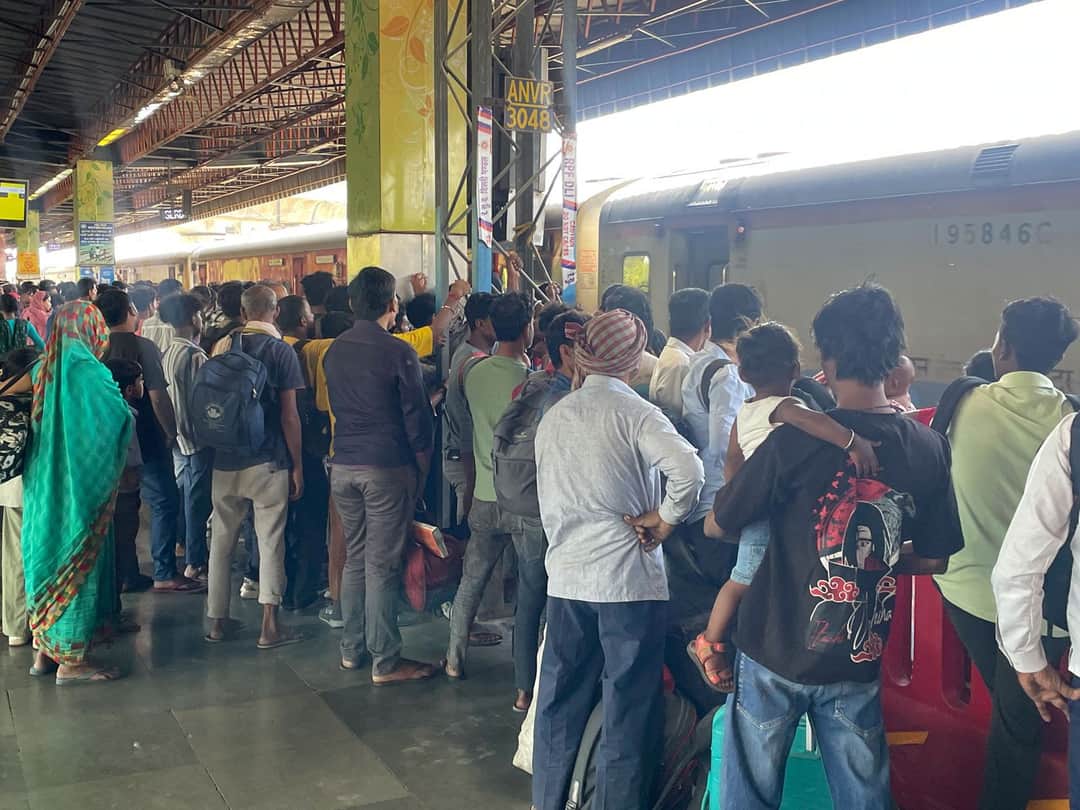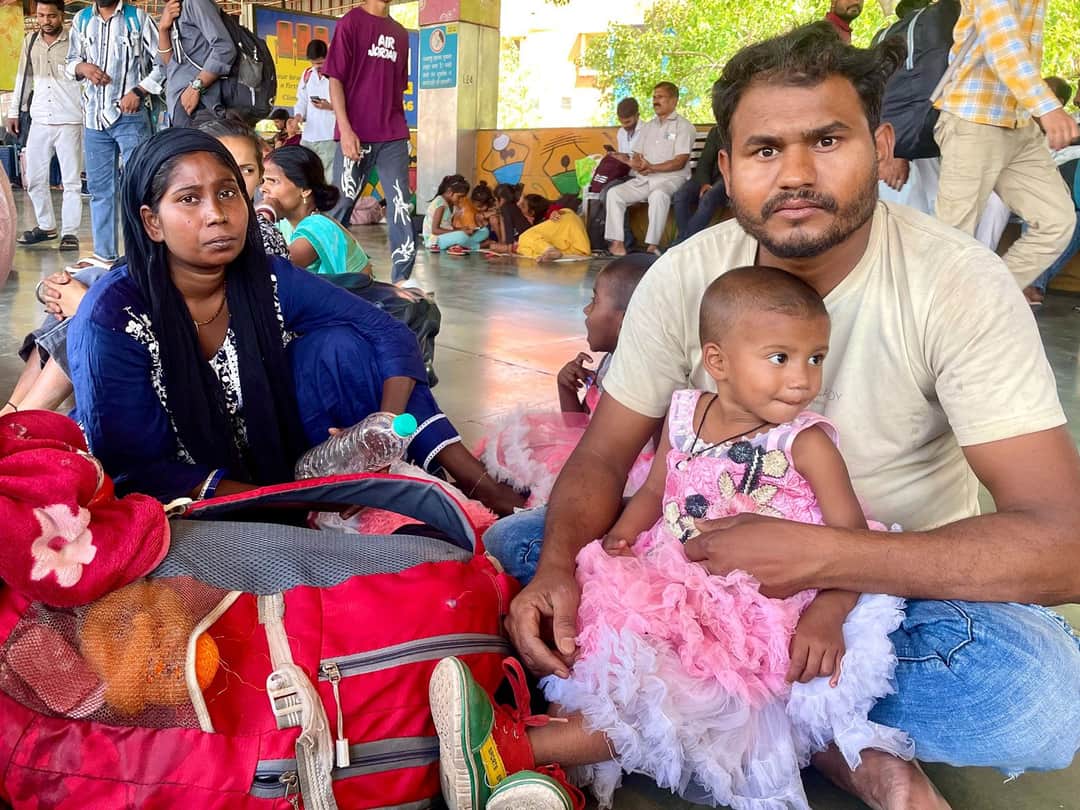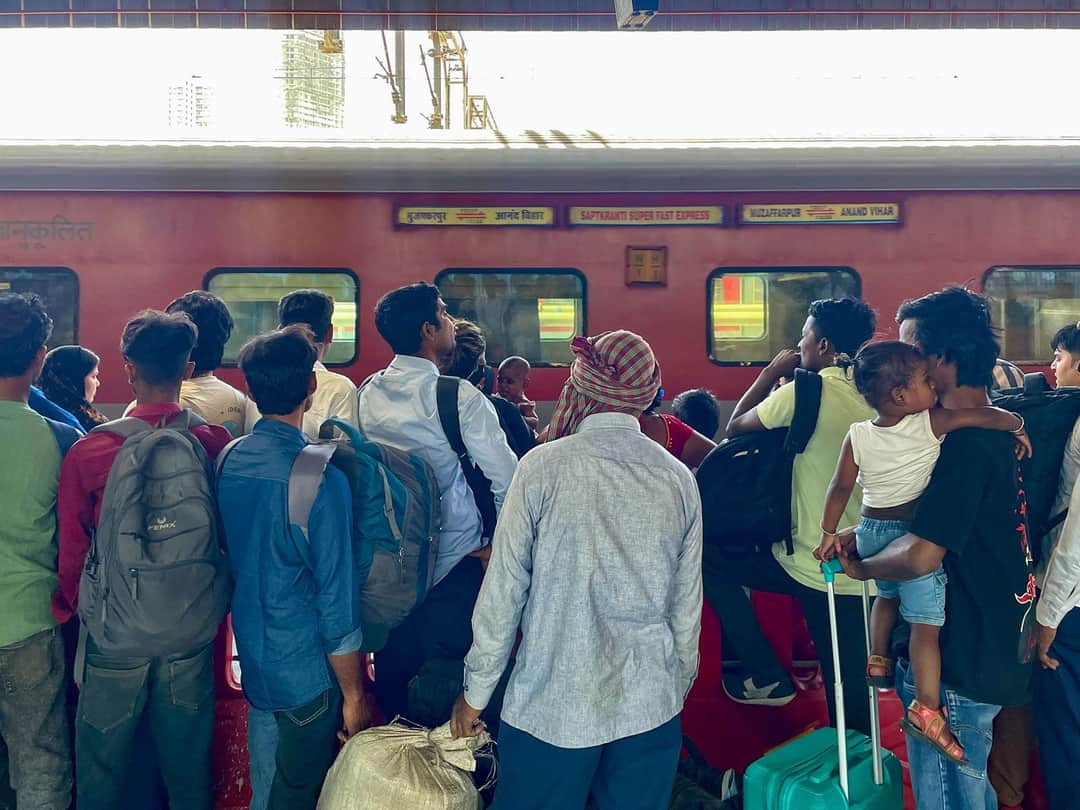


At the crowded Anand Vihar railway station, Sonu Kumar Rawat and his family have found a quiet spot. Around them, commuters, hawkers and trains come and go. The 27-year-old is keenly watching over his belongings. Sitara Khatoon, his wife, is holding their infant. But it’s just past 2 p.m. and they have to wait another four hours on the crowded platform in the stifling heat before they can board the Lichchavi Express which will take them home to Bihar.
Sonu is a mason; Sitara works on construction sites. Both line up at labour mandis in Ghaziabad to find work every morning. In recent weeks, Sonu says, “we spent the whole day at the labour chowk. For two or three days, we found no work at all.”
Since LPG prices have soared across the country – an impact of the United States of America and Israel's war on Iran and the subsequent blockade of the strait of Hormuz – living in Delhi has become economically impossible for the Rawat family.
“Earlier, we spent 1,200 rupees on a gas cylinder, 2,500 on rent, 500 on electricity. That’s already 4,000 to 5,000 rupees of the month’s expenses, before we’ve eaten,” Sonu says. Unable to pay for basic necessities, they have no option but to return home to their villages.
But their return is tinged with a large degree of nervousness – the inter-faith couple had run away from home to get married. They arrived in the capital city less than a year ago, looking for anonymity and work. Now, they have to return. They will try Sitara's home in Mairwa of Siwan district, hoping for a milder reception.
In Delhi, the family lives in a single room in a slum in Kanawani village extension. “We find work for maybe 20 days in a month,” Sonu continues. “In a good month, we have made 10,000 [rupees] each,” he sighs as he goes on to explain how the LPG crisis has unravelled his careful home economics.