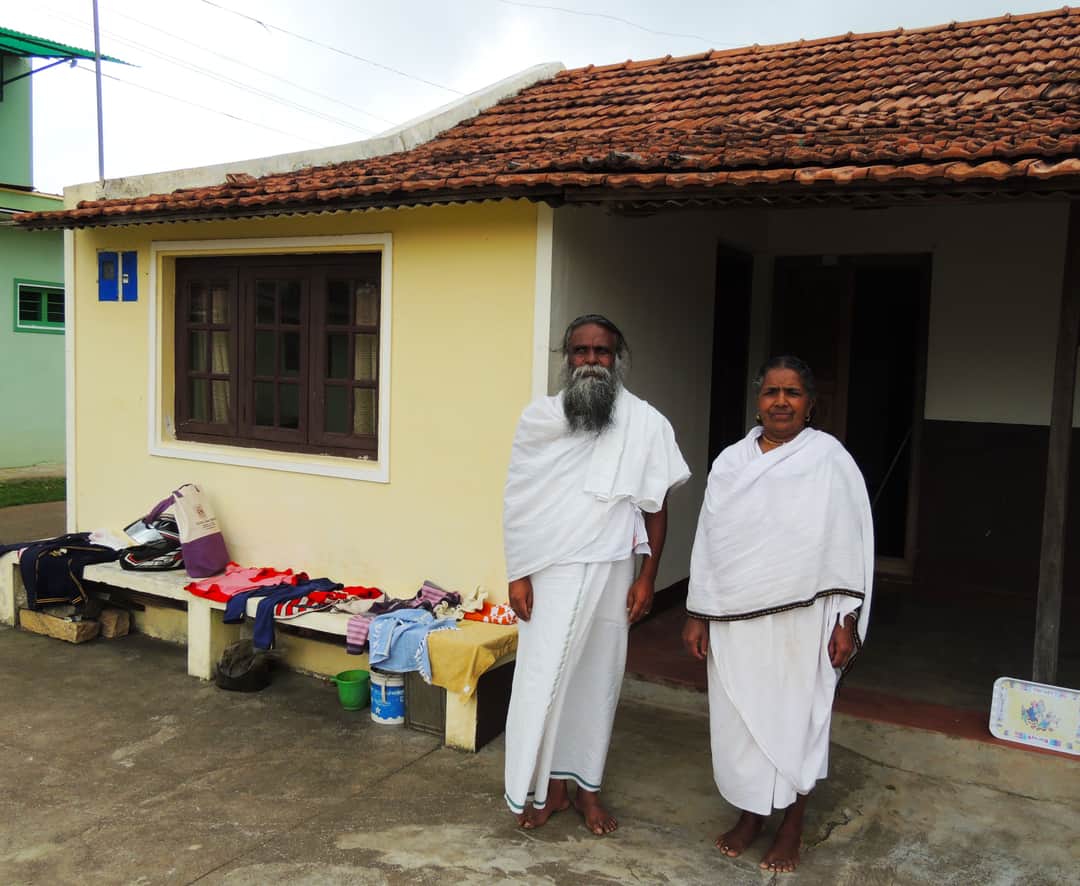


“You can purchase everything in a shop today. But clay pots used in religious rituals by our tribal communities can only be made by us women potters of the Kota tribe,” says Sugi Radhakrishnan. She is 63, and from a long line of women potters in Thiruchigadi, a tribal hamlet, which she refers to as ‘Tirchkaad’ – the Kota people have slightly different names for their settlements. The hamlet is in Udhagamandalam taluk, near Kotagiri town in Tamil Nadu’s Nilgiri district.
At home, Sugi is usually dressed in the signature attire of Kota women – a thick white sheet tied like a toga called dupitt in the Kota language, and a white shawl called varaad. While working in Kotagiri and other towns, the women and men from Thiruchigadi don’t always wear the traditional clothes that they do wear when back in the hamlet. Sugi’s oiled hair is twisted into a horizontal hanging bun in a style unique to the women of her tribe. She welcomes us into her small pottery room adjacent to her home.
“There was no formal ‘teaching’ of how to make a pot. I watched my grandmothers’ hands, the way they moved. Shaping the cylindrical pot into a circular one requires hours of smoothening with a wooden paddle on the outside, while simultaneously rubbing with a smooth round stone from inside. This also decreases porosity, and the stone and paddle must move in harmony so as not to develop stress cracks. Such a pot cooks the most flavourful rice. And we use the smaller-mouthed ones for sambhar. It’s very tasty, you should try it.”