
As the Maai month ends, we eagerly wait for the festival of Shimga. In our Warli language, the twelve calendar months are Chait, Vaishaakh, Jeth, Aakhaar, Shraavan, Bhaadwa, Ashwin, Kaartik, Makasheer, Poos, Maai, and Phalgun (also called Shimga).
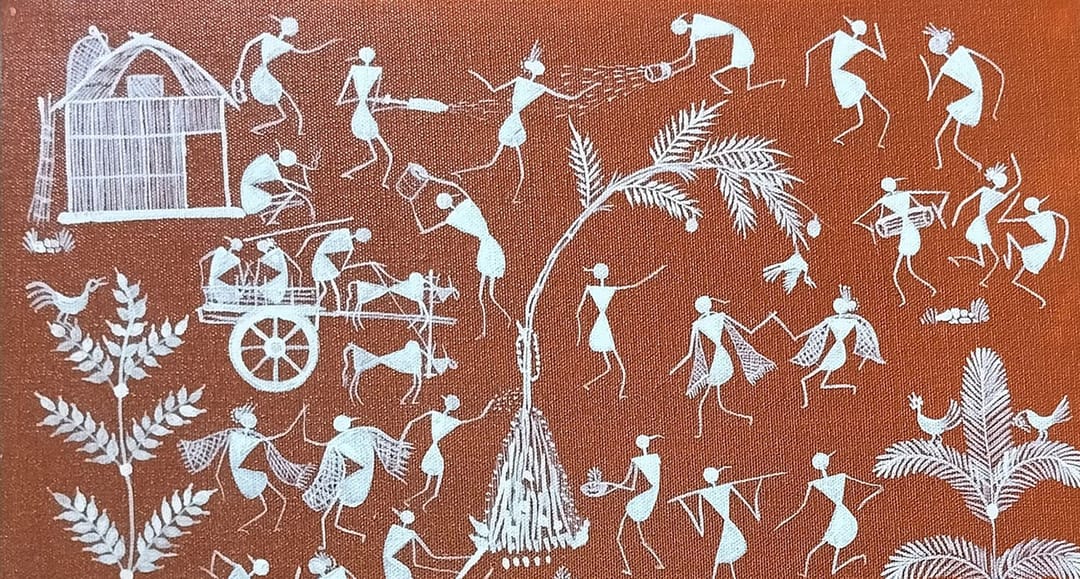
A week or two weeks before the day of Shimga, we collect wood and erect and burn miniature bonfires called holi. We spend the entire night playing traditional games such as aatya paatya. Coming together on the full moon’s night, the fifteenth day of Phalgun, we build a large bonfire by arranging wooden branches and twigs. Only men take part in this ritual. A long bamboo with its leaves is brought from the forest. A garland of flowers, sugar crystals known as gaathi and rice crackers are tied to the bamboo. A small chick of a black hen is also tied at the tip. This bamboo is placed right in the centre and wood collected from the surrounding forests is arranged around it.
This structure is called holi. People worship the holi by breaking open a coconut. A pudharkhi, an elder from the village makes the announcement (dawandi) in the entire village and the holi is lit.
In old times, all people from the village and its hamlets lit a common one and celebrated the festival together. Those who are married before the Shimga come and worship it by going around the lit holi five times. The real festivities start in the night with a lot of banter and fun. Men and women of all ages spend the night pulling pranks, cracking jokes and flirting with each other. That is how we celebrate the joyous occasion. Small children in different attires go house to house and humour people. In turn they demand some gift or money. Shimga festival brings much joy and laughter to all.


