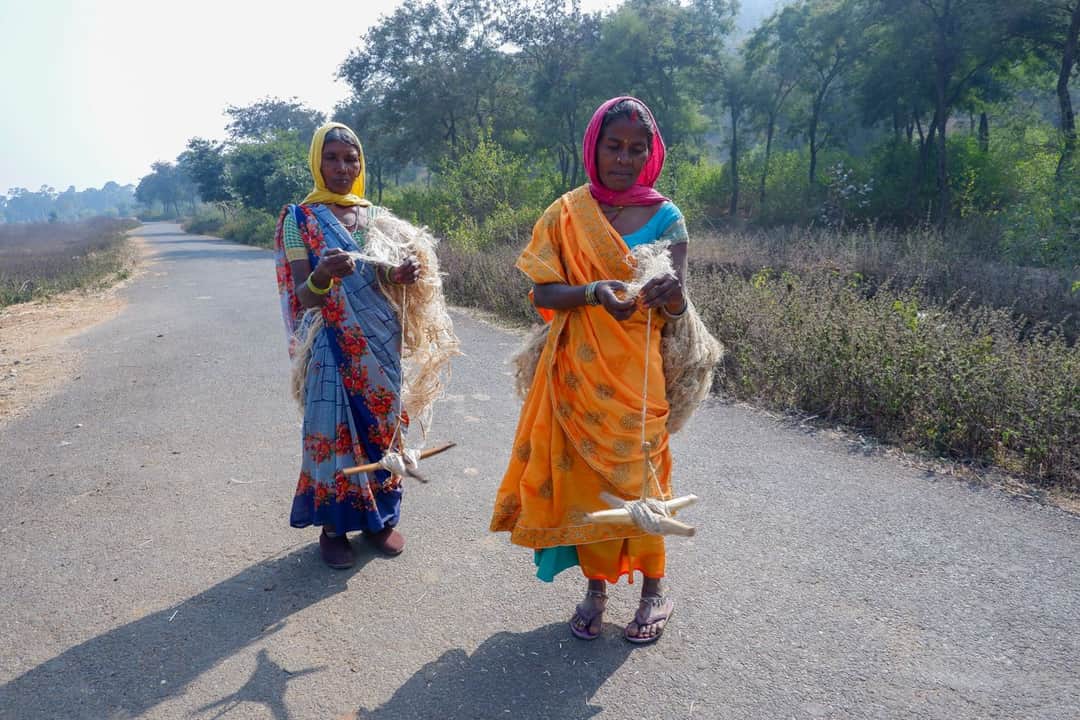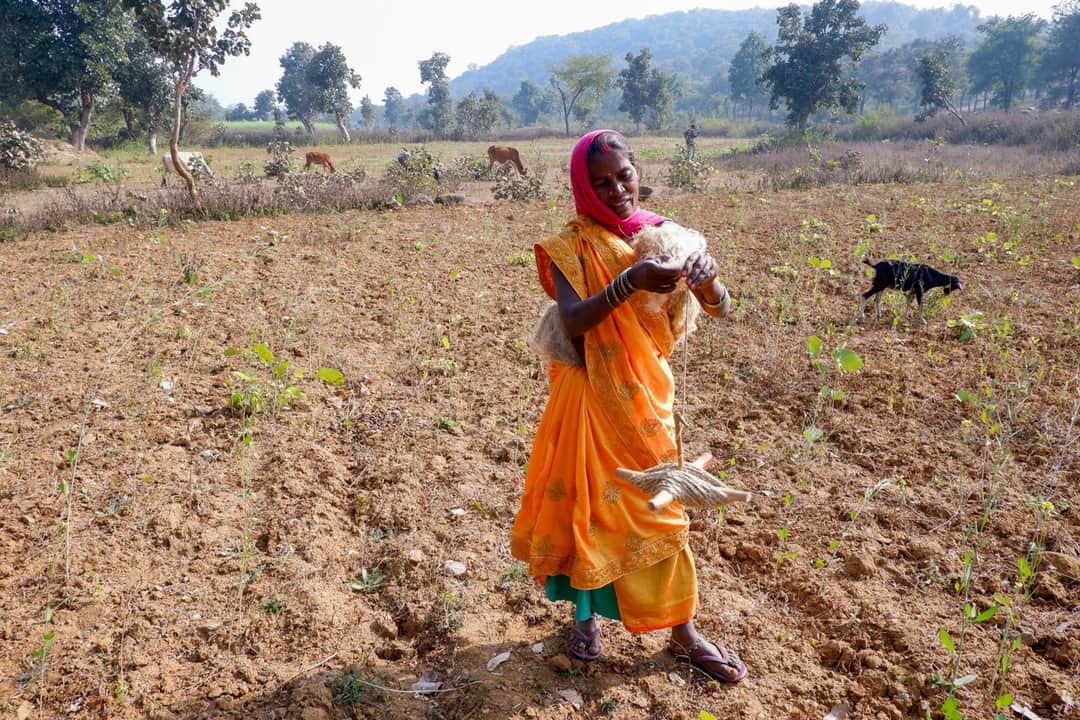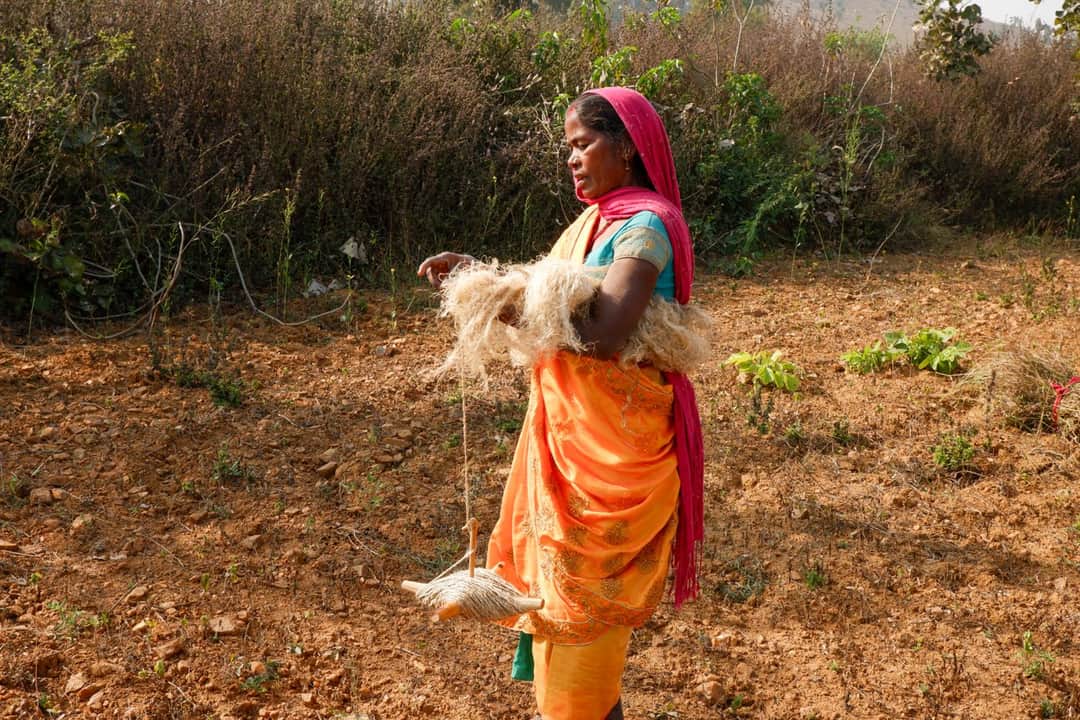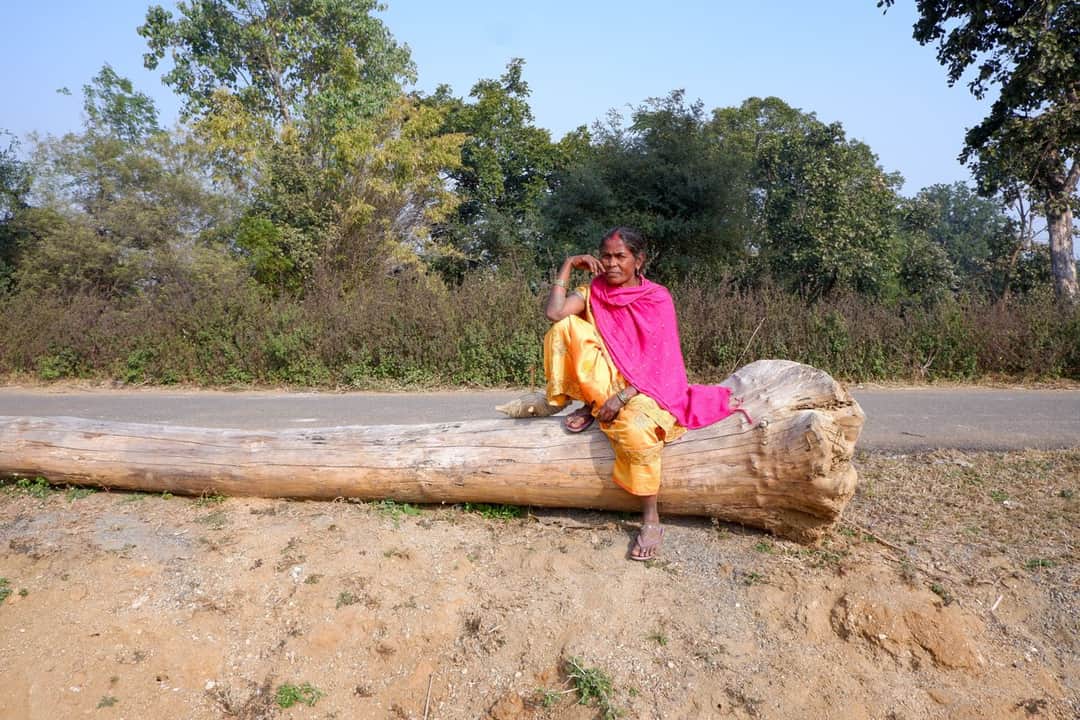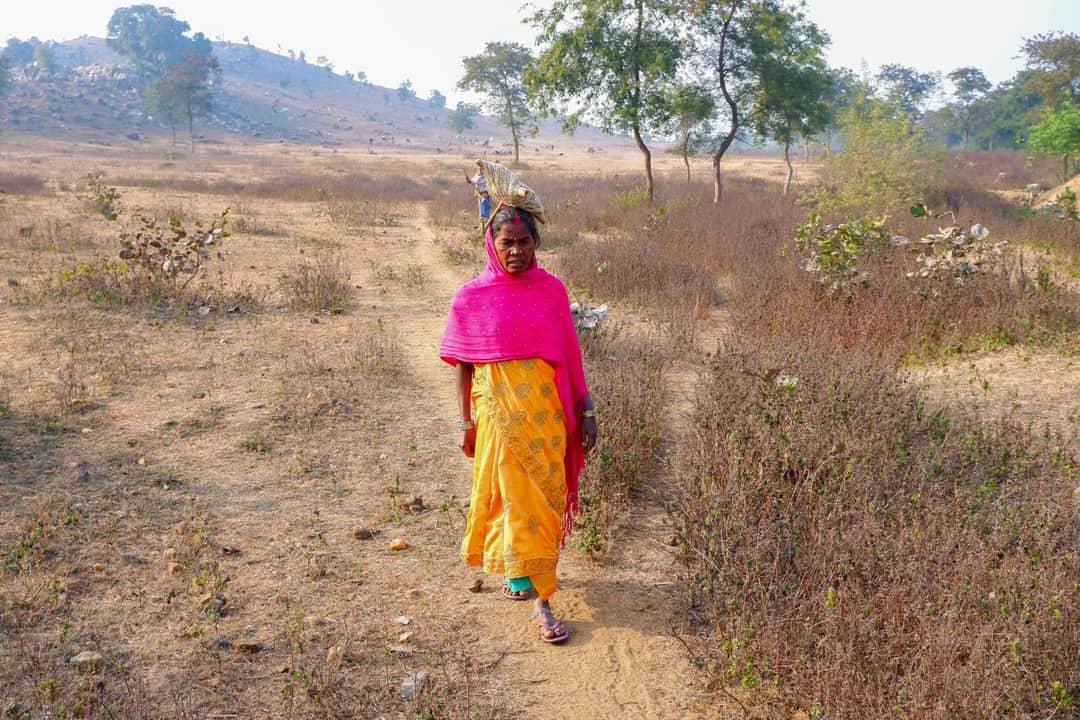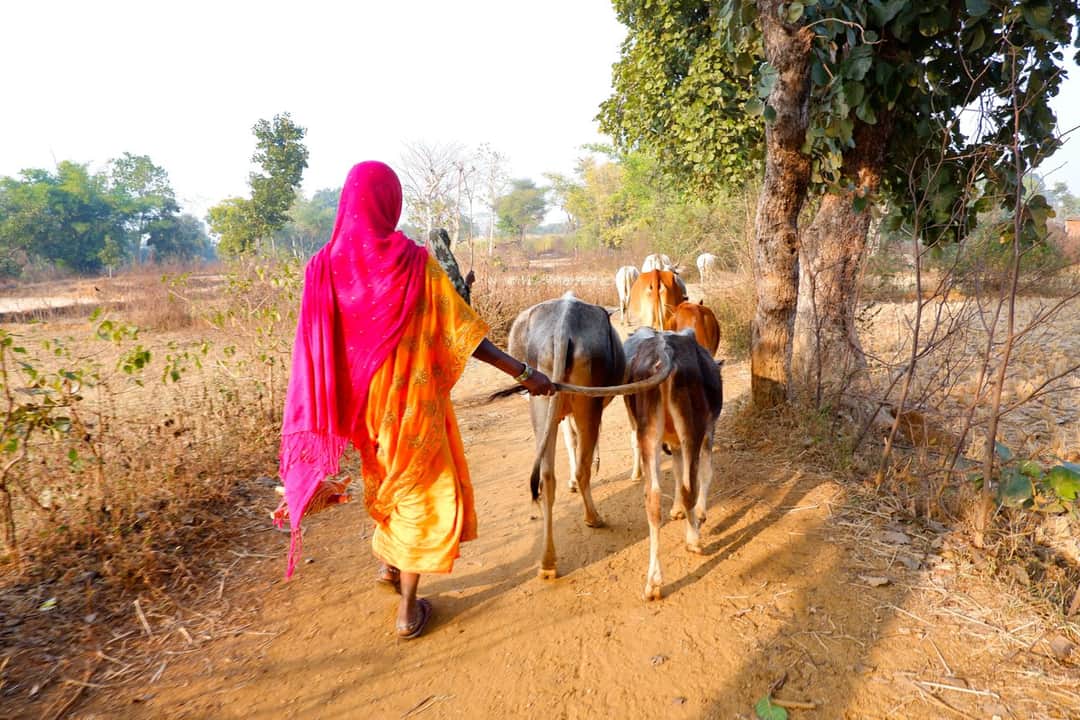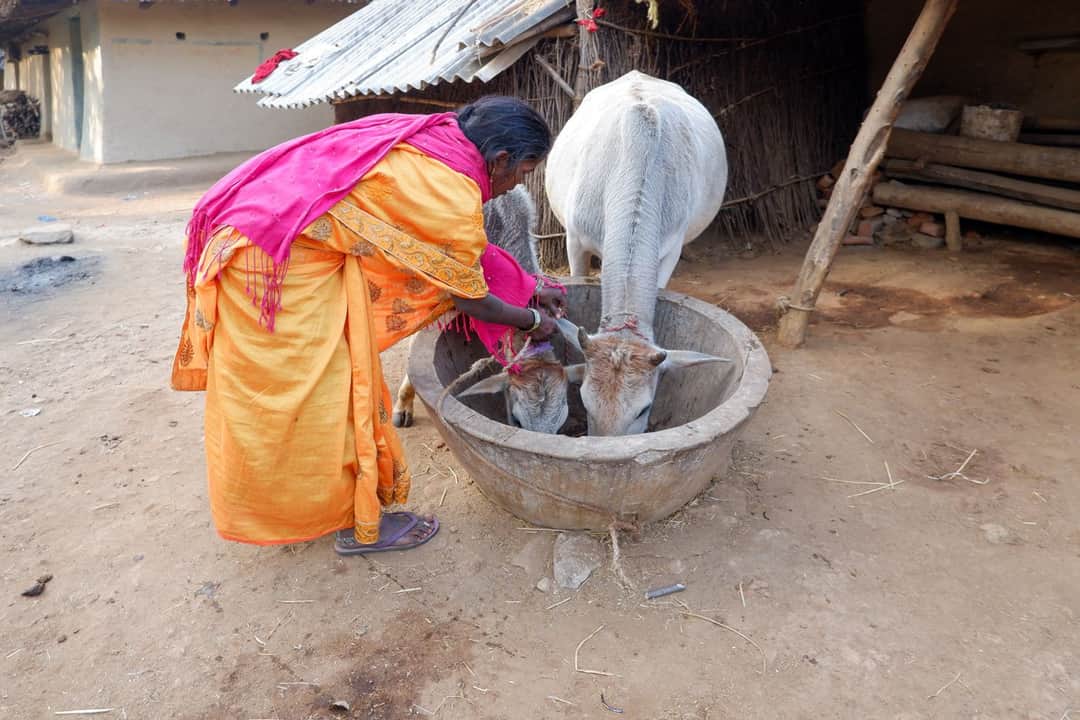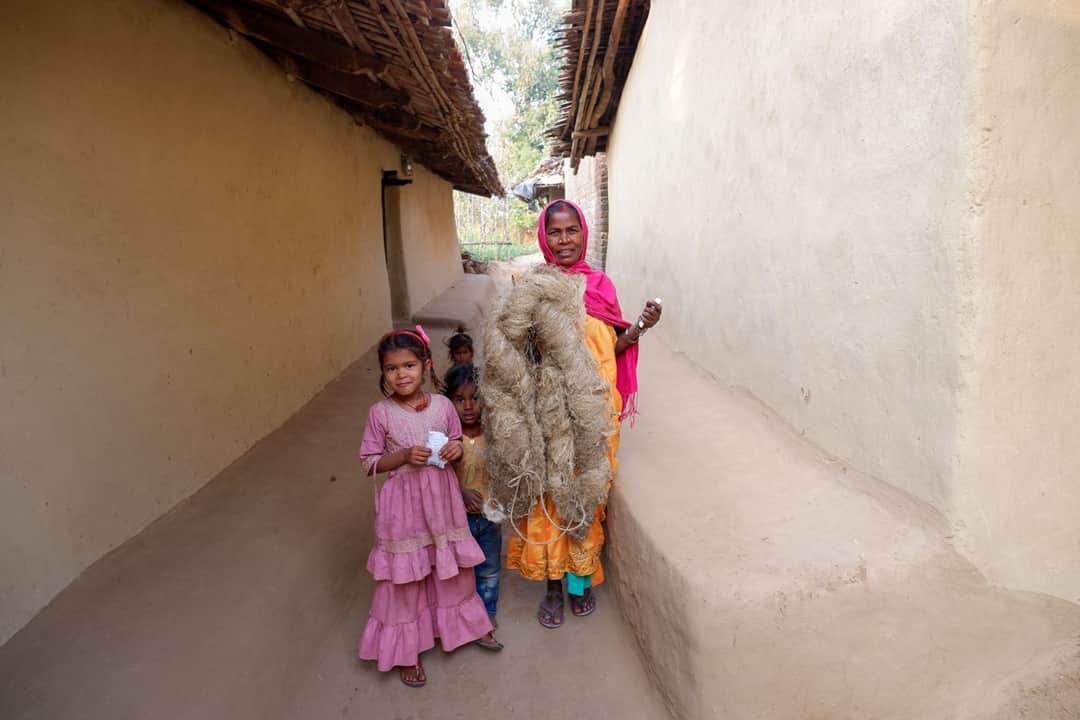

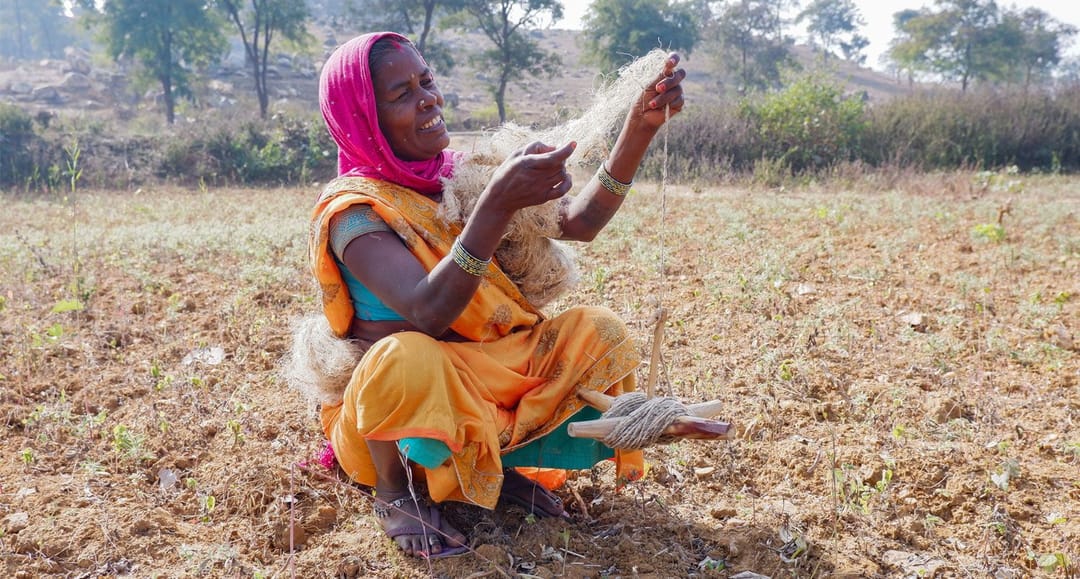
Draped in a bright yellow saree, the pleats tucked in further at the waist to keep it ankle-length, saving it from getting tangled with her worn slippers, she walks briskly in the biting cold of a January morning. Faguni has wrapped her head with a deep pink scarf that sometimes flutters in the wind. She has a fuzzy coil of light brown-gold, sunn hemp fibre (Crotalaria juncea), weighing about a kilo, slung across her shoulder like some fashion accessory.
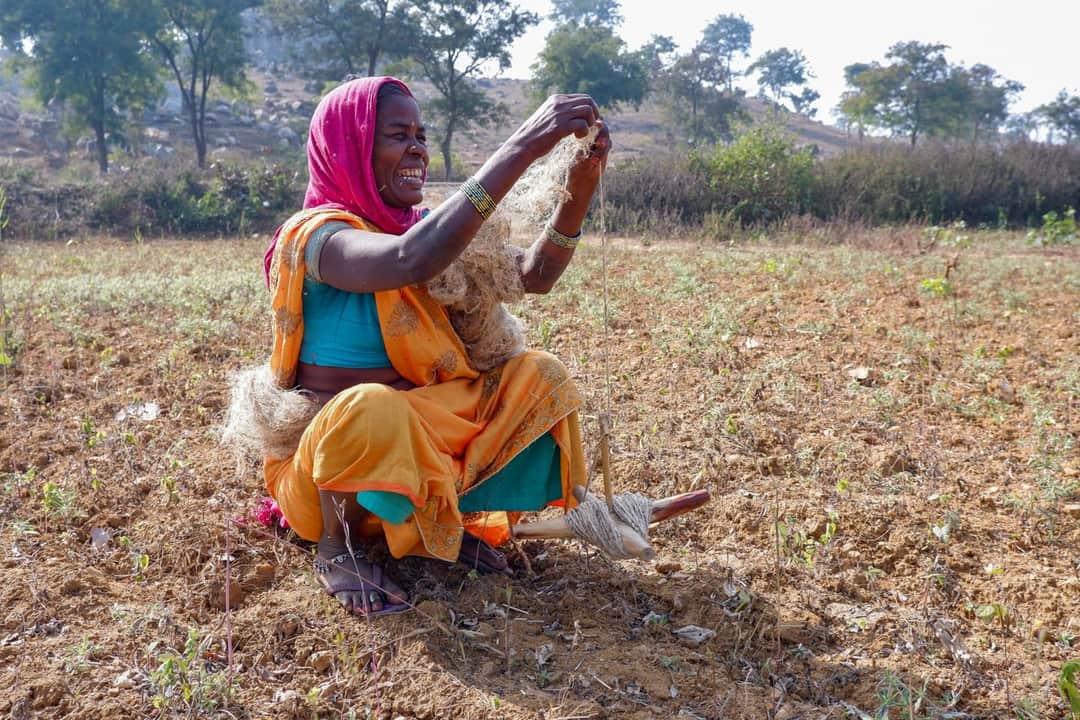
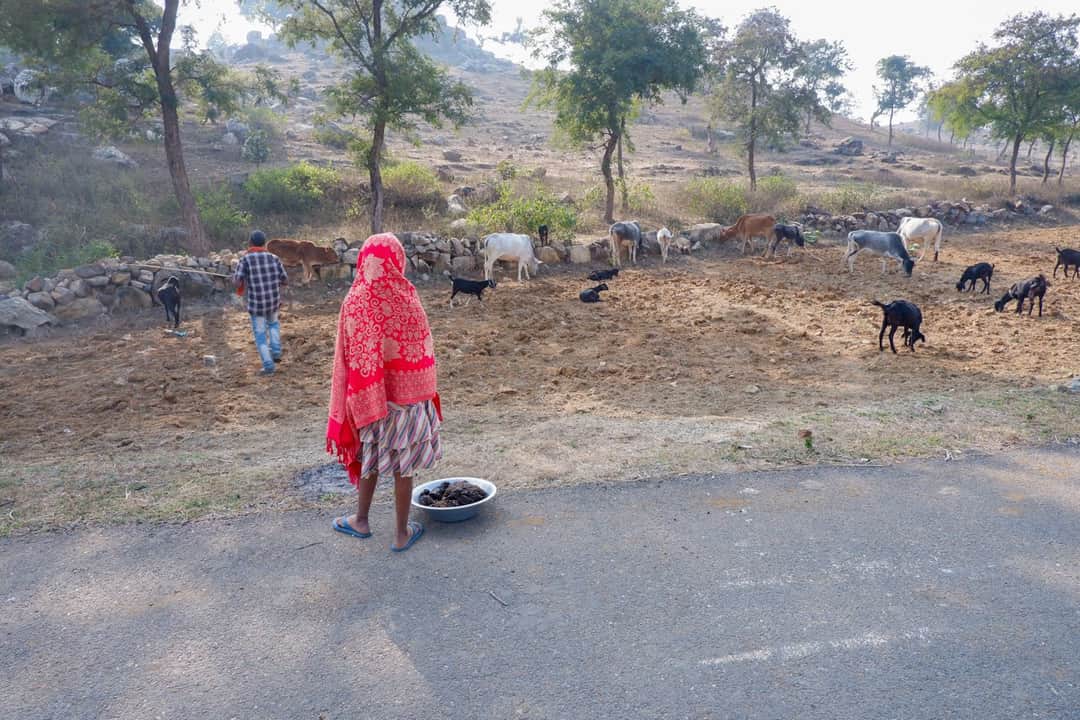
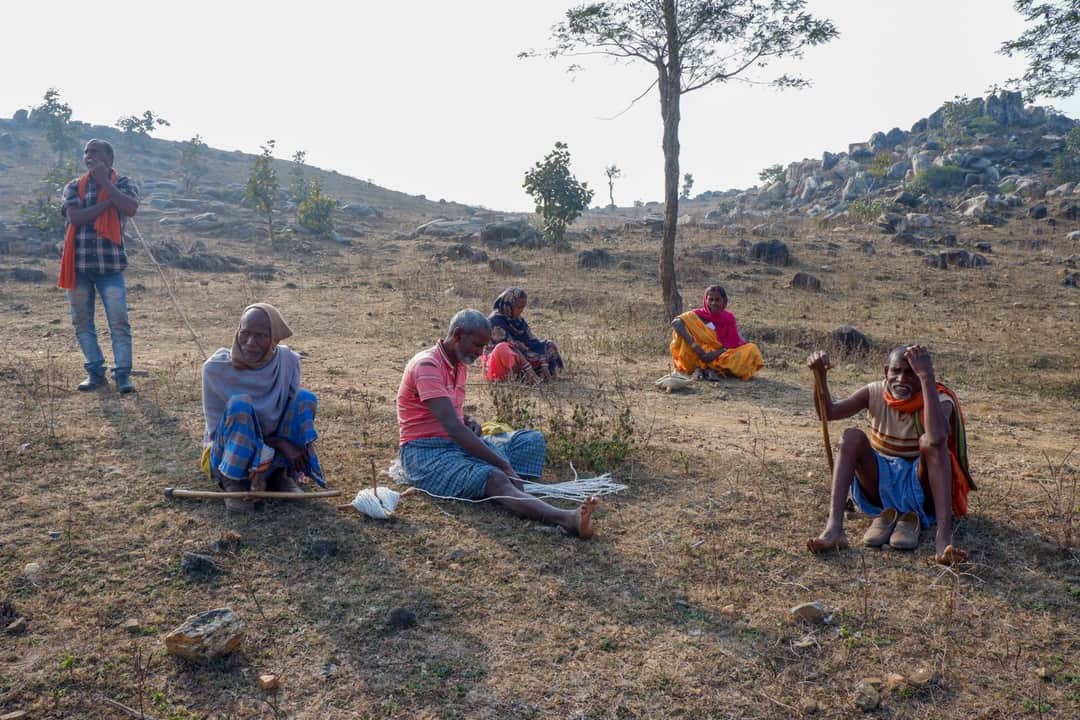
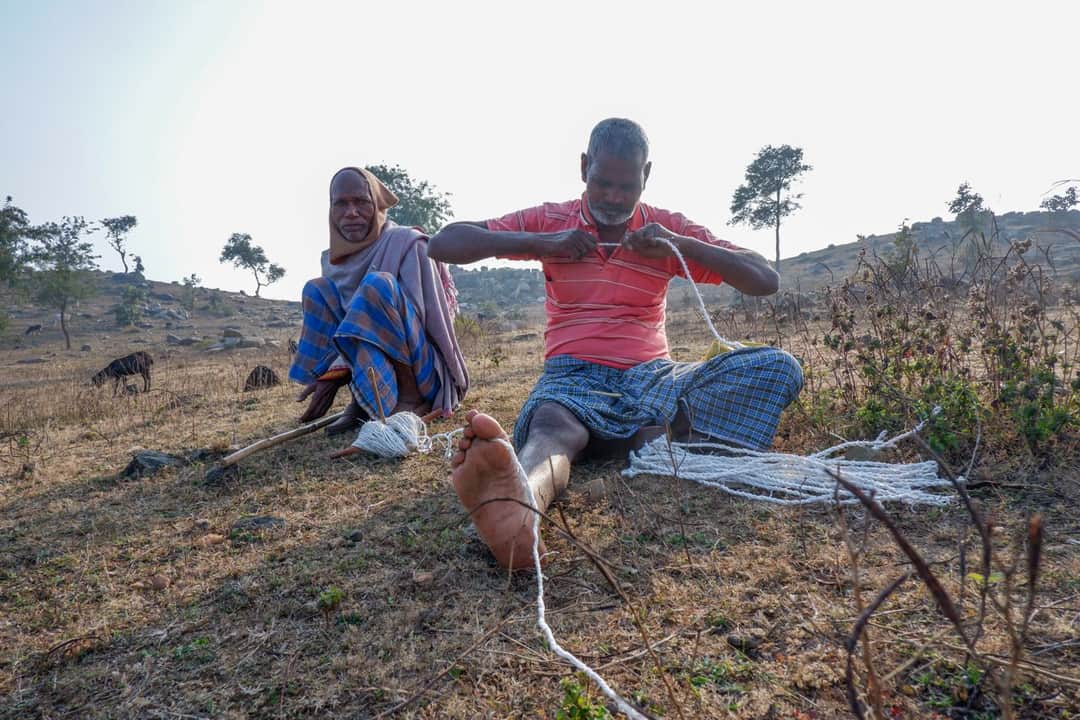
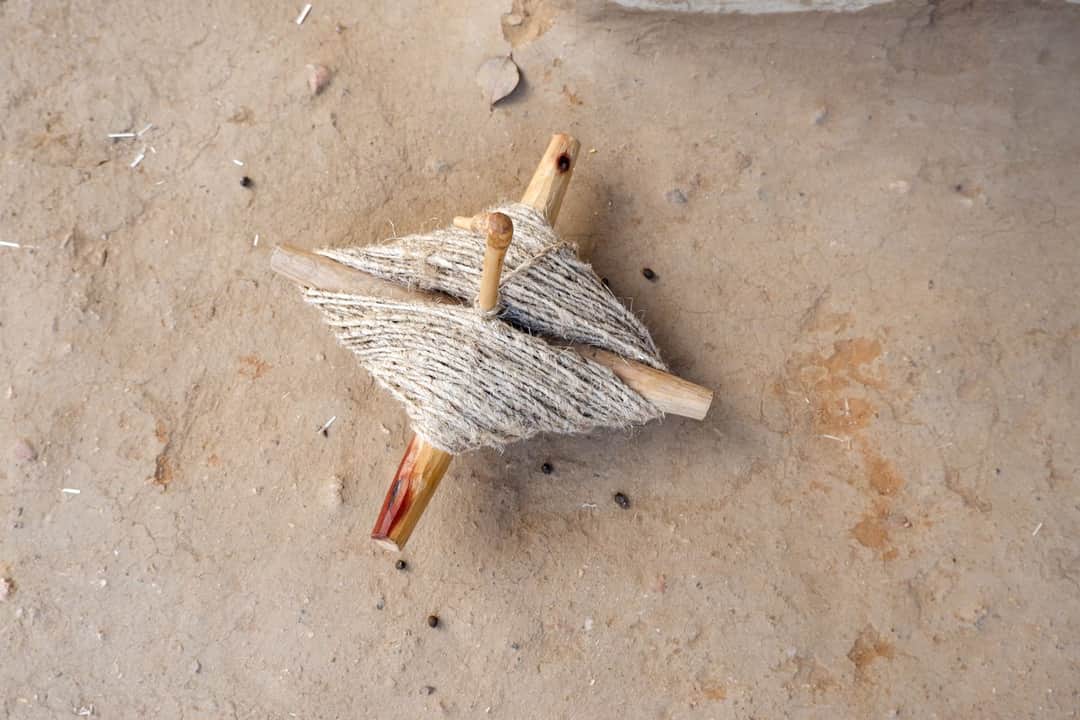
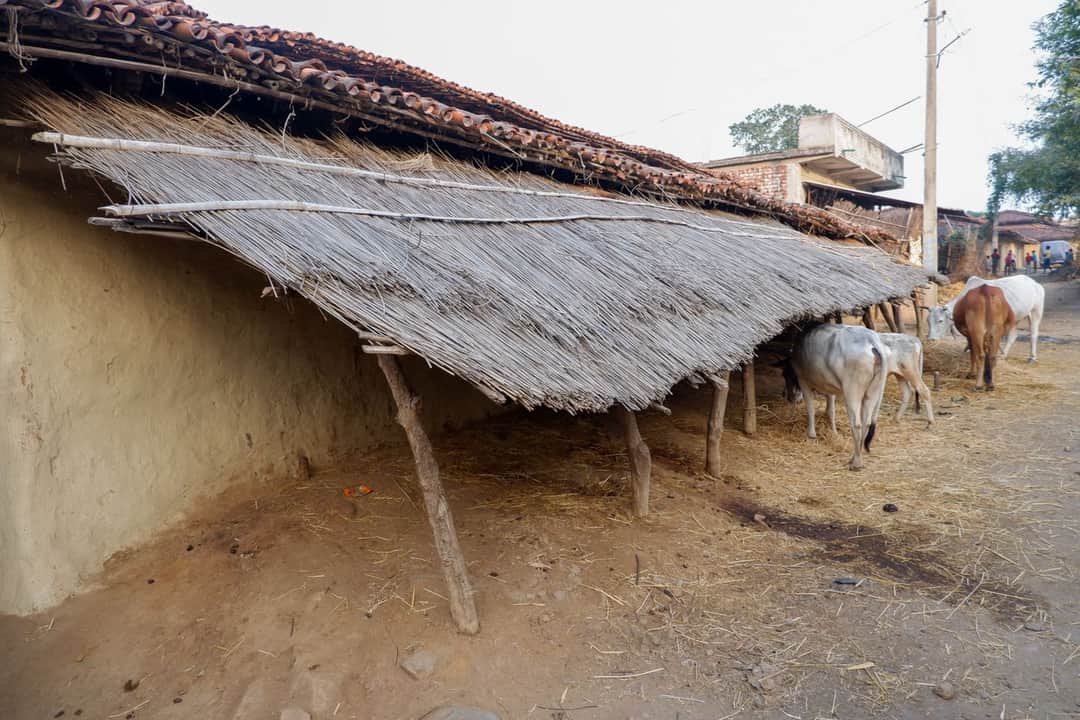
In her left hand she holds, hanging on a thread, a dhera – a simple, four-pronged wooden spindle with a hook. Every now and then she draws a fibre or two from the bundle wrapped around her with her right hand, gives the dhera a quick spin, and then swiftly uses both her hands to twist the fibre into a thin rope. Like magic, her fingers turn the coarse sunn hemp fibres into a shiny, smooth strand that grows longer and longer until the dhera hits the ground. “Hi... hi… chal chal, [hey…hey…come, come.]” Faguni gently commands her three cows and two goats as she picks the spindle up from the ground and winds the thin rope around it before starting it all over again.
“You lose sight for a moment, and they’ll be off—straight into the mustard or the wheat fields,” she speaks almost to herself. The ease and elegance with which Faguni Devi, 56, does all these while also keeping her eyes on the road ahead, and on her goats, and chatting with her friend, makes me wonder and express my amazement. “We Chaudharys are born with this skill—we learn it right from the womb!” I hear a sense of pride in her voice. “Every child in this village knows it.”