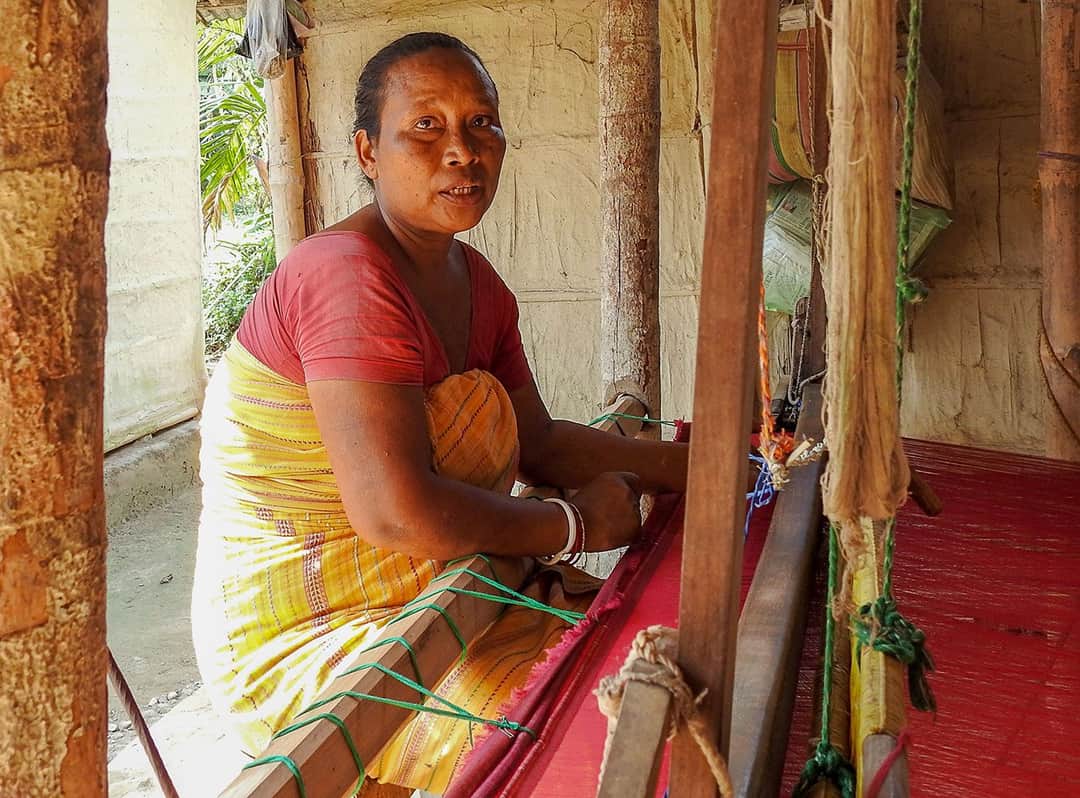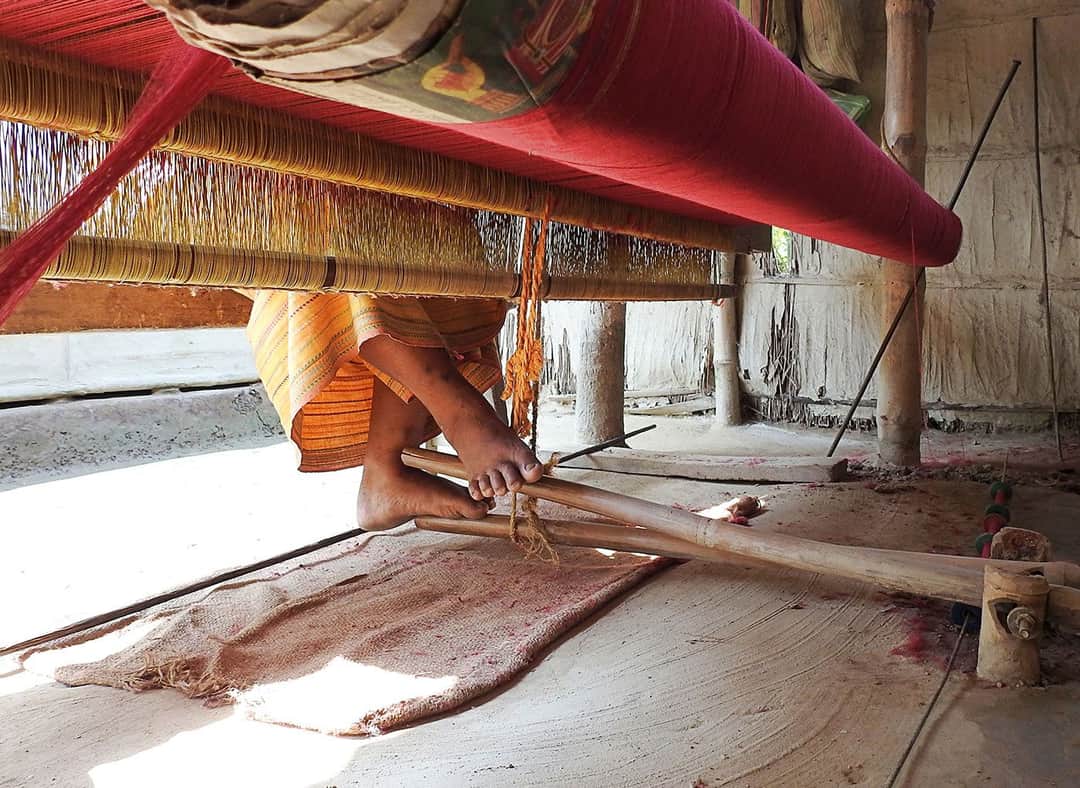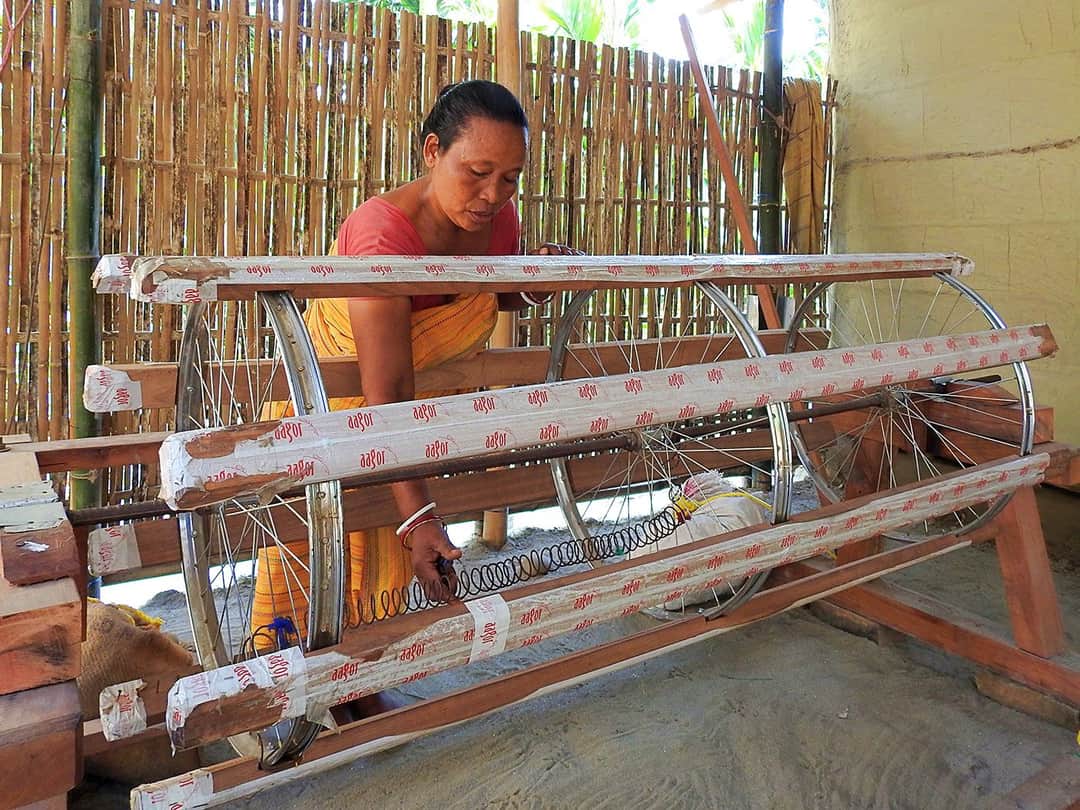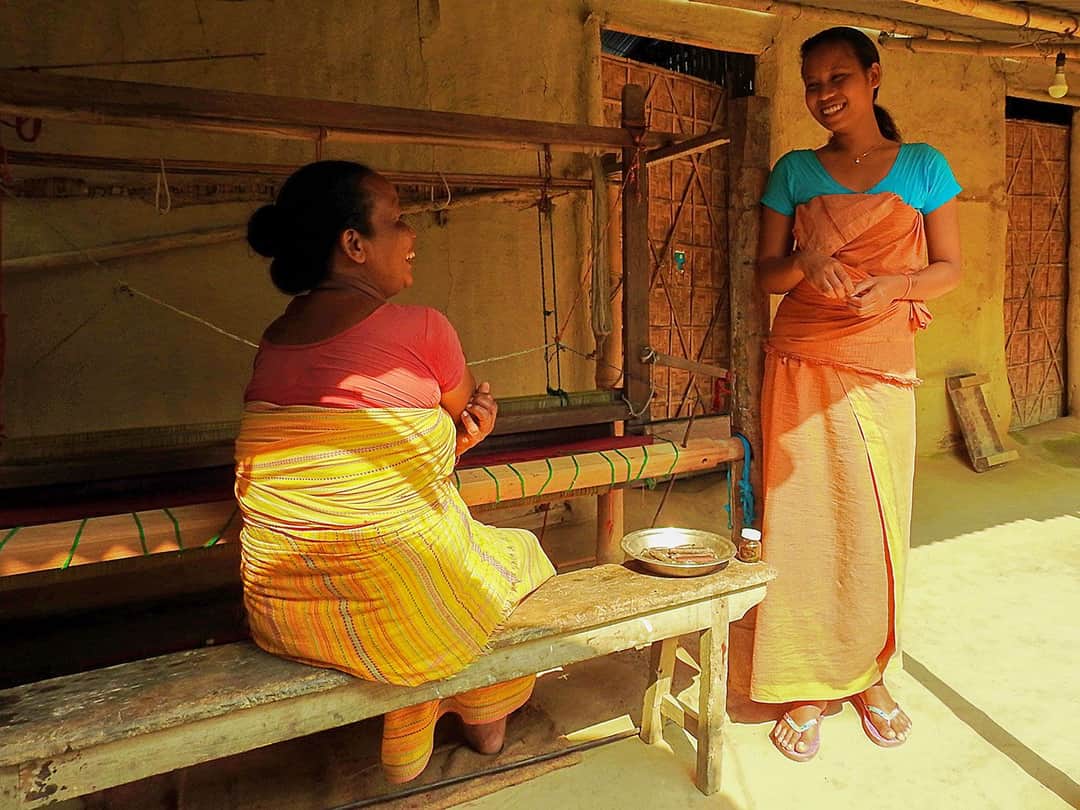

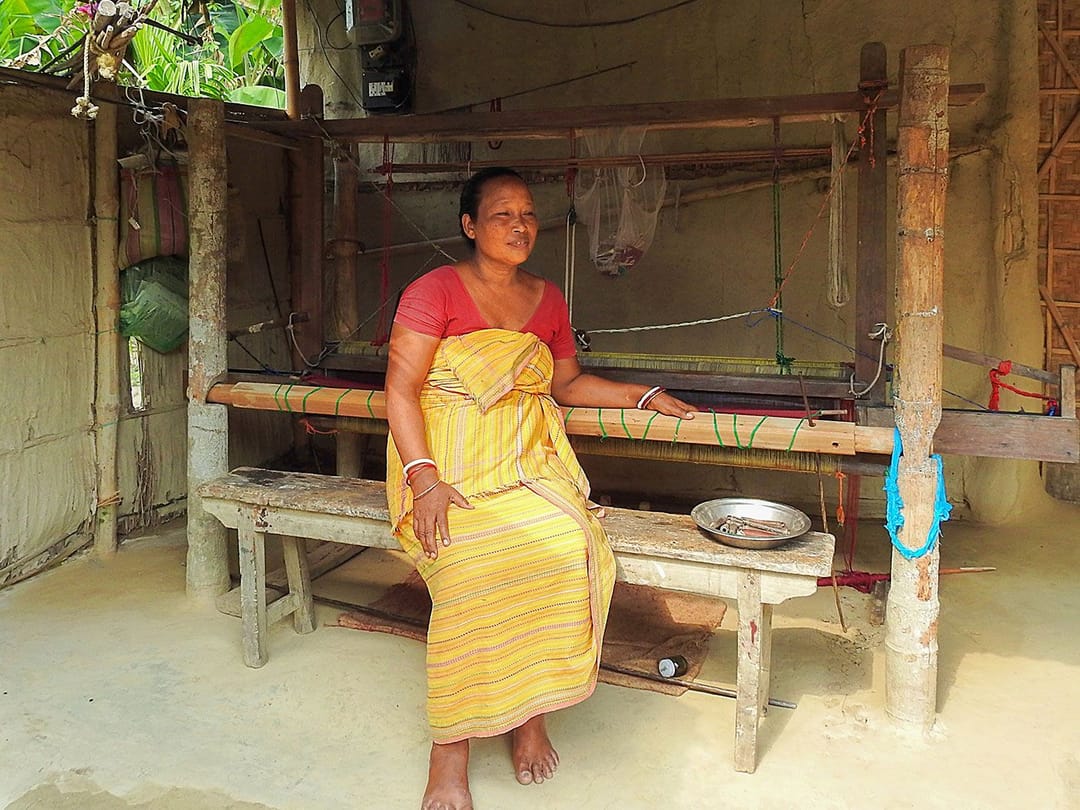
“Like all Bodo girls, I grew up watching my mother weave,” Sama Brahma recalls. She is sitting at her bamboo pedal loom in the verandah of her house in Khujrabguri No.2, a small village located amid green paddy fields on the banks of the river Aie in Chirang district of Bodoland, Lower Assam.
The nearest city, Bongaigaon, is around 20 kilometres away. On the way to her village of 87 households, in some stretches, the sandy river bank serves as the road; in one place, a broken bamboo bridge requires cautious crossing on foot.
In the villages of Assam, every home of the Bodo community has a loom. The community ('Boro' in Assam) is listed as a Scheduled Tribe. Weaving is seen as a highly valued skill in women, and in a prospective bride. Only a few women like Sama have used this traditional skill to earn an income.
“I started weaving well before the age of 15, and perfected my technique by weaving sala mata kapda [simple fabrics],” Sama, now 42, says. “As I became more confident, I would weave traditional items like the gomosa [a shawl-like garment], as well as utility items like bedsheets. But what I enjoyed weaving the most was the dokhona [which is like a saree] especially with complex floral motifs.”