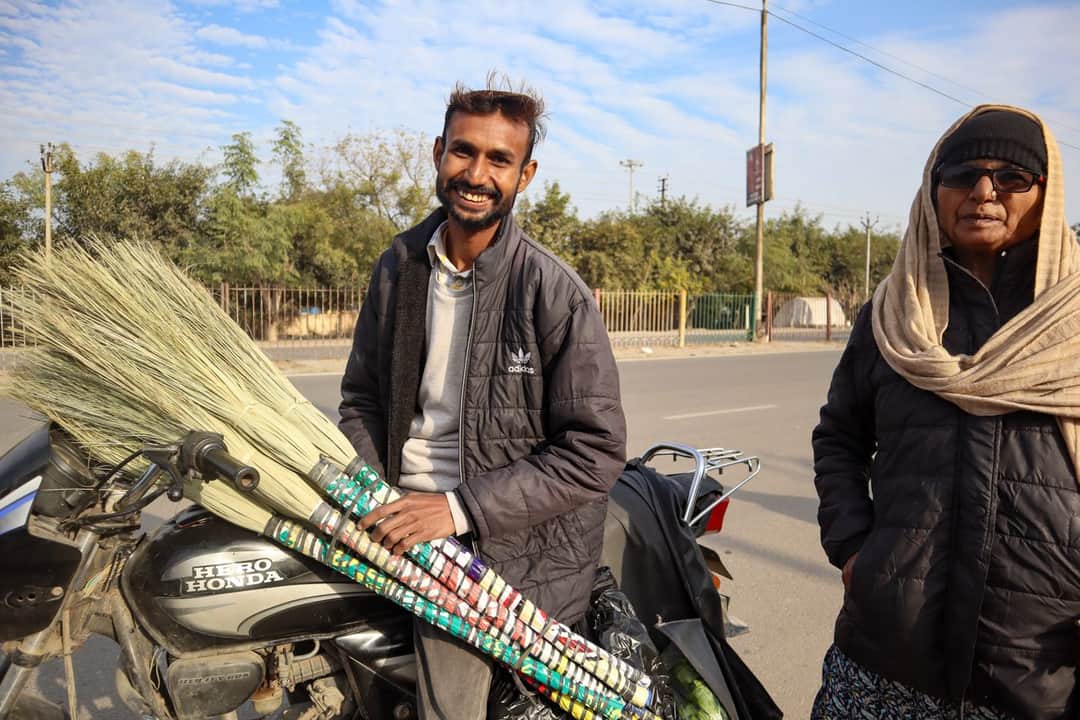

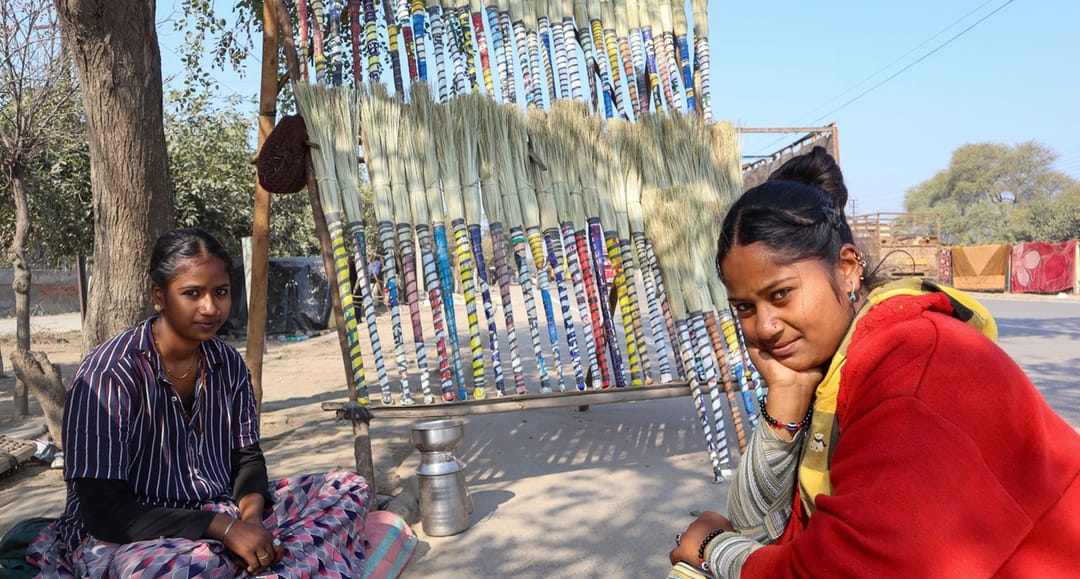
“It takes seven steps to craft a broom,” says Bhagwati.
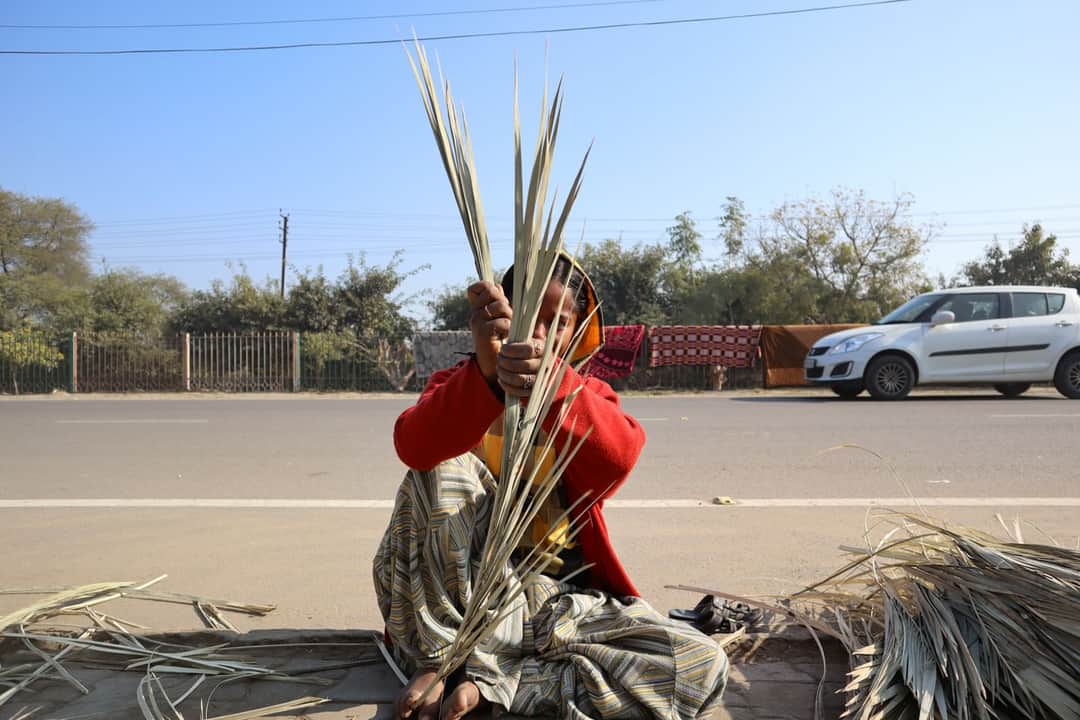
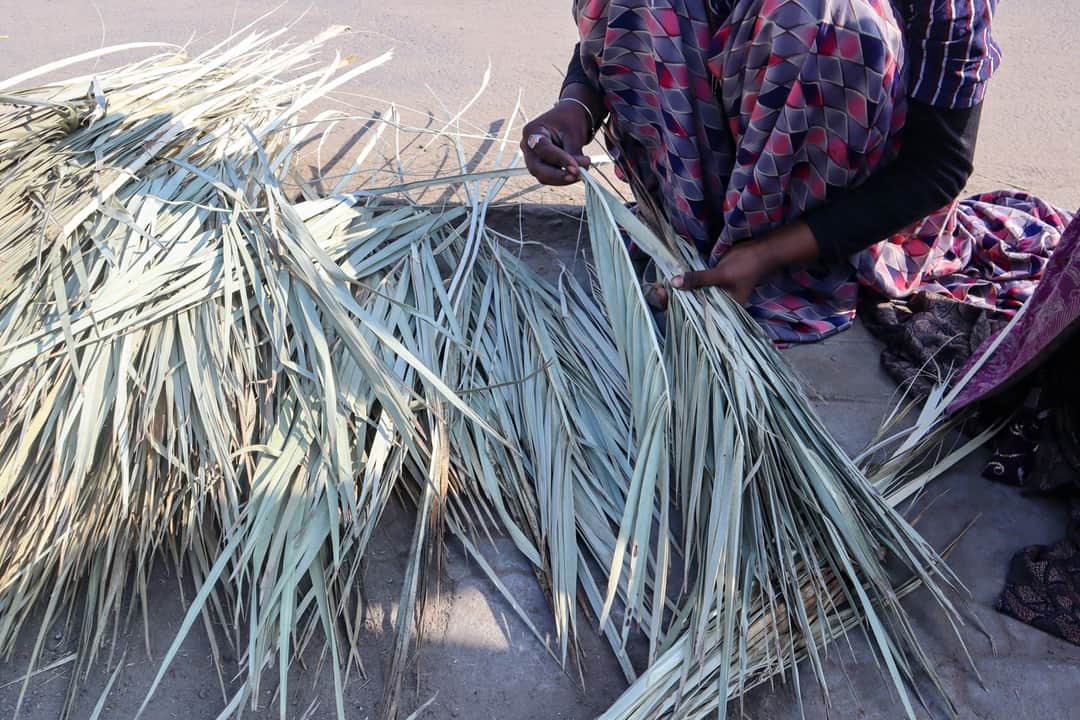
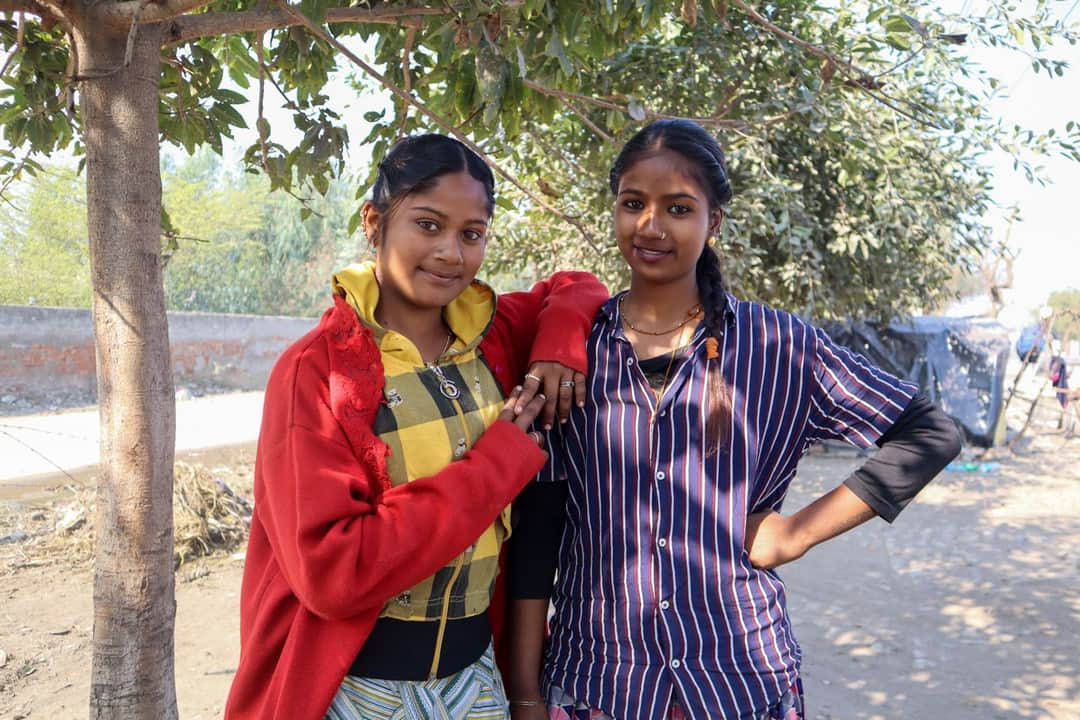
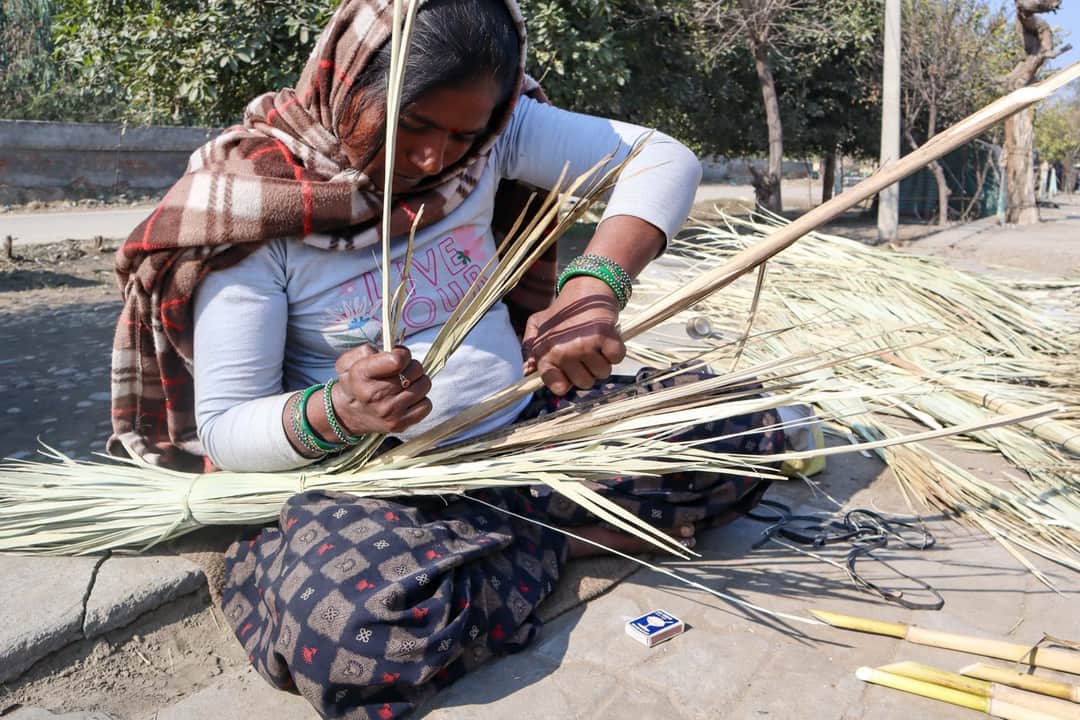
Although only 20 years old, Bhagwati knows her craft well, having learnt from her mother and others in the family. “First, we split the date palm fronds in half, then strip away the leaflets,” she tells this reporter.
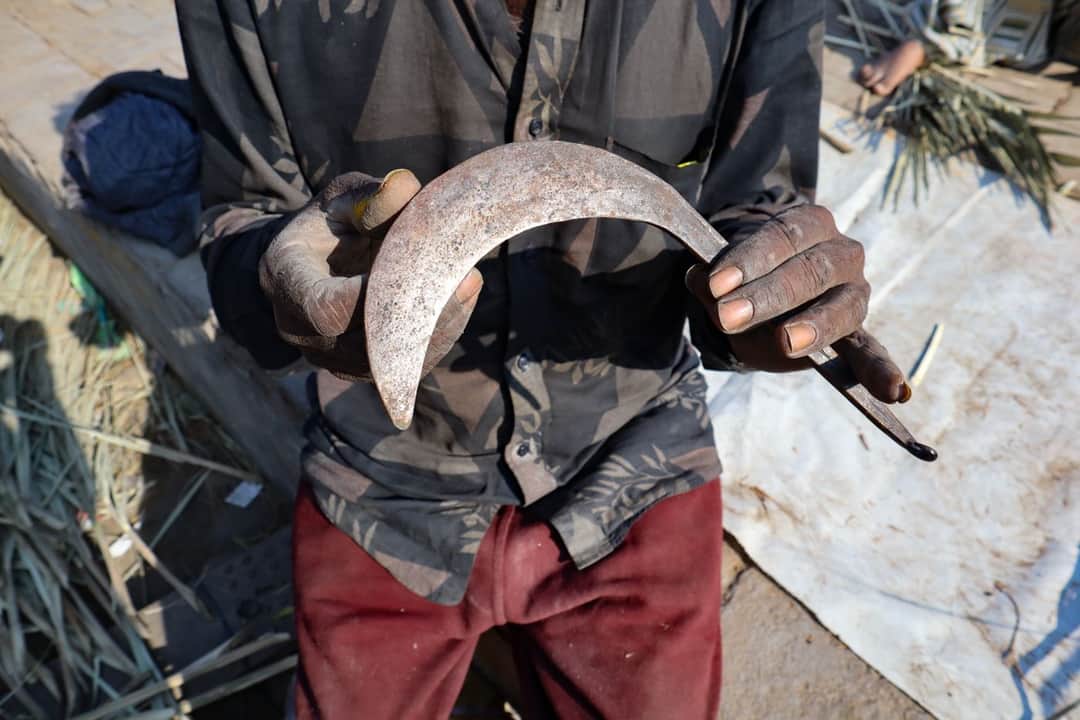
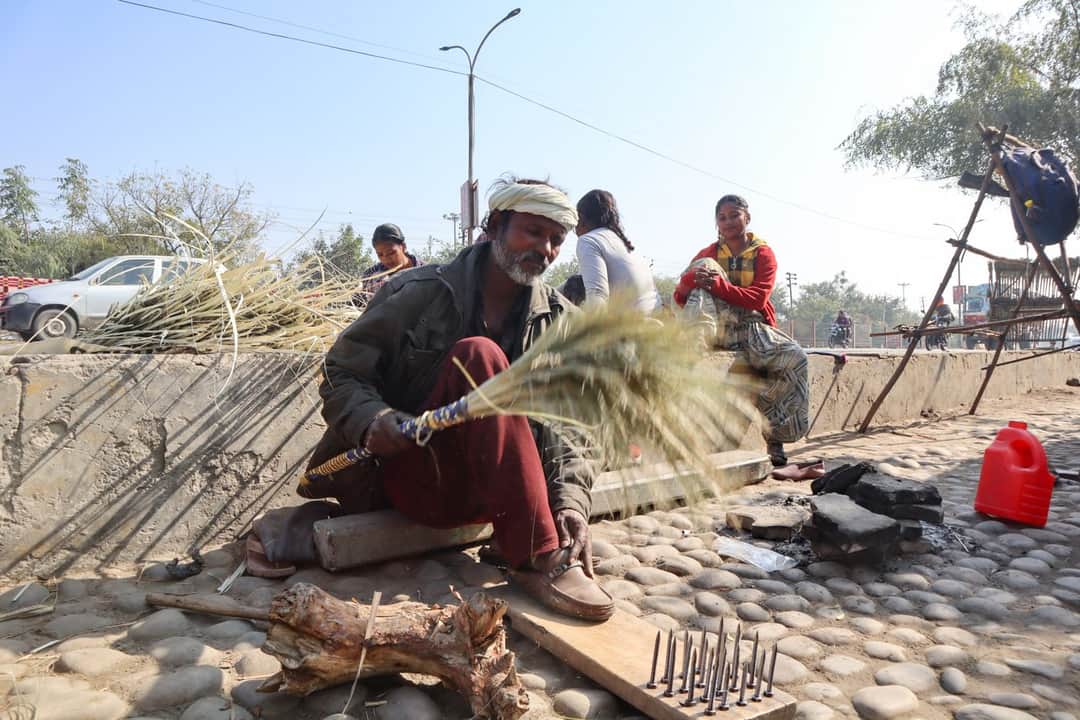
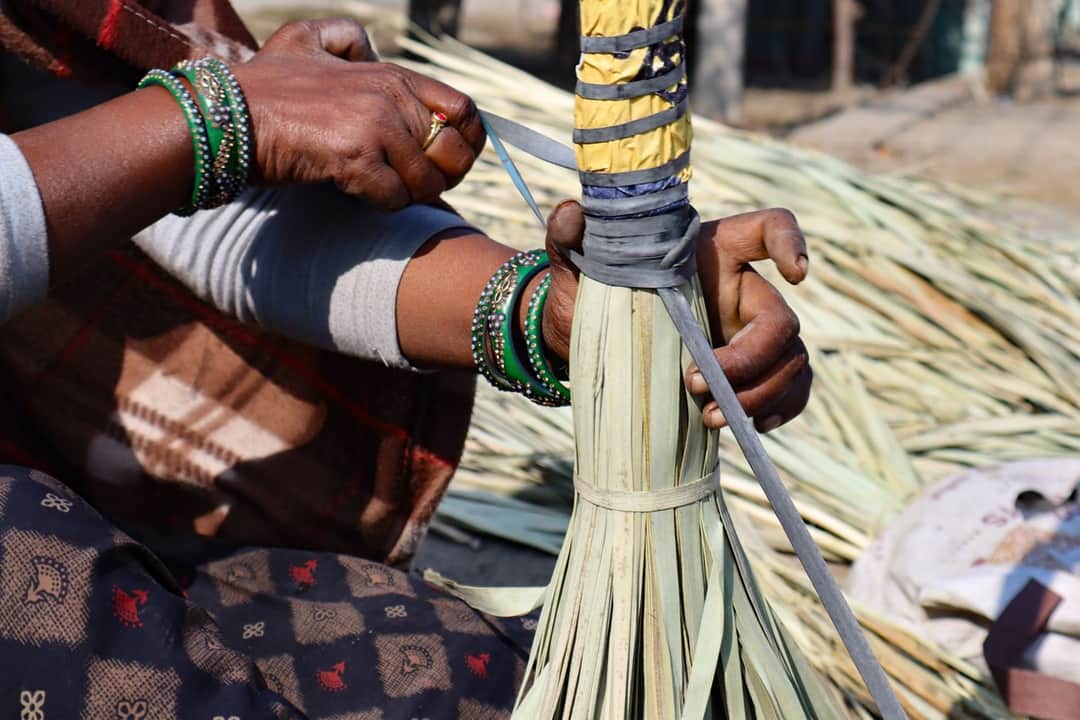
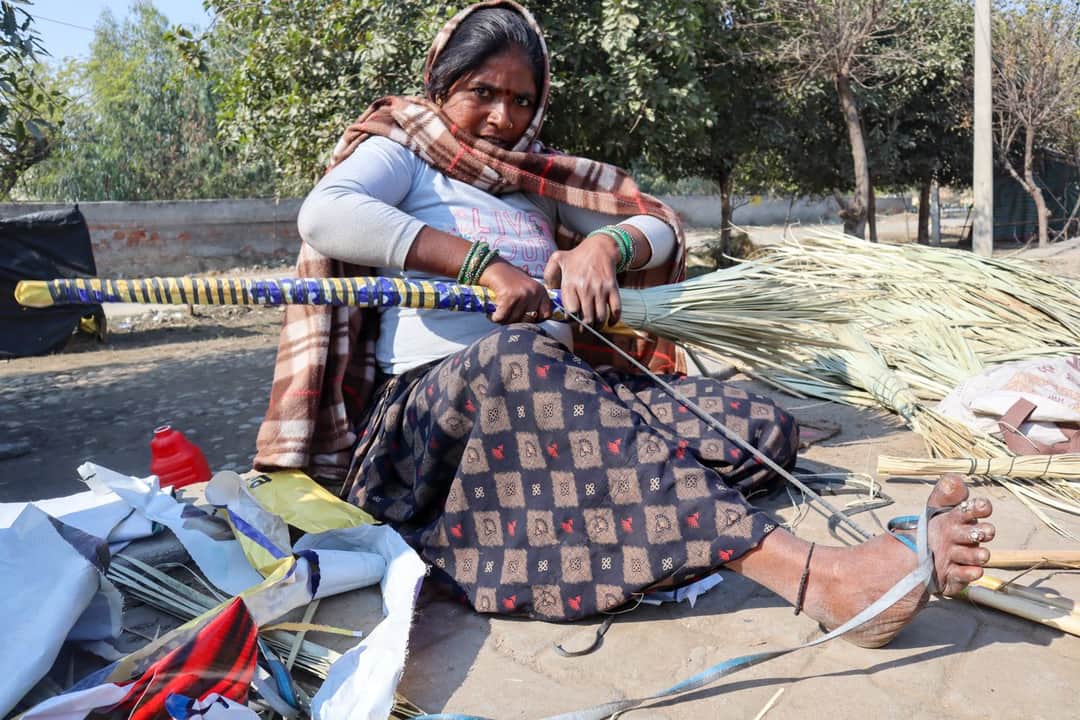
“Tukde tukde [small pieces]” is how she refers to the leaflets – the smaller leaves that form one large feather-like leaf. Broom makers cut each of these out and gather them into bundles. They are then fastened onto a bamboo stick and wrapped tightly with panni [polythene]. The last stage is thinning out the leaves and trimming the edges, she tells us, reeling off the stages. Her cousin Deoali chimes in occasionally.
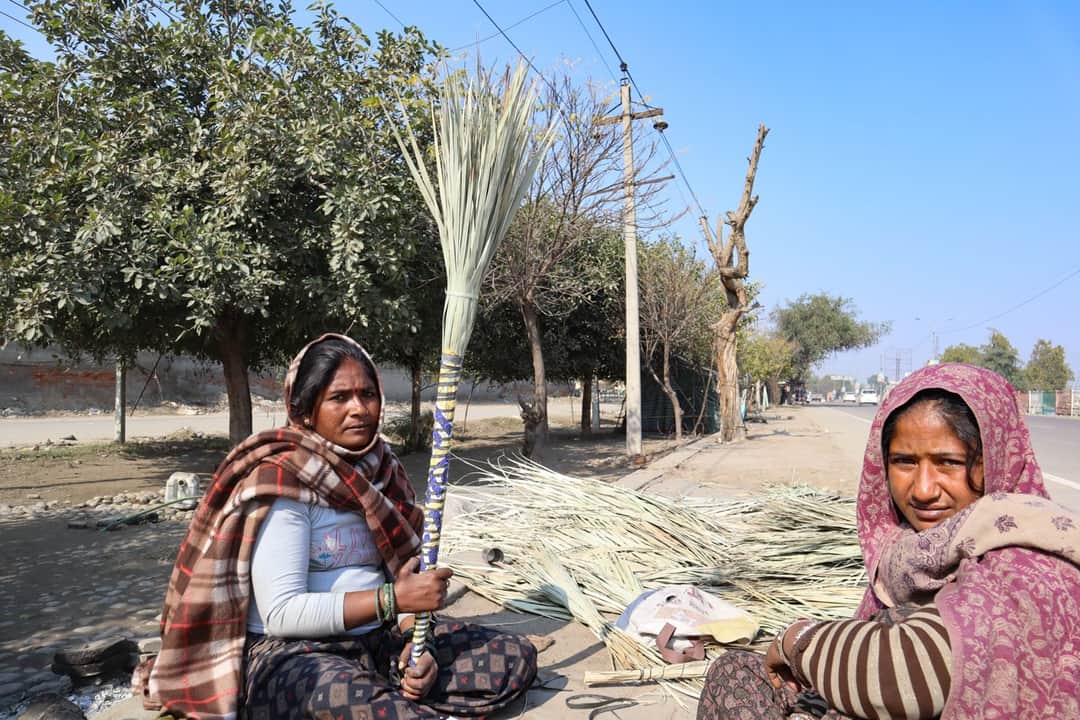
The cousins, in their early twenties, have memorised each step. Seated on a pavement in Malout, Punjab with Bhagwati’s mother Soni Devi, the women face each other in a tight circle. Like a well-rehearsed dance, they take turns, each executing a step before handing the task to the next.
Deoali’s enthusiasm for the family craft is evident in her voice: “We have been very interested [Bohot mann karte the] in making brooms since we were children. And we continue to be.” She learnt the craft from her mother Rukhmani and is looking to pass it down to her three younger siblings.
Her cousin Bhagwati, although as excited as her about the family craft, is more practical: “Kyunki jab mehnat karenge to toh khane ko milega or mehnat nahi karenge toh kya khaenge [We have to work hard to eat. If we don’t work, what will we eat]?” she asks. She has grown up hearing her mother Soni Devi say: “If we will not make brooms, what will we eat?” It’s a sentiment that other broom makers who travel to Punjab from the Mewar region of Rajasthan also express.