
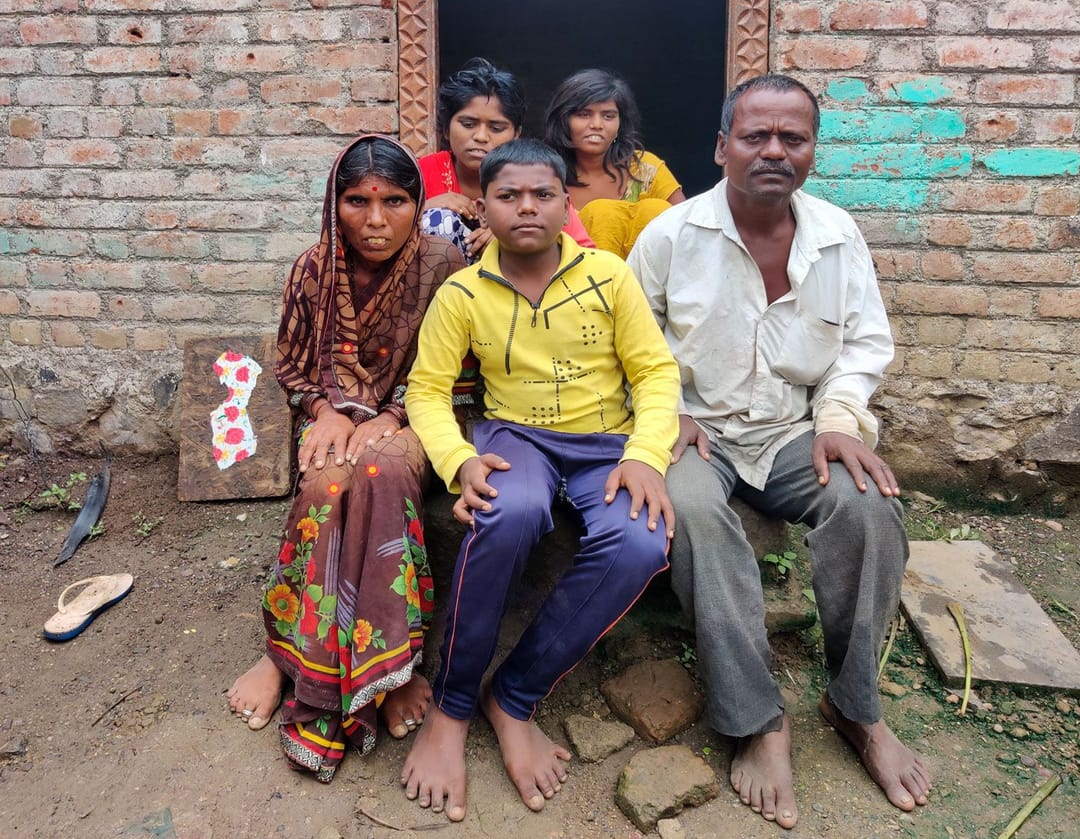
Balaji Hattagale was chopping sugarcane one day. The next day he wasn't. His parents wish they knew more. “The uncertainty is killing us,” says his father, Babasaheb Hattagale. On an overcast afternoon in July, a dark cloud hangs over his one-room brick home, almost reflecting the despair in Babasaheb's voice when he says: “We just want to know if he is dead or alive.”
It was in November 2020 that Bababsaheb and Sangita, his wife, last saw their 22-year-old son. Balaji had left their home in Kadiwadgaon village, in Maharashtra's Beed district, to work in the sugarcane fields of Belagavi district (or Belgaum) in Karnataka.
He was among lakhs of seasonal workers from Marathwada region migrating for six months of a year to cut cane in western Maharashtra and Karnataka. Every year, the workers leave their villages in November, after the festival of Diwali, and come back in March or April. But Balaji did not return this year.
It was Balaji’s first time leaving home to do the work that his parents had been doing for nearly two decades. “My wife and I have been migrating for 20 years or so to cut cane. [Together] we earn Rs. 60,000-70,000 in a season,” says Babasaheb. “It is our only assured source of income. Daily wage work in Beed is uncertain even in normal times, and it has become worse after Covid.”
Finding wage work during the pandemic – on farms and construction sites – has been difficult for the family. “We hardly made any money from March to November 2020,” says Babasaheb. Before the outbreak of Covid-19, in the months that they were back in their village in Beed's Wadwani taluka, Babasaheb usually worked 2-3 days a week, earning about Rs. 300 per day .


