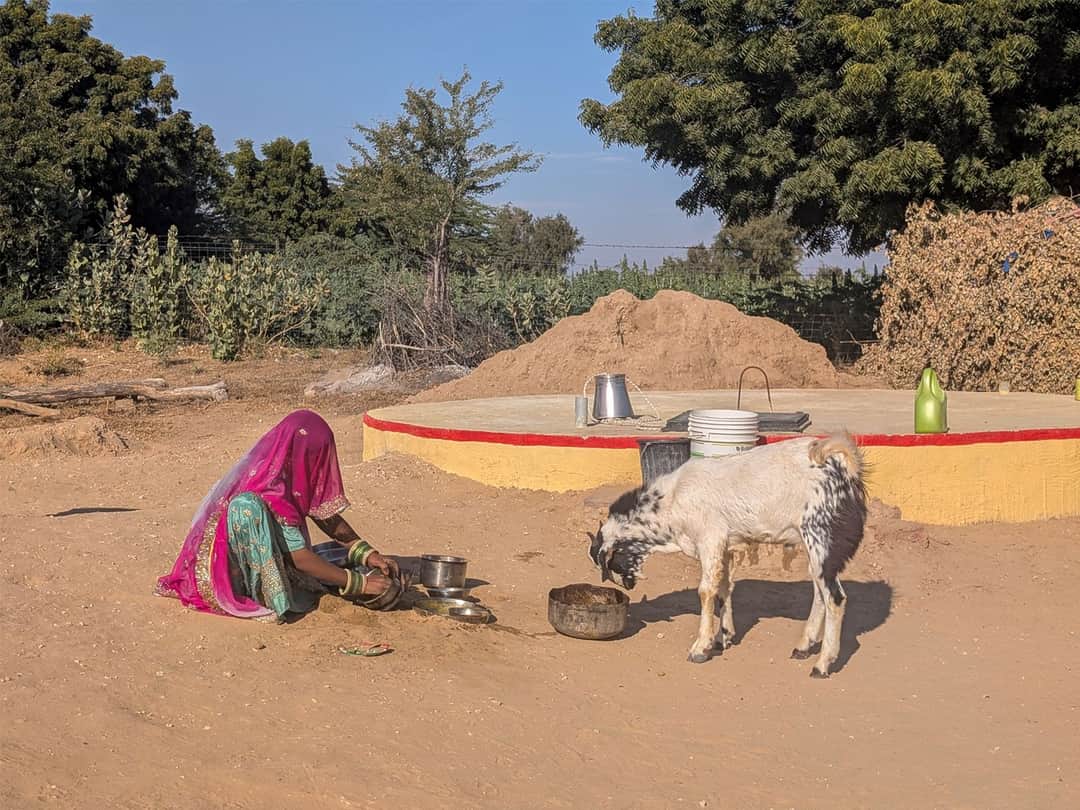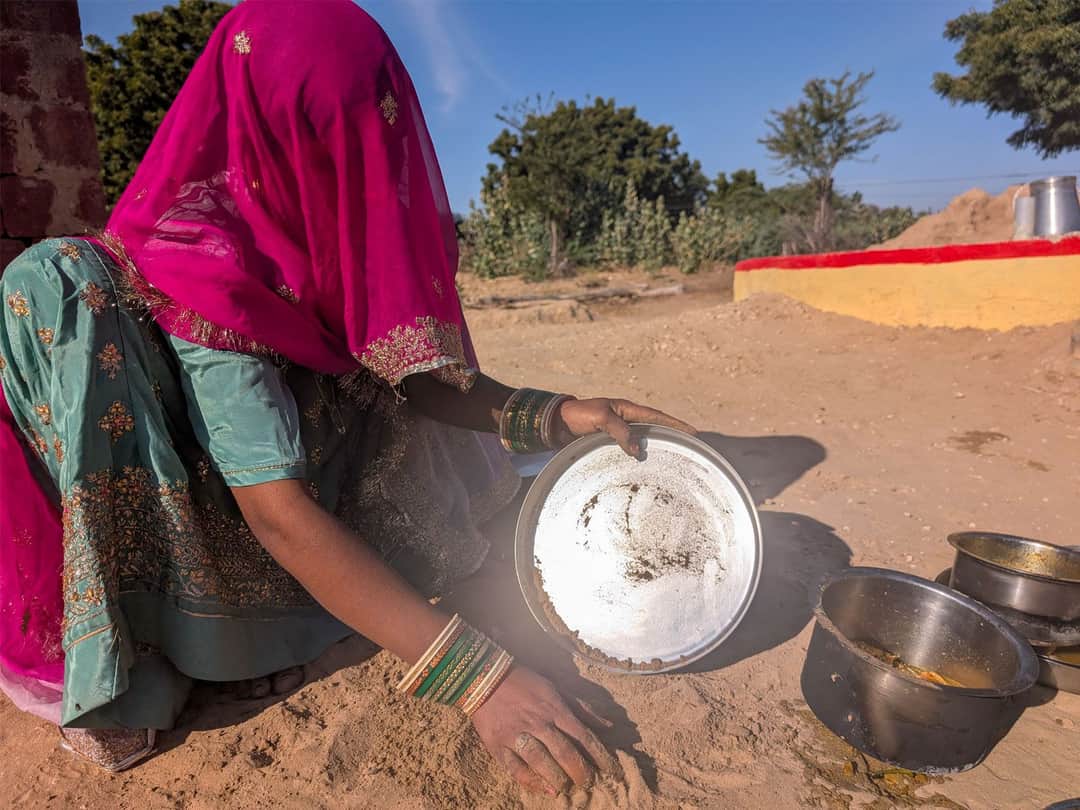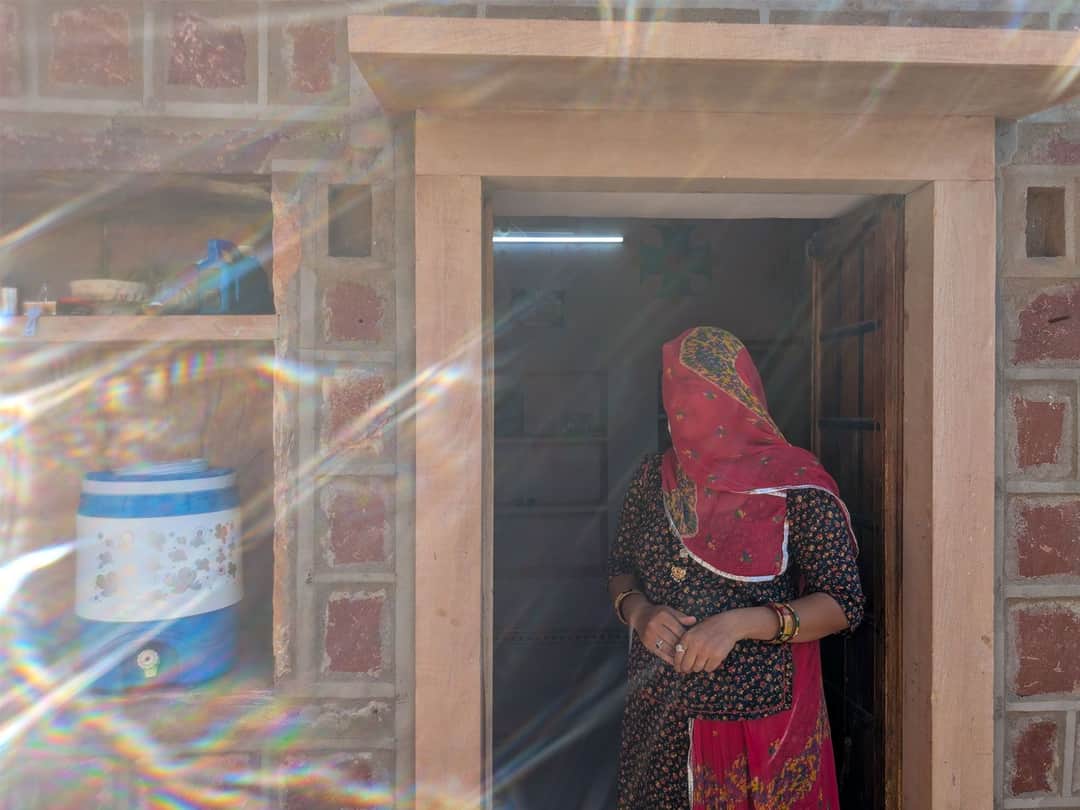

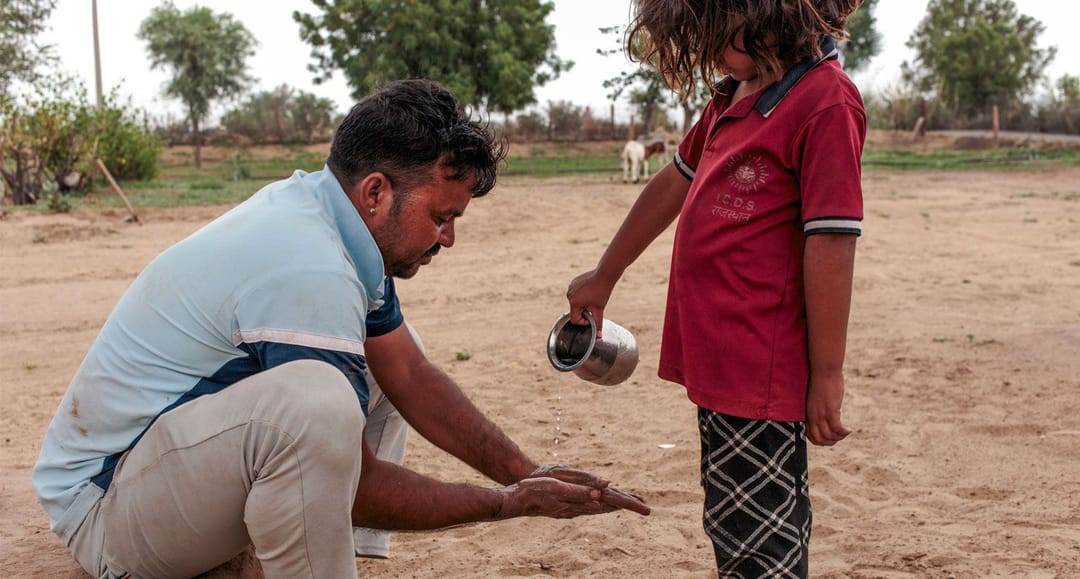
Vimala splashes a handful of Thar desert into one of the grimy bowls we have just eaten from. Rotating the vessel in her hands she scrubs off the leftover grains and grease. “With sand the dishes get cleaned well. With water, they don’t,” she speaks through her pink veil.
Why? I follow Vimala’s broken Hindi but haven’t understood her logic.
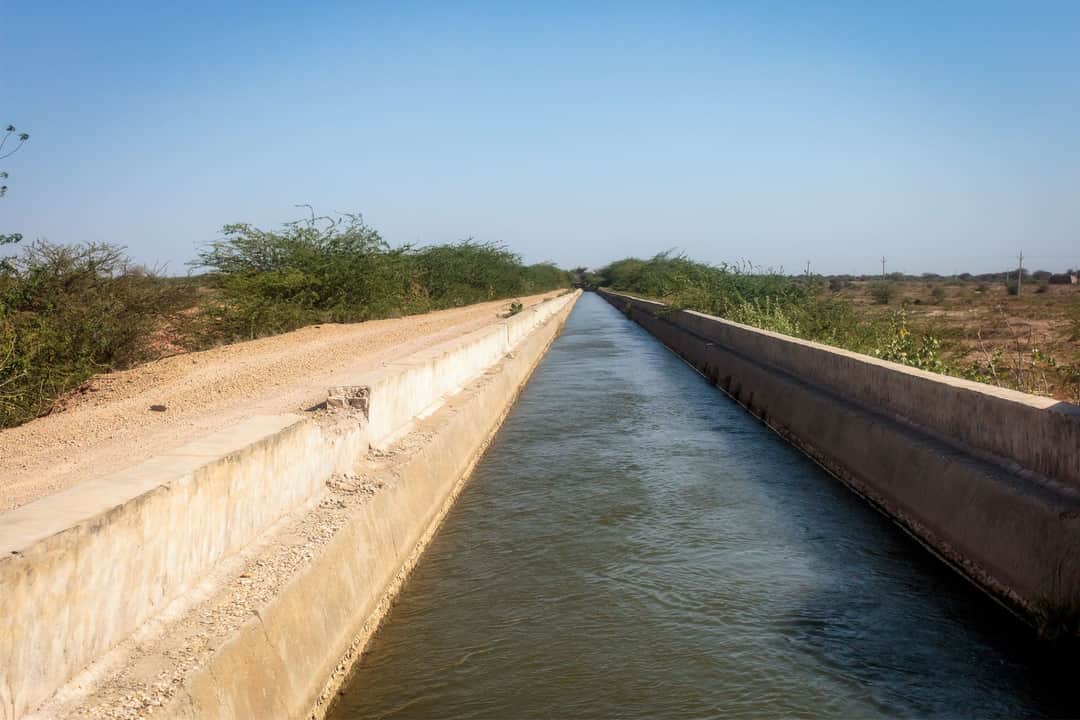
“The quantity of NaCl [Sodium chloride aka salt] is high in the water here,” my friend Pushpa Chouhan, 27, chimes in. She is Vimala’s sister-in-law and my translator for the day. "If we use water the stains remain on the dishes. The water here is bhari and khara [heavy and salty].”
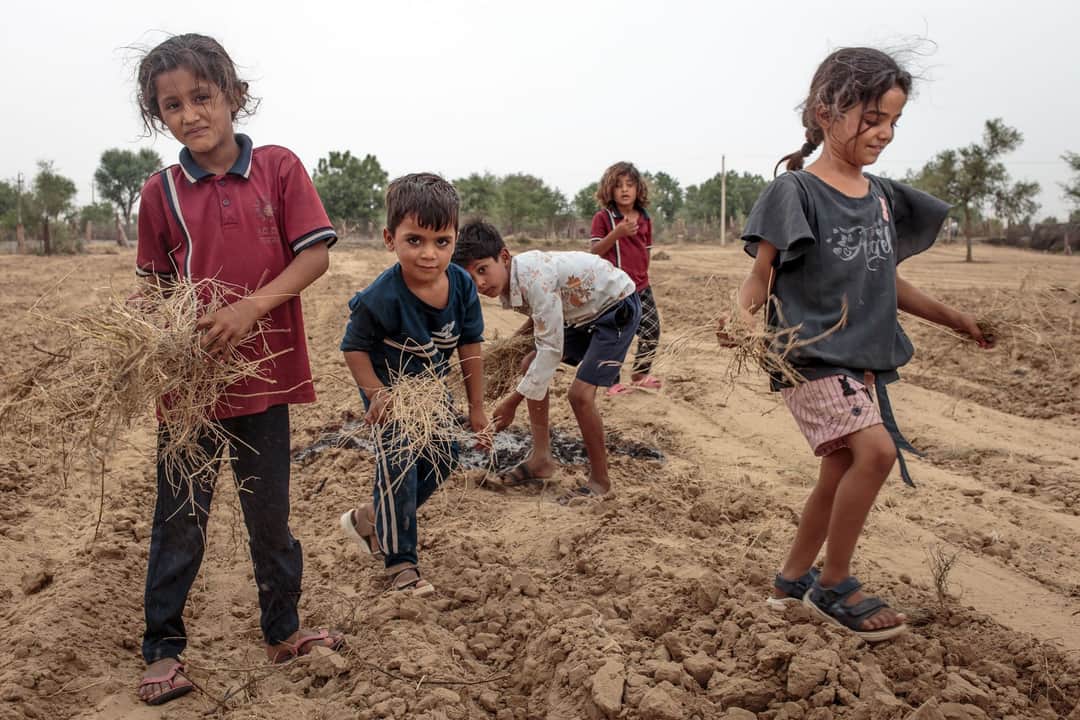
Welcome to the world’s ninth largest subtropical desert. The salty taste of the groundwater has a geological explanation. The intensity of the evaporation here exceeds that of the rainfall. Thousands of years of this results in the salt and minerals getting deposited in the soil and water here. The desert spreads across Gujarat, Rajasthan, and the other side of the border to the regions of Punjab and Sind in Pakistan.
In the middle of this desert, in the newly formed (2023) Phalodi district of Rajasthan, lies the village of Daya Kor. At the edge of which is Vimala’s house. And right outside her residence sits Vimala Devi, 32, on her haunches, cleaning the vessels.