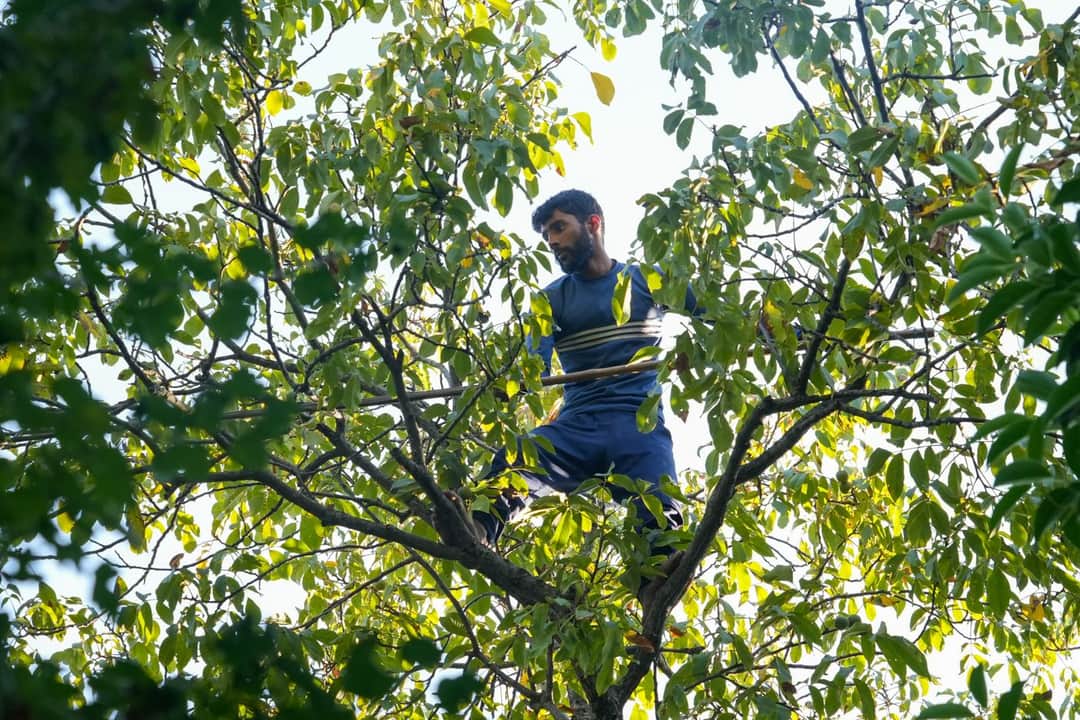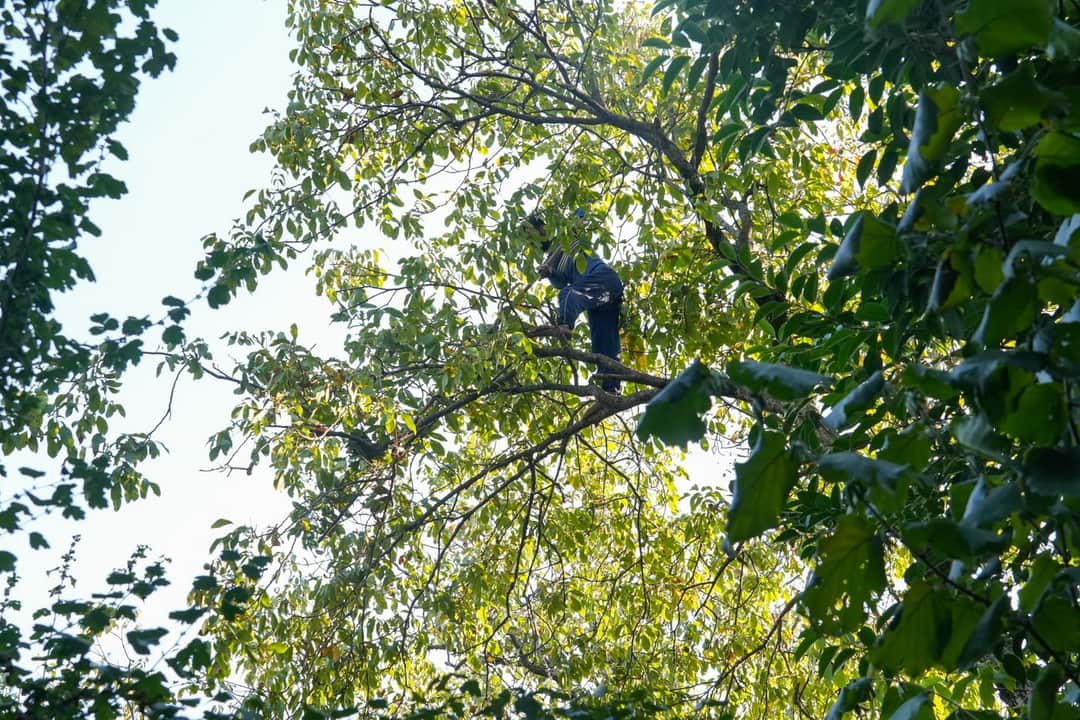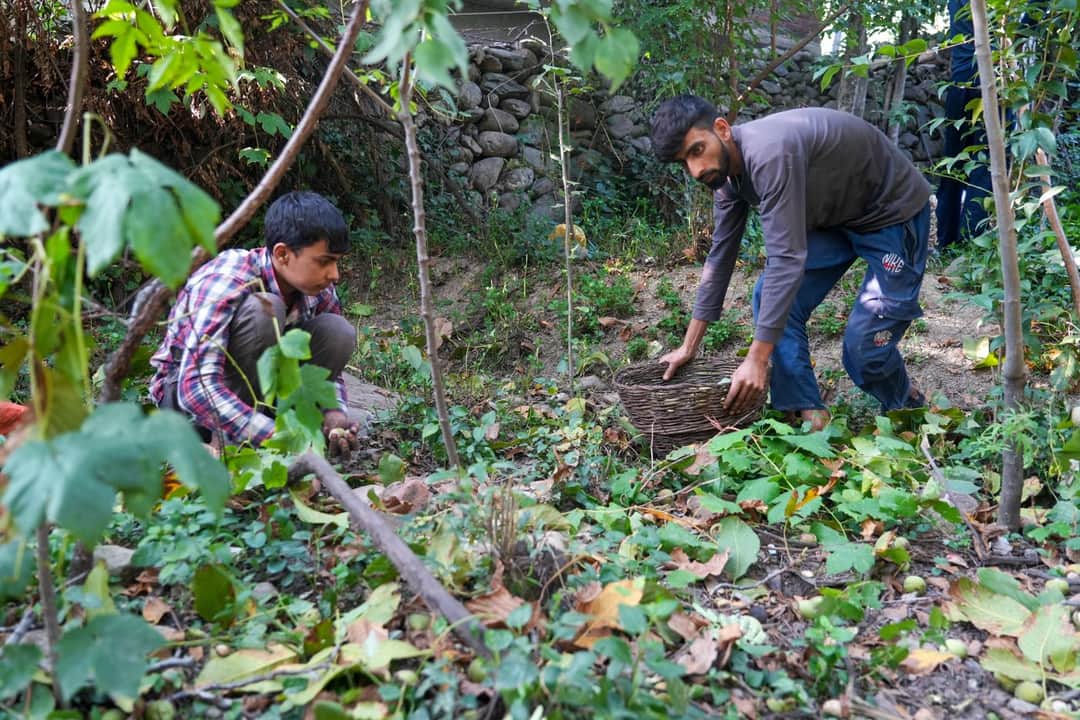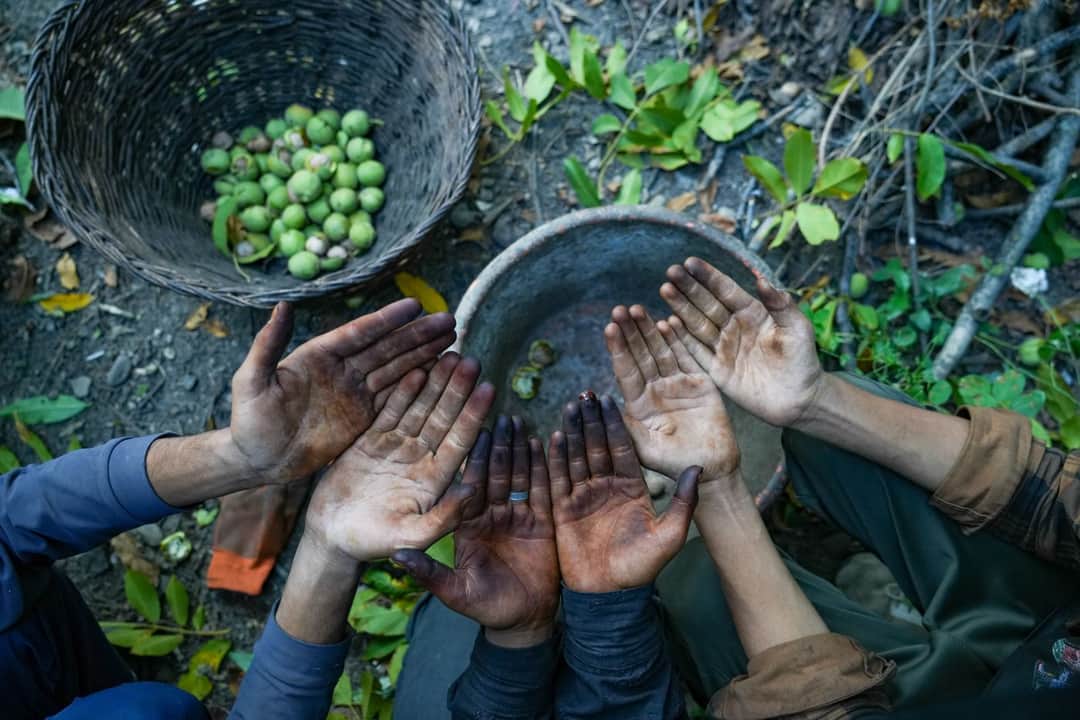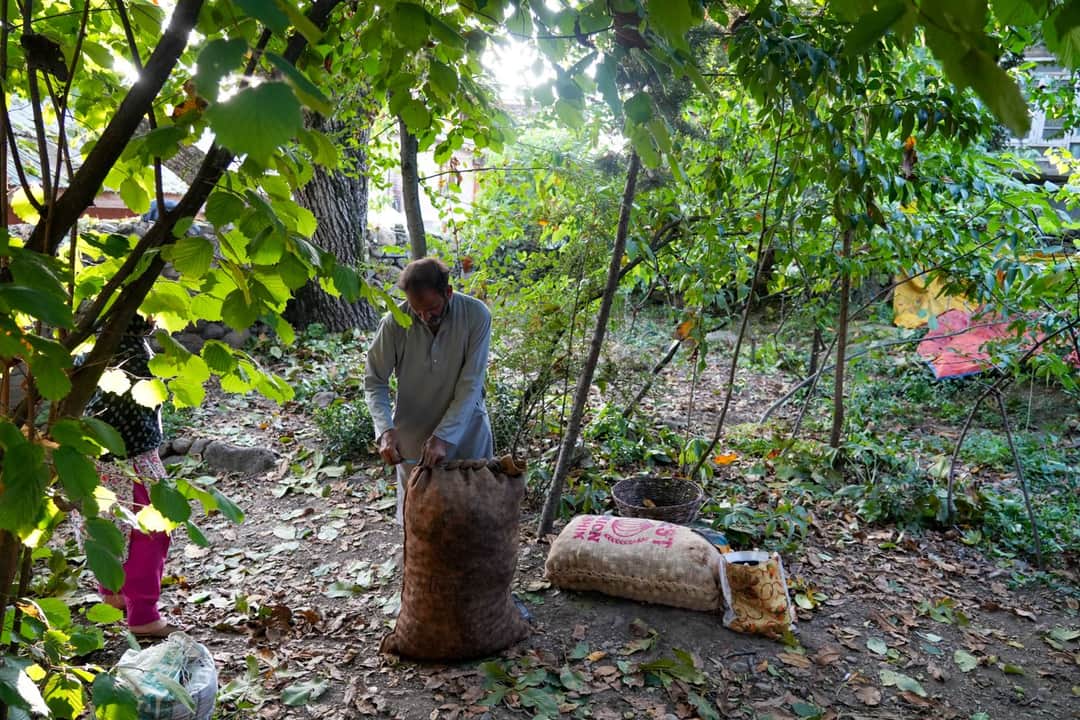

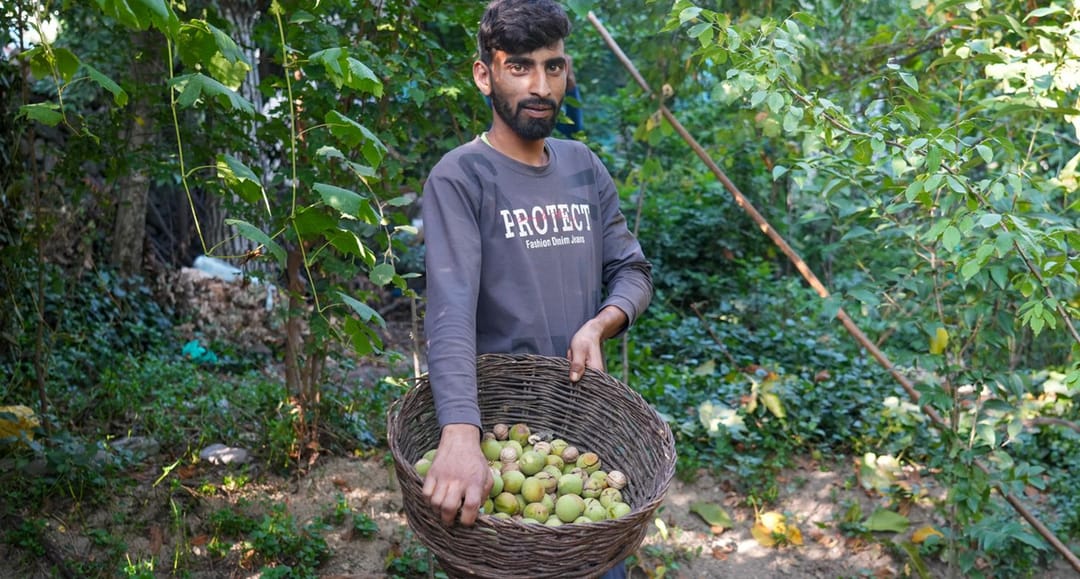
A loud cracking noise fills the otherwise silent lane in the Harwan neighbourhood of Srinagar. Mohammad Afzal and Sajid Khan are threshing a walnut tree (Juglans regia), and the noise is the sound of the hard nuts striking and ringing on metal roofs of nearby houses.
At a hundred feet tall or the size of a 10-storey-building, threshing walnuts is a dangerous task. And so the men who harvest walnuts are highly skilled workers known as chanan woel (walnut threshers). Mohammad Afzal, a a resident of Rajouri, Jammu, has been working as a walnut thresher for the past six years. Every season, the 24-year-old from the Bakarwal community (listed as Scheduled Tribe in the state) travels to Kashmir for this work. “I feel scared,” he says, “because the trees are tall.” In addition to walnut picking, he works in apple packaging and tree-cutting in October and November for Rs. 500-700 a day.
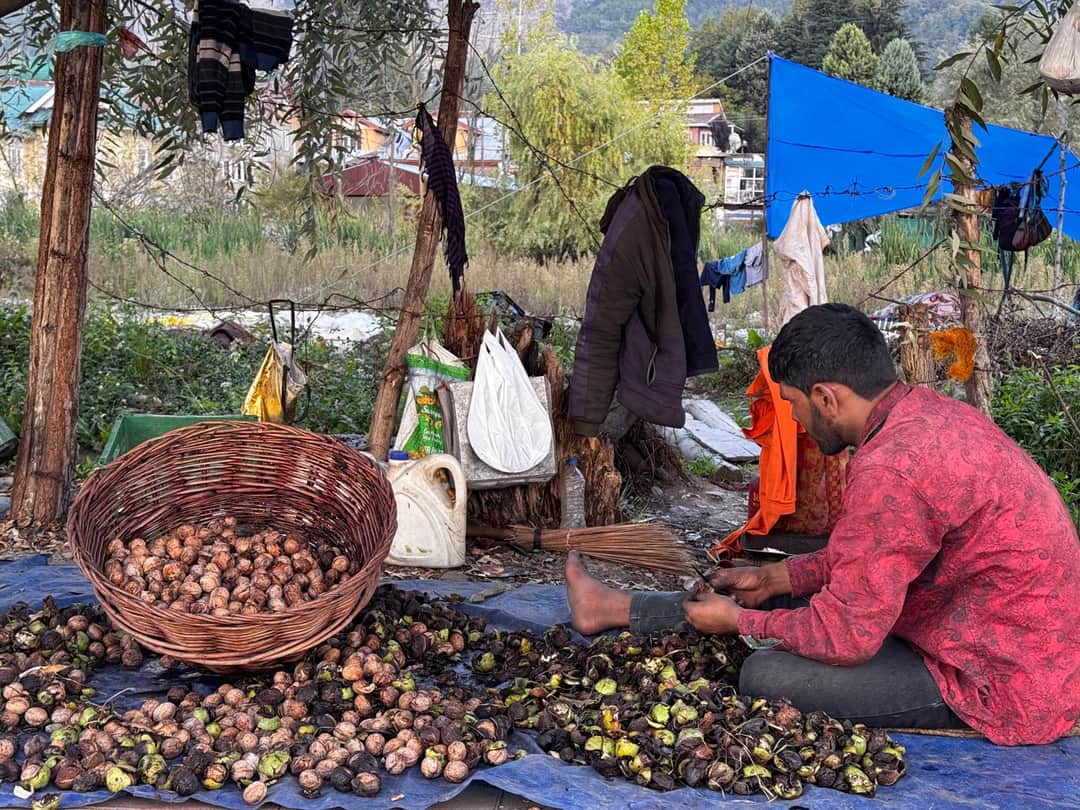
During this time, Afzal and other walnut threshers set up make-shift tents near the orchards where they work.
In the harvest season, August to October, Afzal’s work day begins at seven in the morning and usually ends at six in the evening. He can cover four to five trees in a day, depending on the height, climbing and striking the upper branches using long, sturdy poles crafted from willow or other strong wood.
Afzal finds walnut threshing challenging work. “It is a very risky job,” he says. “You have to be extremely agile to balance on the tree while holding a five-kilogram stick and striking the walnuts with force.”
Some walnut trees, especially in Budgam, grow as tall as 150 feet. “During rainy days, we avoid climbing the trees because they become too slippery,” Afzal adds. “Luckily, I have never faced any mishap.”
But his family worry about his safety. “My mother doesn’t want me to do this work because many men in our village have died falling from walnut trees,” he admits.