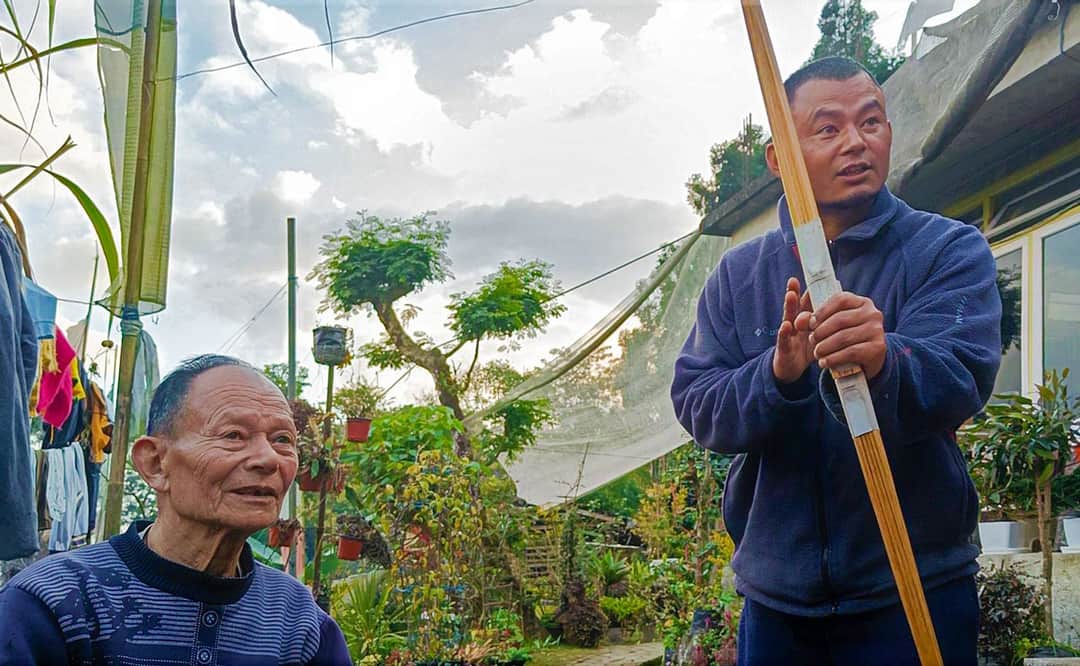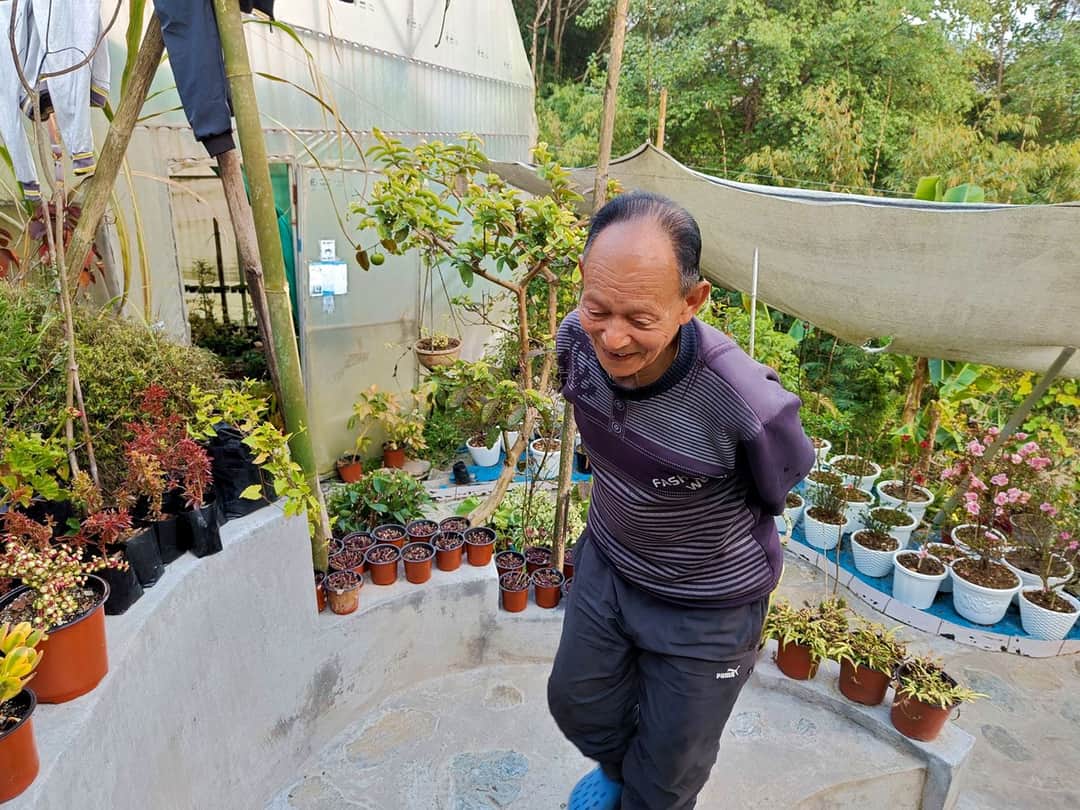

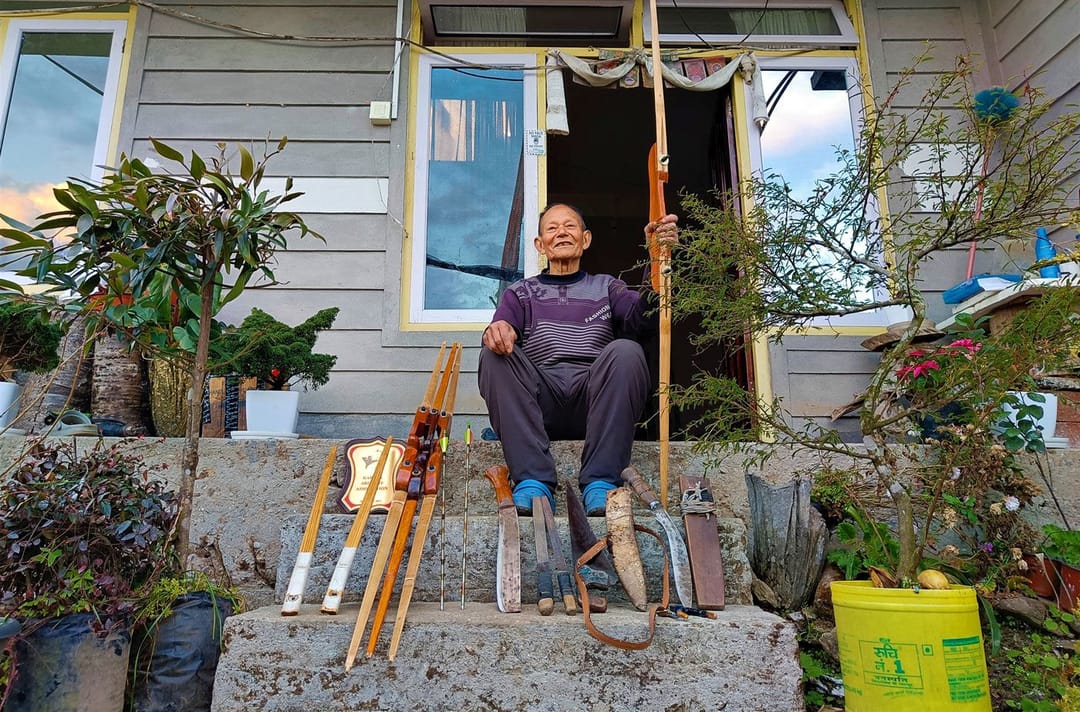
It takes time to realise that Tshering Dorjee Bhutia never earned his living from making bows. That’s because his life is so wrapped up in that art and craft, and it’s all the 83-year-old wants to talk about at his home in Karthok village of Pakyong district. For 60 years, his income came from carpentry – mainly repairing furniture. But his inspiration, as he would tell you, came from archery – deeply embedded in the culture of his native Sikkim.
His many decades as a skilled wood worker sit lightly on him. He would rather be known as the bow maker of Pakyong.
“I was 10 or 12 when I started making things with wood. Gradually, they began taking the shape of a bow and people started buying them. That’s how this bowman was born,” Tshering tells PARI.
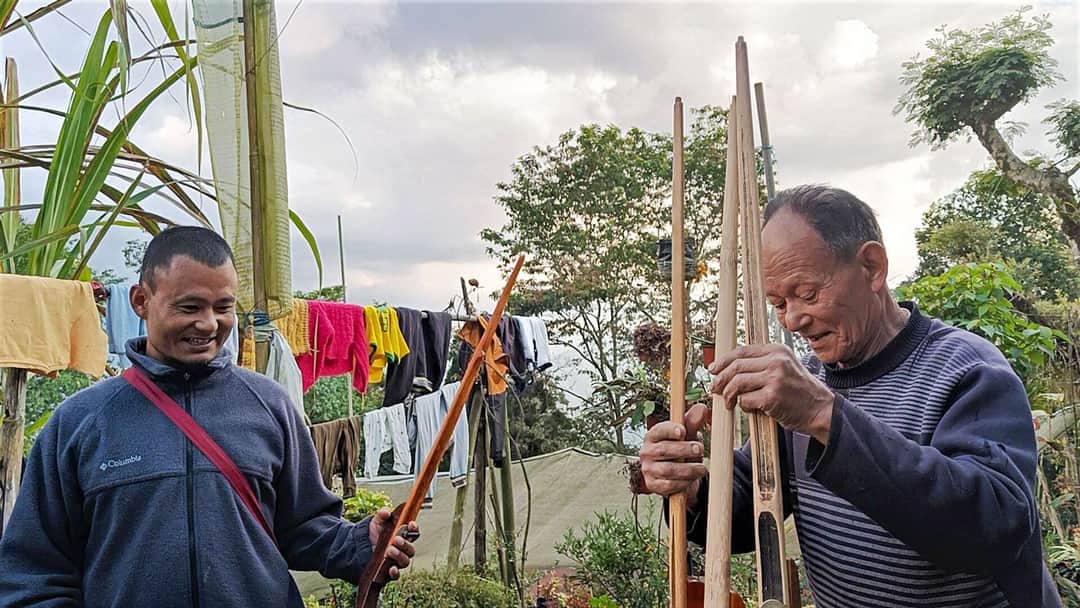
“Previously, the bow was made differently,” he says, showing us some of his products. “This earlier type was called tabjoo [in Nepali]. It consisted of two simple pieces of stick joined together, tied, and covered with the chamda [leather]. The version we make nowadays is called the ‘boat design’. Making one bow takes three days, at least. But that’s for an active, young hand. An old hand would take a few more days,” Tshering says with a mischievous smile.