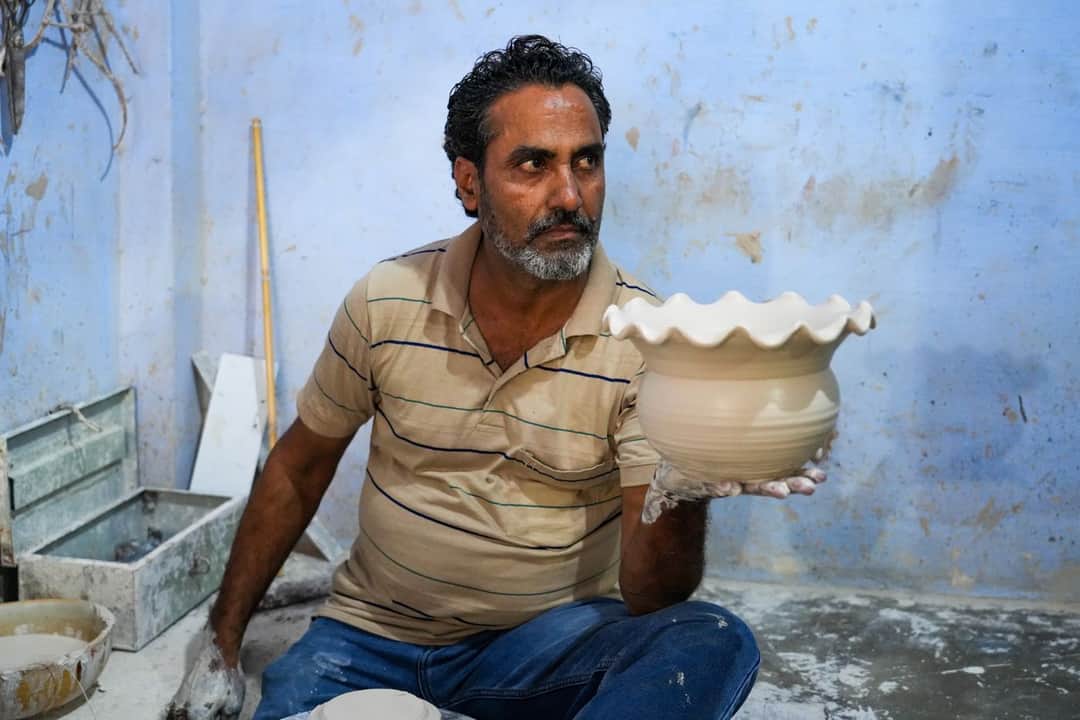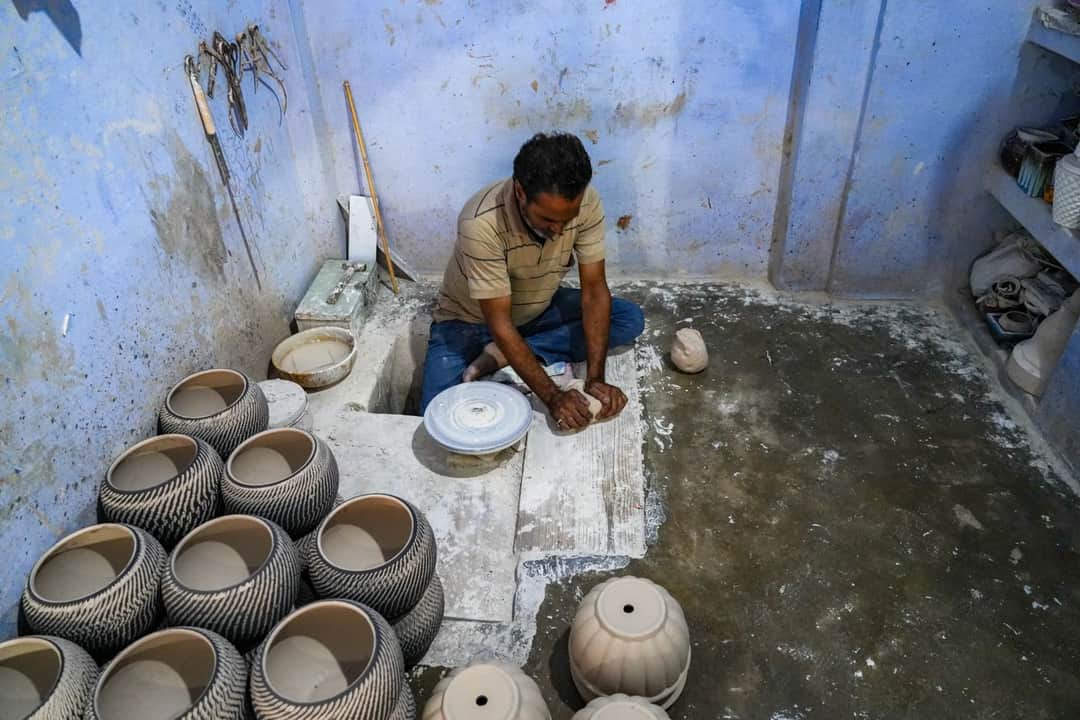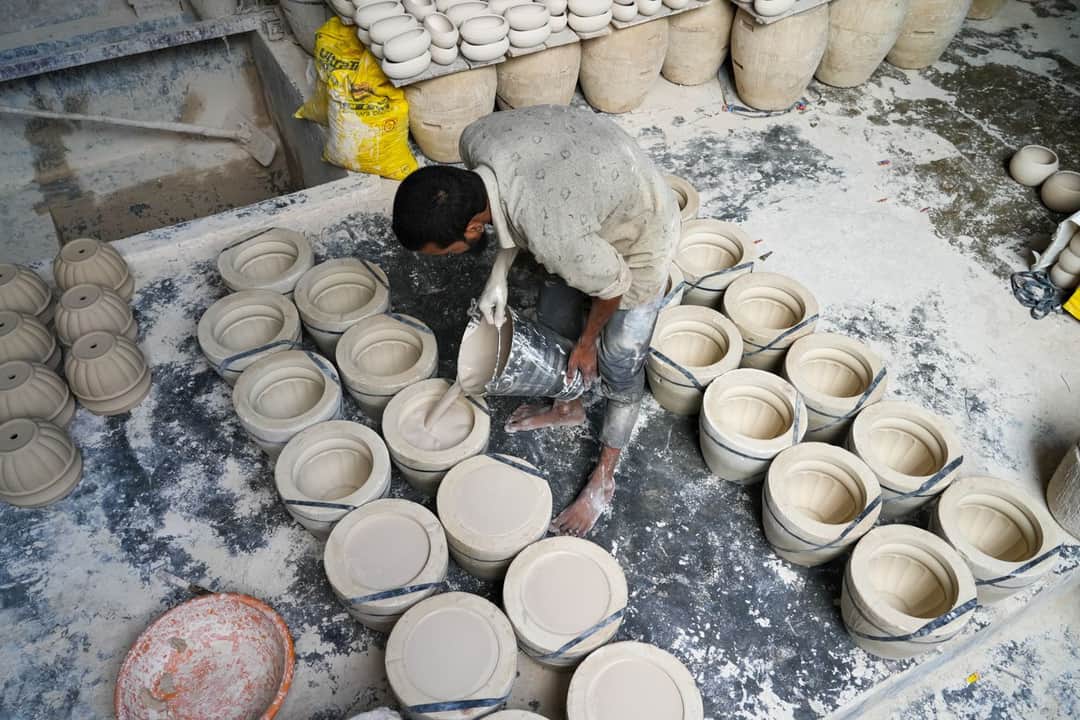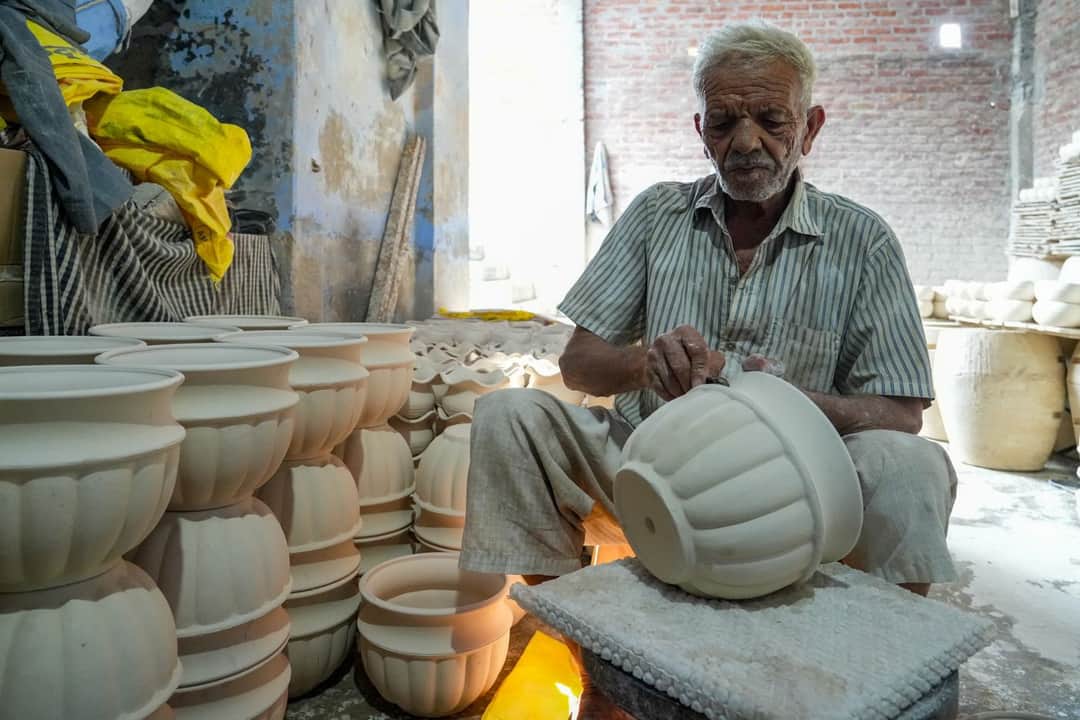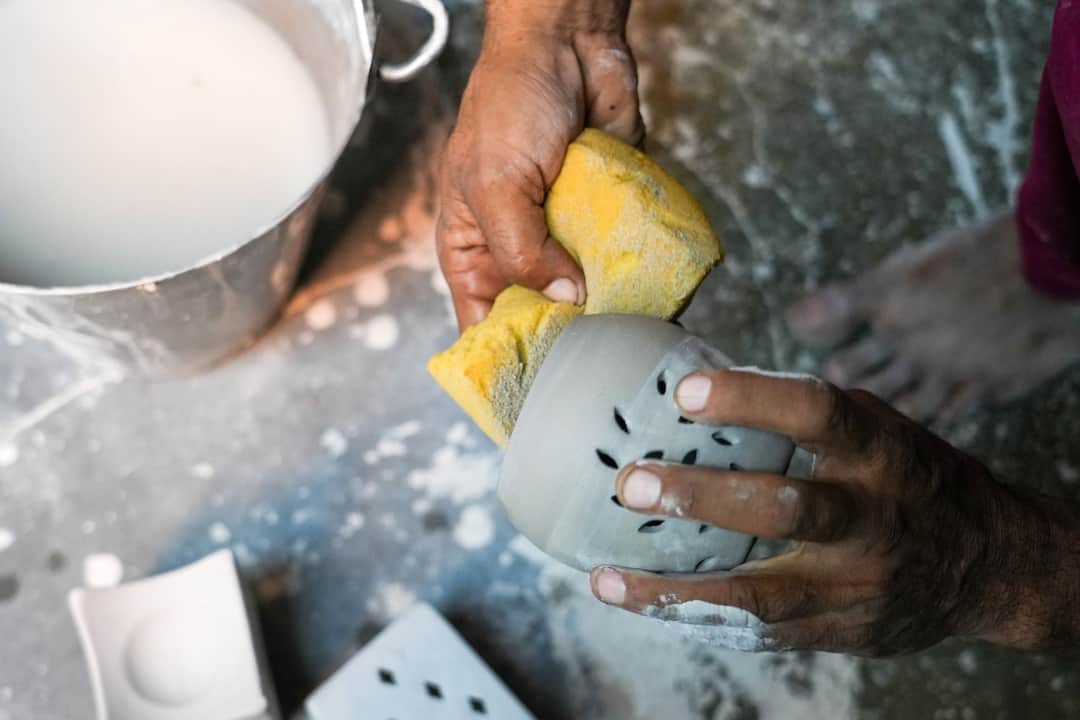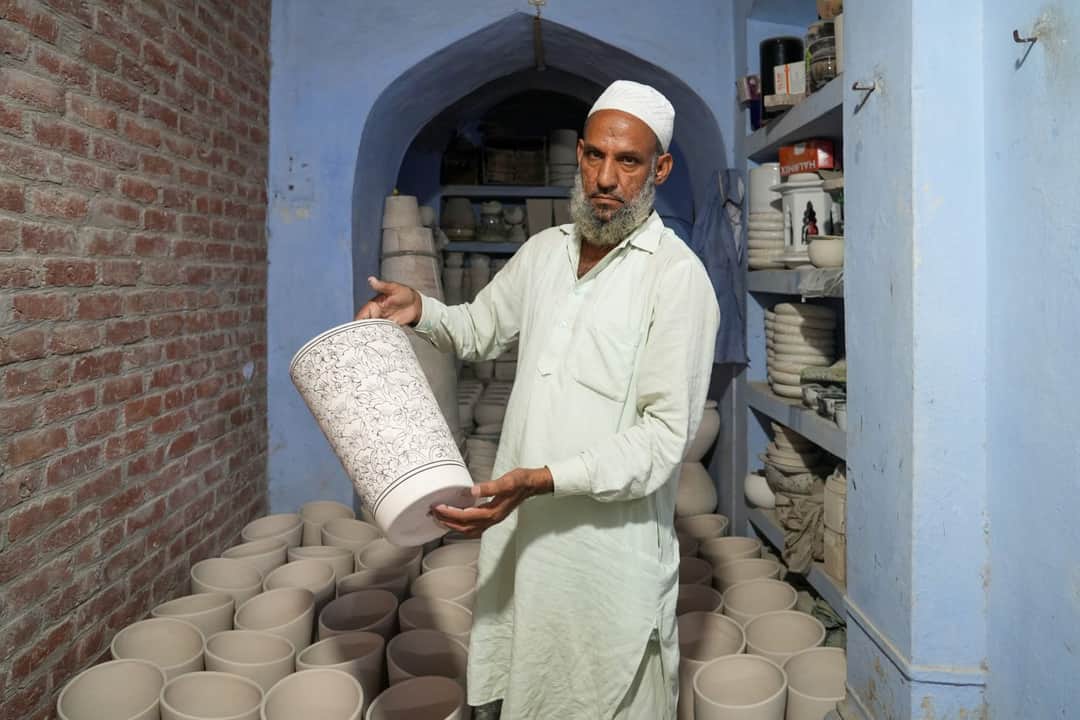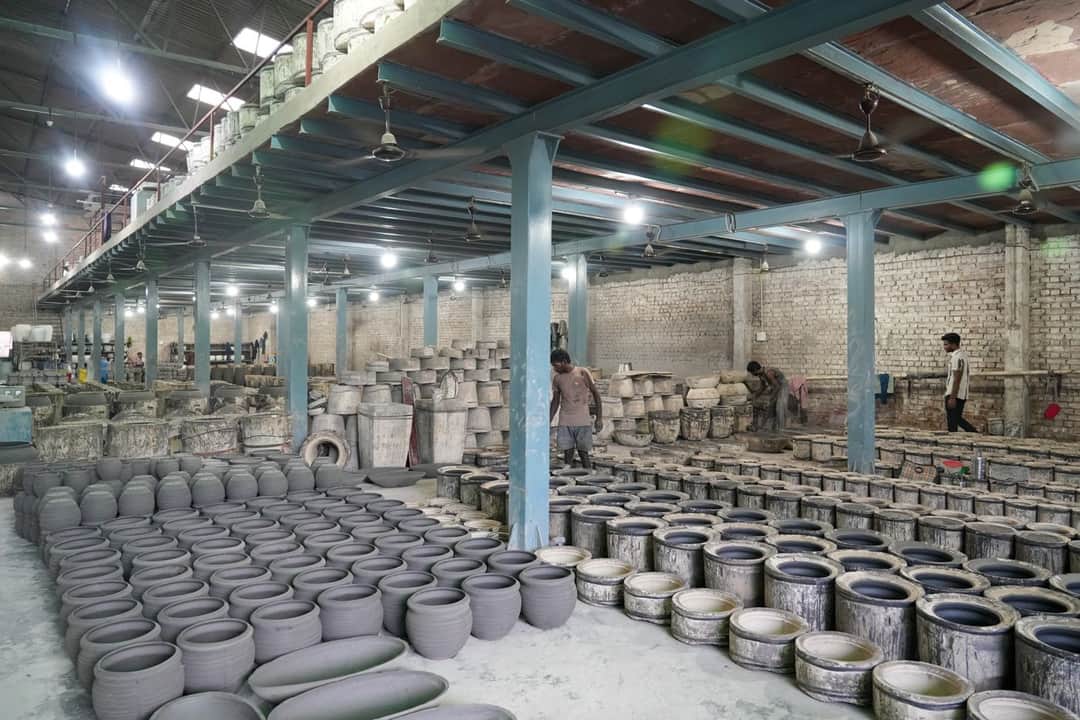

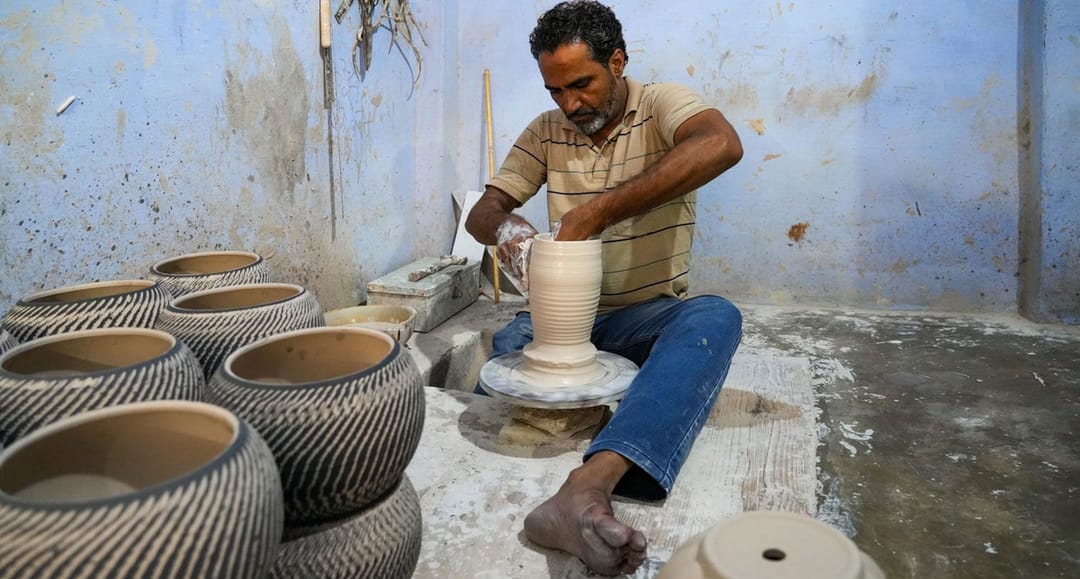
The air smells of clay and wood smoke. The cement floor is stained with patches of white clay stored in a large tub. Moulds and half-finished pottery items lie scattered around; there is barely any space to walk. “Watch your step,” Hameed Ahmed has to constantly remind everyone.
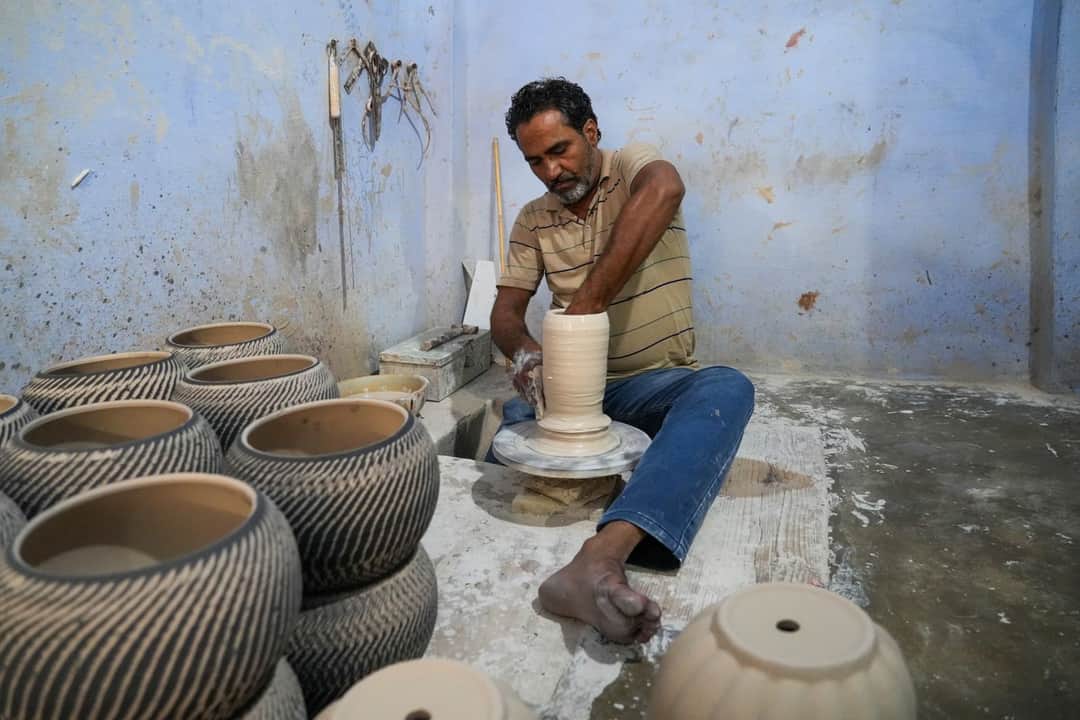
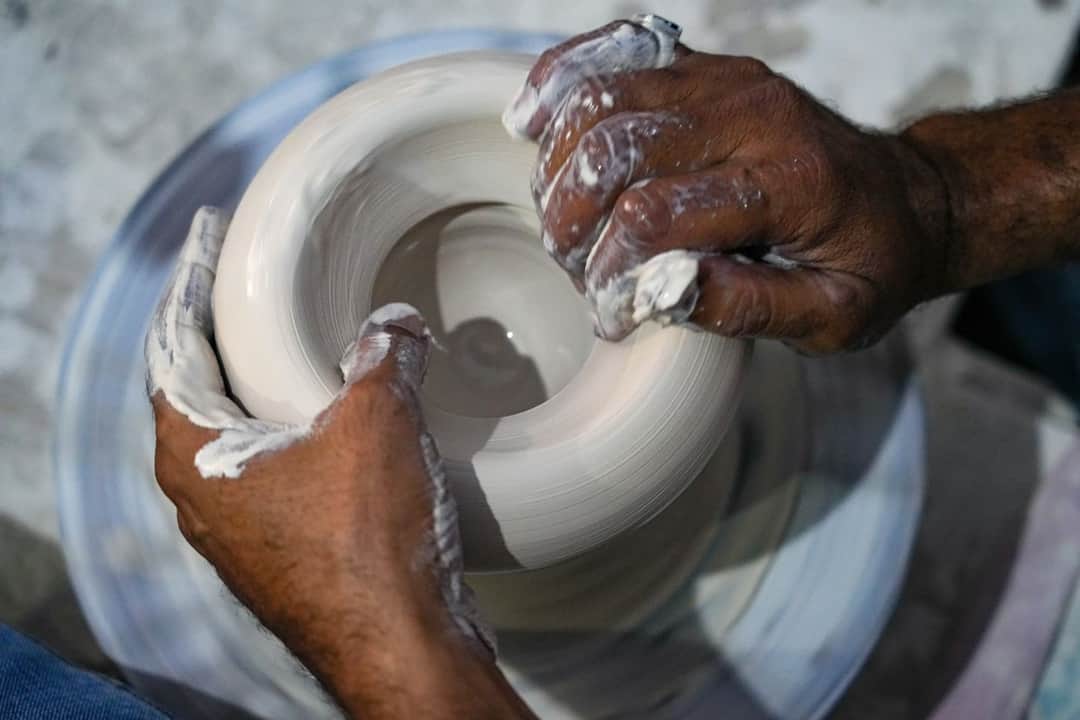
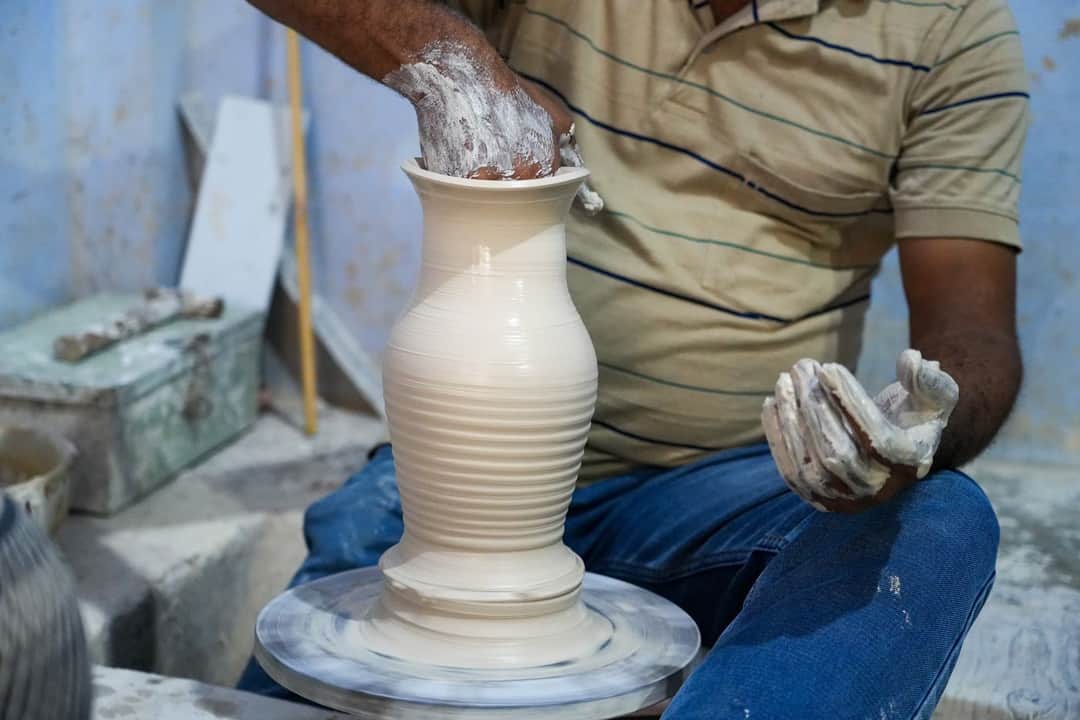
A young boy of 12 is at a spinning wheel, learning his paces. It’s Hameed’s son, Mohammad Salman, and the young fellow is covered in white clay dust as he pushes an underground spinning wheel with his right leg while simultaneously stretching out his left, focus writ large on his face.
“Take [the pot] off slowly,” Hameed instructs him. History is repeating itself – the 49-year-old master potter was around nine years old when he started learning the distinctive kick-wheel technique from his father. “I broke my first few pieces,” he recalls with a smile. “It comes with practice.”
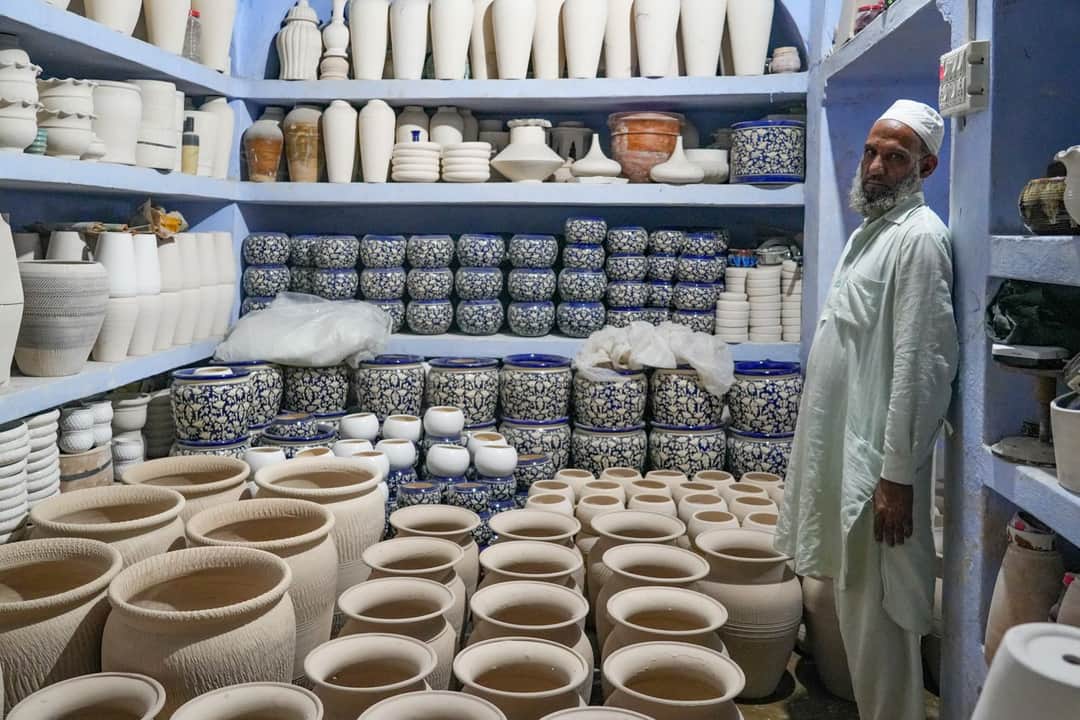
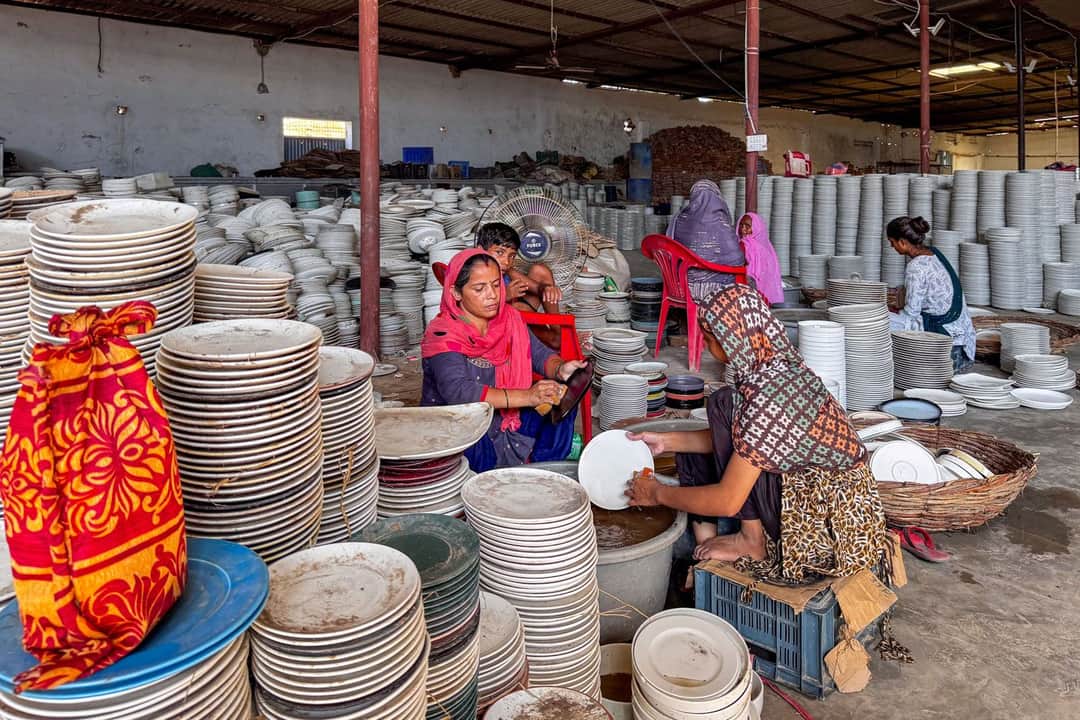
One of 10 brothers, he is a seventh-generation clay craftsman. Today his family are the only ones still practising the form in the ‘ceramic city’ of Khurja, in Uttar Pradesh – a city well known for its distinctive pottery, mostly practised by Muslims.