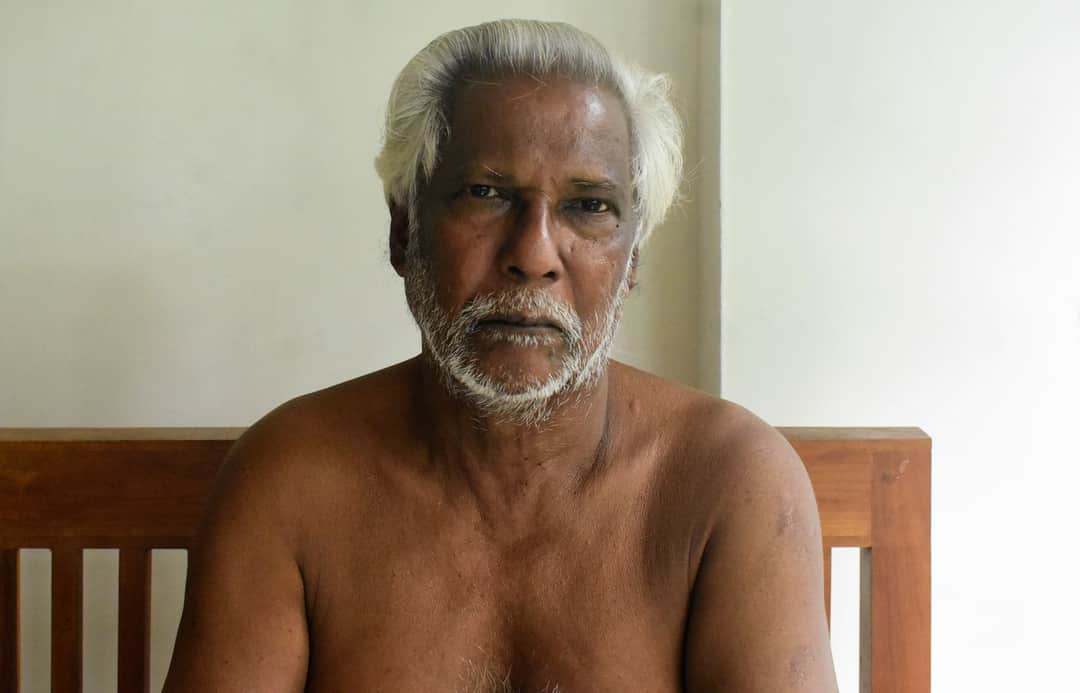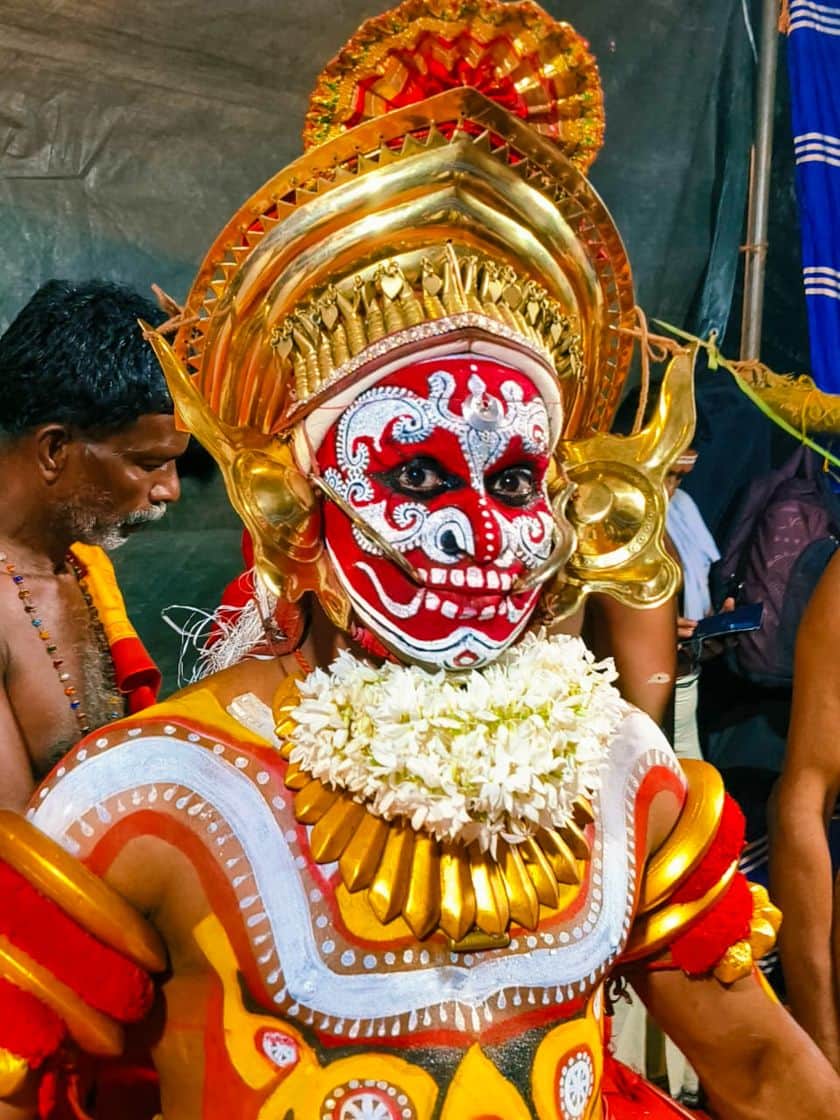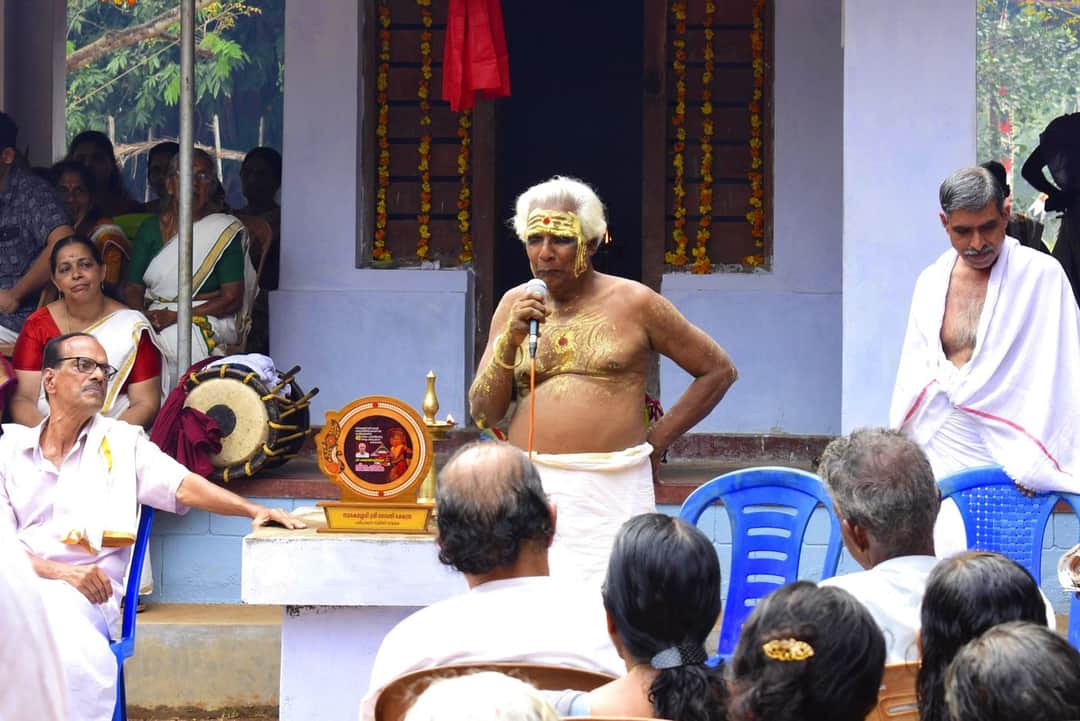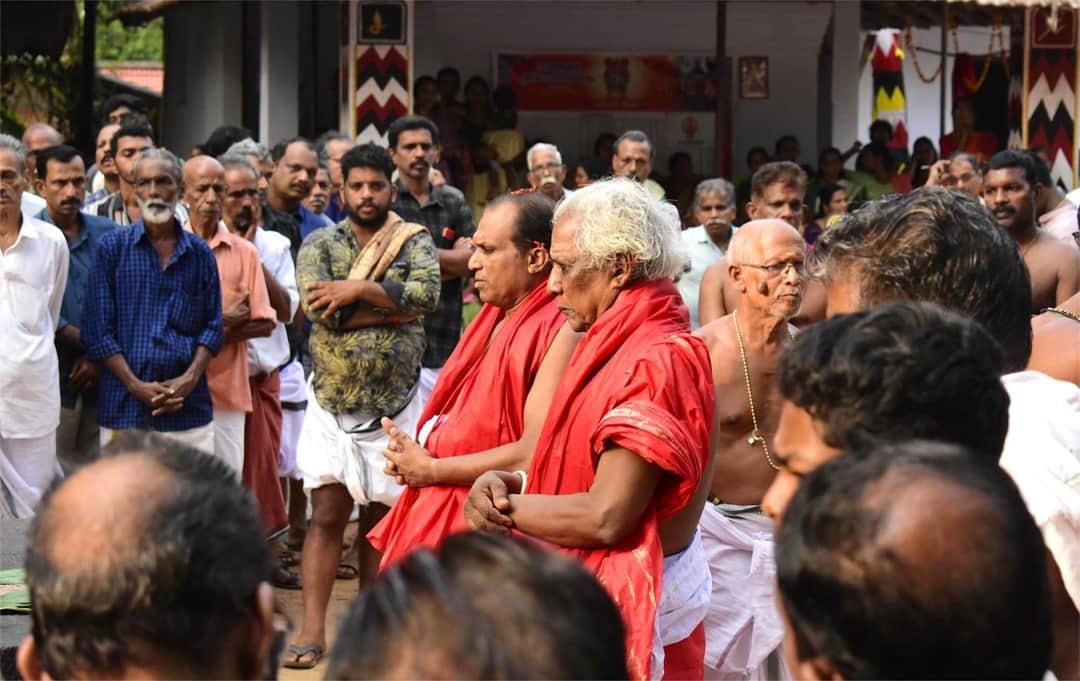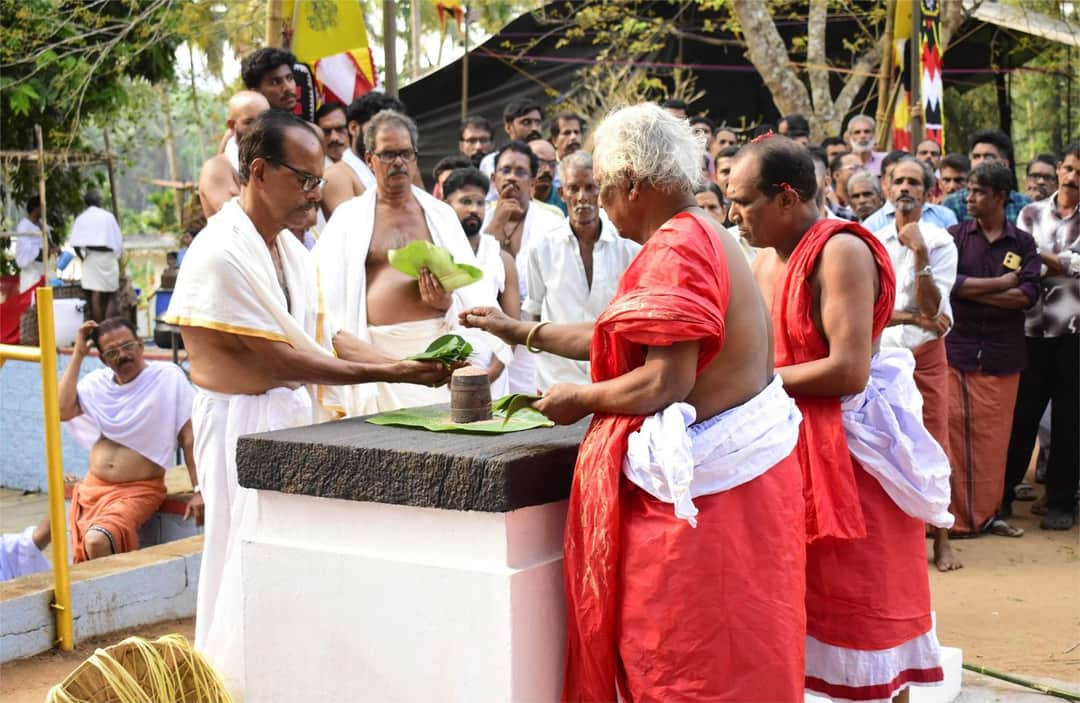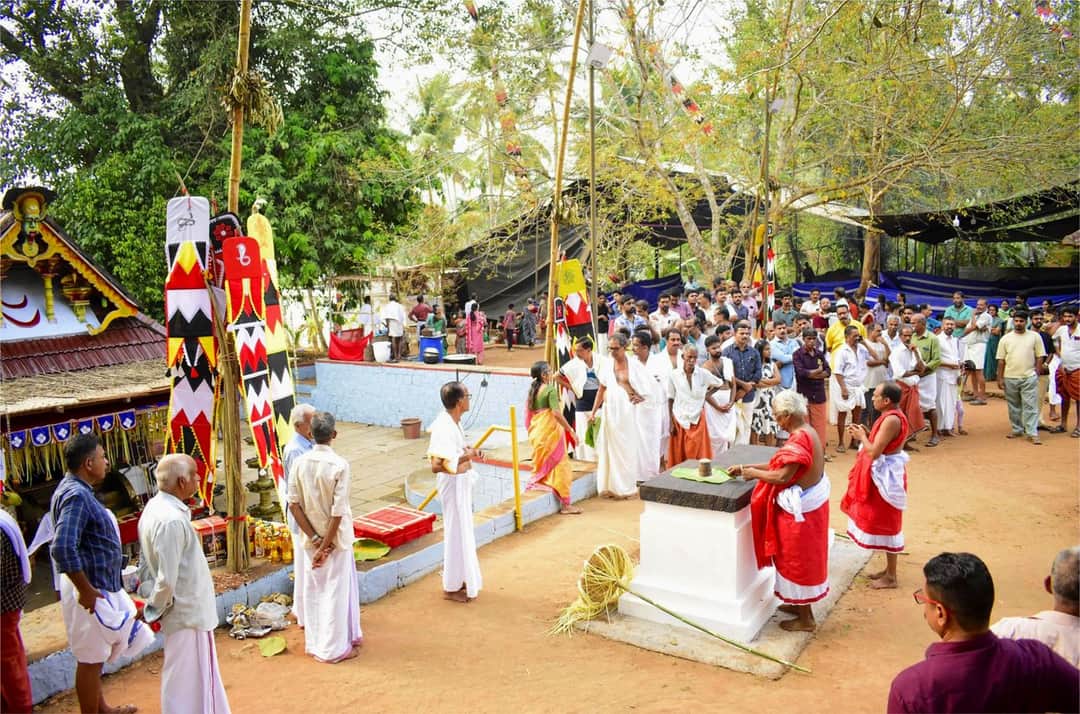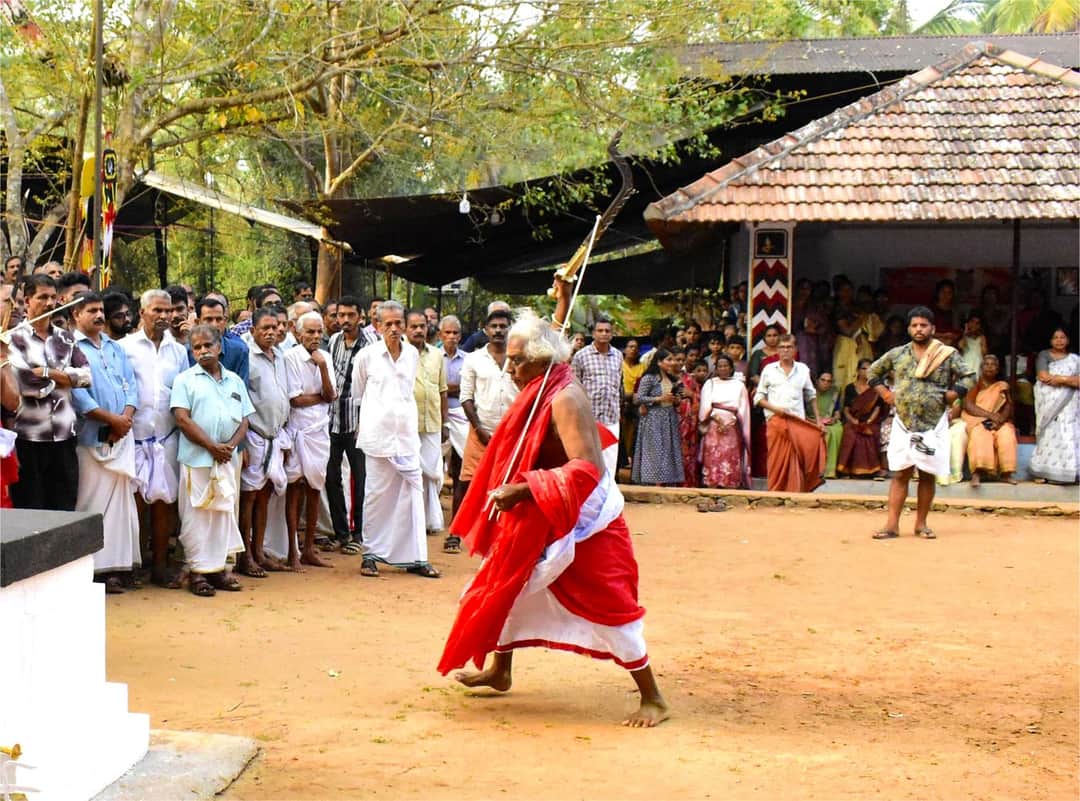

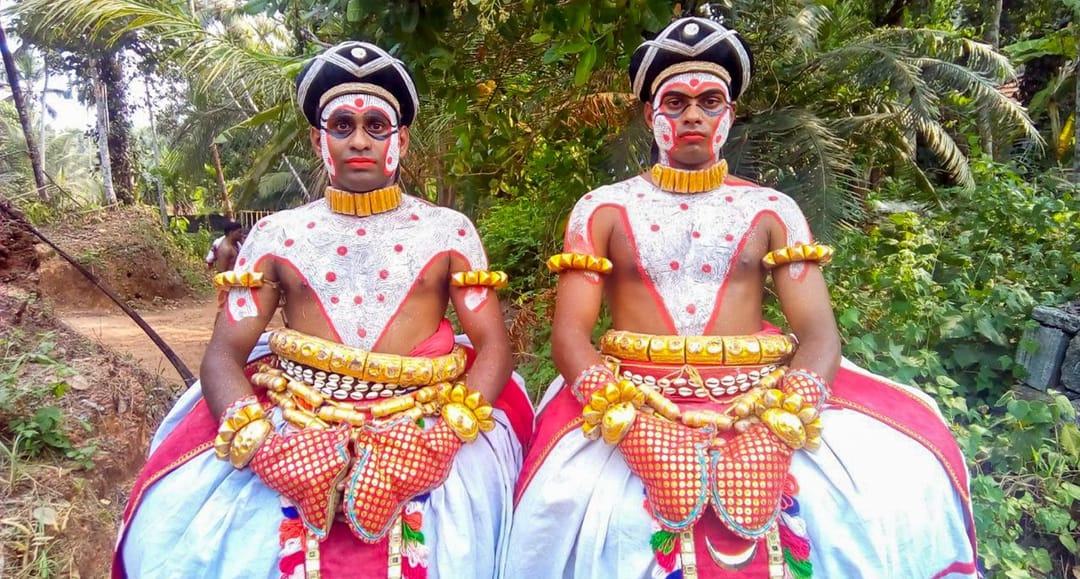
Thirra artist, M.K. Kelukutty, once plucked a leaf from a tree during a performance in a sacred grove. “He was told to pay four annas for having ‘polluted’ the place. It didn’t matter that he was performing as a god when this happened,” recalls his grandson, M. K. Kunjiraman.
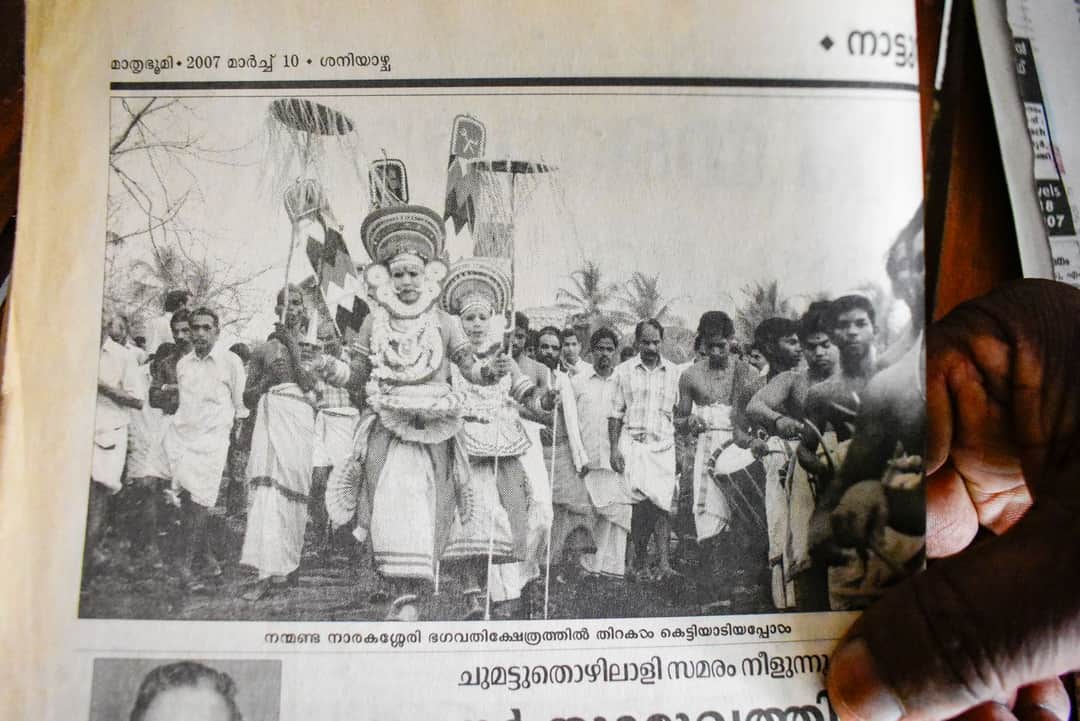
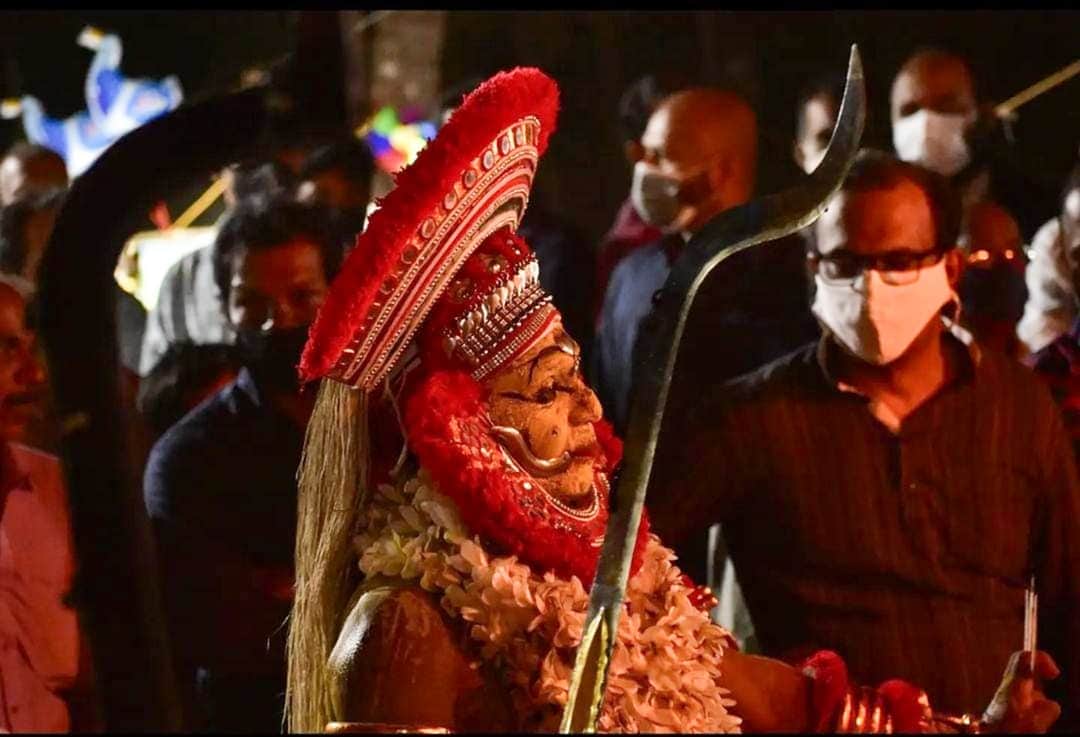
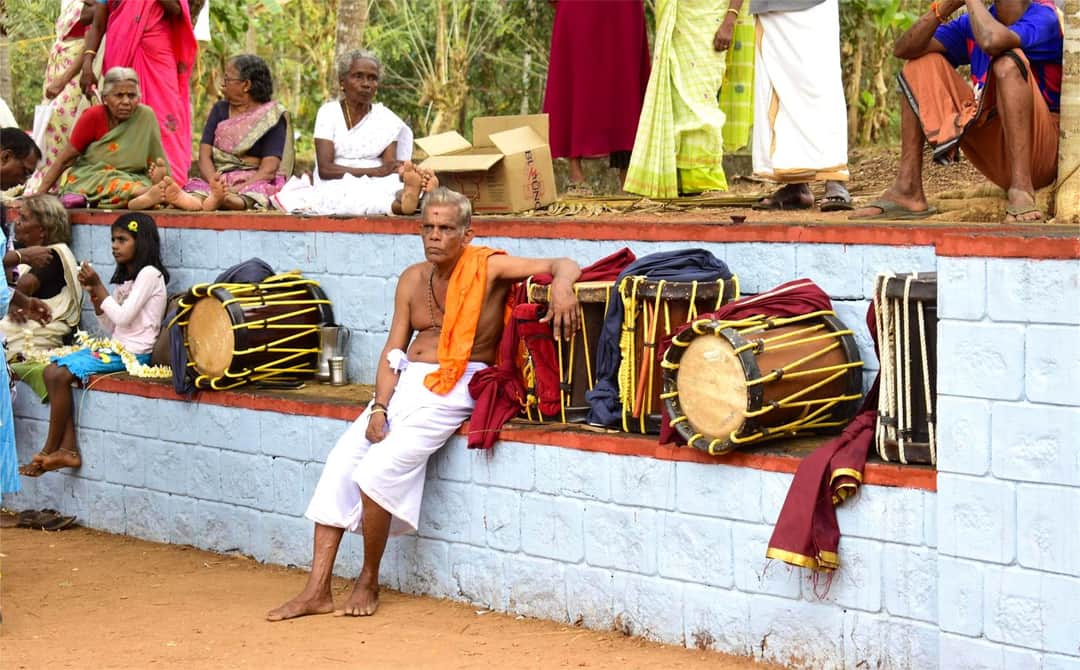
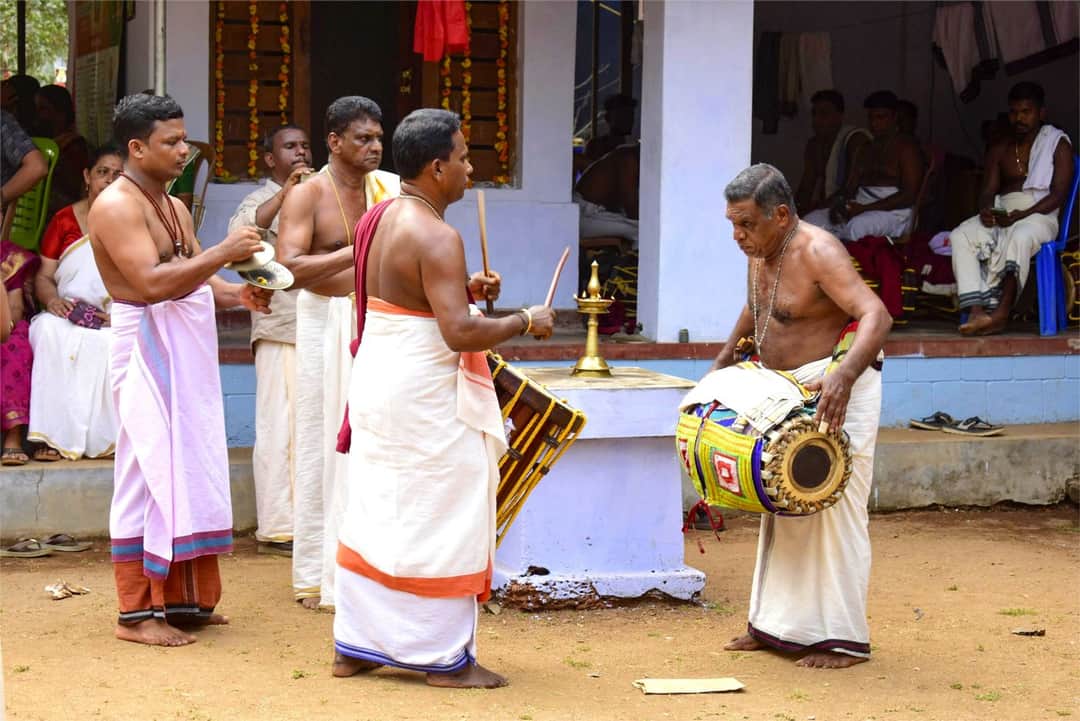
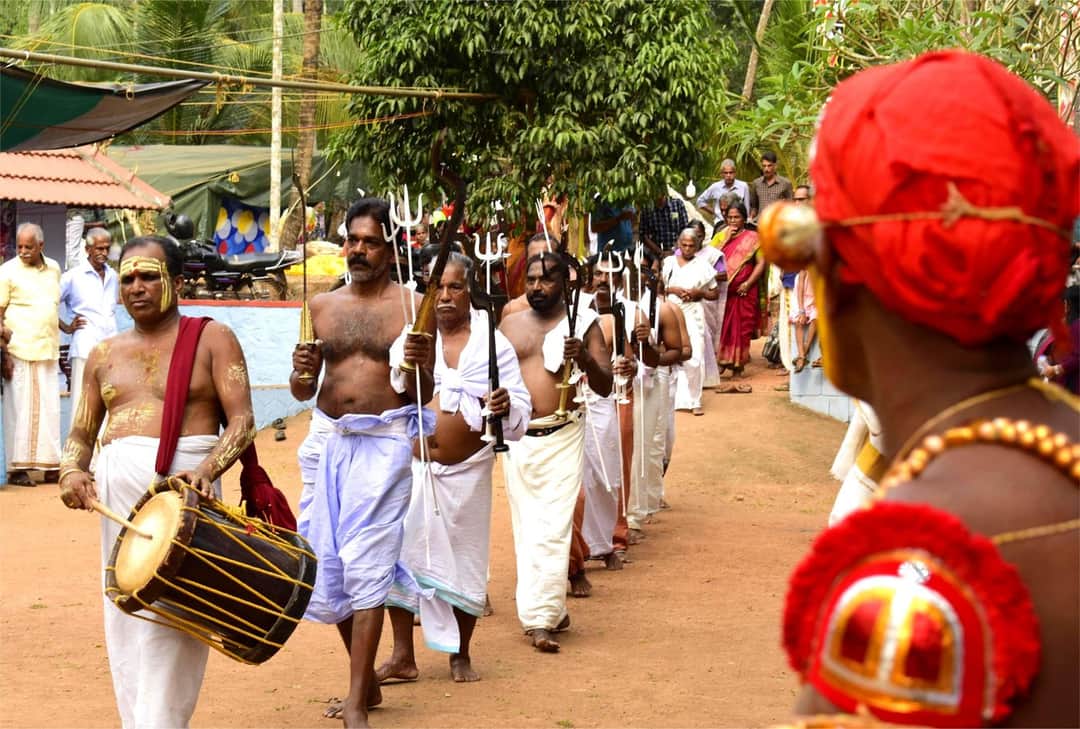
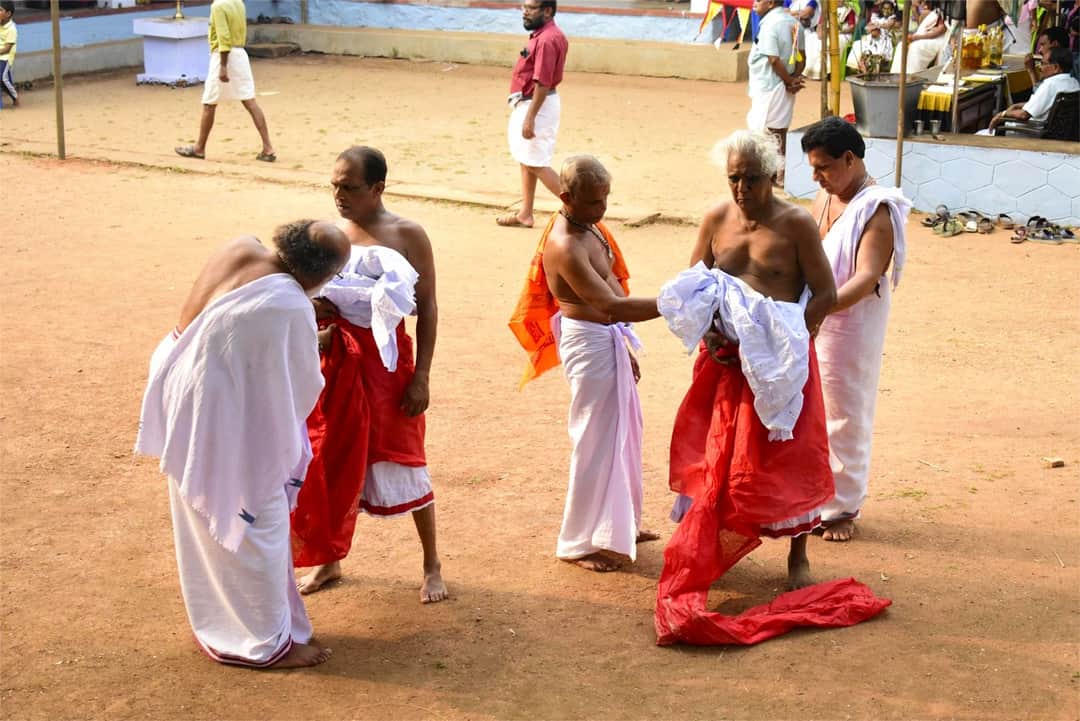
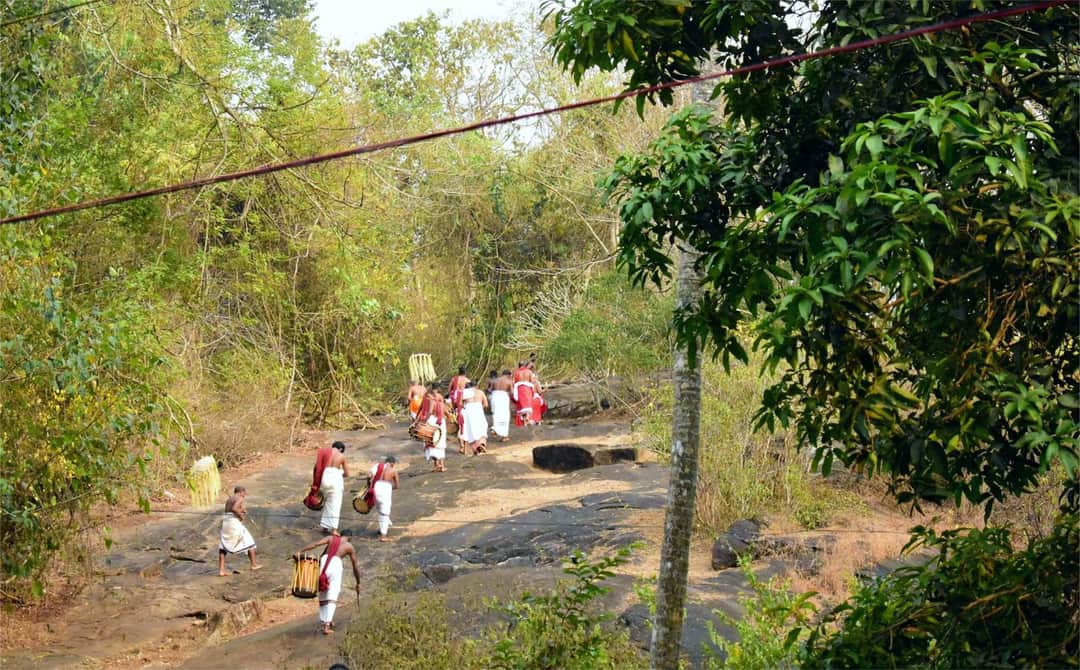
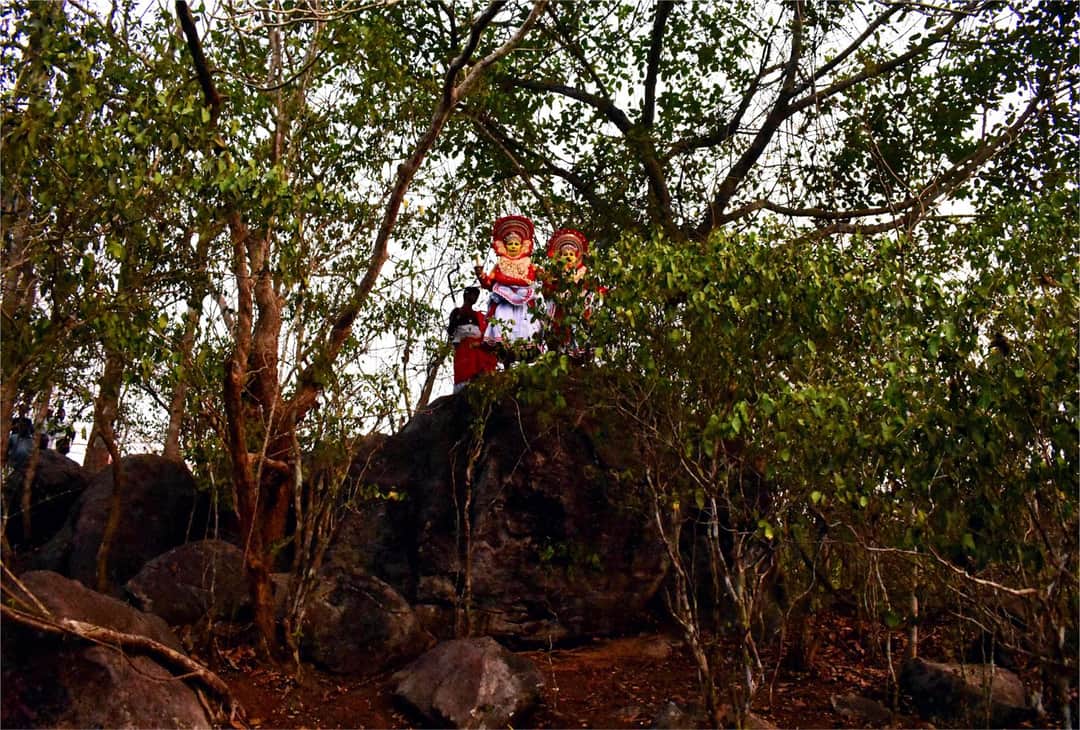
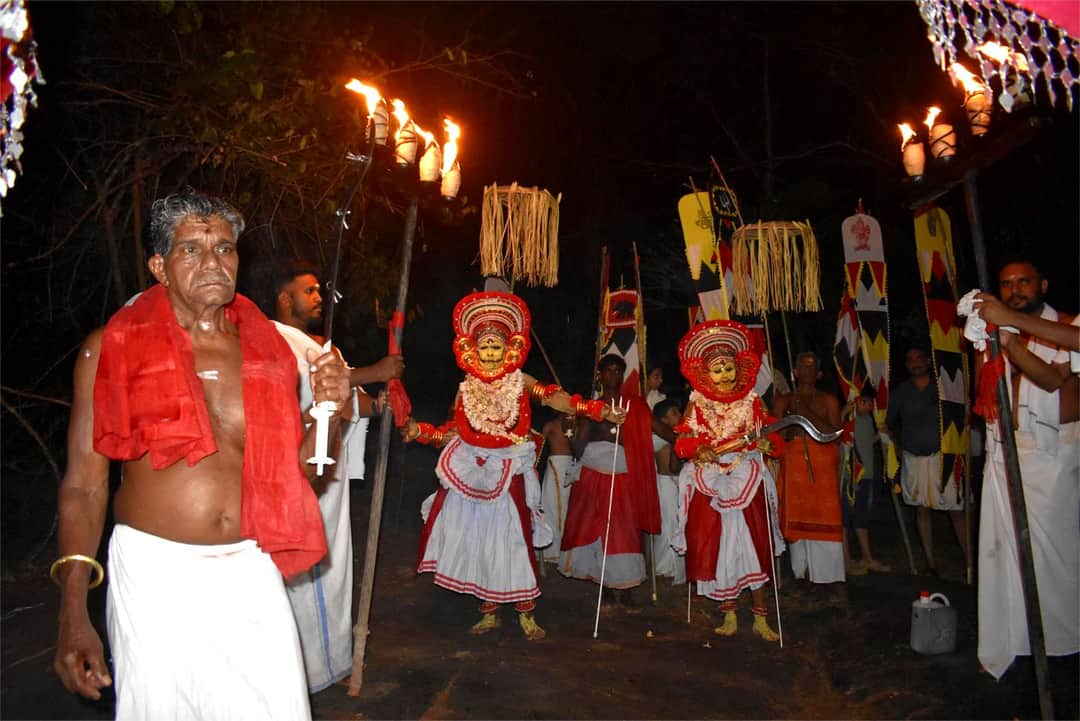
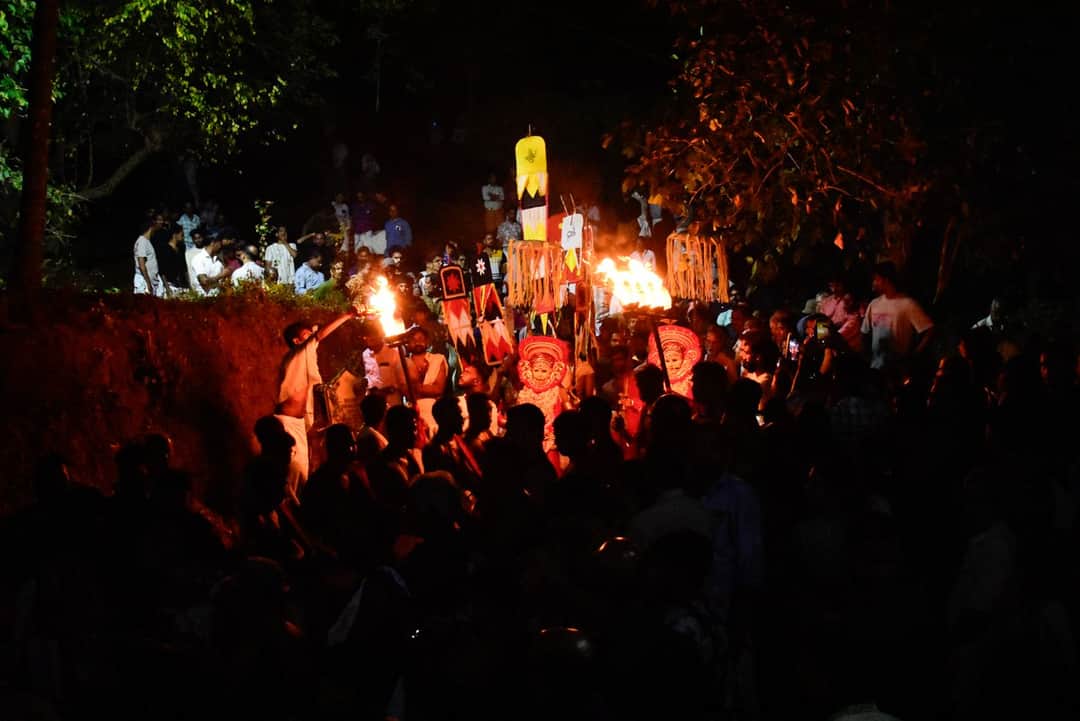
Thirra artists are people from scheduled caste communities, and although welcomed as performers in upper caste temples, these places are off limits. This ceremonial dance is performed in kaavu or sacred groves, as well as the premises of a temple. But entering or performing where the deity is kept, is out of bounds.
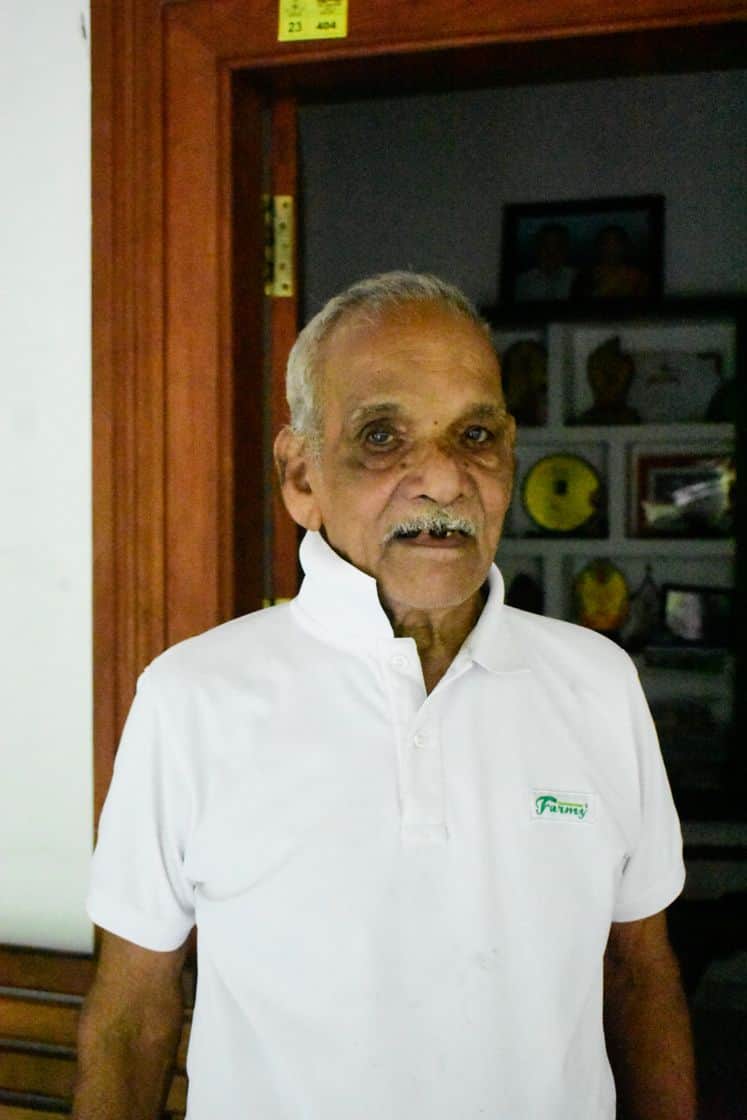
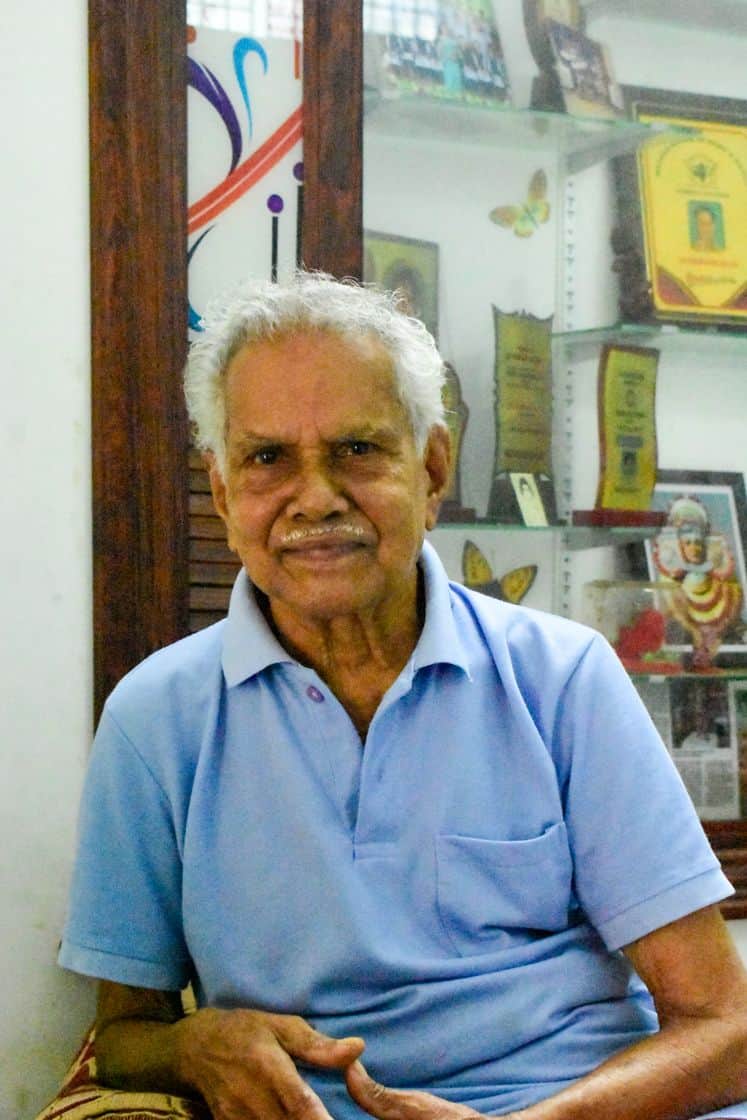
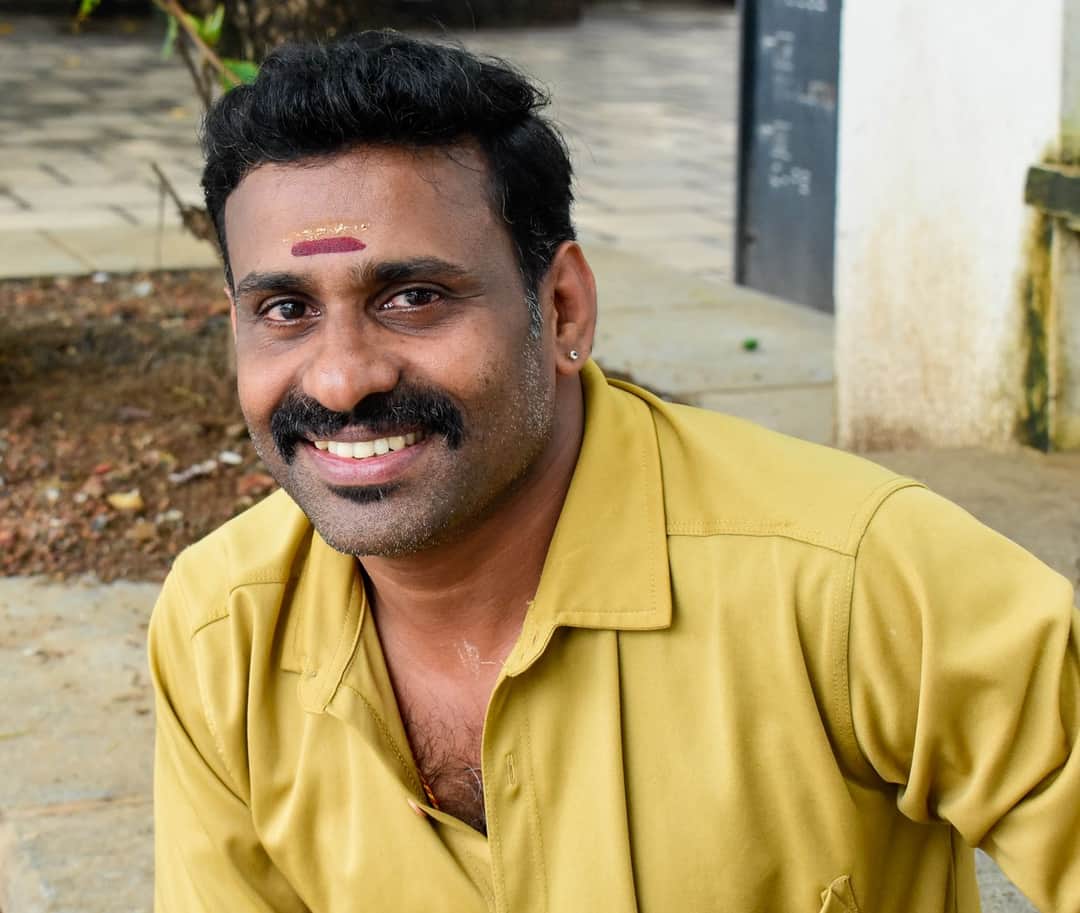
Kunjiraman is from the Vannan community, those who traditionally washed clothes, generally of the upper castes. They are listed as Scheduled Caste in Kerala. He was a young boy when he began accompanying his father and grandfather, both Thirra artists. He finally started performing in his early forties.
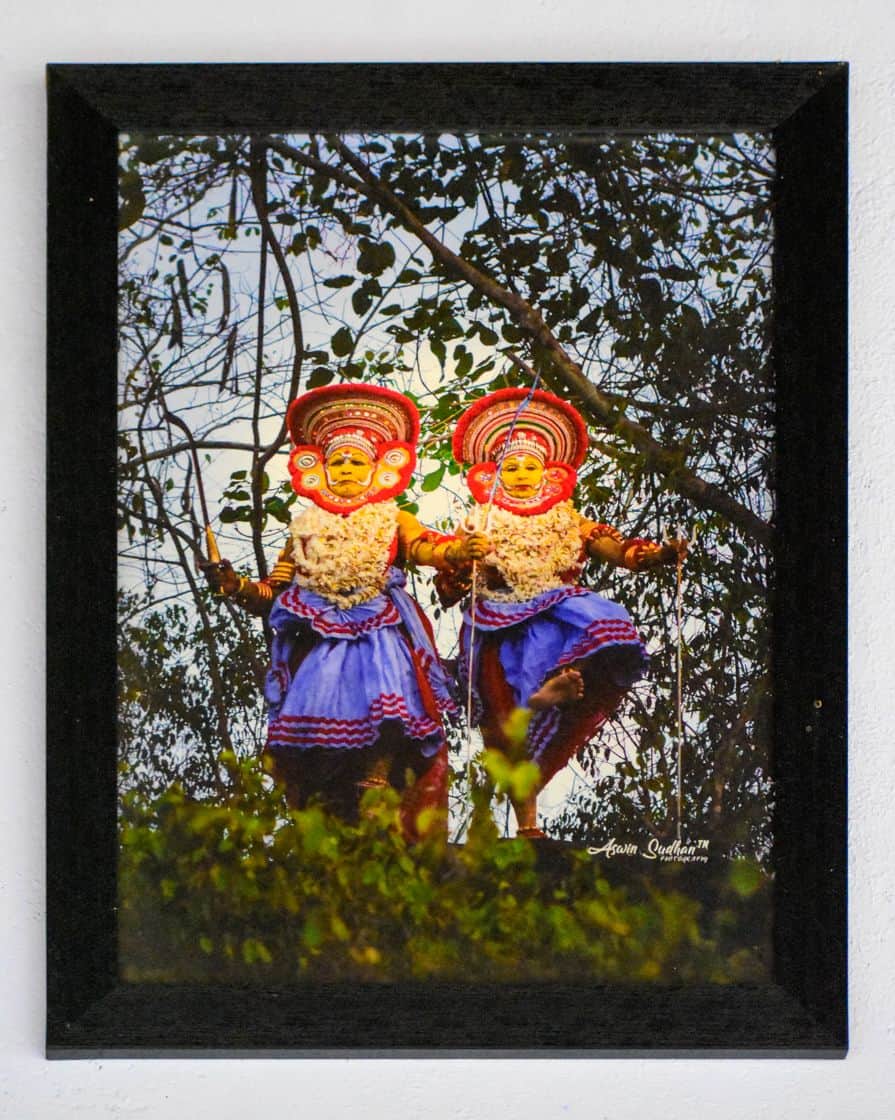
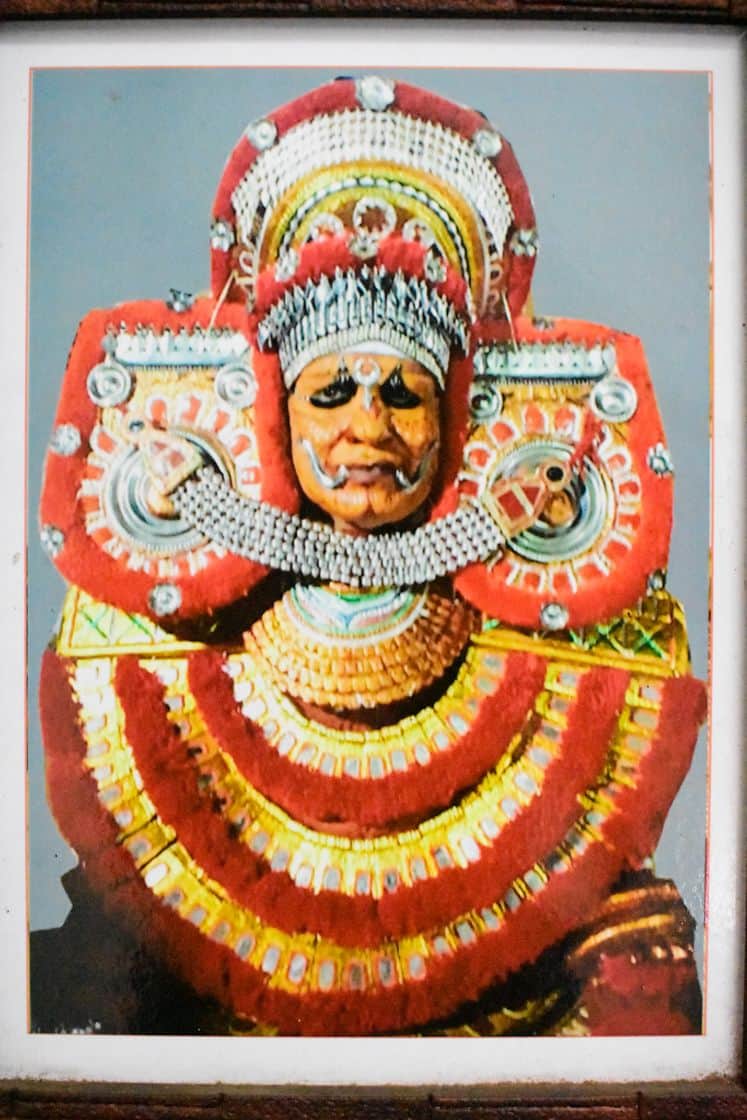
“Talachilon, Kariyathan, Kuttichathan, Vettakorumakan, Kannikakaruvon…” the 87-year-old reels off names of Hindu deities he enacted.
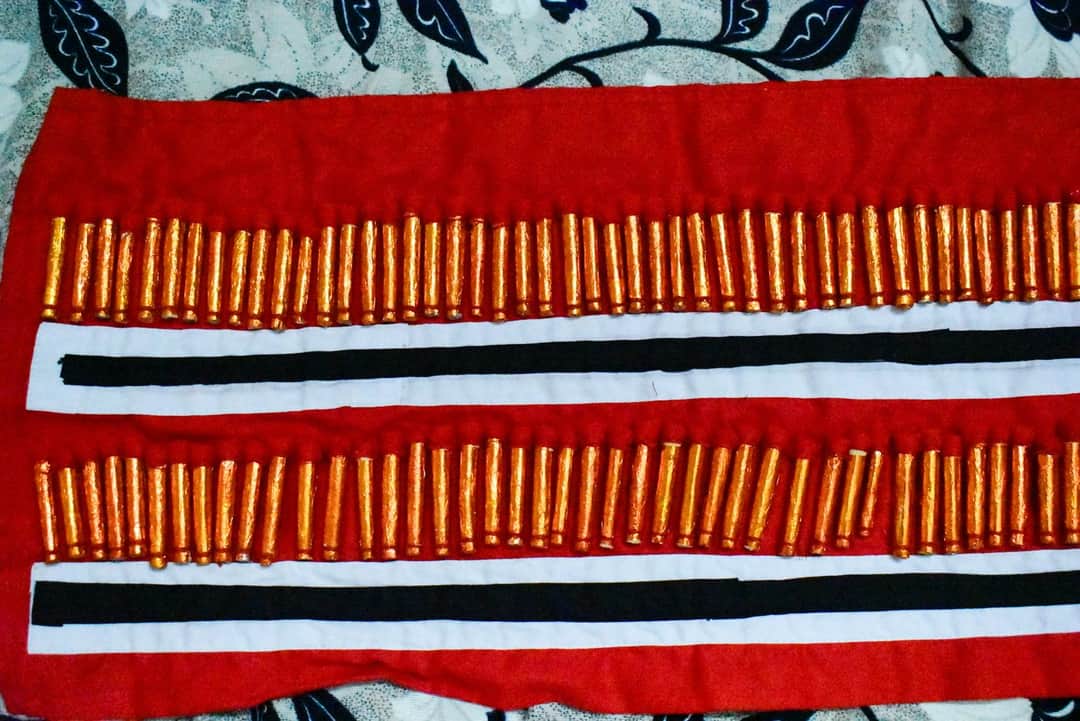
And then Kunjiraman begins to sing the ‘Anjadi’ and ‘Tottam Pattu’. The first is sung to invoke the God who will take hold of the dancer’s body and the second narrates the history of Kuttichathan. Although some scholars say that Tottam Pattu invokes the goddess Bhagavathi and not Kuttichathan, who is worshipped for protection and prosperity. He is depicted with eight pulli (dots) on his chest.
His musical voice fills the space. “Kuttichathan was born to a valluva [lower caste] mother and a Namboodiri [Brahmin] father. Once, when he was a boy, he felt very hungry. He had been starving for a long time. He then killed a buffalo from his herd and drank its blood. Furious, his father killed him and cut him into 399 pieces,” narrates Kunjiraman.
He is seated on the veranda of his two-storey house in Sivapuram village in Kozhikode. “That is how we have so many Kuttichatan today – Pookutti, Teekutti, Karikutti,” he tells this reporter.