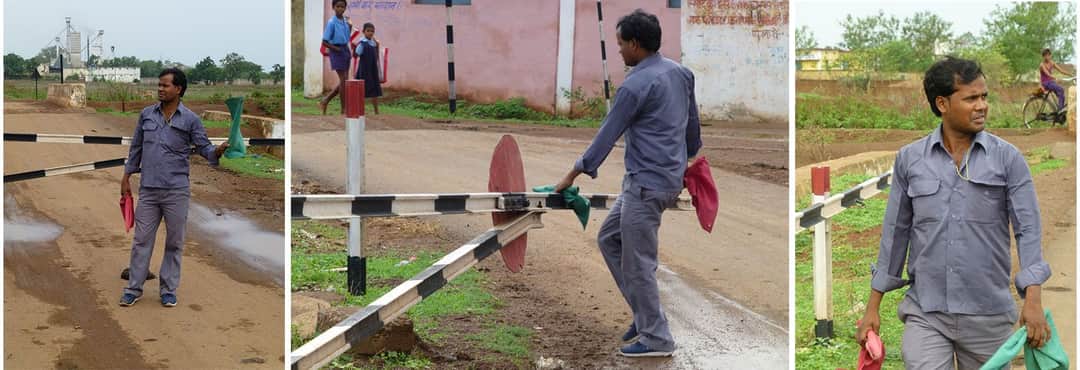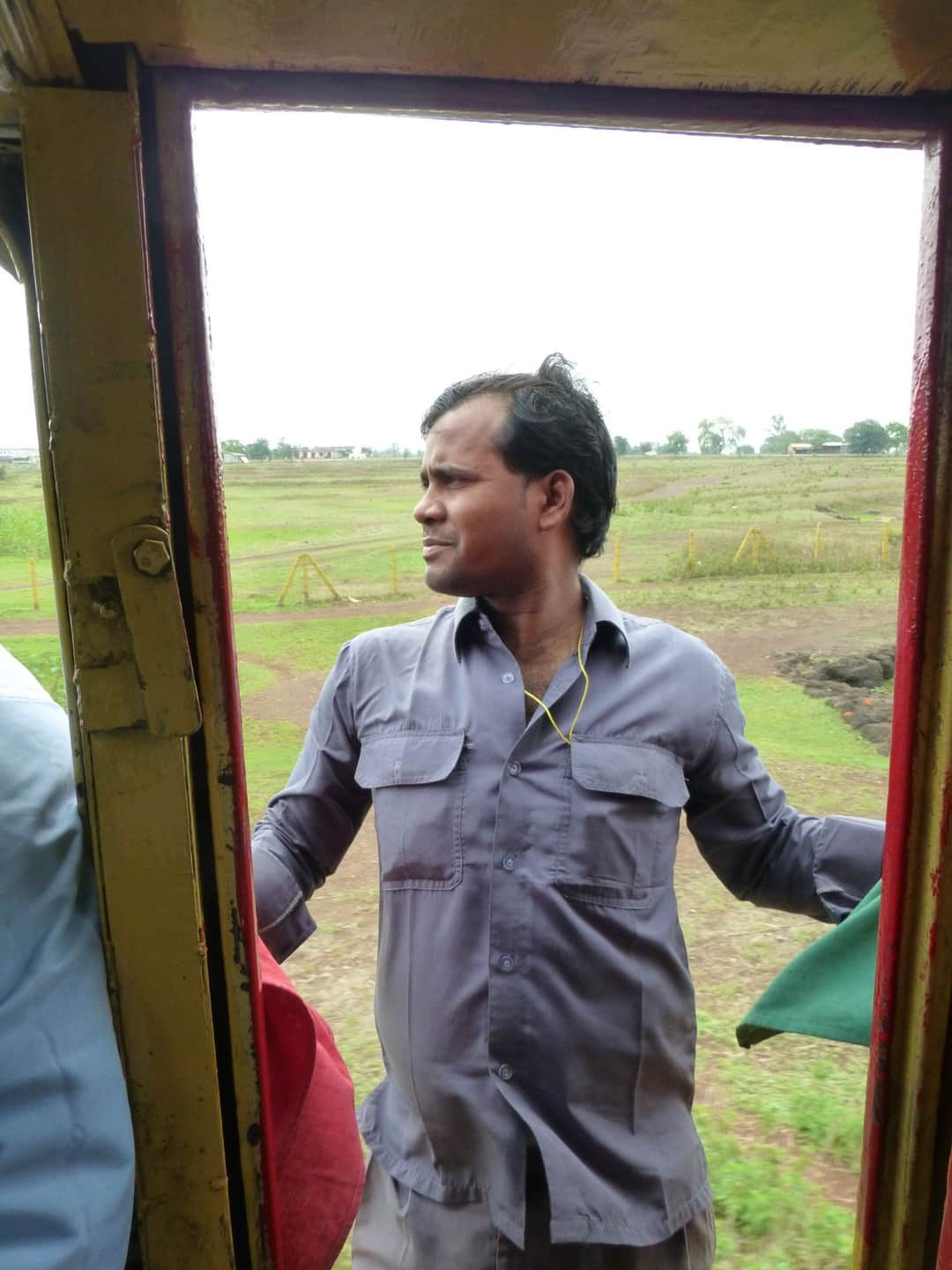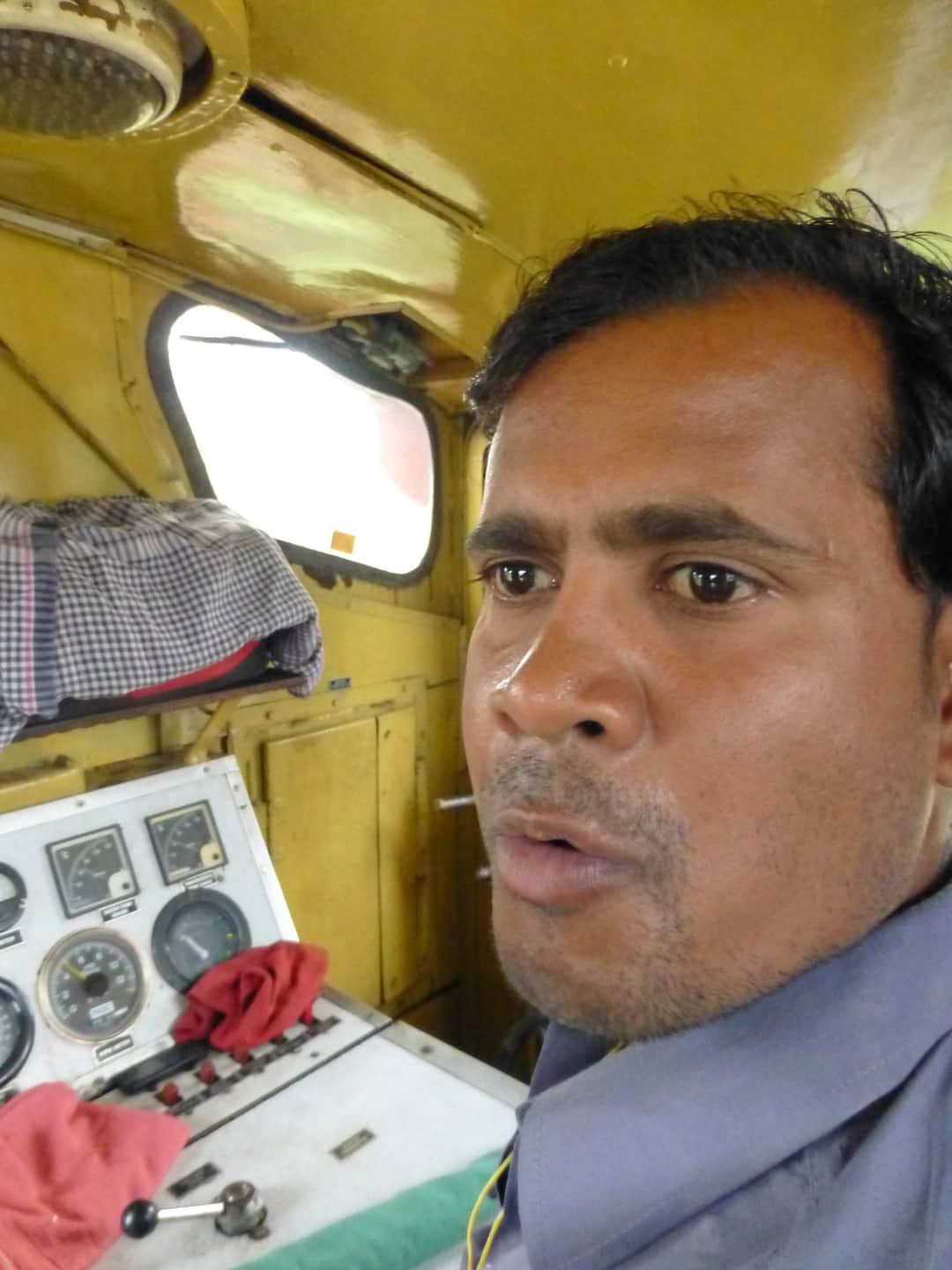

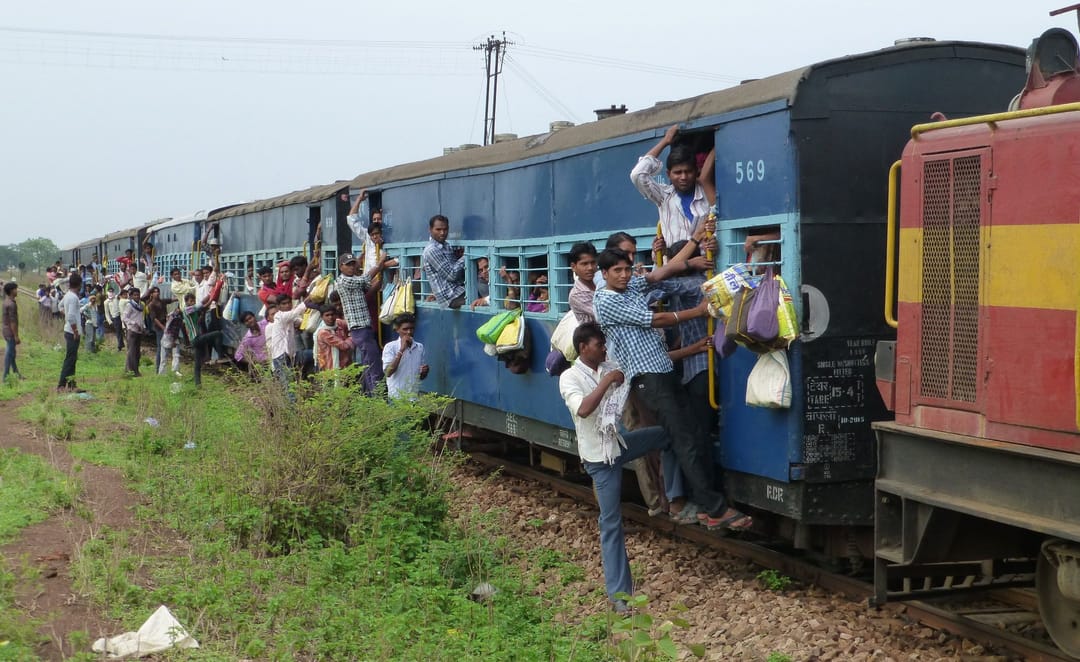
When Kanhaiyalal jumped off from the engine driver’s cabin with a pair of red and green flags in his hands, we got off the slowing train, too. We’d been waiting for that. What we did not expect was for him to shoot off across the next 200 metres like a sprinter. We ran behind him, stumbling on the uneven surface. Kanhaiyalal darted towards an unmanned level crossing and, waving his red flag, quickly shut and locked the railway gate there. Then he turned towards the train and waved the green flag. The train moved forward, passed the locked gate – and stopped again. Kanhaiyalal opened up the gate and raced back to the driver’s cabin, with us closely behind.
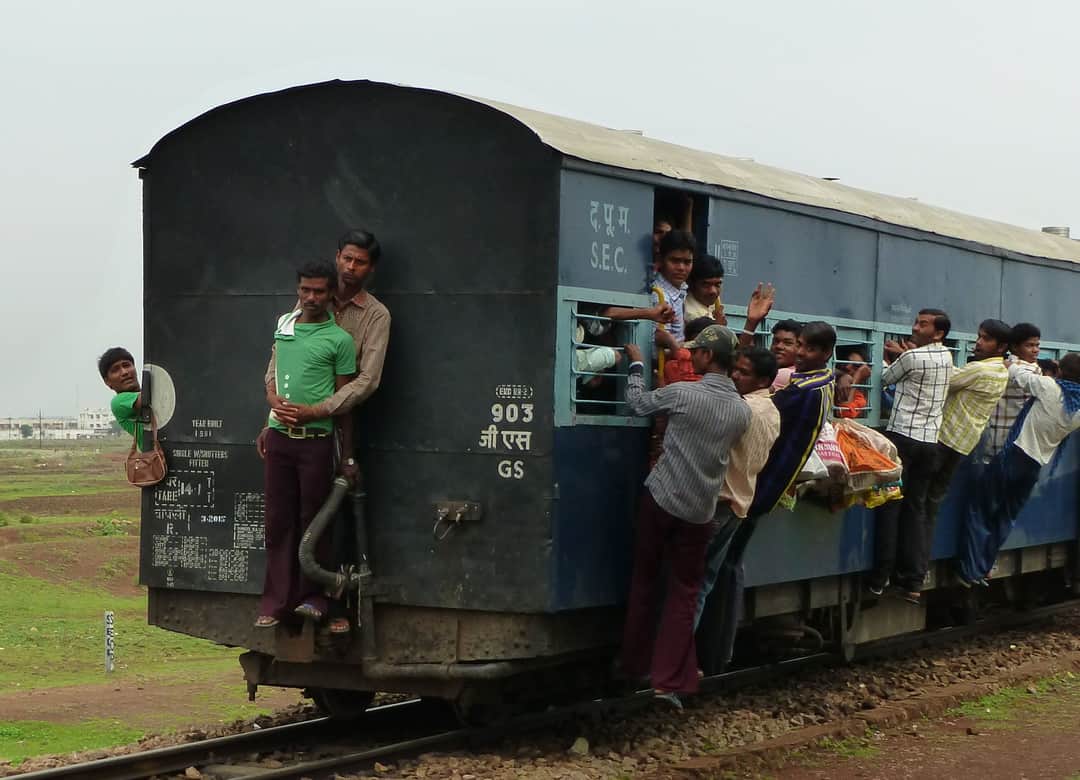
He could do this up to 16 times over a distance of 68 kilometres, one-way. “It’s what I do. I’m the mobile gatekeeper,” he says. It brings back a whole, old meaning to the word 'mobile'. This is the South East Central railway in Chhattisgarh state. And we’re on the 232 Down Dhamtari Passenger, better known as the ‘Labour Train'. It ferries hundreds of migrant labourers from nearby villages flocking to Raipur city in a desperate search for work. The full journey from Dhamtari to Telibandha in Raipur takes three hours and five minutes, with nine station halts on the route. And there are some 19 ‘gates’ or level crossings of which just two or three are manned.
“My job is to open and shut the gates,” says Kanhaiyalal Gupta. “Earlier there used to be gatekeepers for these crossings, but now I have been appointed as the mobile gatekeeper. I used to be a gangman but was promoted to this post, which I’ve held for two years. I enjoy my work.” He is certainly dedicated and hard-working (and would be earning less than Rs. 20,000 a month).