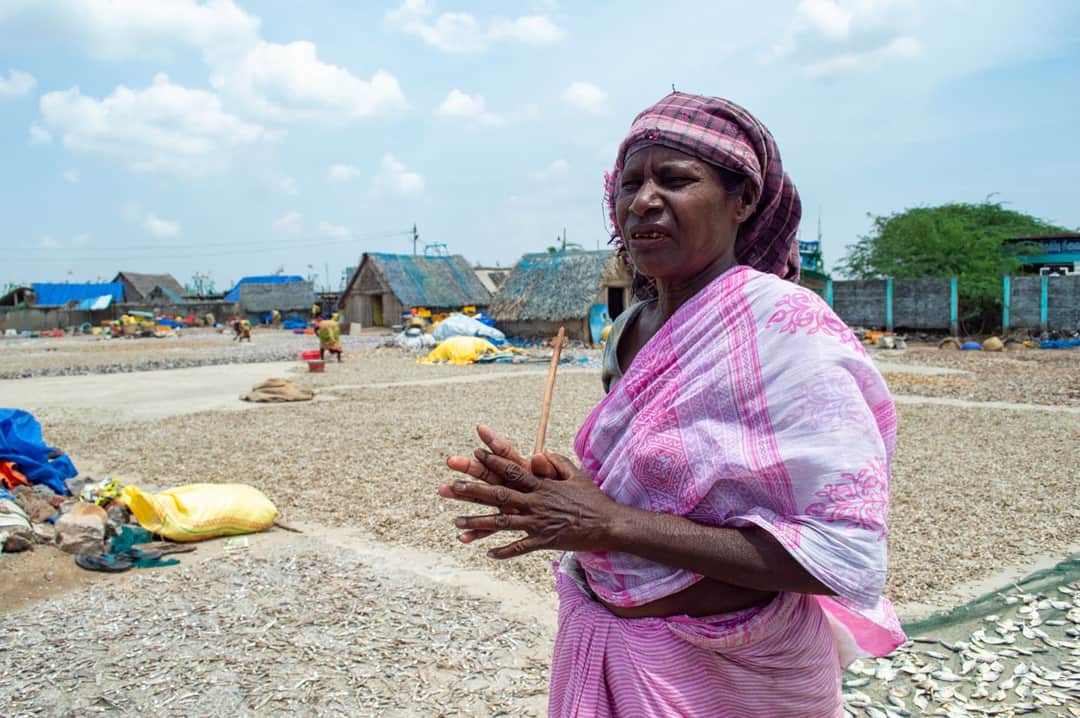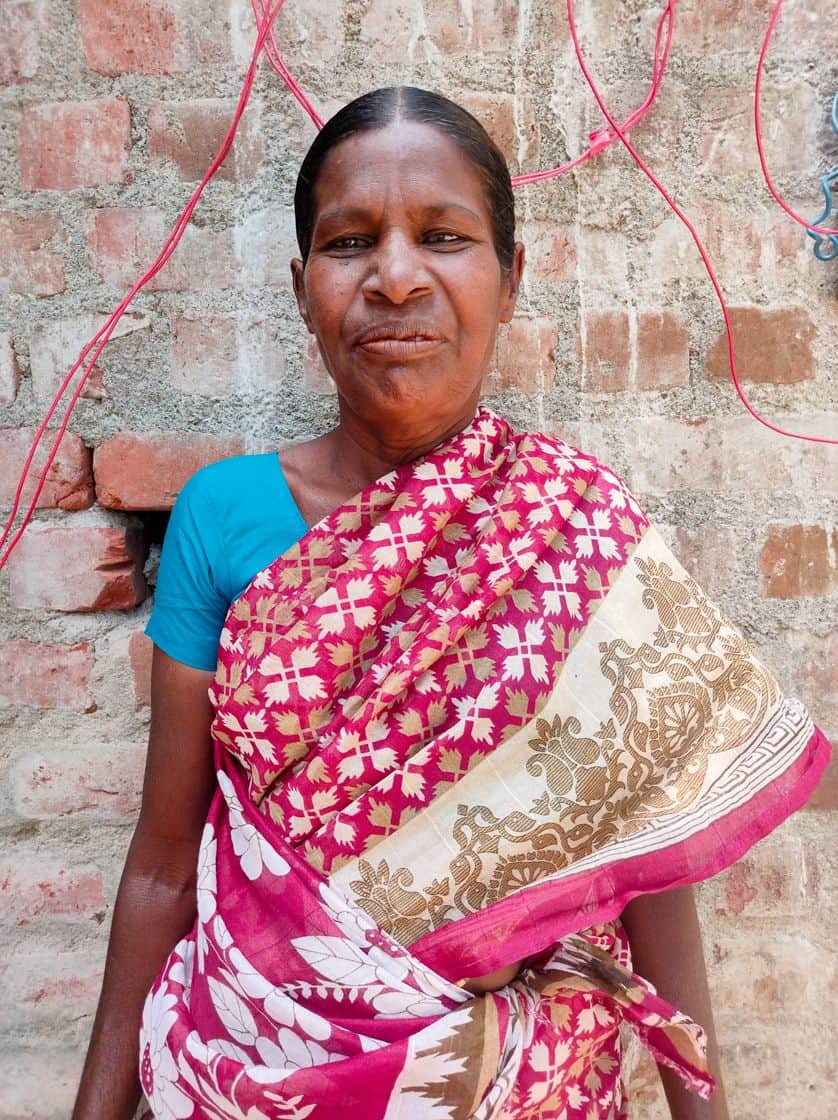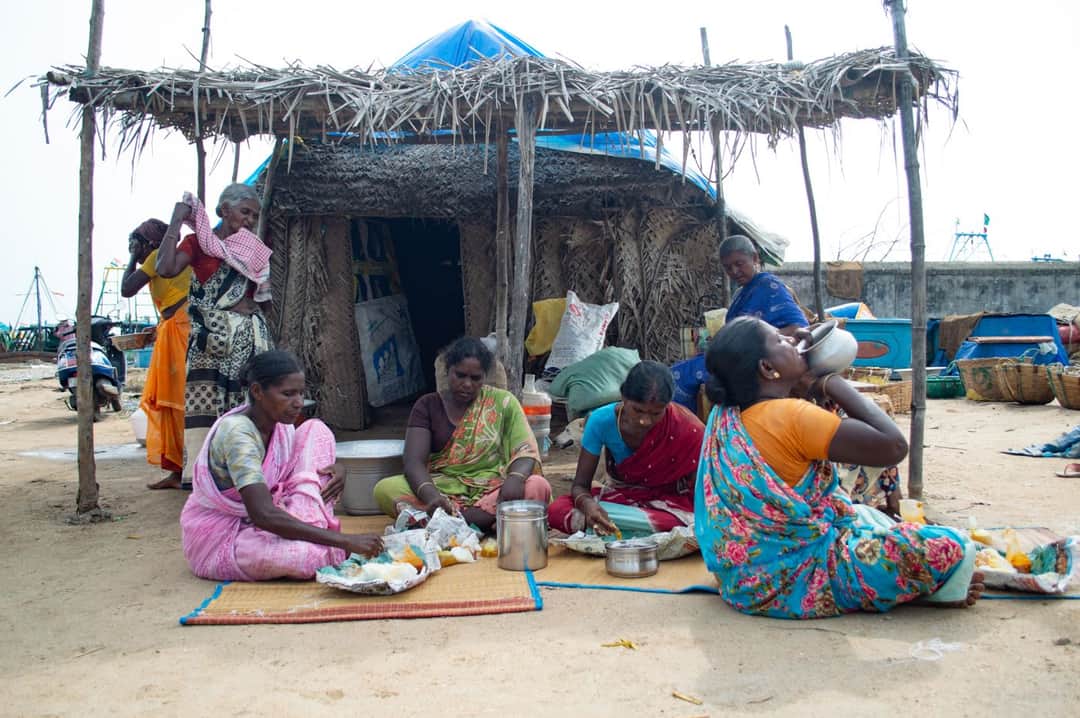

Sitting outside her thatched house, 48-year-old Gomathi Veerayan prepares a quick meal for her family early in the morning. It’s a familiar scene in Anna Nagar, a Dalit settlement in Thandavankulam village, located six kilometers from Pazhayar in Sirkazhi taluk, Mayiladuthurai district. Like most women in the locality, Gomathi’s day starts well before dawn, at four o’clock. The morning routine involves fetching drinking water from a nearby tap, cleaning the cramped house, and cooking in the open over a firewood stove.
“Gas cylinders are available, but this is cheaper,” Gomathi explains, stirring the pot with practiced ease. By the time she’s finished preparing breakfast and lunch for her husband, mother-in-law, and son, there’s no time left for her to eat.
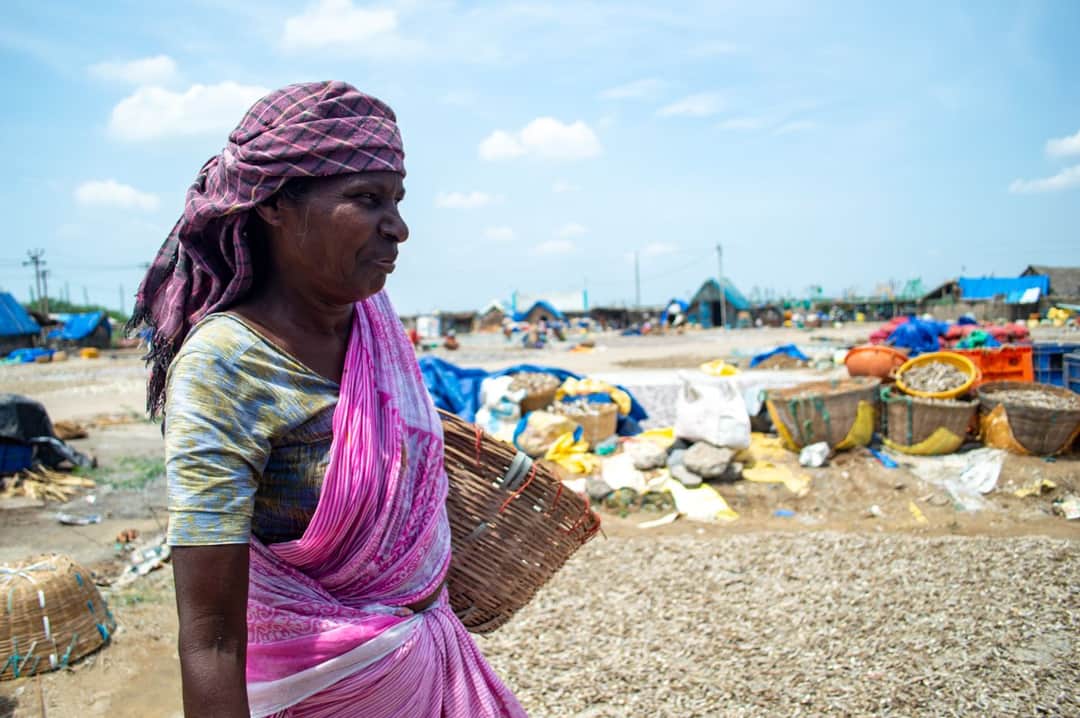
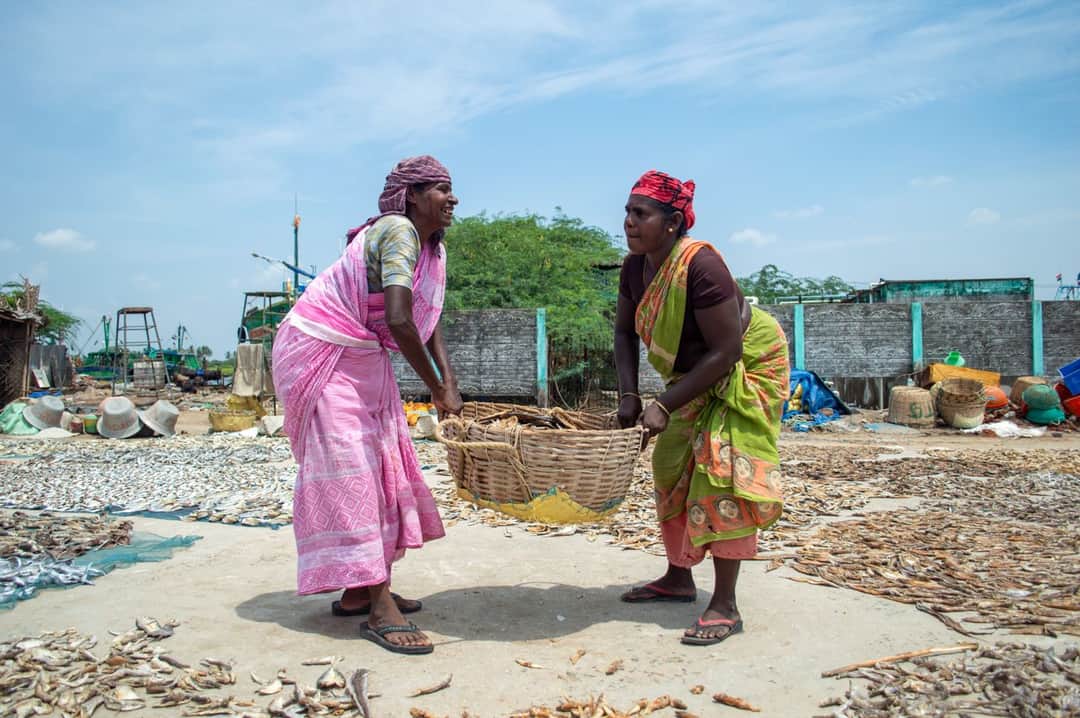
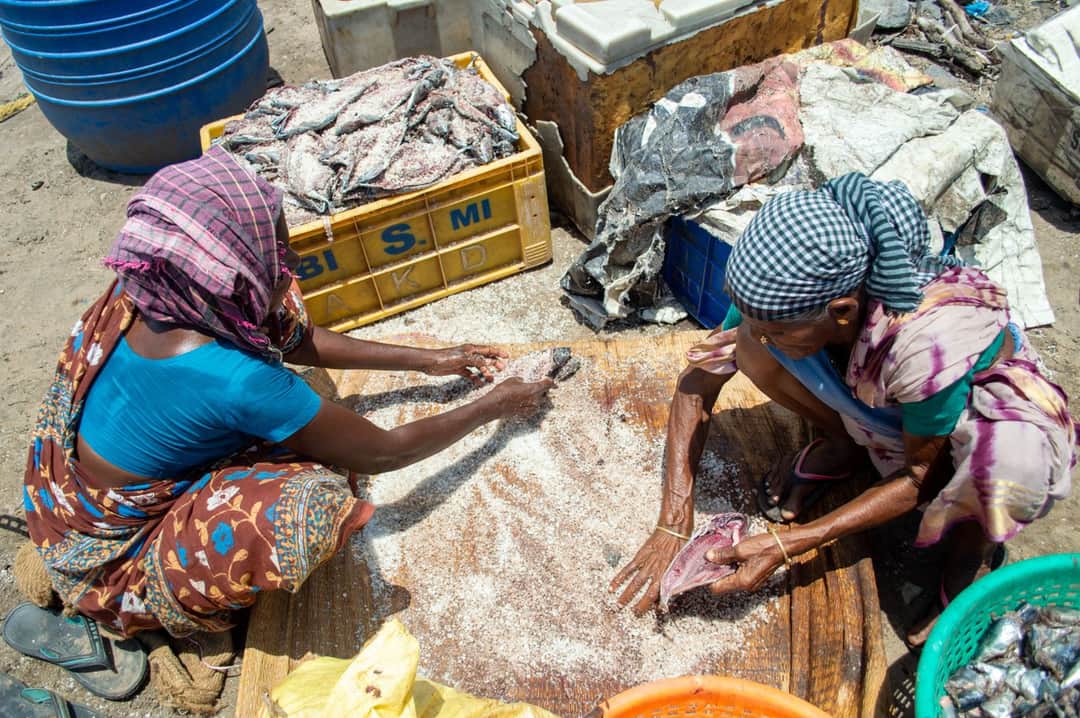
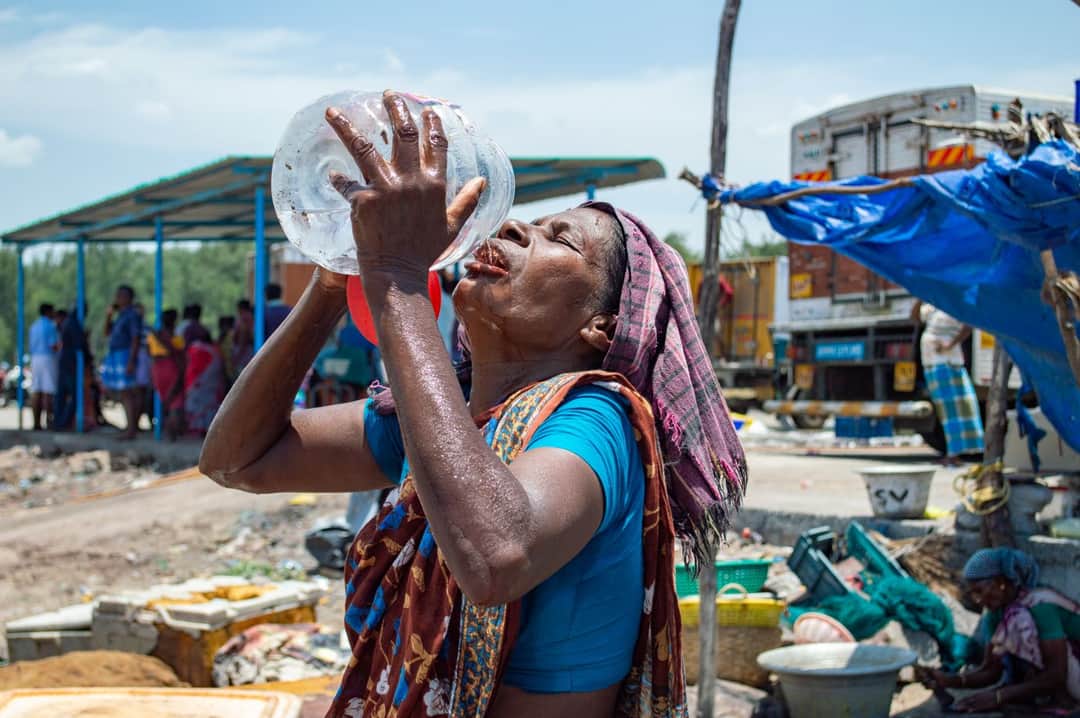
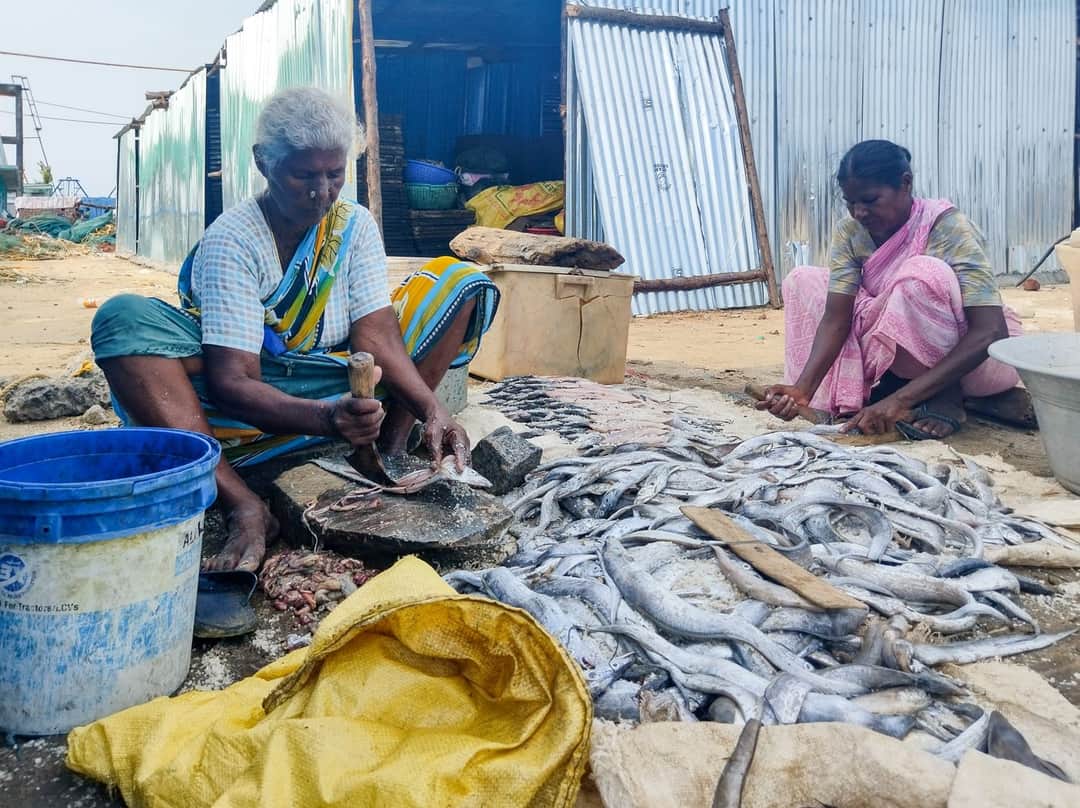
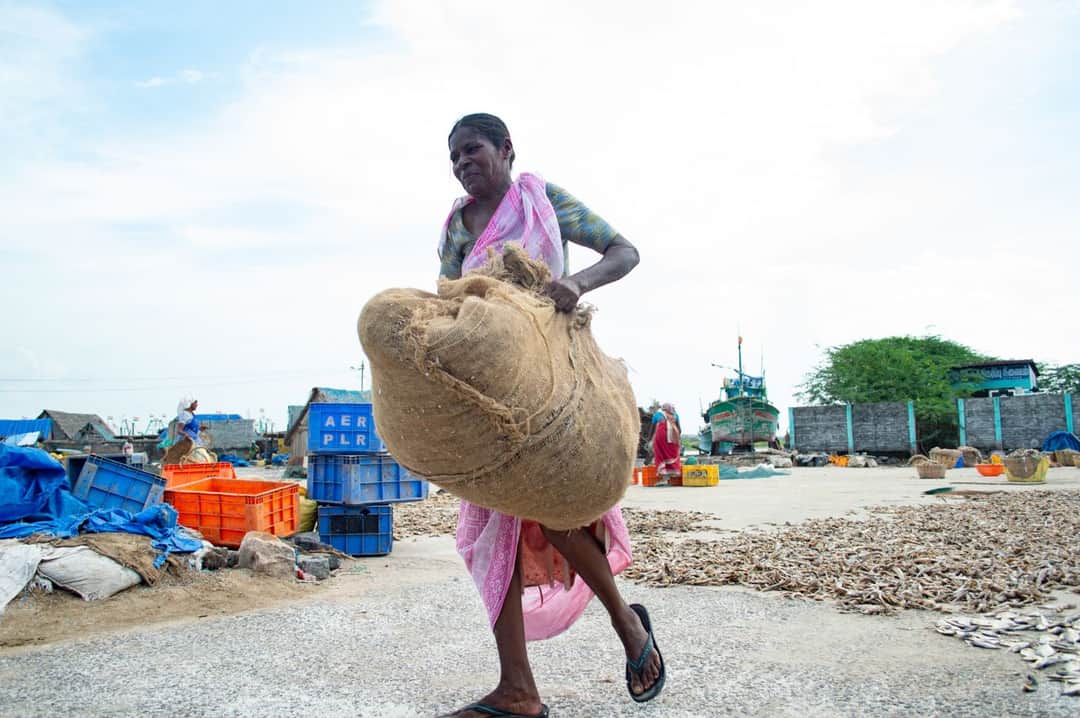
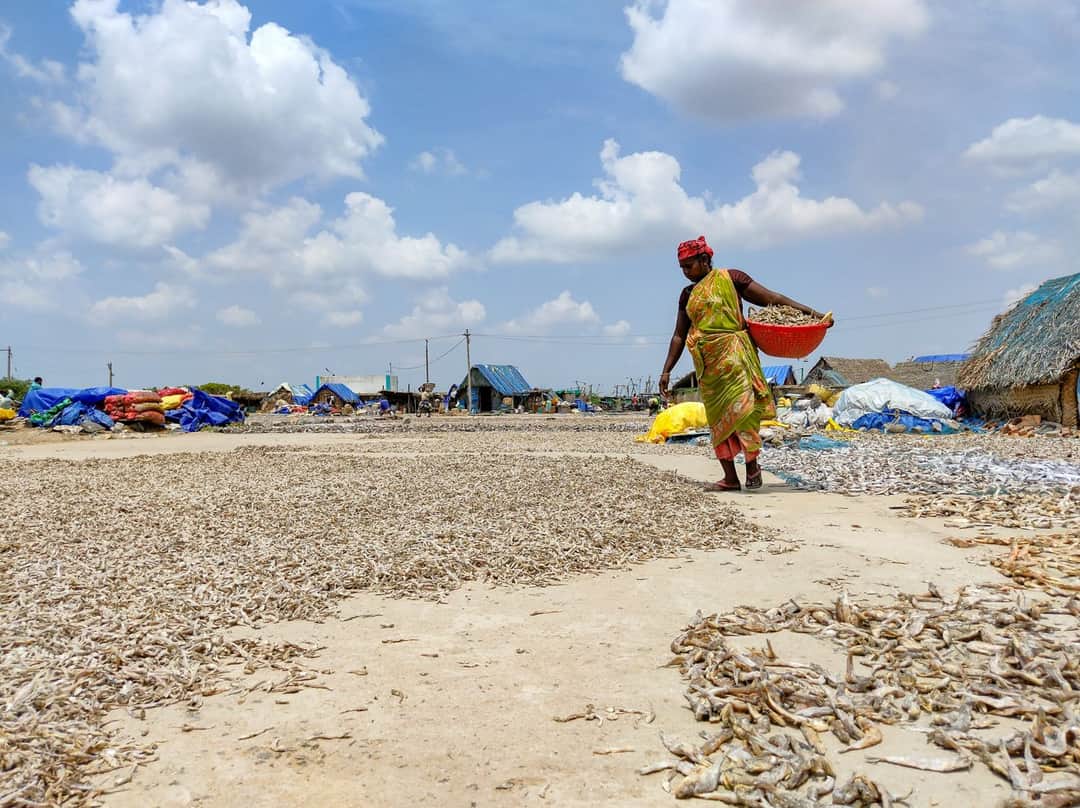
She hurries to Pazhayar, where she works as a fish dryer at the fishing harbour. Her work, dictated by the rhythms of the rivers and the moon cycle, shapes her day from start to finish.
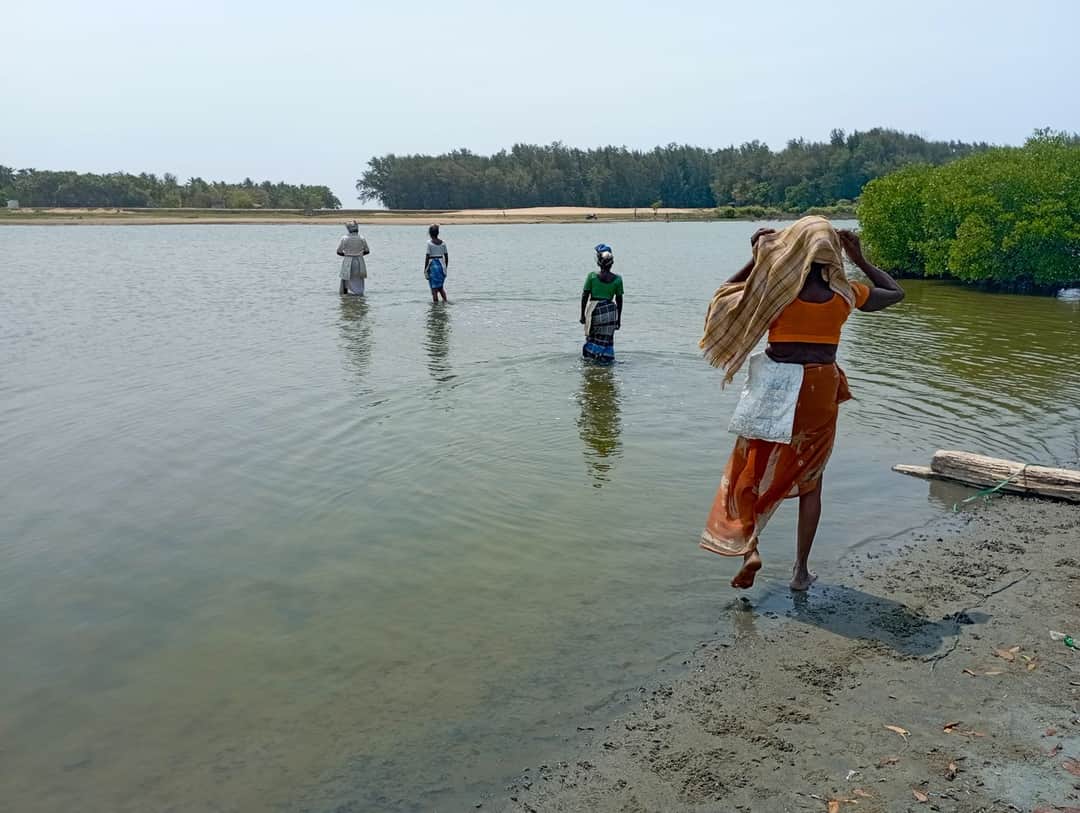
One by one, the women finish their household chores and make their way to the riverbank in time for the low tide. If their work involves drying fish in Pazhayar, they head to the nearest bus stand by eight o’clock to catch the bus. Their timings depend on the tide.“Pazhaiyar is the lifeline for our people! It means everything to the villages around here," says Gomathi, a fish dryer at the Pazhaiyar fishing harbour.
Pazhaiyar is a fishing harbour that sits at the mouth of the Kollidam river where it meets the Bay of Bengal. Located in Mayiladuthurai district (carved out of Nagapattinam district in 2020), it is one of 12 fishing harbours in Tamil Nadu, and it supports thousands of workers coming in from nearby villages who rely on the catch for their livelihood.
Gomathi Veerayan, has been drying fish at the Pazhayar fishing harbour for several years. “The women’s lives are deeply intertwined with the harbour,” explains Gomathi. “We were born here, we marry here, and we live our lives here. Earlier, we worked in the fields, planting paddy, millet, and pulses. But now, there’s no place for that – either there’s too much rain, or none at all, and the crops wither.”
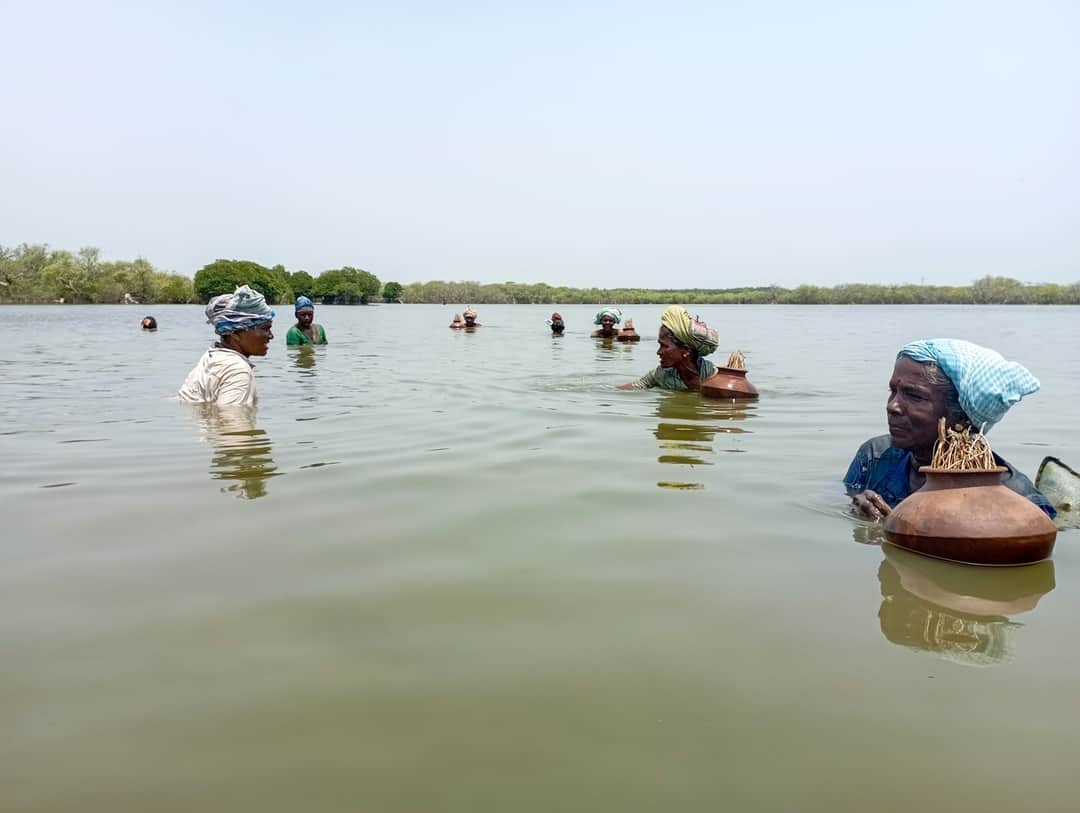
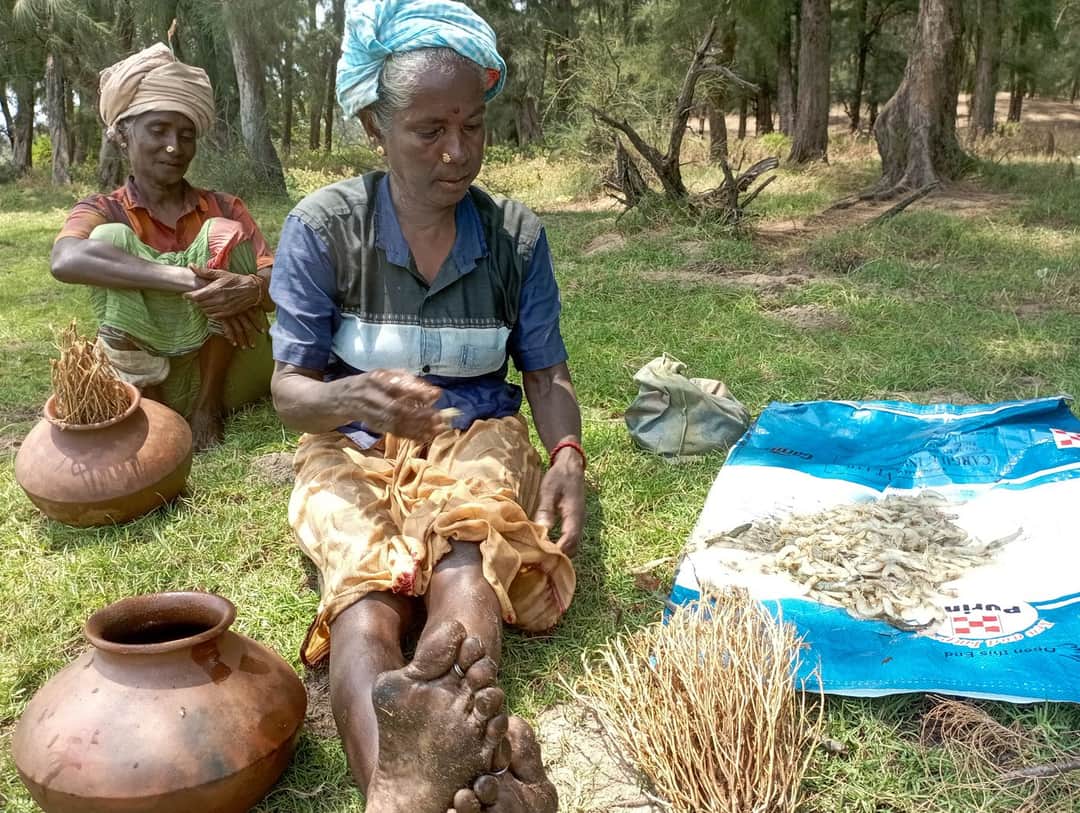
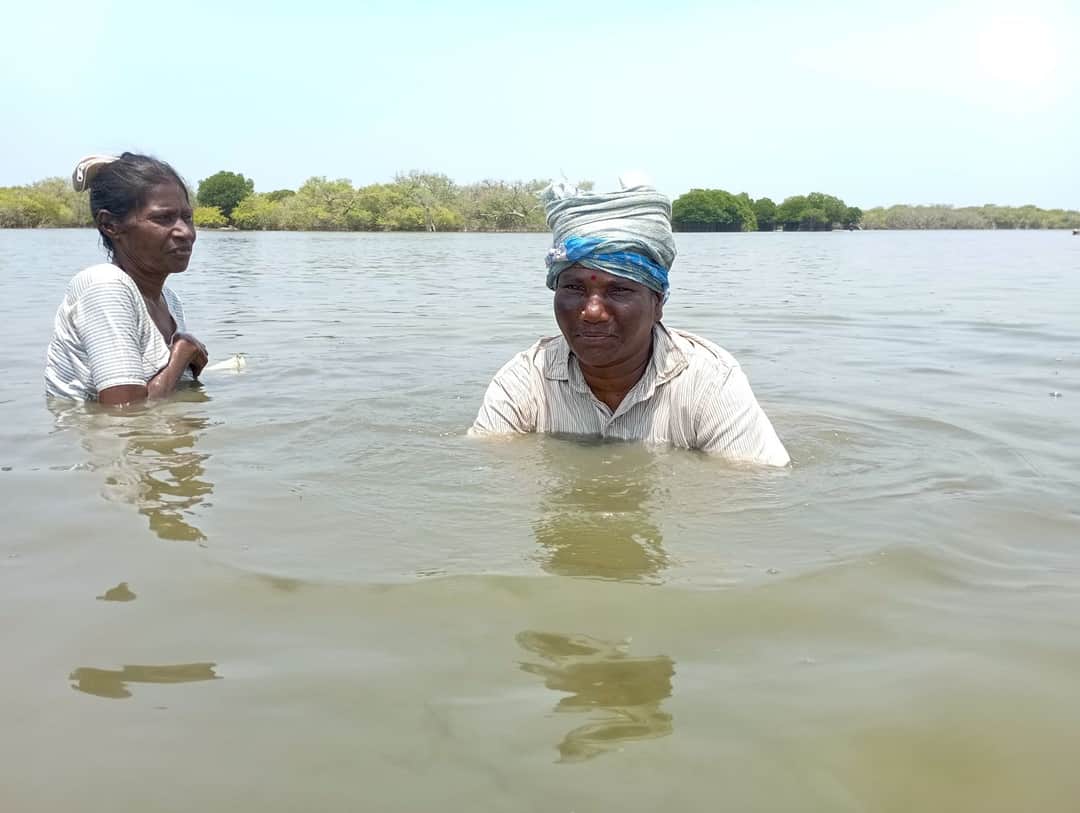
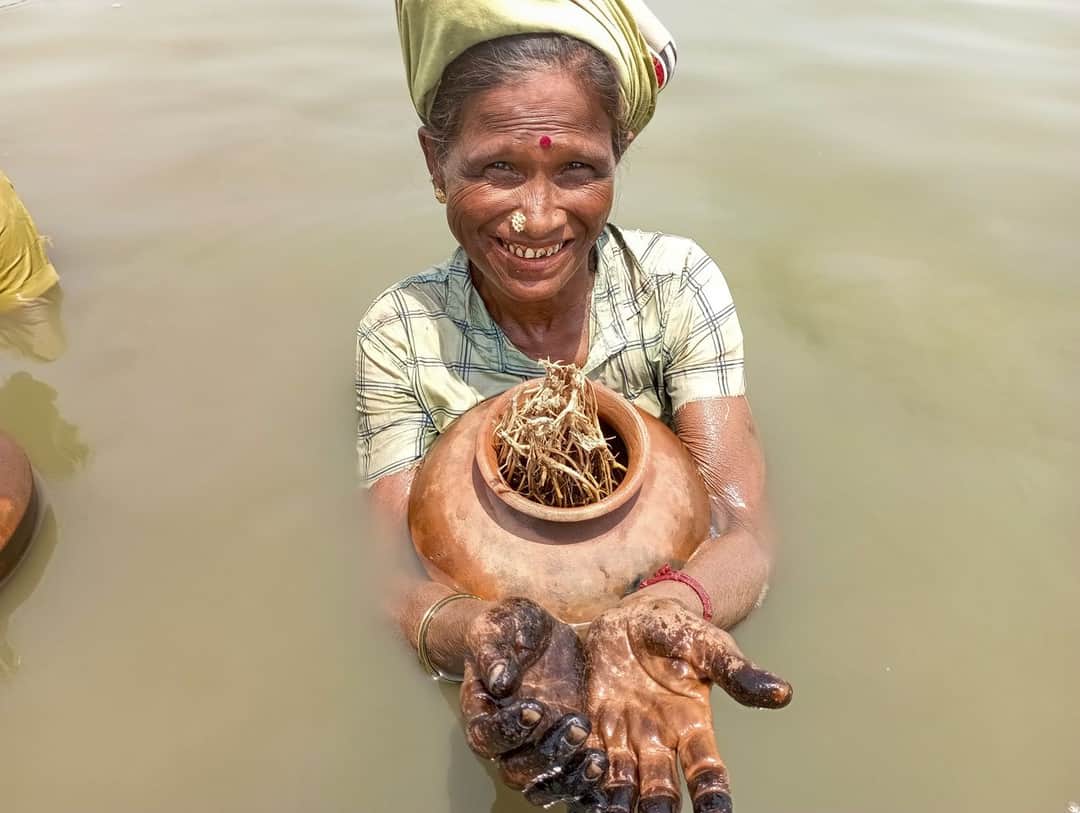
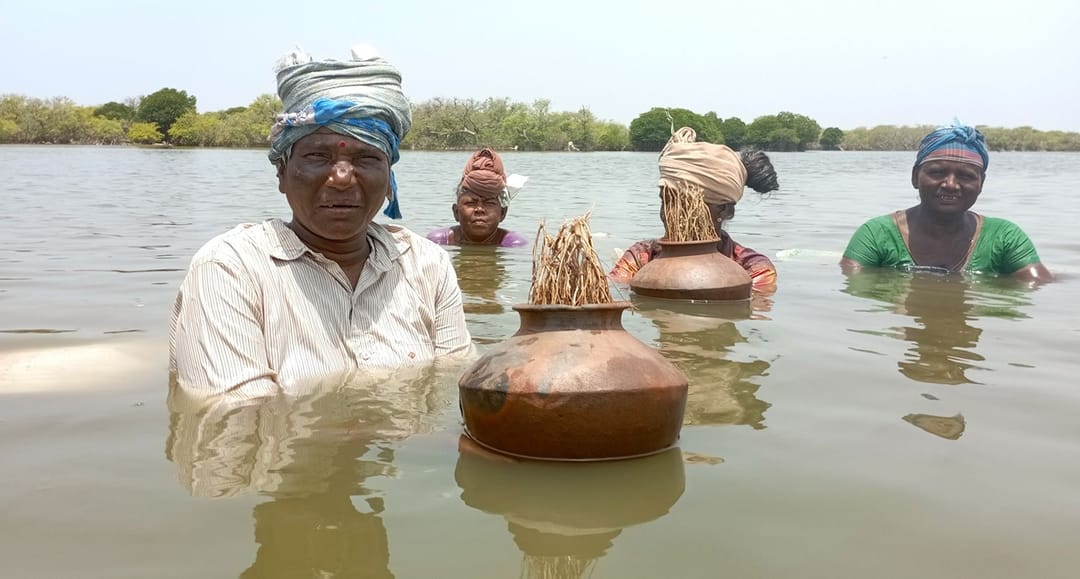
She continues, "I've been catching shrimp [Caridea] with my hands in the river since I was 15. My mother and mother-in-law did the same,” and adds, “I've even felt for and caught shrimp while pregnant. I have supported my children's education with this income. As long as I live, I will continue to catch shrimp."
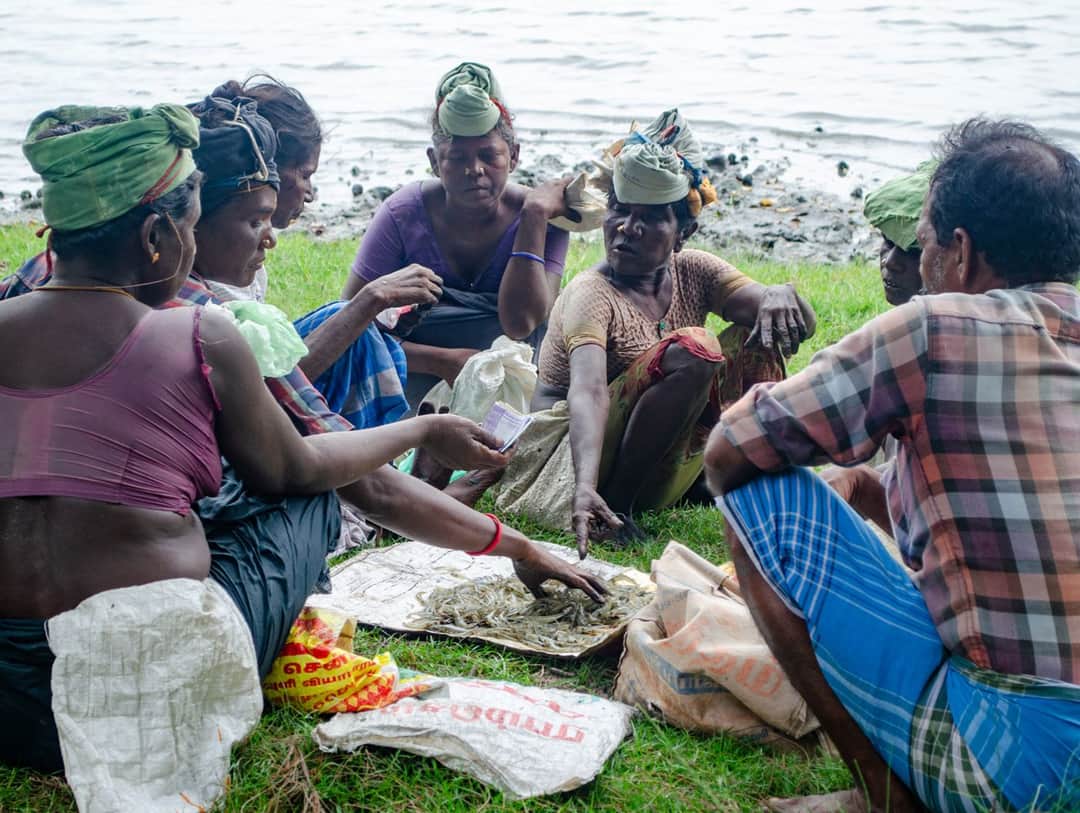
More than 20 women from her area, six kilometres from the harbour, are also engaged in this work. "The women catch the 6 [a.m.] bus to work. We clean, salt, preserve, and dry shrimp, fish, and squid four or five times, each type processed and bundled separately" says Gomathi, a member of the Paraiyar community (listed as Scheduled Caste in the state).