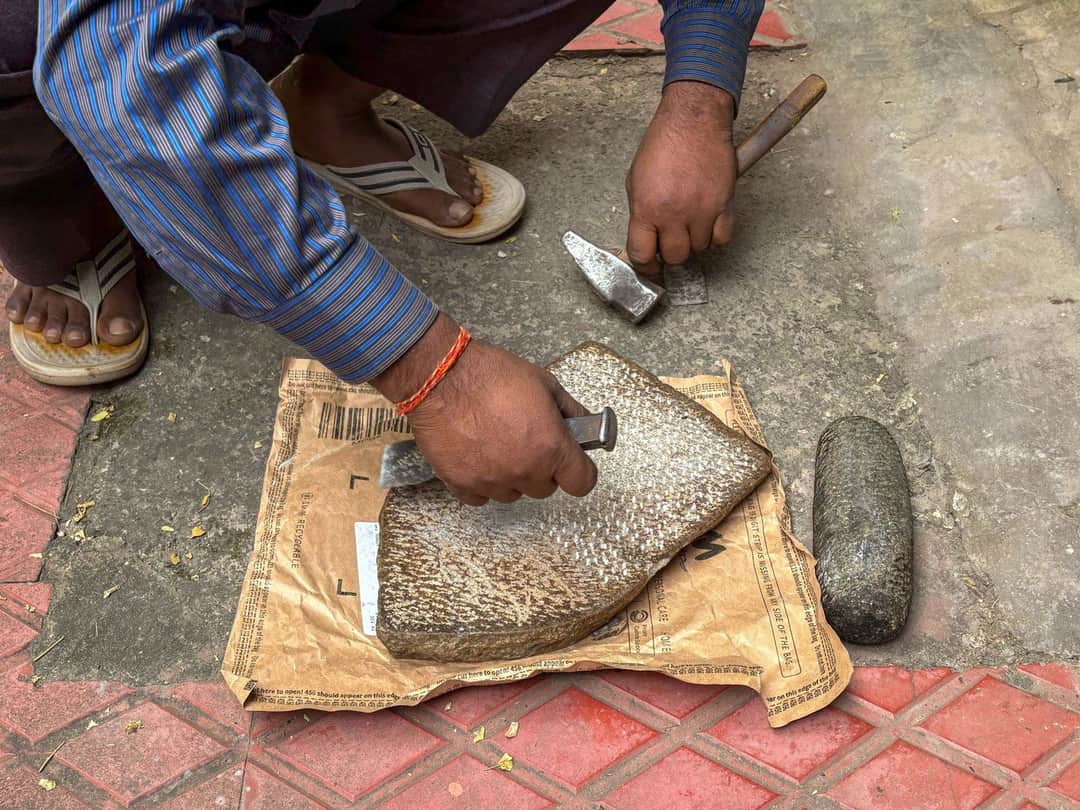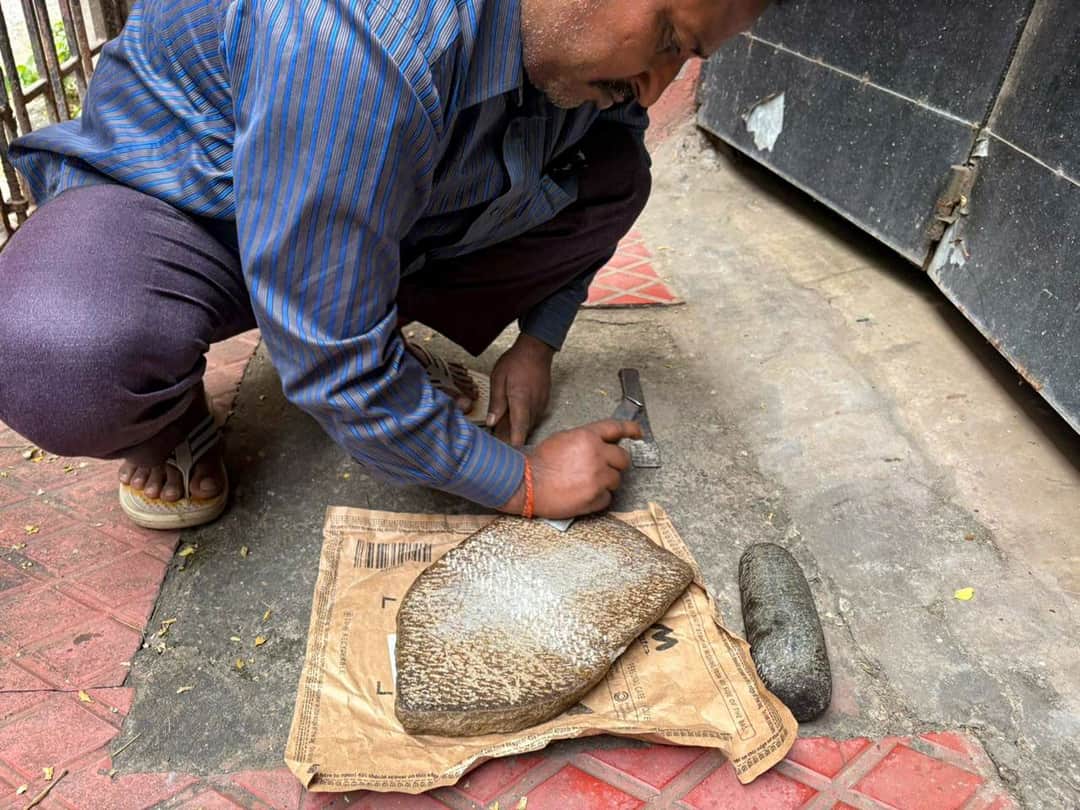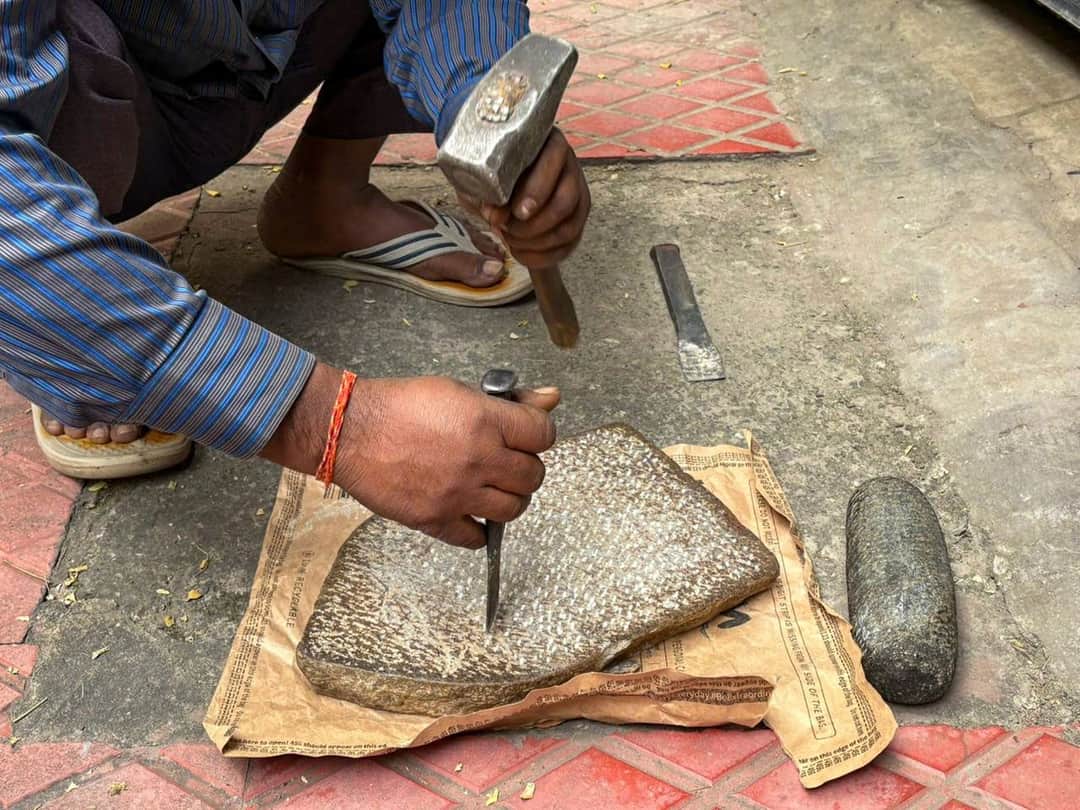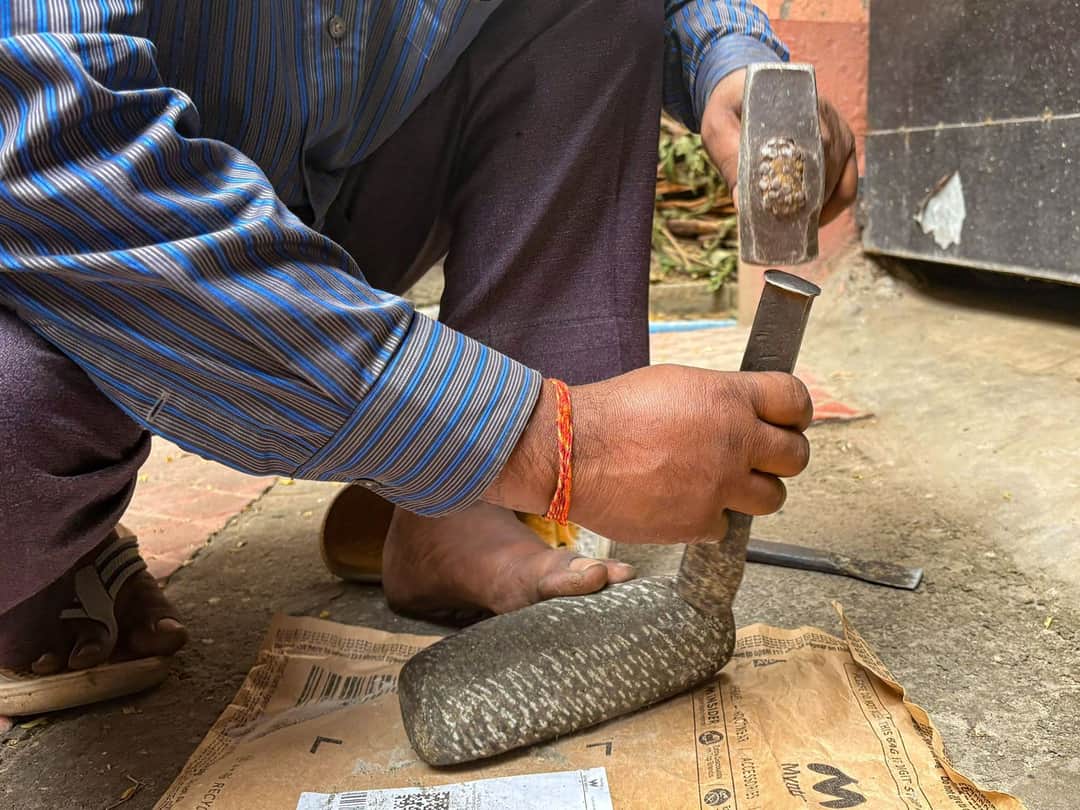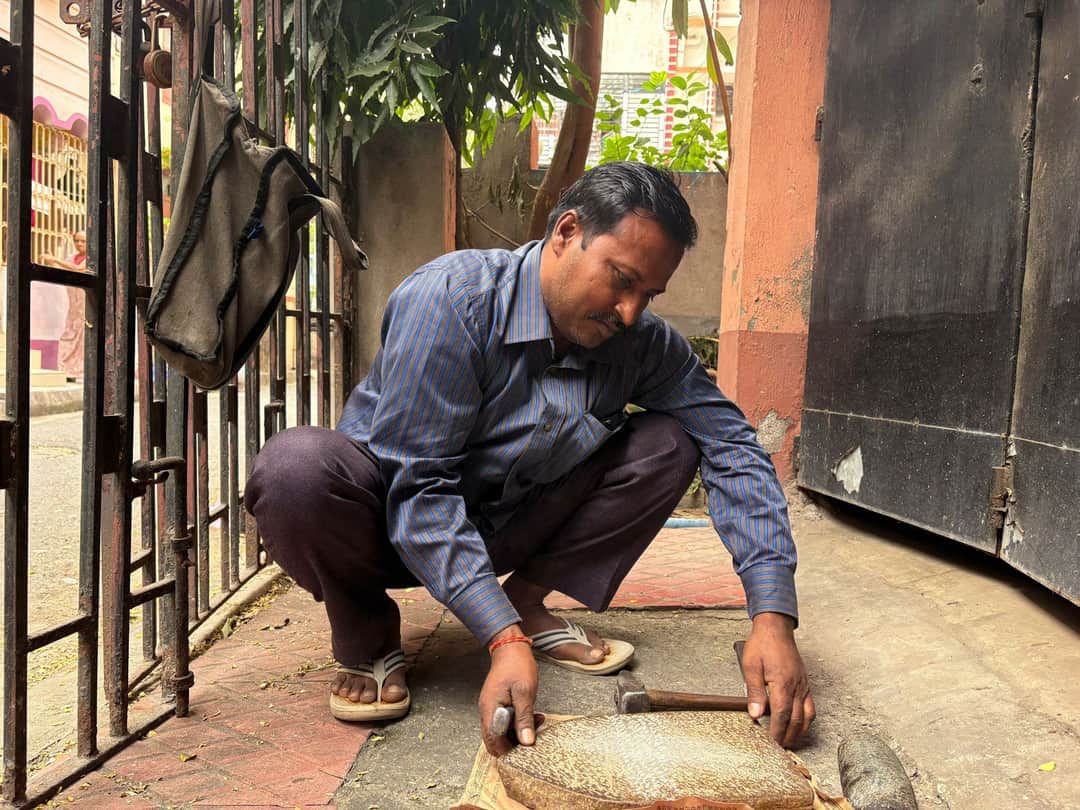

“Shil kata-a-o-o!”
Lalbabu Mahato’s loud, shrill voice rings out in Garia, a neighbourhood near North Sonarpur. It’s half past noon, and other than his voice, the only sound is some idle chatter in the nearby market here in Kolkata.
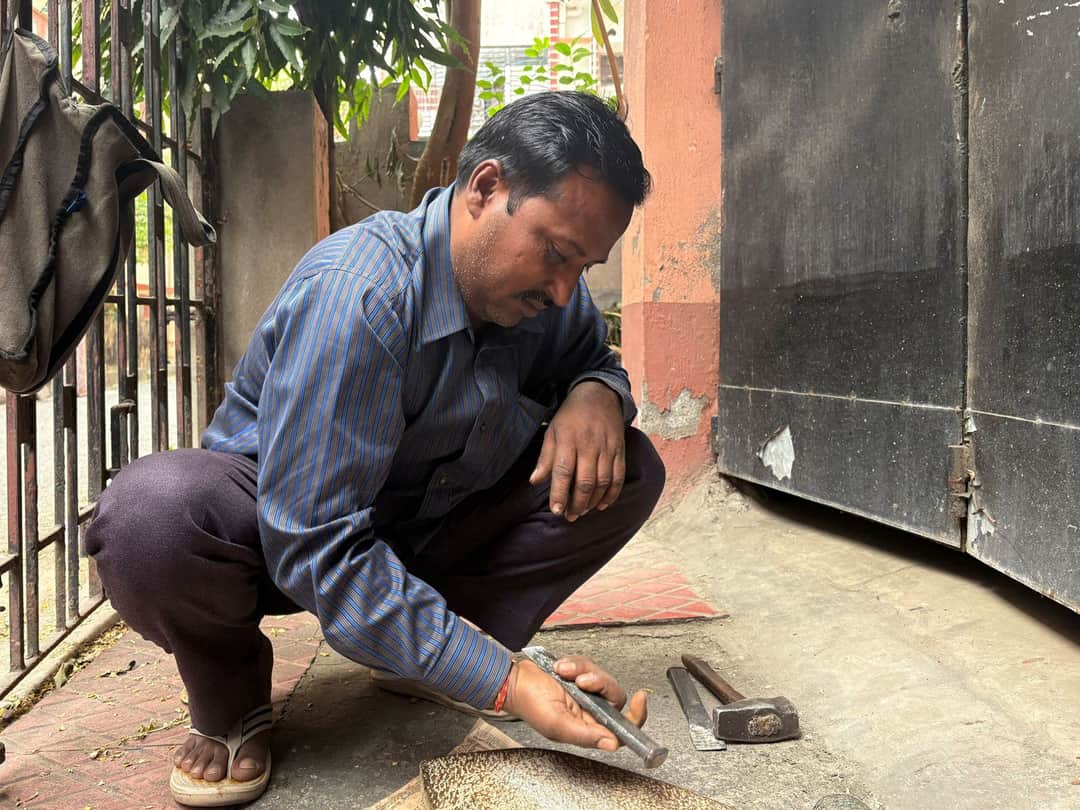
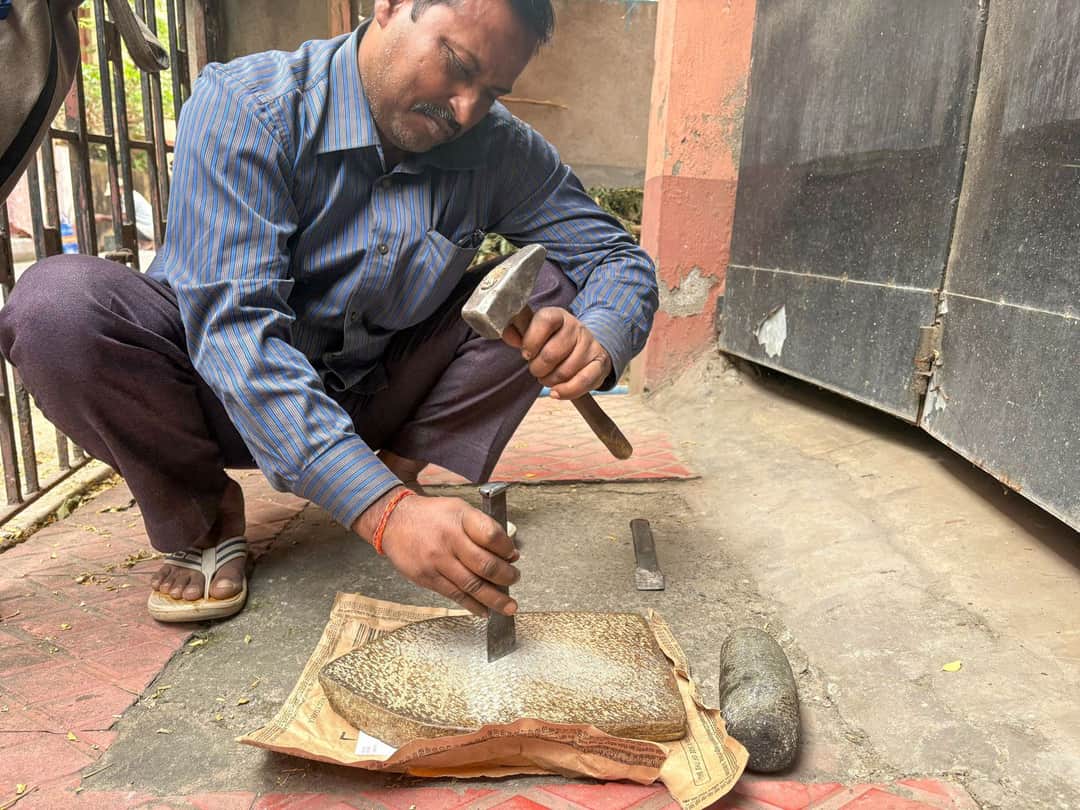
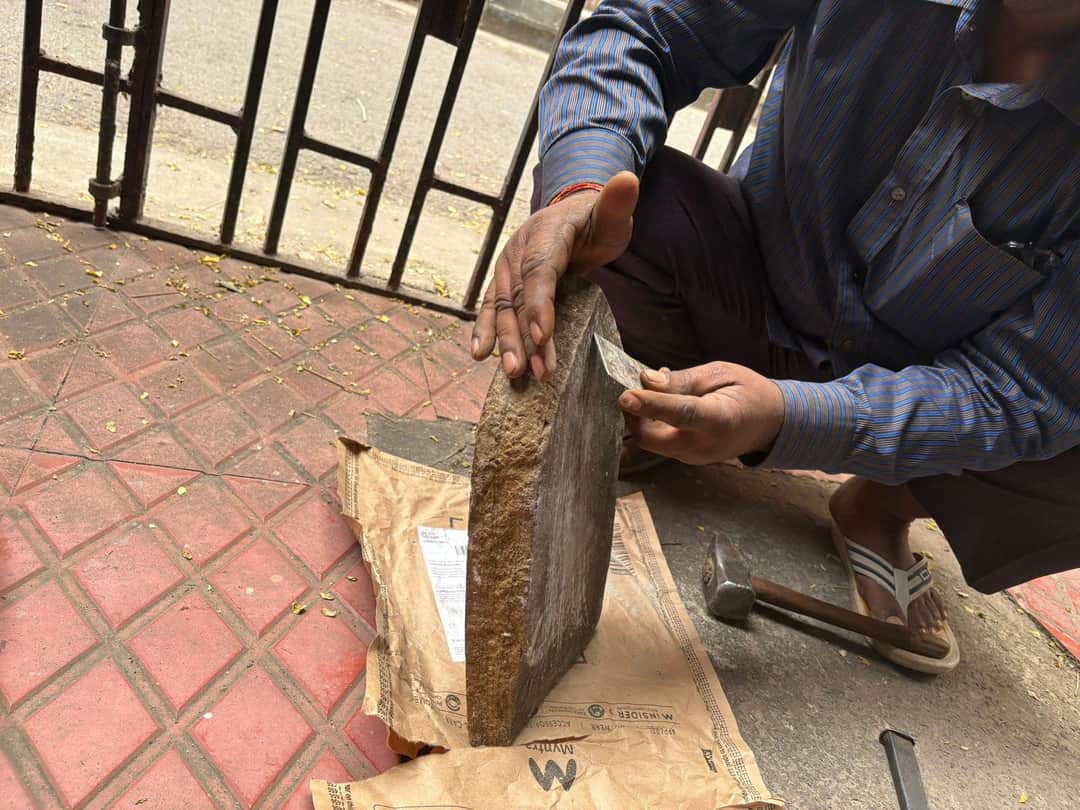
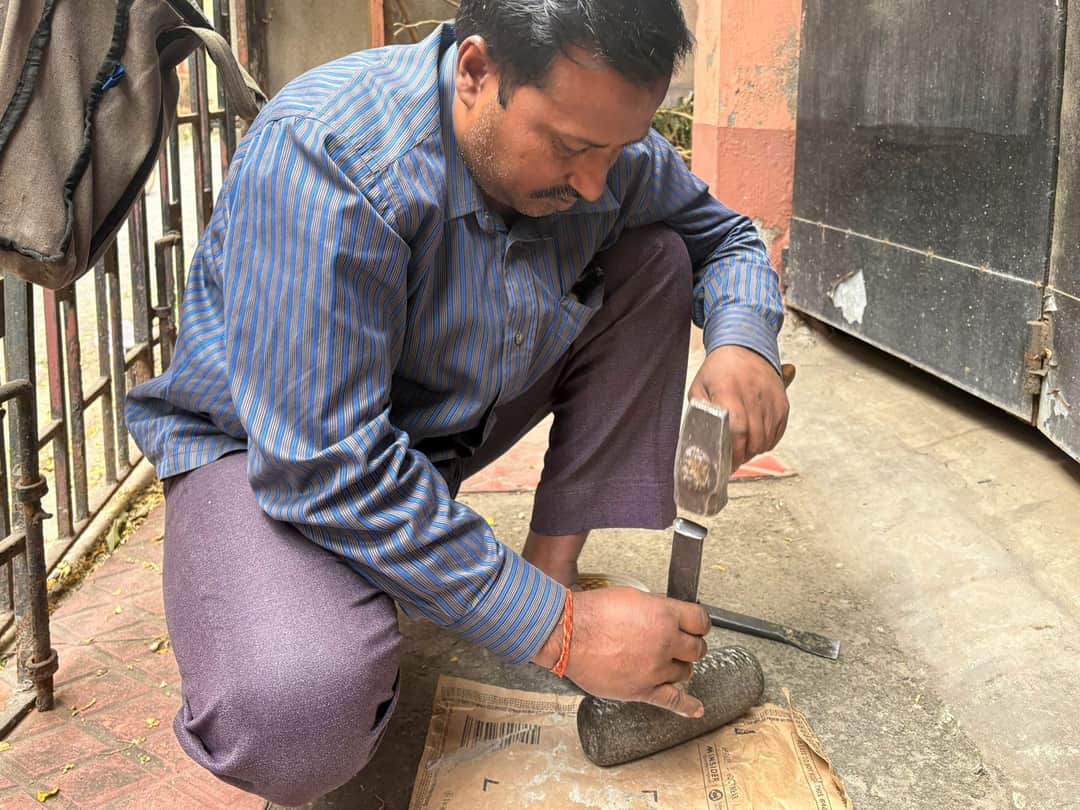
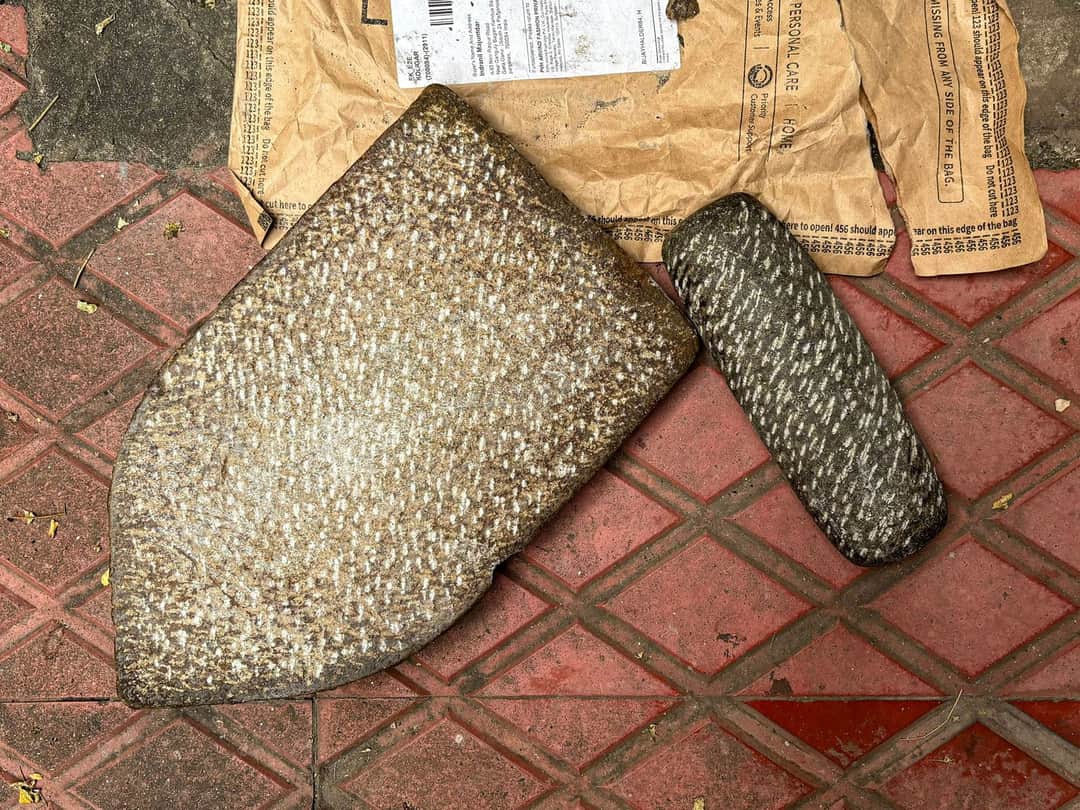
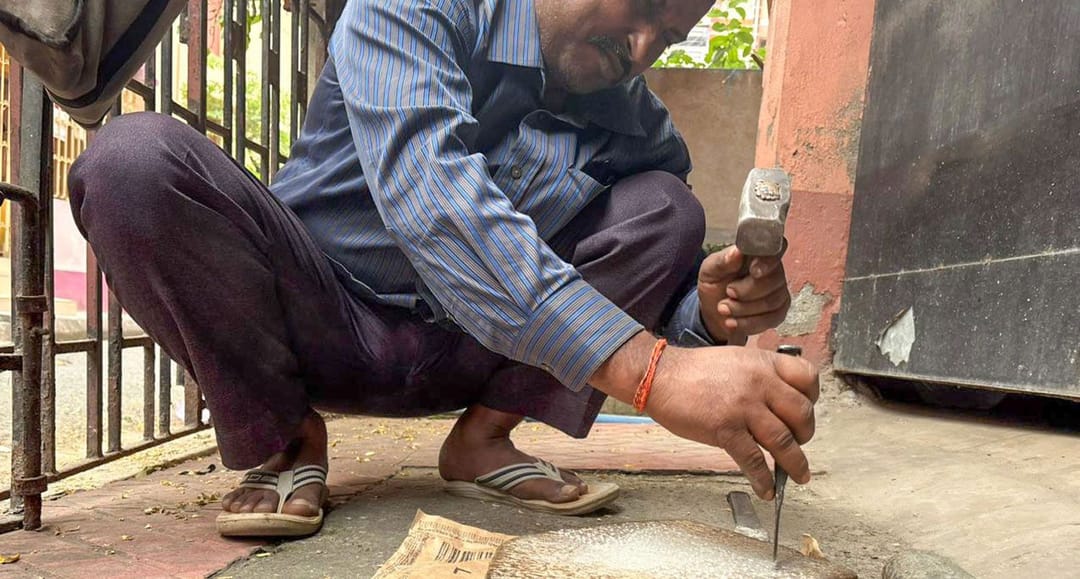
“Shil kata-a-o-o!” he calls again, walking briskly down the lane, hoping for a customer who wants to get their shil nora carved. In Bengal, shil katao is the traditional work of carving designs on a granite grinding stone – shil – and a hand-held grinding tool – nora. Shil-Nora, a variant of the sil batta or the Tamil ammi kallu, is used to reduce whole spices into a wet fragrant paste or powder – central to Indian cooking. Indian cooks believe that only when the steady pressure of the nora lands on the hard shil, do herbs and spices reveal their true flavor profile.
“Its main job is to make the masala more fine. No fancy mixer will give you the same quality,” is Lalbabu’s final word on this important kitchen tool.
“There are hardly any new people practising shil katao as a profession. We are the final generation,” Lalbabu, a migrant from Bihar’s Siwan district, says, “even about 10 years ago when I first arrived here, there were 250 of us in Kidderpore alone. Now, most have grown old, and retired, unfit for such tiring work.”