
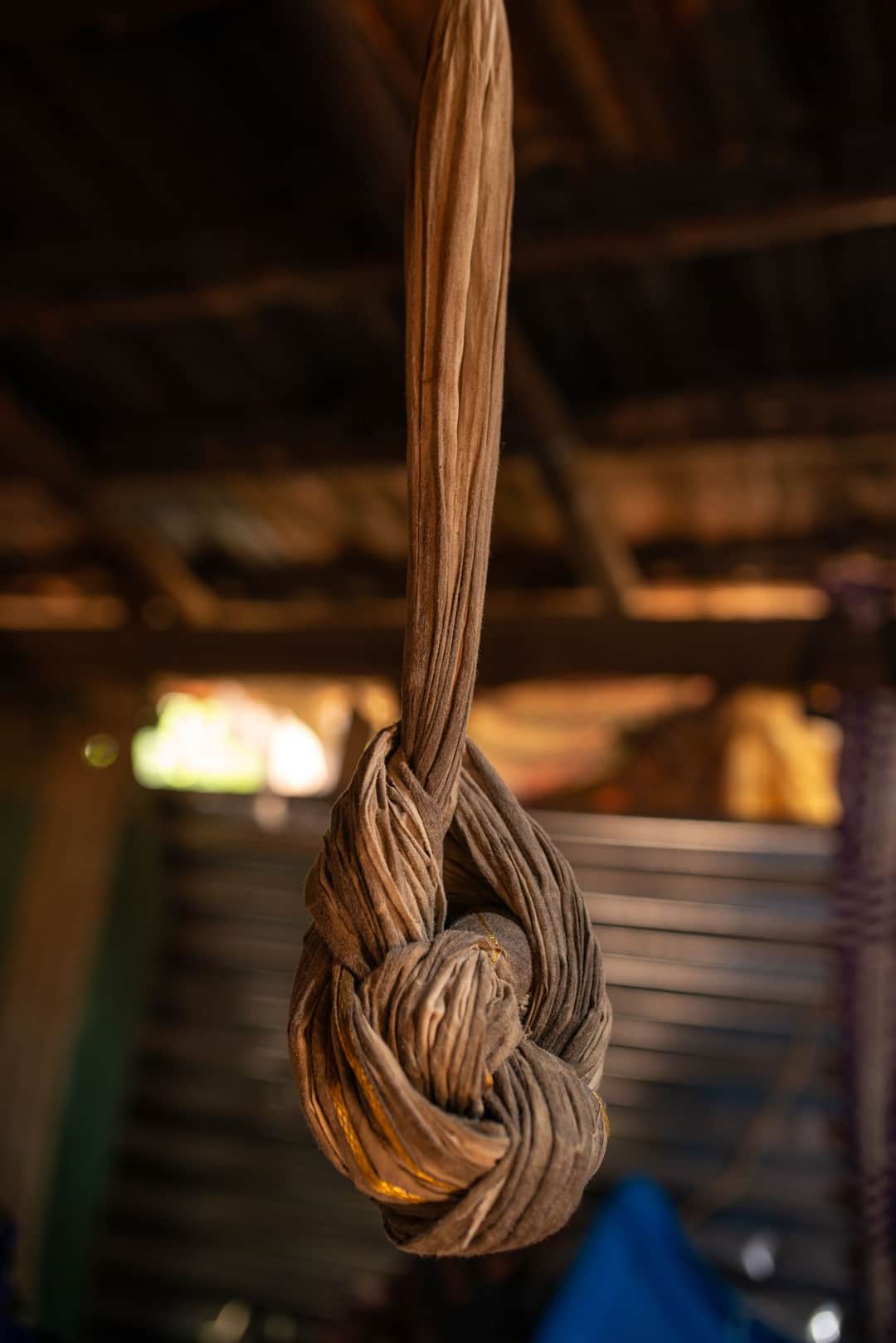
He pulls the rickety wheelchair closer, facing the old hospital bed he is confined to these days. His left hand clutches a rugged cloth hanging from the wooden beam of the roof. Twisting and pushing his torso away from the bed with his right, he gently slides into the wheelchair. Next, he pulls his legs down, holding each one with both his hands, one at a time, till his feet rest on the footplates of the chair. The dexterity with which he does this says he has done it a thousand times before. The same ease with which he once climbed the tall trees inside the forests of the Biligirirangana Hills until...
T
Chamarajanagar, Karnataka
|THU, MAR 19, 2026
The broken-winged bird of BR Hills
A young Soliga Adivasi harvesting honey from tall trees in Karnataka’s BR Hills is left searching for his song after a dreadful accident
Author
Editor
Photo Editor
Listen to Karana Kethegowda singing jenu kuiya haadu, a beehive cutting songs that Soliga honey gatherers sing when they set out to harvest honey
M. Palani Kumar
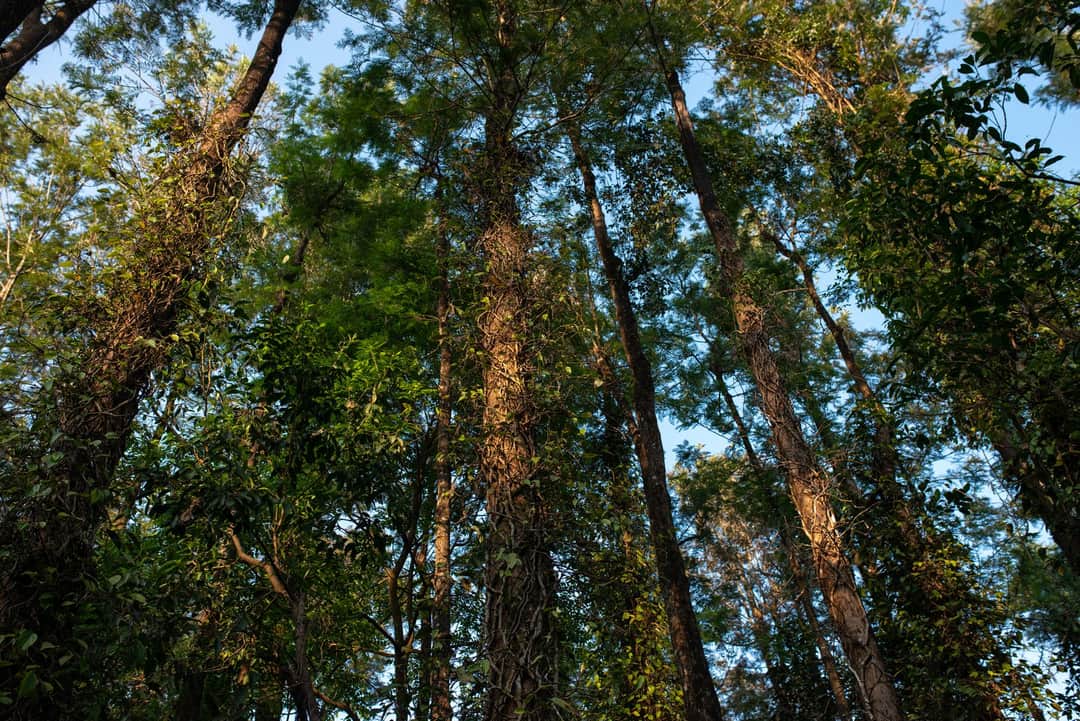
Soliga Adivasis, the traditional forest dwellers and skilled honey harvesters, often climb tall trees inside forests to gather honey
“It was about six in the evening. It was raining. The bark was a little slippery. There was a big hive on a taare mara [Terminalia bellirica]. To cut it, I had climbed onto a honne mara [Pterocarpus marsupium], right next to it. These are big trees. Very tall trees.” The ones Arun Kumar is referring to can grow up to 130 feet.
“I was holding the smoky torch in my hand, but the bees were stinging me, and I wanted to get down fast. Suddenly, my foot slipped and I fell, 25 feet down to the ground, on my back.” He’s speaking of that dreadful evening of May 12, 2024 - the last day he stood on his own two legs.
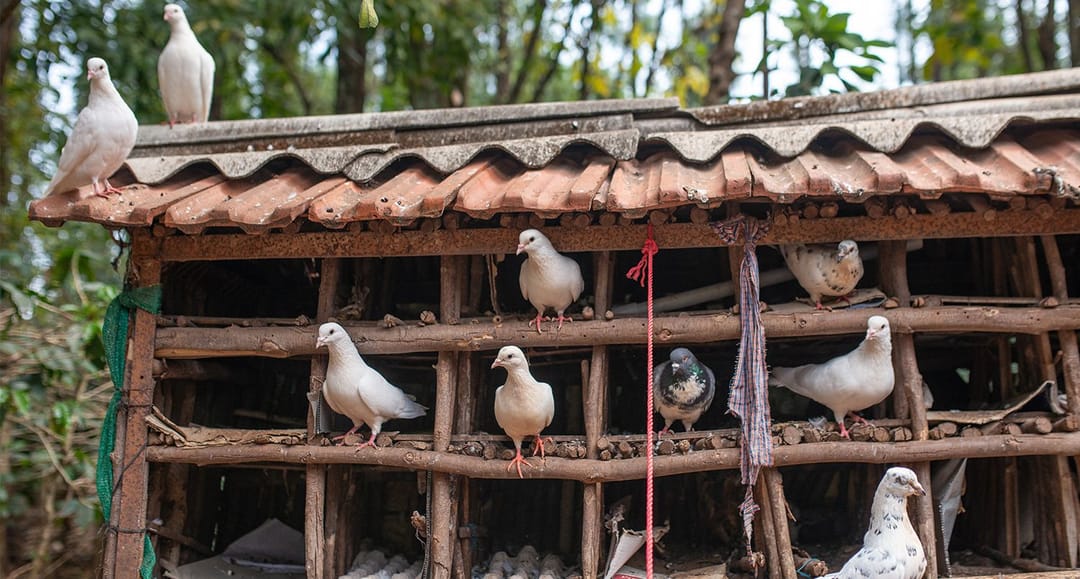
Arun’s hands manoeuvre his worn-out chair through the small door of his 8 x 10 feet tin shed. Dark but for the little light flowing through that opening. It stands, almost hidden, on one side of the brick and mud house where the rest of his family resides. Less hidden, on the other side, are dovecotes on stilts, where a few pigeons that his father cares for live.
Pratishtha Pandya
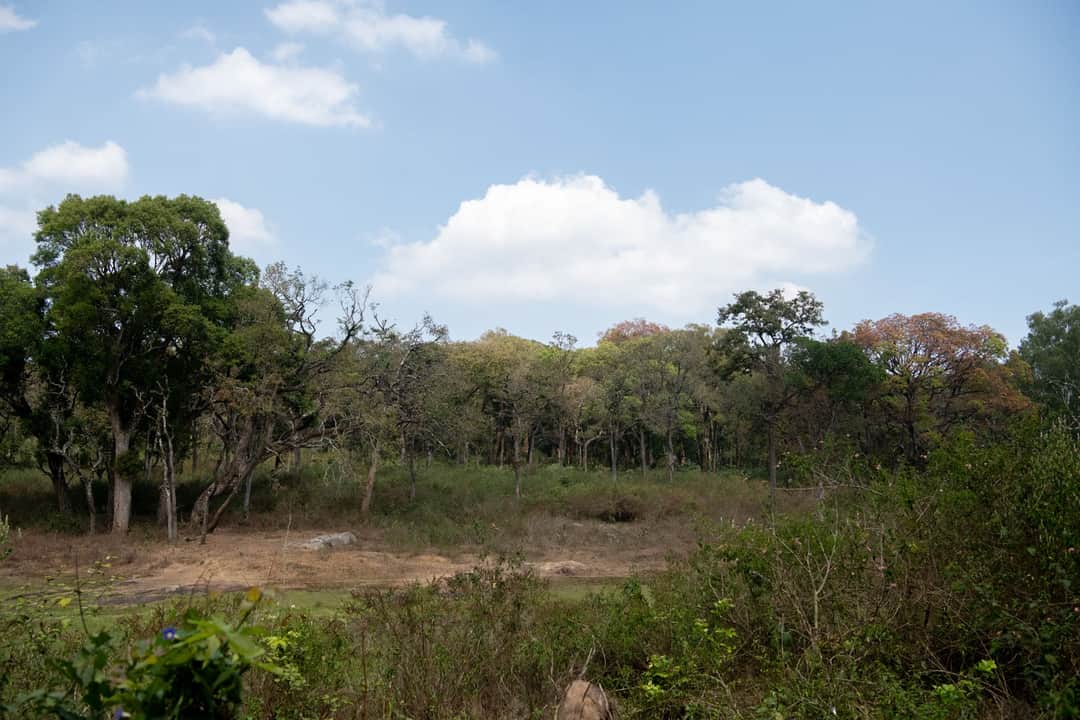
The honey-harvesting season lasts for barely five to six weeks between April and June when rock bees attracted to fragrant flowers migrate to BR Hills
M. Palani Kumar
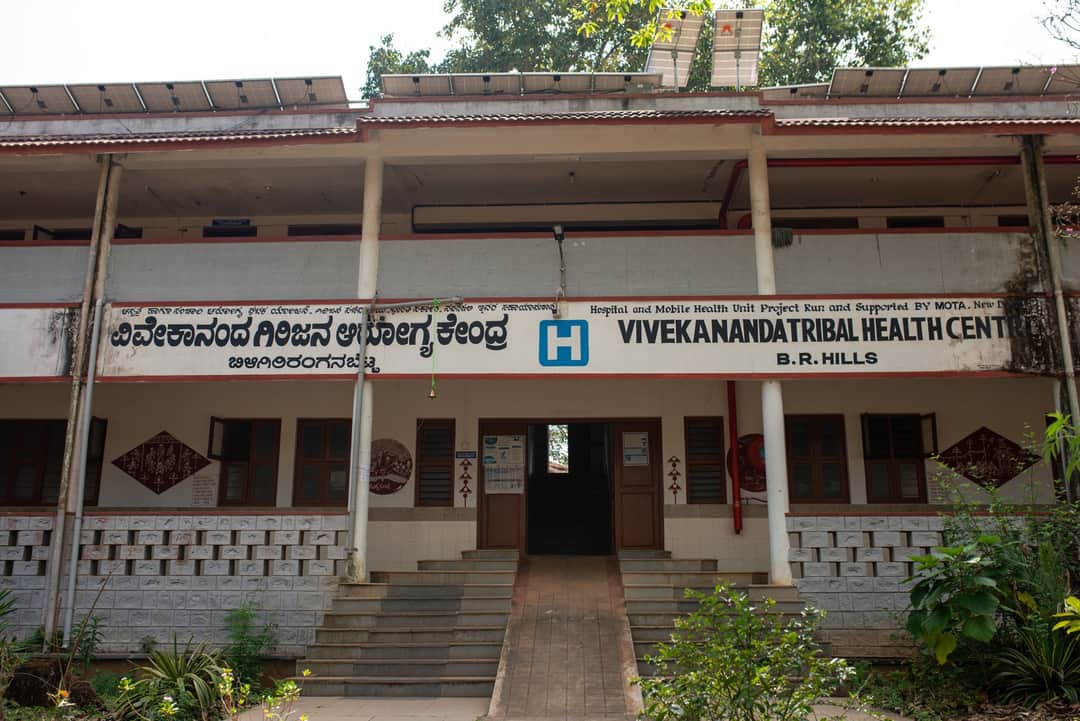
VTHC, supported by the Ministry of Tribal Affairs provides free health services to local communities
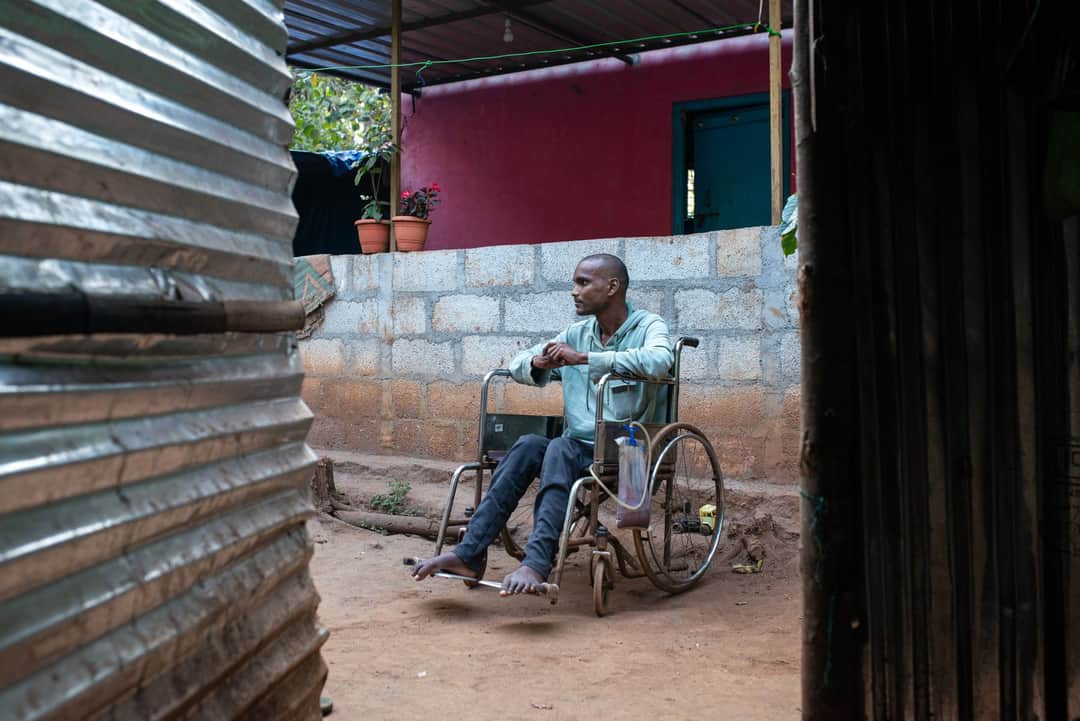
“There’s no one to help. In the morning I take myself out of this room and sit in the sun,” says the 24-year-old, turning the chair towards a little open space behind his room. The sun has just made an entry through the branches of silver oak trees surrounding the space.
Usually, by this time of the year, Arun would have helped the family cut the top branches of these trees to allow the right amount of sunlight to their coffee plants. This year they are dependent on paid labour. That being expensive, the trees grow unchecked.
Arun moves into the spotlight of the winter sun.
“I used to harvest honey to earn something during the season. It lasts only for five to six weeks between April and June,” he says. “During summer there were no jobs outside. At home too, there were money problems. So, four-five of us friends made a group and started doing this for a little income.” Small amounts that helped run their households.
Courtesy: Arun
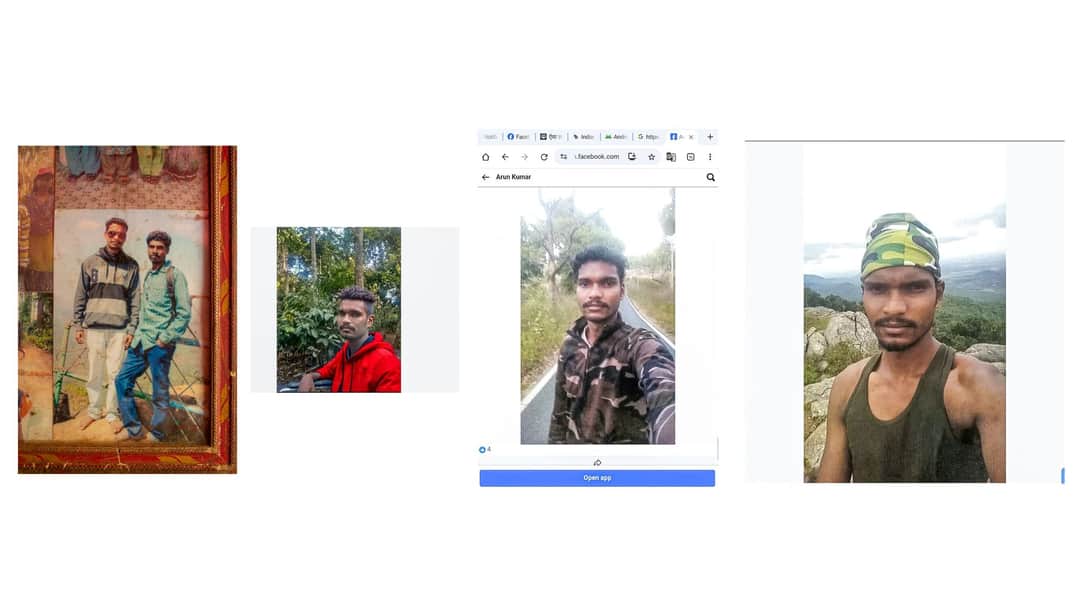
Arun learnt to climb trees and harvest honey by watching his friends. He continued doing it even after he started migrating for work
“I loved hanging around with my friends but didn’t follow much of what was going on in the classroom. I quit in Class 7,” Arun says. “I learnt to climb trees and harvest honey by watching other kids. In the beginning it was scary, but I got the hang of it. People usually march to the trees singing jenu kuyyo haadu [a honey gathering song]. I never learnt that song.” Soligas are skilled traditional honey collectors. But Arun’s father, M. Sannarange Gowda, 53, was not one for long.
Gowda is a farmer and community activist in Chamarajanagar district. In the 1970s, the government pushed the Soliga Adivasis to settle in podus (small settlements) inside the forest and give up shifting cultivation. His family has farmed the two acres they were given in Muttugadgaddu podu of Yelandur taluka since 1974.
Courtesy: Arun
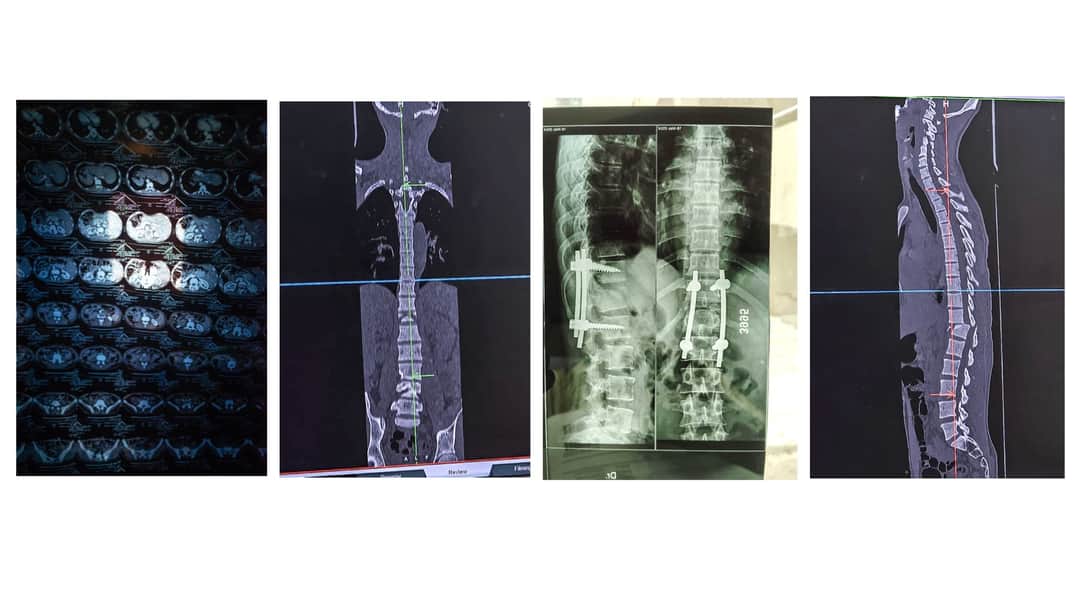
Arun fell from a tree 25 feet down to the ground while he was harvesting honey, badly injuring his spinal cord. He lost movement from waist down that has not returned after a surgery
“We used to cultivate avarekai (hyacinth beans), jola (great millet), togari (pigeon pea), ragi (millet). But elephants and pigs ravaged those crops. So, in the 1990s we shifted to coffee cultivation,” says Gowda.
After dropping out of school Arun helped his father in his farm – planting, pruning, cleaning the surroundings, weeding, plucking berries. He tried to earn by doing other small jobs. “I did whatever work I got, chopping trees, cutting wood, collecting honey, pachi (lichen). Some days I would get even 1,000 rupees, but the income was never steady.”
“Young Soligas don’t find work outside. They’ve no other skills, and education doesn’t ensure jobs,” says Dr. C. Madegowda, an activist and the community’s first PhD scholar.
At 18, Arun started migrating, first to Bangalore as a construction labourer and later to coffee and pepper plantations in Karnataka and Kerala. He would return in March-April after the harvest.
Those months mark the honey collection season in his village.
M. Palani Kumar
After the surgery Arun remains confined to his tin shed, a tiny dark room without much light except that which enters through its only door
M. Palani Kumar
The rugged cloth in the shed that hangs from the wooden beam in Arun's shed, which he uses to move himself in and out of his hospital bed
“You don’t get beehives on every trip. You don’t go to the forest every day of the season either. Only four-five times a month. We’d go in the morning, within a 15-kilometre radius, to check the jenu gudu (beehives), come home, and return in the evening for honey collection. But often, we’d go deeper inside the forest, carrying food for two-three days,” says Arun.
Their earnings depended on the number and size of hives they found. They could collect up to 60-70 kilograms of honey on one trip. Once home, they poured it into cans, filtering it through a clean cloth net. These they sold to an agent for 200 to 300 rupees a kilo, dividing the money equally.
“Three of my friends were with me.” Arun recalls the fateful day. “I tried getting up after the fall. But I had hit the ground on my back and the pain was unbearable. My bones were broken. I just couldn’t move. My friends spent hours with me as it was already night, lighting a fire to protect us from wild animals. In the morning, village people came along and then the ambulance took me to the hospital.” That is, the nearby Vivekananda Tribal Health Centre (VTHC).
M. Palani Kumar
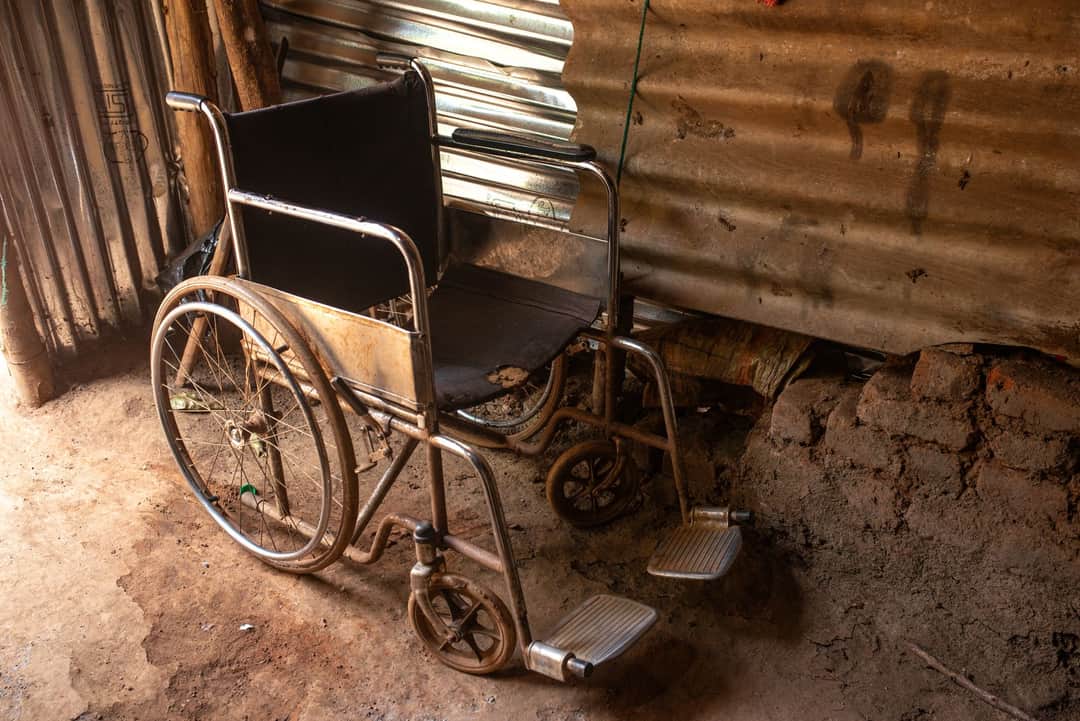
The old wheelchair in one corner of the shed, Arun manoeuvres it through the small door on his own when he moves out to sit in the sun for a while
“Since that morning it’s been years of hospital visits,” says his father. VTHC doctors found that Arun had lost all power from waist down. His spinal cord had suffered critical damage. “They sent us to the Chamarajanagar Institute of Medical Sciences (CIMS). There, the doctors said his bone was jammed and he needed an operation. And a nerve was also cut. The hospital kept the reports. We were given medicines and injections,” says M. Sannarange Gowda.
After a surgery at the CIMS to fix the broken spinal canal and prevent further injury to the nerves, Arun returned to VTHC. There, the staff trained the primary caregivers in his family, including Arun’s young wife.
M. Palani Kumar
'There's no one to help. In the morning I take myself out of this room and sit in the sun,' says Arun
M. Palani Kumar
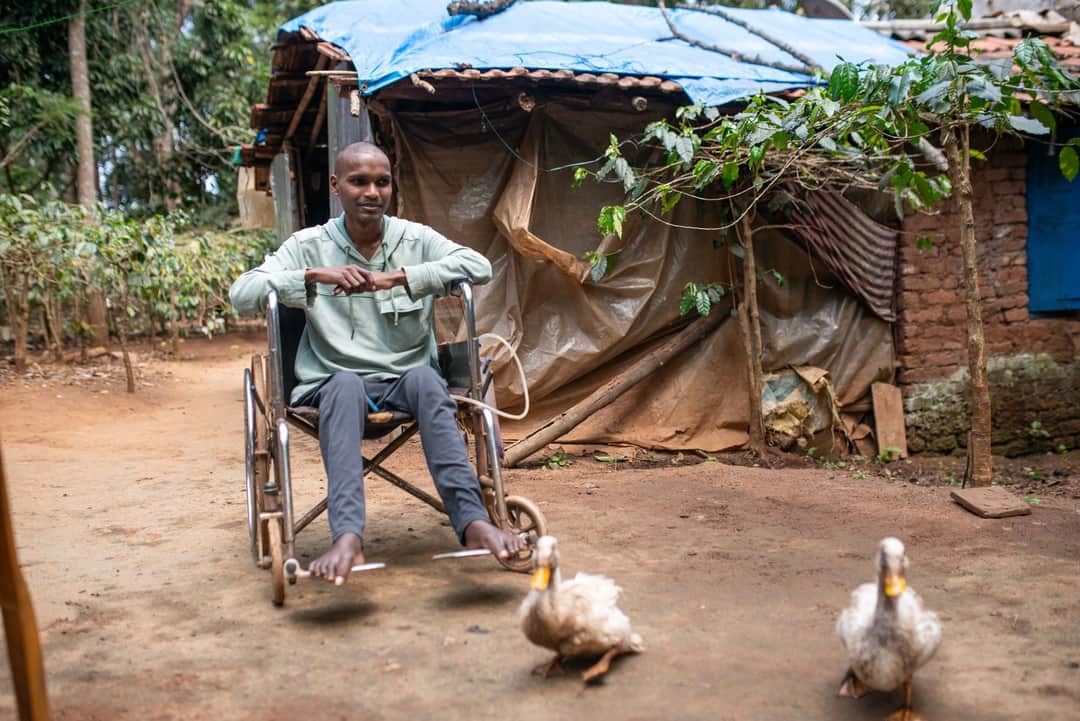
Arun sits in the open space behind his shed that stands on one side of his brick and mud house where the rest of the family resides
They were married just six months when his horrible accident happened. “His wife used to take care of him completely until…” Arun’s mother Masanamma, 45, can’t complete that sentence. “We’re in the forest the whole day. He stays at home, watches his mobile. No friends visit him as they used to. He gets bored, feels helpless. I can’t do anything. I worry. That is all,” she says.
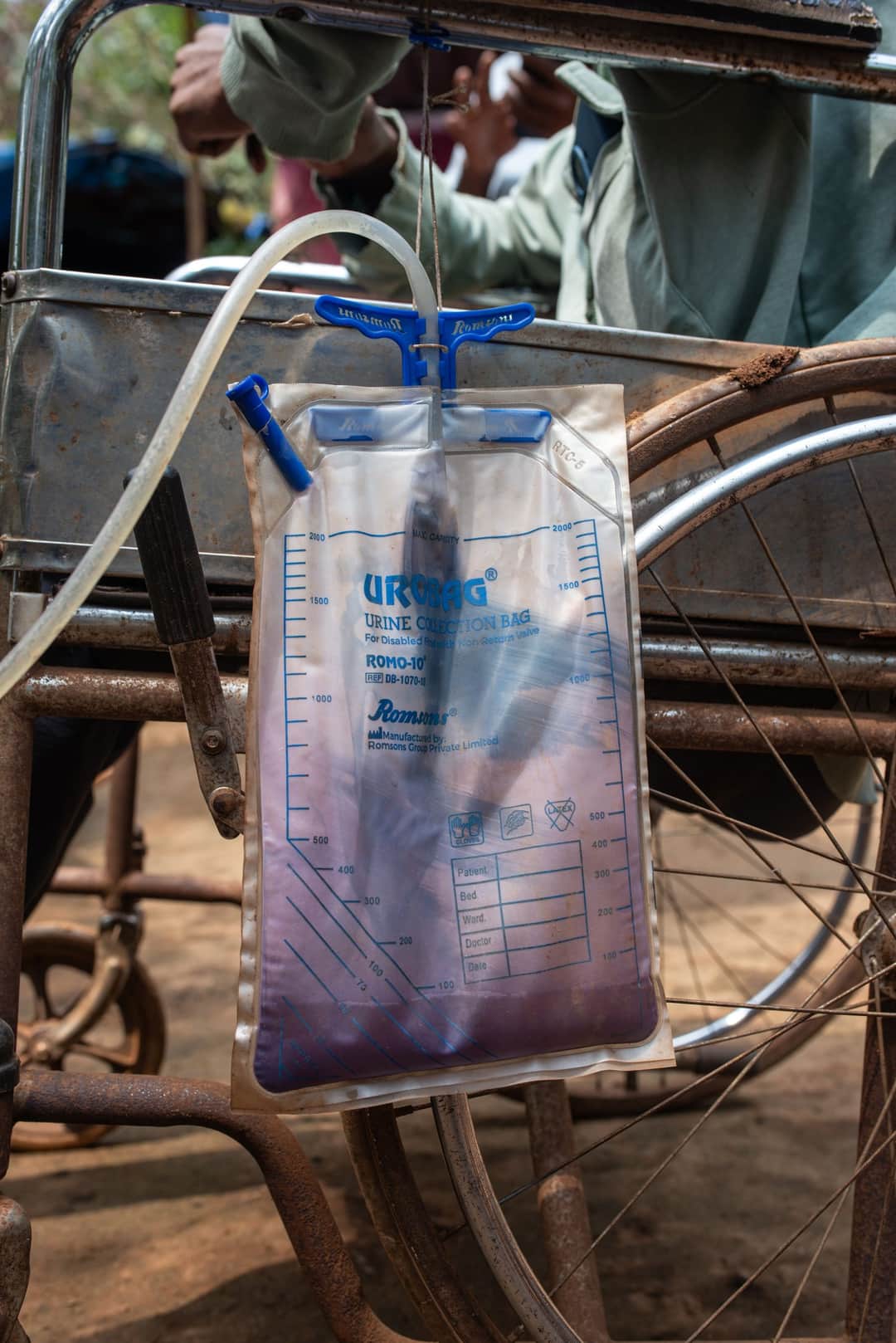
“I don’t know what the doctors told my parents. To me they said that I could be back on my feet. They asked me to try and walk. But there was no support, so I did not attempt it,” says Arun. His fingers play with the plastic tube of the catheter bag resting on the left arm of his wheelchair.
Soon after his surgery Arun developed a urine retention problem. VTHC doctors’ attempts to resolve it failed. Arun had a painful, palpable bulge in the lower abdomen. June 2024 saw another round of hospital visits. First to CIMS; then to a urologist in K. R. Hospital, Mysore, where he was admitted for further investigations and discharged five days later.
M. Palani Kumar
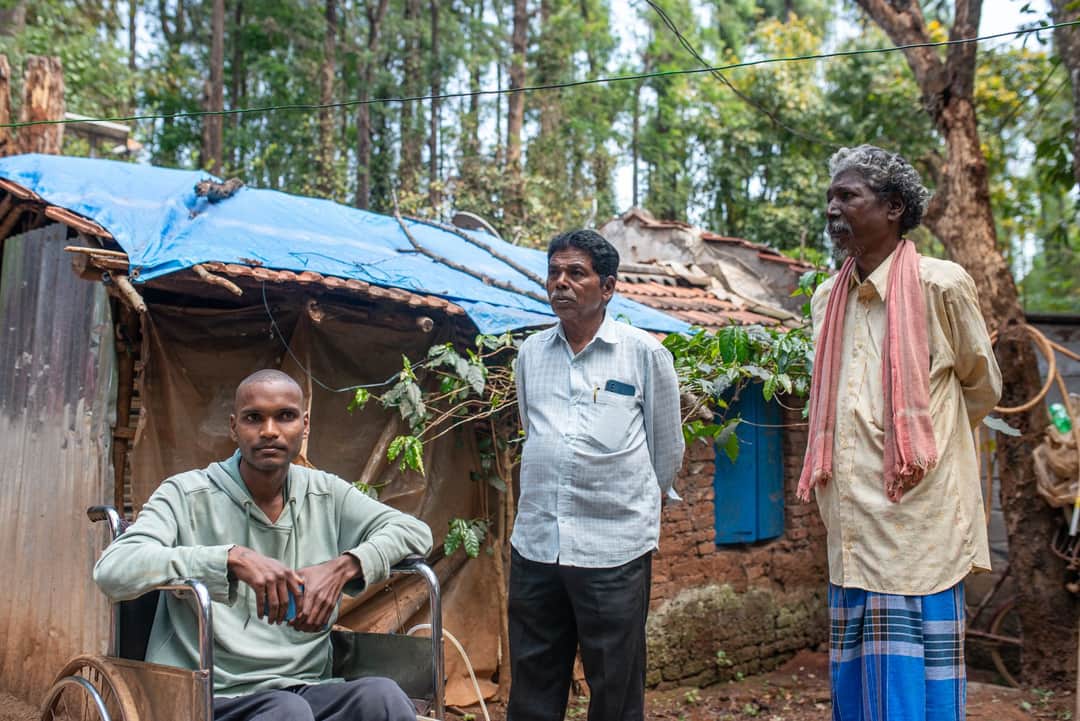
Community activist Karana Kethegowda (left) with Arun and his father M. Sannarange Gowda (right), who cultivates coffee on his two acres of land
Pratishtha Pandya
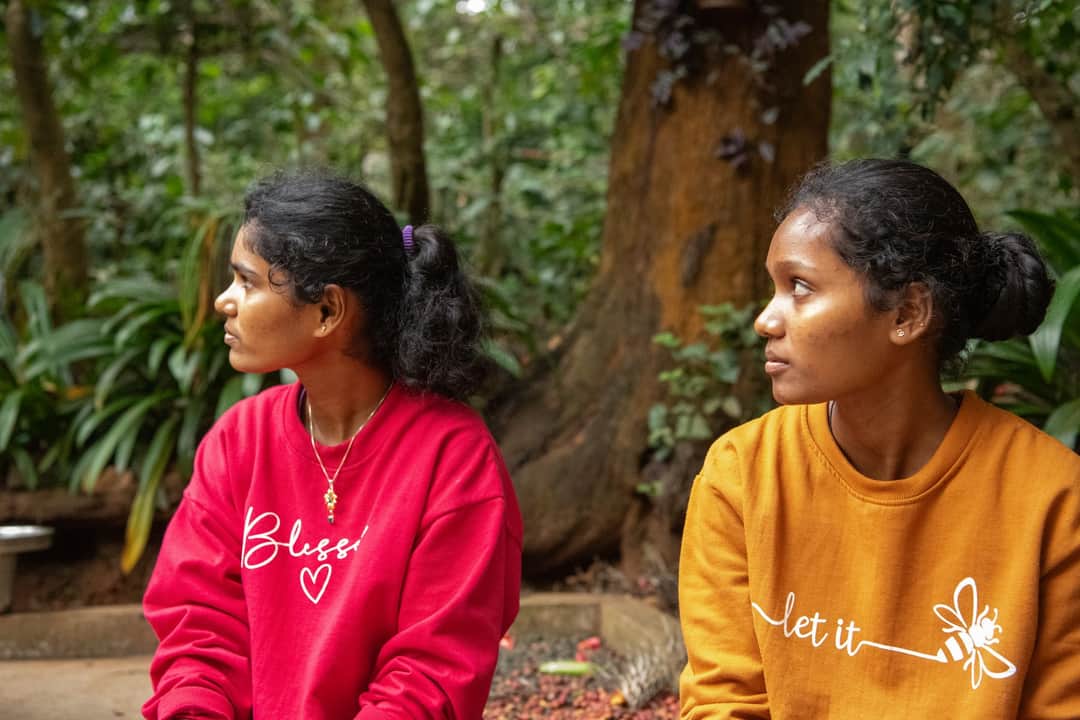
Aruns sisters have little time to spare. Shobha, 25 is married. And Prema, 24, (in red) and Manjula, 22, are first generation college students
The problem kept recurring all through July and August. Each time, Arun was admitted for a few days in Mysore under a urologist’s care. Often, he had infections demanding treatment with antibiotics. Sometimes his blood pressure would rise, requiring anti-anxiety medication. Caregiving became more difficult.
“Once the urine problems happened, we had to make several visits to Mysore,” says Arun’s father. “Treatment in government hospitals is free, but vehicles charge 3,000 rupees to reach Chamarajanagar, 5,000 for Mysore. Add to that food and stay… Each trip cost 10,000 rupees – minimum.”
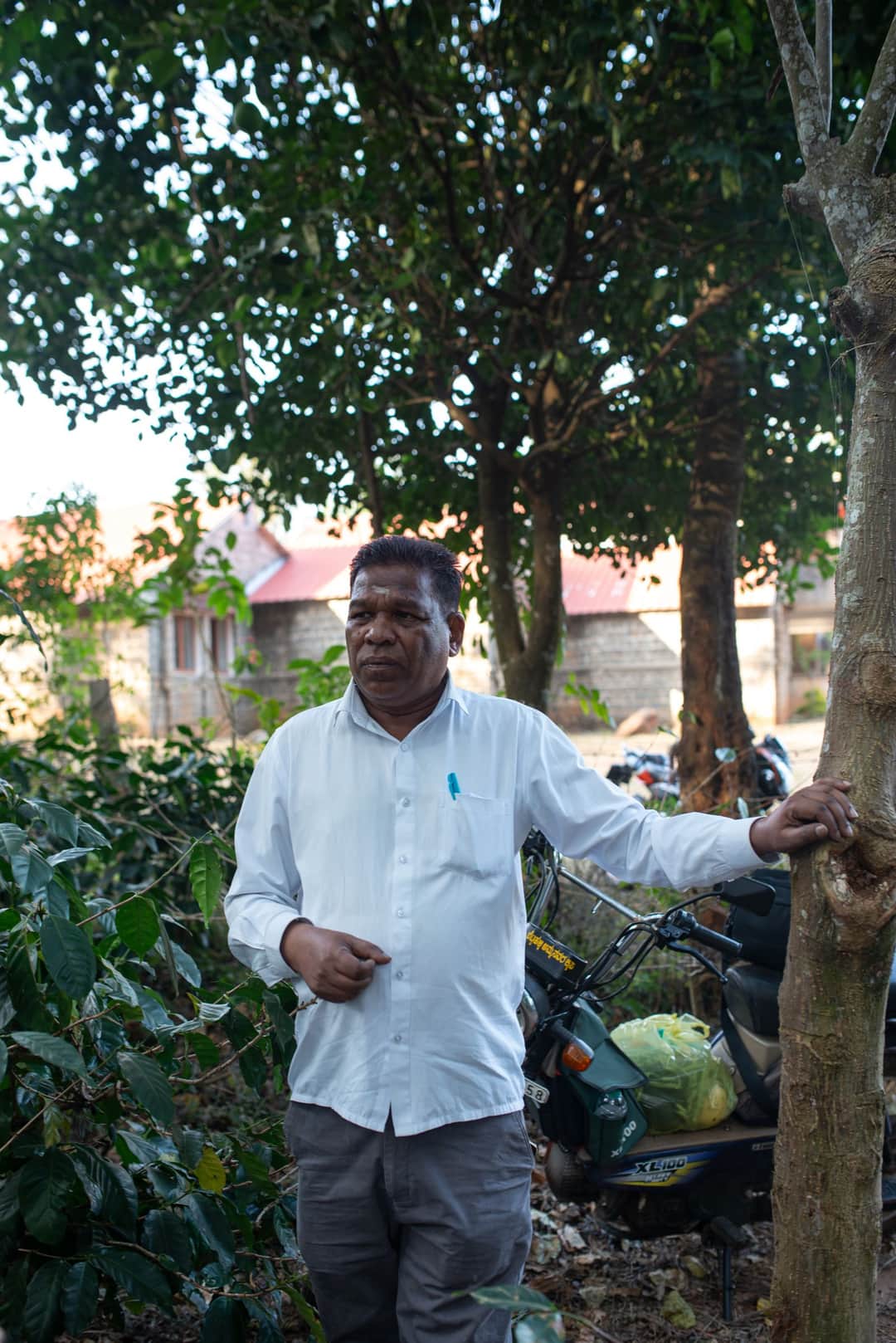
The government does little for people like Arun says Dr. Madegowda. “Tiger killings, elephant attacks can draw compensation of some 20 lakhs. Even the Large Area Multipurpose Societies offer insurance policies covering serious accidents and health issues. But if you fall from a tree harvesting honey there is no insurance, no compensation.” Adivasi forest gatherers across India, including in BR Hills, face these issues. “Before Arun, another boy in Keredimba podu fell from a tree and lost his leg.” The cooperative society sometimes offers Rs. 2,000 – 3,000 as compensation, but that’s never enough to survive on.
Pratishtha Pandya
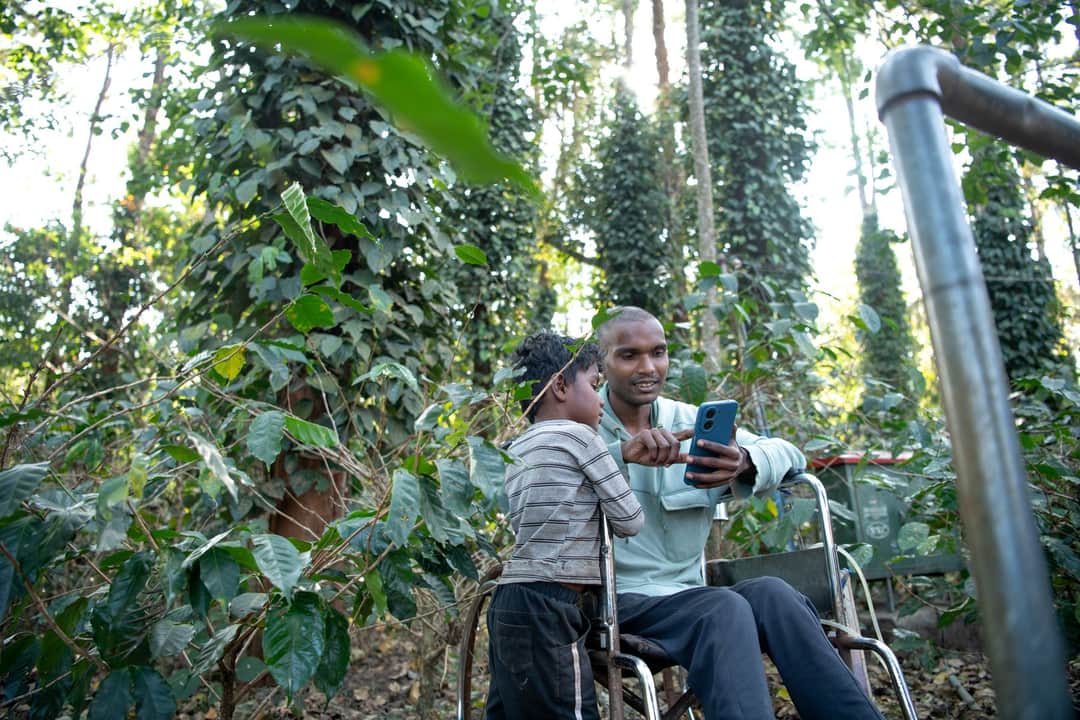
Often Arun sits by himself and watches something or the other on his mobile. On some lucky day he has his sister's 5-year-old son Deepak for company
The doctors could only “correct [Arun’s problem] partially,” says his father. “K.R. Hospital says he needs treatment in a bigger facility. We don’t have money. Now a [VTHC] doctor comes to change his catheter every three months, without charging. When serious blockage happens, we have to go to Chamarajanagar.”
Arun’s days have completely lost their familiar rhythm.
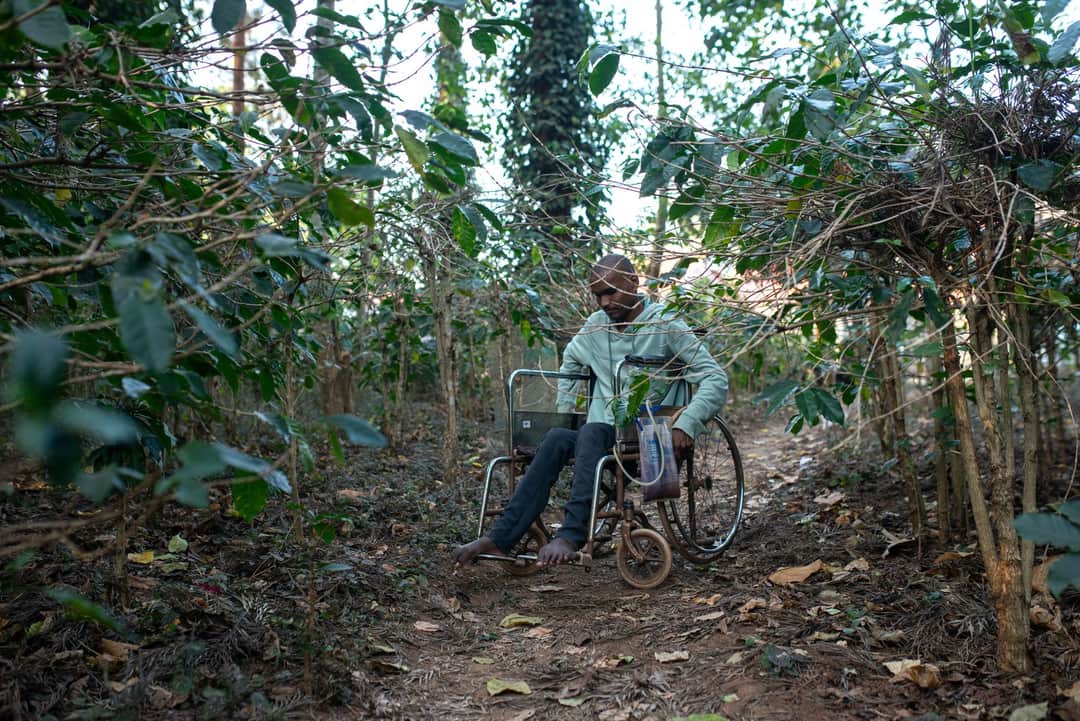
“I simply sit here from morning, sometimes pulling my chair as far as the main gate. Or sit in the sunlight for a while. Then I return to the room. Previously, everyone was together [in the main house]. After the injury – no one. I keep watching something or the other on the mobile. This shed was built earlier. I moved here thinking it would be easy to roam around. There is no one to support though. I do not like the way I am.
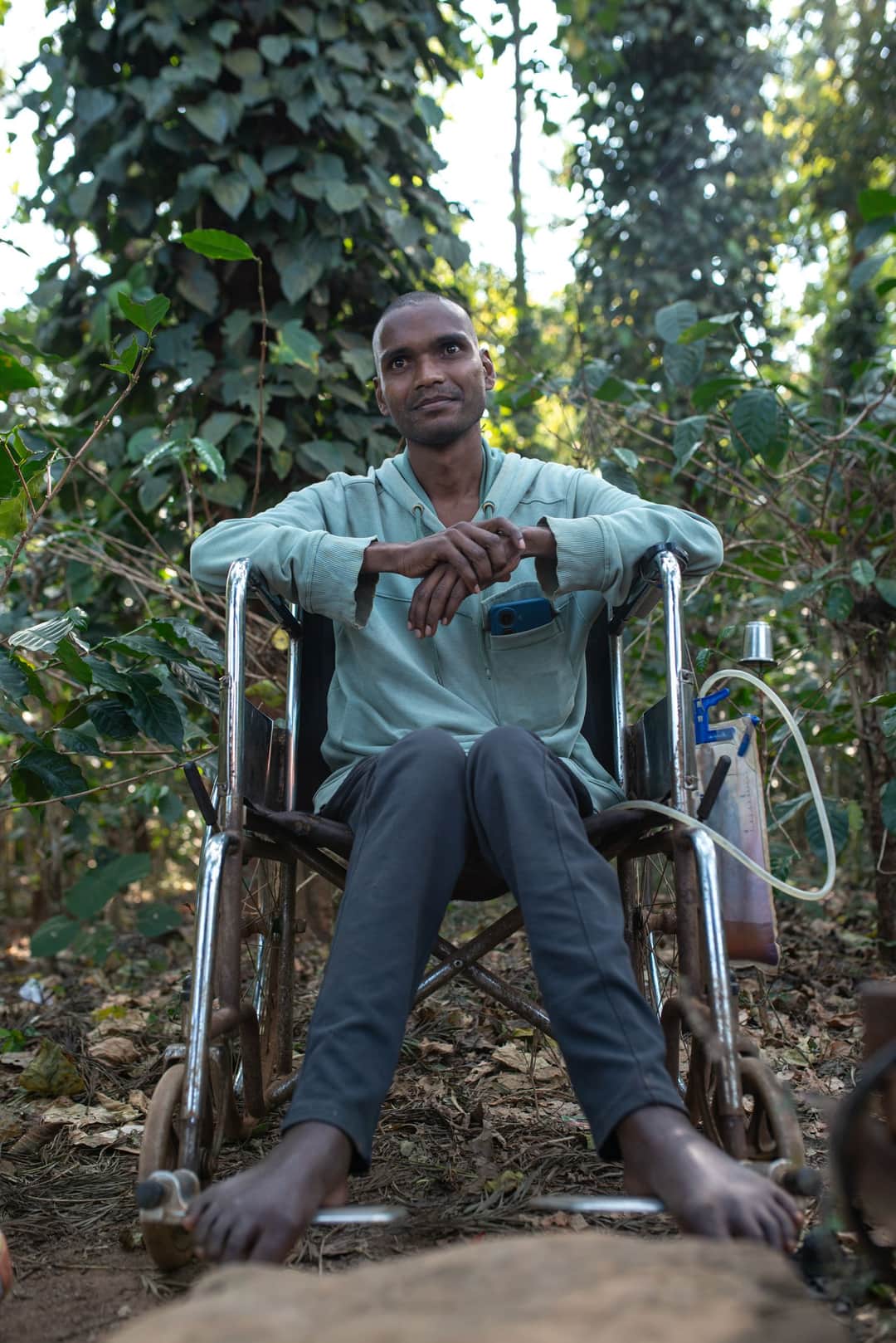
“Even my wife left me,” says Arun. “She used to take care of me. But when things didn’t improve, she left. Once she called me and said, ‘I will come back when you are fine.’ It has been three months since she left.” Arun’s voice is as soft and fragile as his body.
M. Palani Kumar
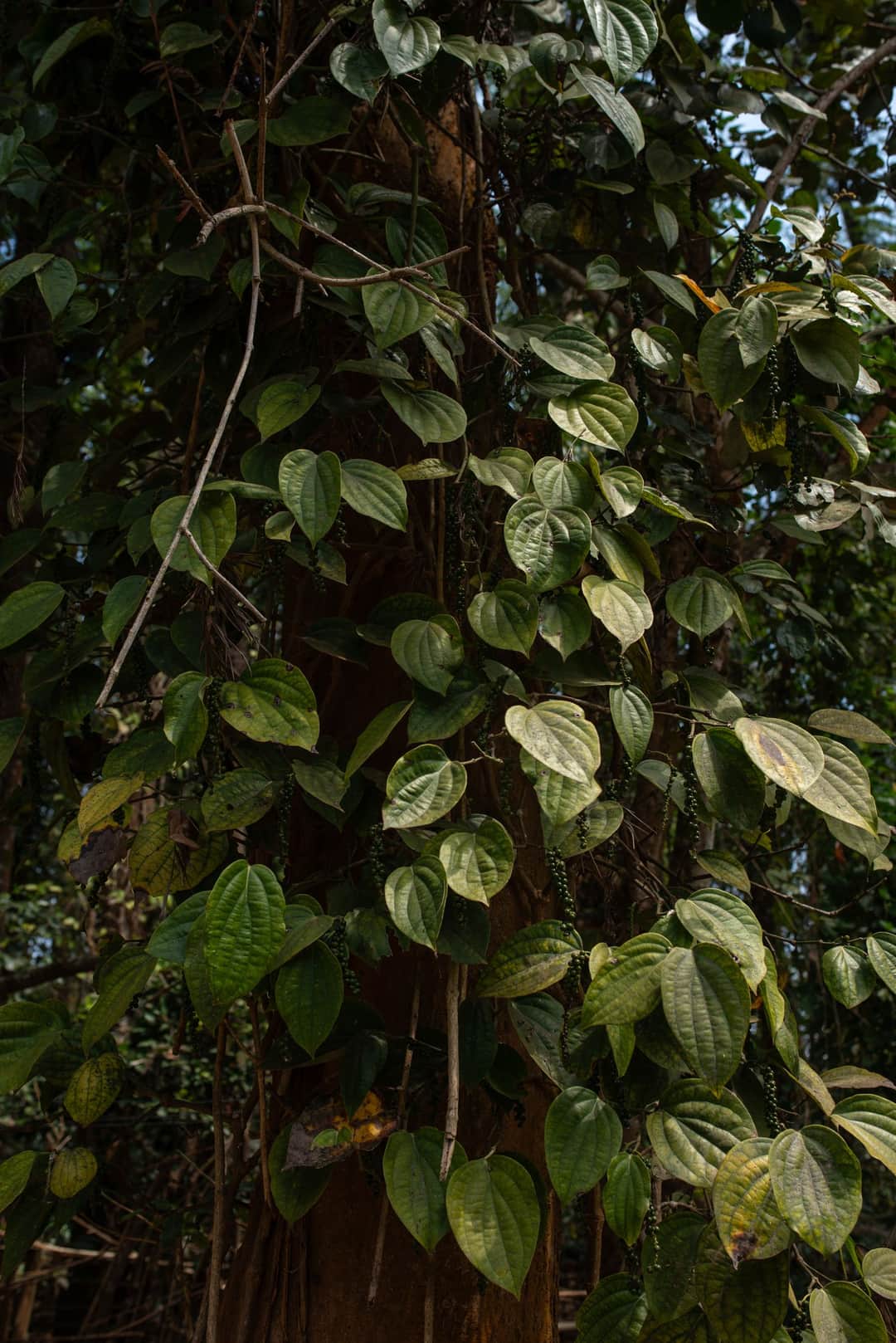
Arun's family shifted to coffee and pepper cultivation as elephants and pigs used to ravage other grains and legumes they used to grow earlier
M. Palani Kumar
After the spinal surgery, Arun developed a urine retention problem requiresing another set of visits to doctors and hospitals
“I give him breakfast, dinner,” says Arun’s mother. “I bathe him as well. If he has to go to the toilet his father handles it.” I see a bag of adult diapers hanging in his room. “We spend 1,500 rupees on that every month,” his father says.
“His sisters speak to him for 5-10 minutes in a day, they have college work.” His mother pauses and then: “the only thing we expect him to do is to walk around a little and help himself.”
“For that we need a big hospital,” says his father, quickly.
“I won’t admit him anymore,” she says rather brusquely. “Last time we did, nothing changed. I’m not ready to do it all over again.”
“My wife does not like hospitals, so she ...” Gowda begins to explain.
M. Palani Kumar
Arun was married for barely six months when the accident happened. His wife who used to care for him left when things did not improve after the surgery
M. Palani Kumar
C. Madegowda an activist and the first research scholar from the community speaks about the absence of support and compensation for forest produce gatherers like Arun
“Who will take care of him there?” Masanamma retorts before he can finish. “No one. If we go, there is no one to look after things here. We cannot. It’s tough for us.” And she abruptly gets up and leaves to take care of the plantation work. Perhaps seeking in her work, an antidote to her grief.
Arun can’t go back to work. He must wait. Wait for someone to attend to him. Wait for time to pass.
M. Palani Kumar
Sometimes Arun takes himself all the way to the main gate of their farm to watch the school children play
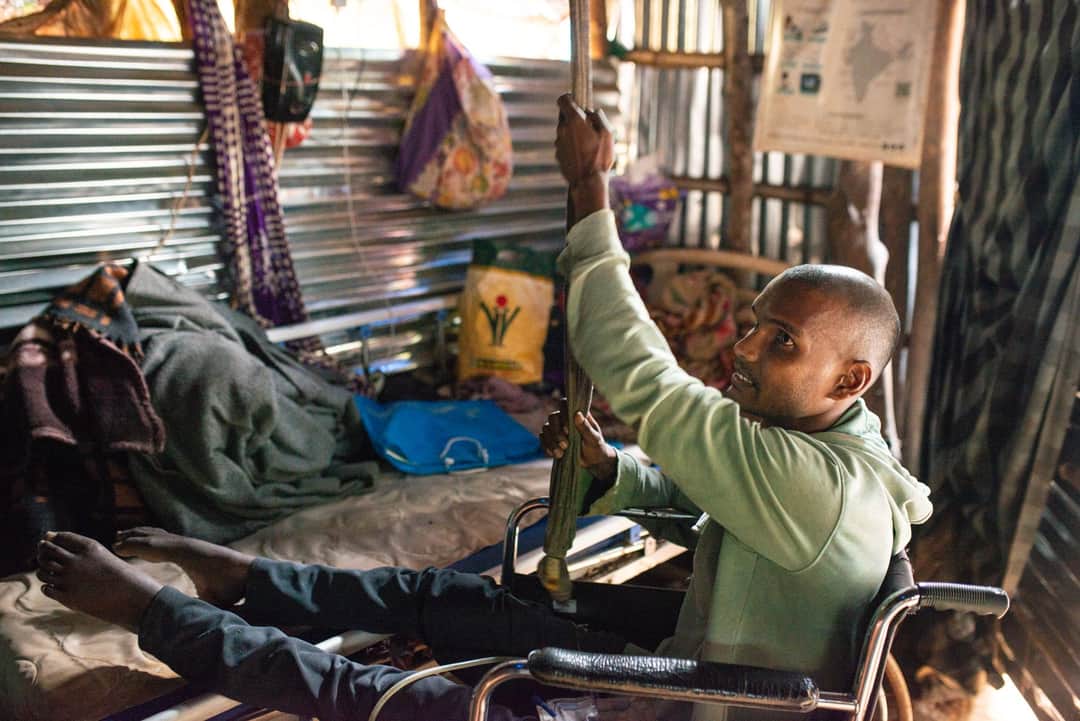
M. Palani Kumar
Two years ago Arun was an earning member of the family, contributing his labour and money in running the household
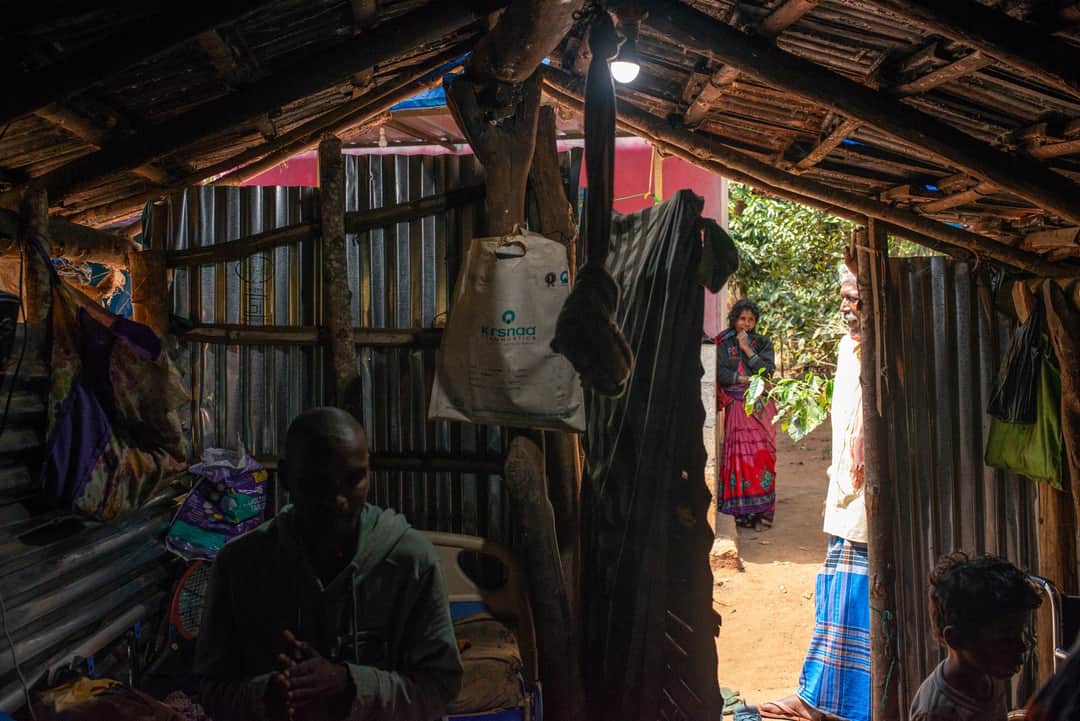
M. Palani Kumar
Friends don't visit Arun as they used to. 'I can't do anything. I worry. That is all,' says Masanamma (seen standing outside his shed)
Come March, the jamun trees will bloom again. The migratory Indian rock bees will flock the hills chasing the nectar of their fragrant, pale yellow blossoms. As yet another honey harvesting season arrives in BR Hill forests. Arun’s young friends will march towards the tall trees. And once more, the haunting sounds of Jenu kuyyo haadu will echo in the forest:
Call him, call him, O caller…
Call the man of the leafy forest…
Honey is there on the hanging combs…
Honey is there on the hanging combs…
Hanging-comb honey, thick honey…
Hanging-comb honey, thick honey…
Call him, call him, O caller…
Arun did not know the song then; he isn’t going to be singing it now...
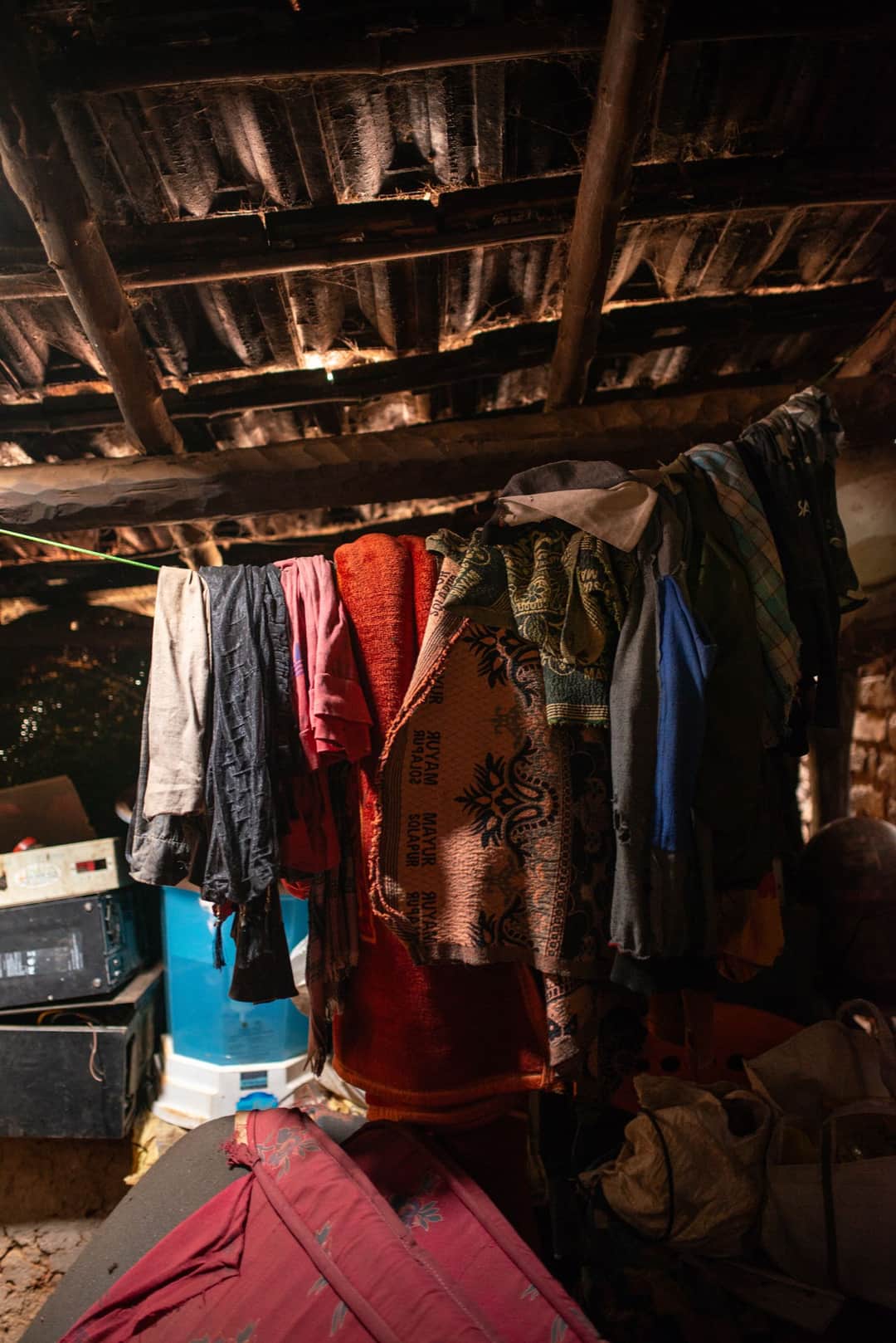
M. Palani Kumar
His mother takes care of his meals and his father helps him with his other daily routine
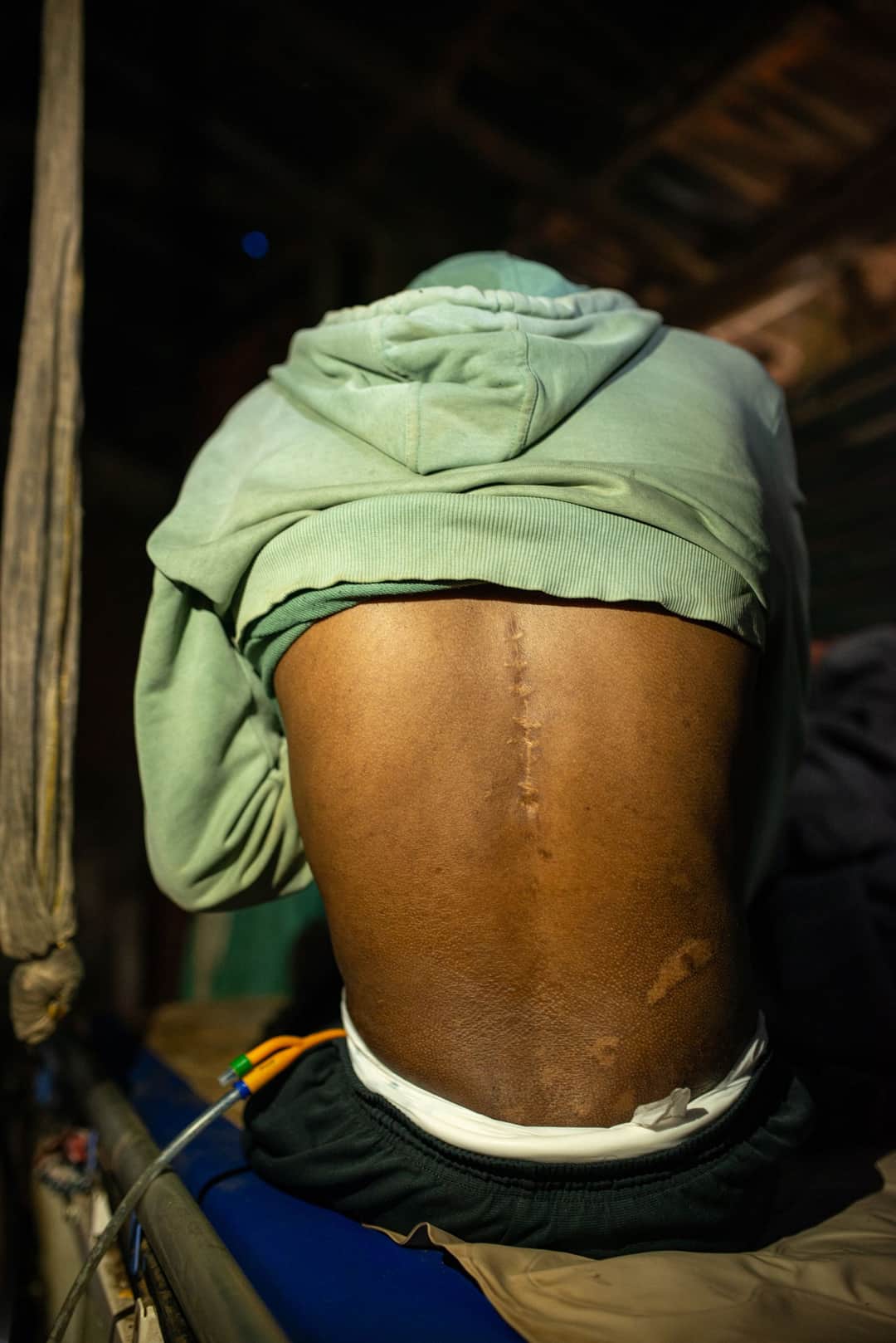
M. Palani Kumar
The doctors had assured Arun that he could get back on his feet if he tried to walk. But without a support structure it has been hard for him to even try
M. Palani Kumar
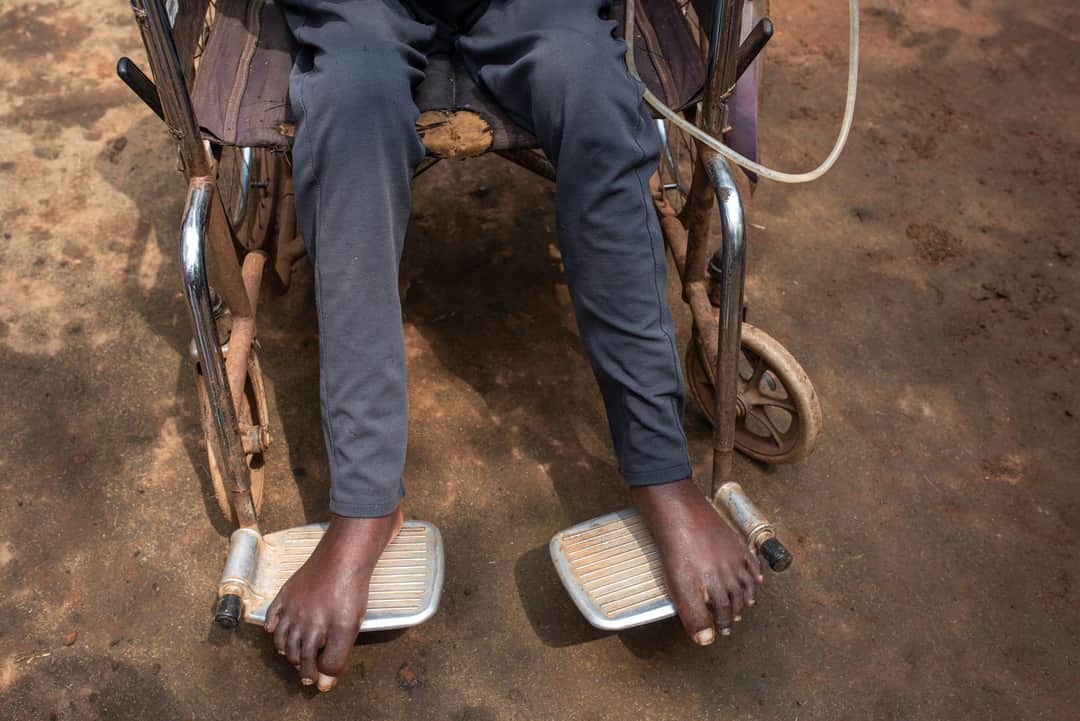
The only thing the family wants is for him to walk a little and help himself
M. Palani Kumar
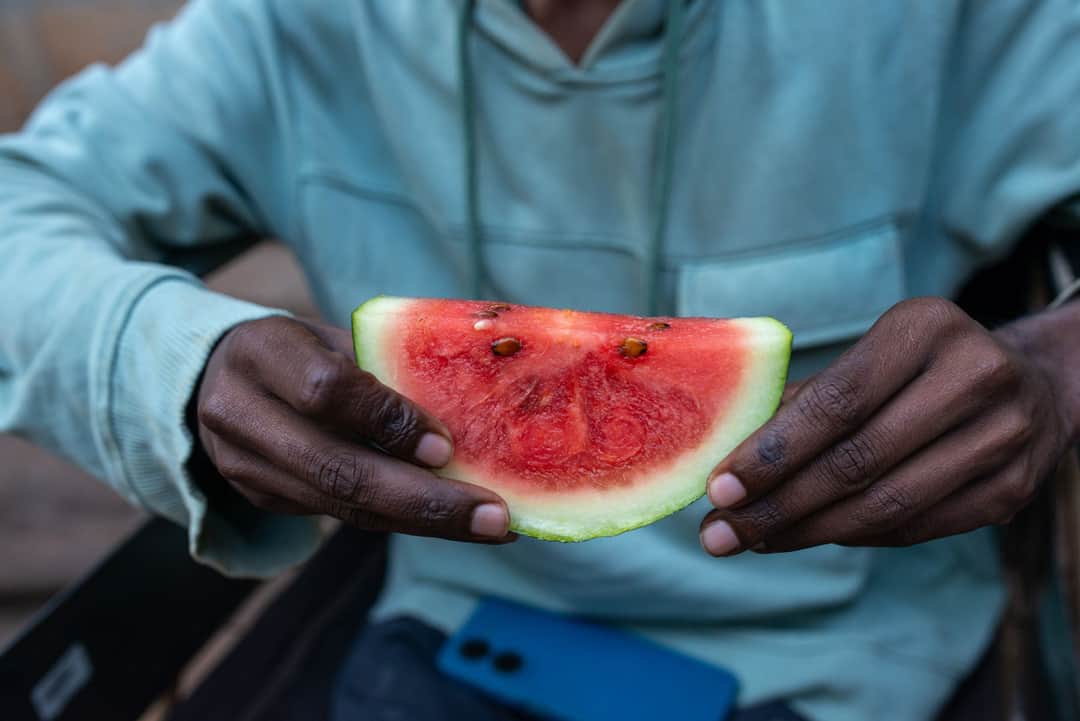
All Arun wants is to get alright first. 'If I am alright I can do anything. I can go back to work,' he says
Watch the video: The men of the leafy forests
The writer is grateful to Arun and his family, Dr. Tanya Seshadri, Dr. Sangeetha V, Soliga community workers Karana Kethegowda, and Mahadevamma Kumbegowda at Vivekananda Girijana Kalyana Kendra BR Hills and Institute of Public Health, Bangalore, Dr. Prathmesh for their invaluable support that made the writing of the story possible. She would also like thank Dr. Shobhana Kiran, Shankar N. Kenchanur, and Deepa for their help in translation at various stages in the writing of the story.
Want to republish this article? Please write to [email protected] with a cc to [email protected]
Donate to PARI
All donors will be entitled to tax exemptions under Section-80G of the Income Tax Act. Please double check your email address before submitting.
PARI - People's Archive of Rural India
ruralindiaonline.org
https://ruralindiaonline.org/articles/the-broken-winged-bird-of-br-hills