Open defecation is the norm and diarrhoea is common in every household, particularly after a flood. For drinking water, about 10 families depend on a single tubewell, which they maintain at their own cost.
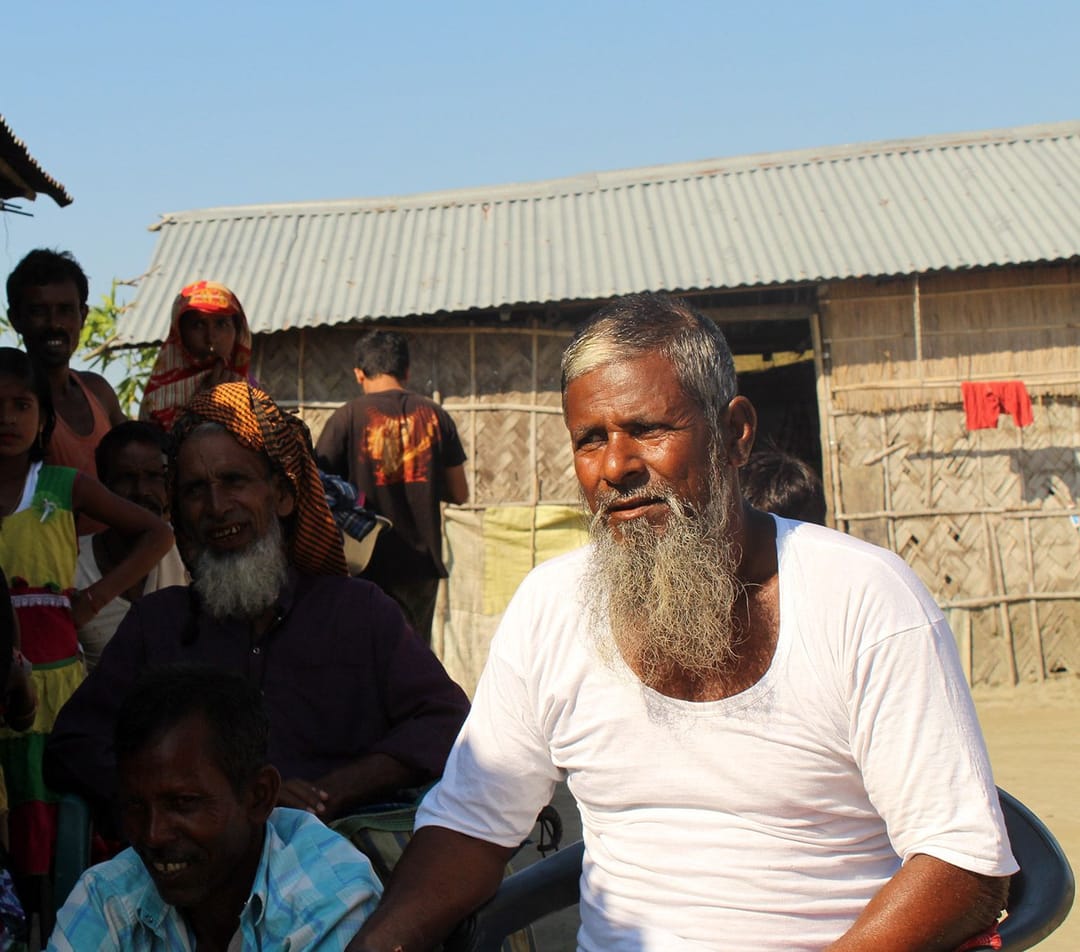
“Our char is divided equally into two legislative constituencies – Boko on the south bank and Chenga on the north bank. Due to some official anomalies, however, people who belong to Chenga constituency have been deprived of below poverty line (BPL) rations for a long time,” says Ali, who is registered with the Boko constituency but does not get any benefits, apart from BPL rice.
Electricity is a distant dream and no family has a solar lamp. Instead, they rely on kerosene, which costs Rs. 35 a litre – Ali’s family needs 5-7 litres every month. Even a radio seems to be a luxury here.
“Life would have been better if a char existed for at least 20 years. But the life of a char is hardly 10 years. By the time we manage to earn something and prepare for a relatively settled life, erosion begins again, forcing us to shift,” Ali says.
“This is our story, the story of every char -dweller. My story, however, does not end here…” And Ali begins to speak about his second son, 18, a Class 12 science student at a college in Barpeta district of lower Assam. He is now preparing for a medical entrance exam. Ali could not provide for his elder son’s higher education. But, with the help of his teachers, his second son got 83 per cent in the secondary examination two years ago, despite all the hardship.
“He is determined to get enrolled in a medical college," says Ali. "His teachers say it would cost at least Rs. 30 lakh to complete the course. I do not know how he will complete it even if he does clear the entrance exam.”
But Ali’s eyes tell us that he still nurtures the hope that life will take a new turn some day.