
In eight songs, three singers from Majalgaon in Beed district hail the birth of Bhimrao in Mhow, Madhya Pradesh. They express gratitude to him, and speak of the new identity that Buddhism has given them. To mark the birth anniversary of Babasaheb Ambedkar on April 14, PARI’s Grindmill Songs Project features couplets on Dr. Ambedkar and caste issues throughout this month
Rangubai Potbhare, Walhabai Takankhar and Radhabai Borhade sing eight ovi in this edition of the Grindmill Songs. The singers are or were residents of Bhim Nagar, a Dalit hamlet in Majalgaon, a taluka village in Beed district.
The work of Babasaheb Ambedkar and his role as a beacon for Dalits and all other oppressed communities inspires the women to sing ovi in praise of their leader. For the Grindmill Songs Project, Majalgaon has been a wellspring of ovi about Dr. Ambedkar, the revered national leader and statesman, voice of the oppressed, and architect of India’s Constitution.
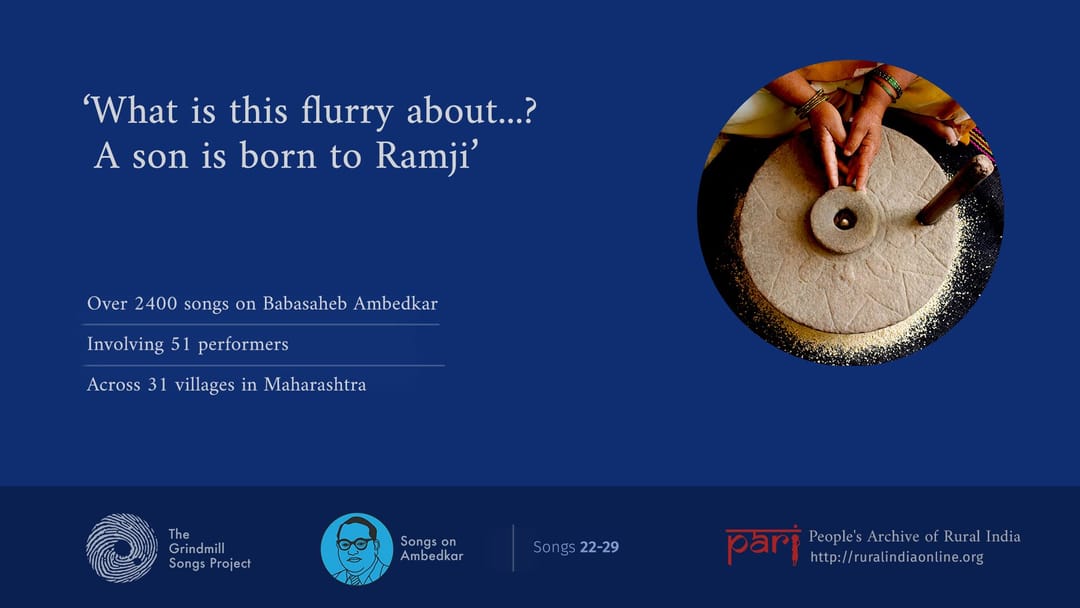
In the first of the eight ovi here, Rangubai sings about flurry and excitement in Mhow, a bustle about the birth of a baby. (Mhow is a cantonment town in Madhya Pradesh; since 2003 it is officially also called Dr. Ambedkar Nagar. Babasaheb was born here on April 14, 1891). The ovi tells us that the news spreads in town that a son is born to Ramji (Ambedkar).