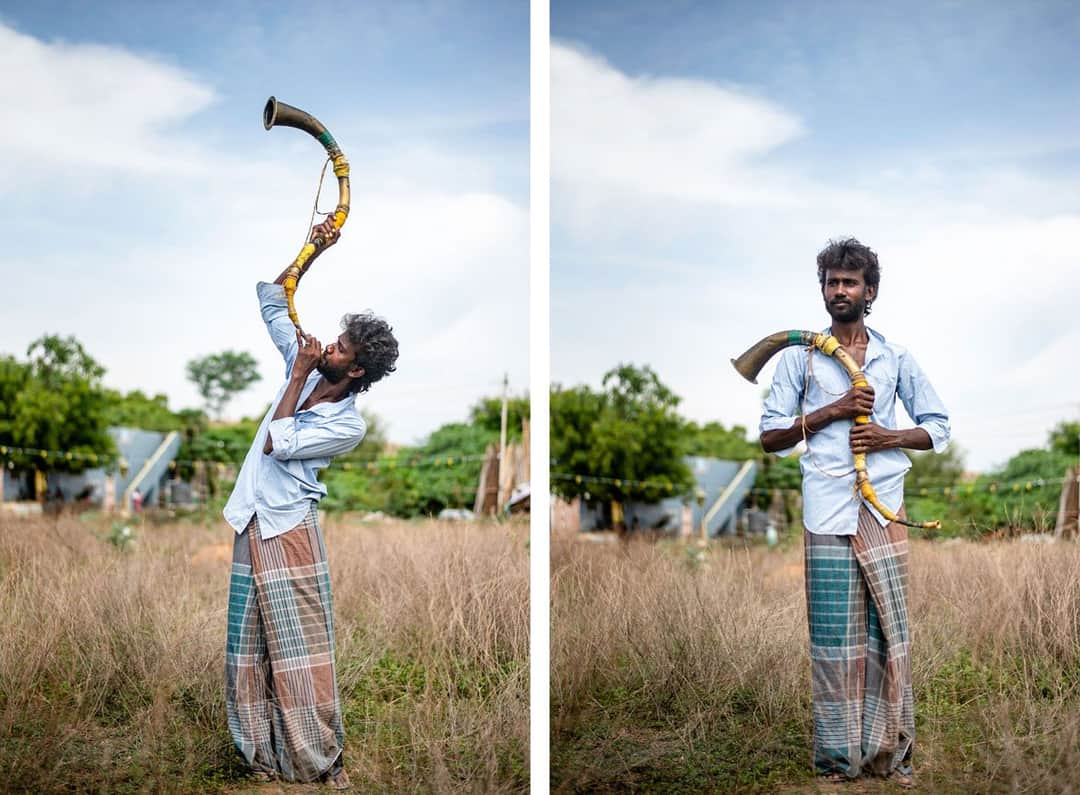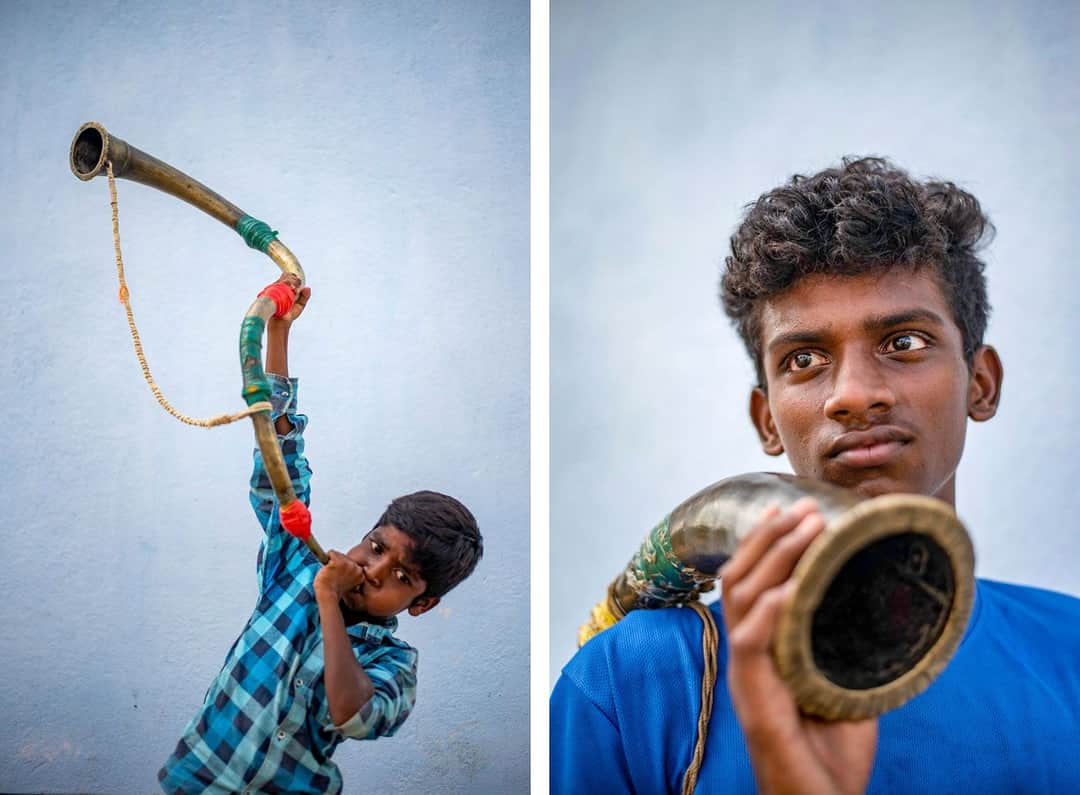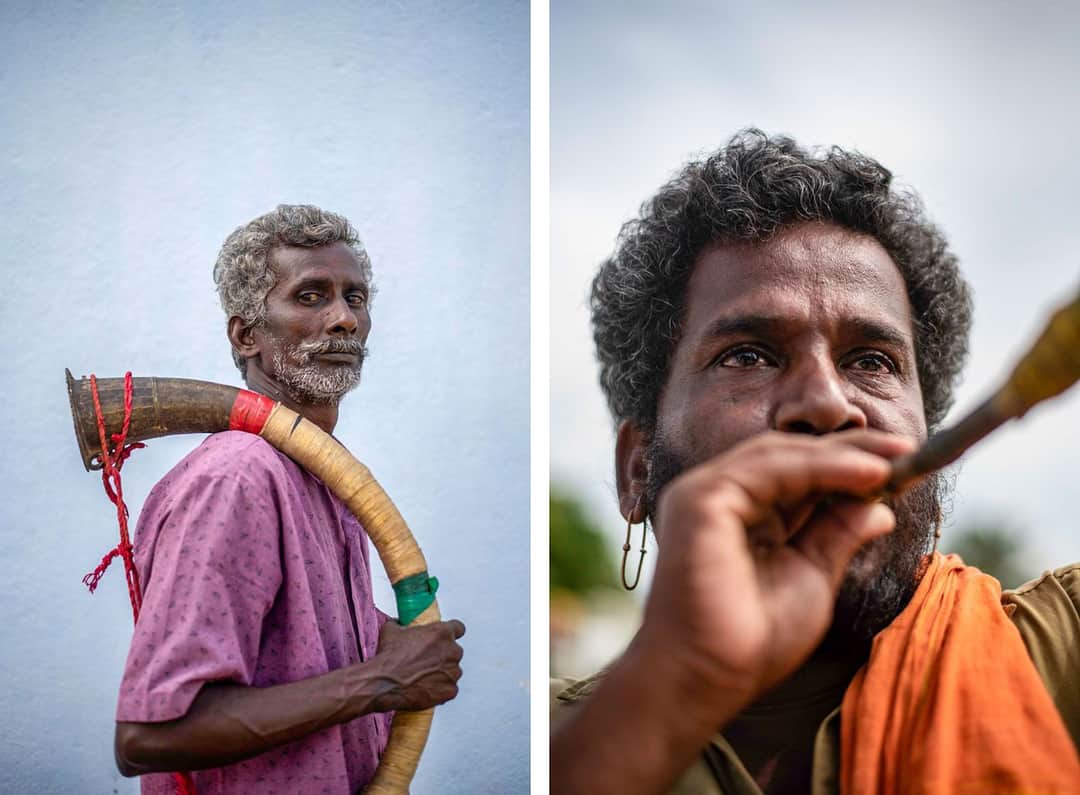


M. Karuppiah wants to die while playing the kombu. Well, historically, it was a wind instrument trumpeted aloud across battlefields to announce the start of hostilities. Almost literally, music to die for. But that’s not Karuppiah’s reason for wanting to exit the world playing this horn made of brass or bronze and shaped like an elephant’s trunk.
For Karuppiah, 49, kombu is a great artform. And he’s a fourth-generation player, far more attached to the instrument than to the autorickshaw he’s forced to drive to earn a living in his village in Madurai.
Until about three decades ago, the art was in “top” form, says Karuppiah. He remembers playing for Chief Minister J. Jayalalithaa in 1991. “She asked us to play it again, she was so impressed!”
But these days, work is patchy for him and the other kombu artistes in his village, Melakuyilkudi, in Thiruparankundram block. The rhythmic artform, which was already languishing and being replaced by current pop culture, has suffered greatly during the Covid lockdowns since March 2020. The artistes are out of work – and money.
When Karuppiah does get some work – playing the kombu at temples, public functions or funerals – it earns him Rs. 700-1000 for a performance. “Since last year, because of the lockdown, we have not played for the Alagar Koil Thiruvizha. We would get eight days of work during that time.” The kombu artistes perform during the annual festival (in April-May), when lakhs of devotees gather at the Alagar Koil temple, 20 kilometres from Madurai city.
“Not everybody can play the kombu. It calls for a lot of skill,” says R. Kaleeswaran, founder of Alternative Media Centre (AMC), an organisation in Chennai that supports folk artistes and the arts. The instrument is played in the beginning of an event, and then in between, but not continuously. So the artistes usually play for 15 minutes, rest for five and then play again for another 15 minutes. “Typically, the artiste draws a very deep breath and blows into it [the kombu].” It is thanks to their mastery over breathing, Kaleeswaran points out, that artistes who are nearly 100 years old are still around.