

The purple flowers on the anchal of Ambiya Khatun’s white worn-out saree are fluttering in the November wind as she struggles to cover her hair. Her right hand moves to her head to maintain her purdah while she keeps rolling, beading and knotting the jumbled-up jute fabric. Ambiya is keenly aware of the gaze of men passing by her temporary home on the edge of a marsh. The eroded banks of the Beki river are a place where privacy is in abeyance during the monsoon floods.
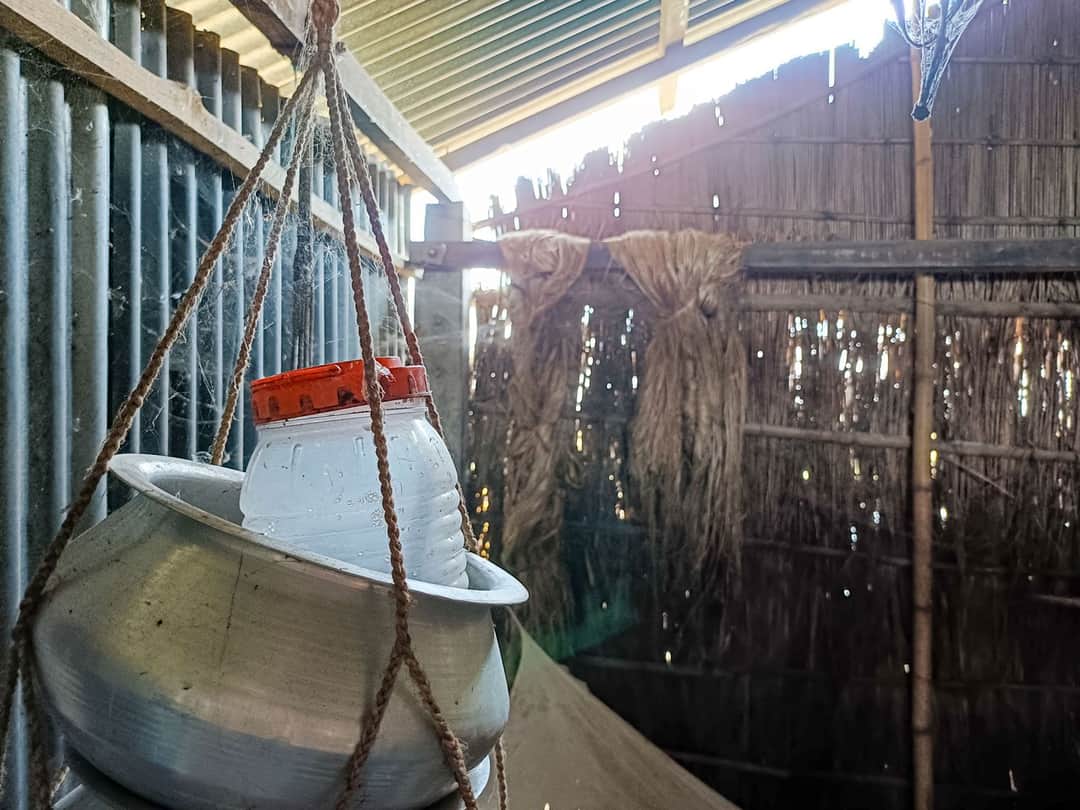
Seated on the floor of her house, Ambiya is making sikas (also called sigas) – decorative hangers made of jute fiber, and used to hang utensils, seeds, clothing, mattresses and even jewellery. The sika is not just a decorative piece but a culturally important artefact, popular among Miya Muslims of Assam as well as the peasantry of present-day Bangladesh. A sika also keep things dry in these flood prone areas.
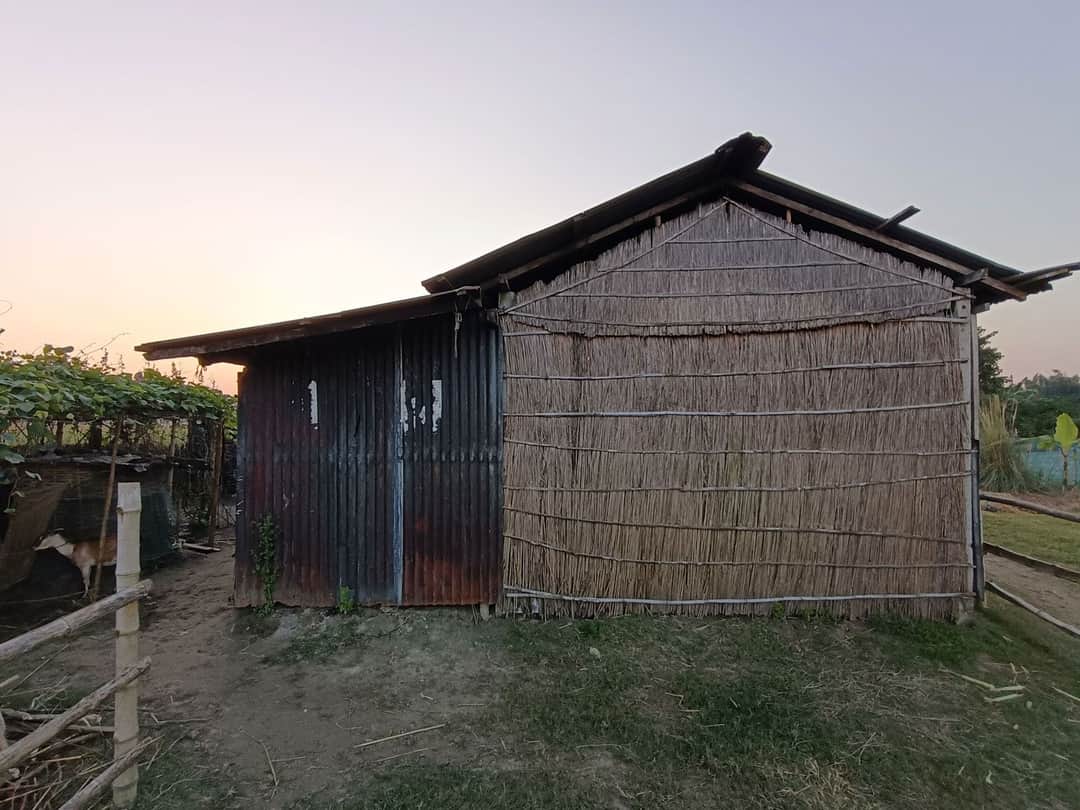
The 71-year-old master craftswoman has been at work since before dawn, finishing household chores before settling down to her craft. Her workplace is the front yard of her single-room tin and thatch house set in the shade of an ashgourd plantation. The colourful beads glint in the sunlight filtering through the canopy of wide, green ashgourd vine leaves.