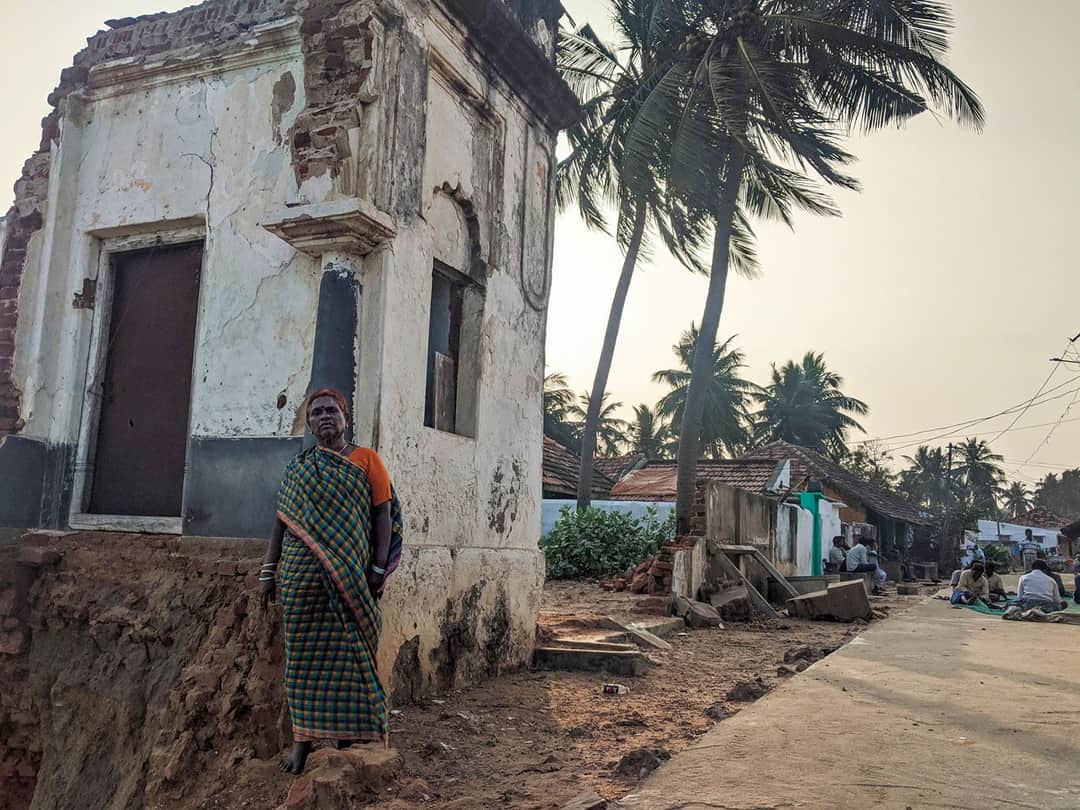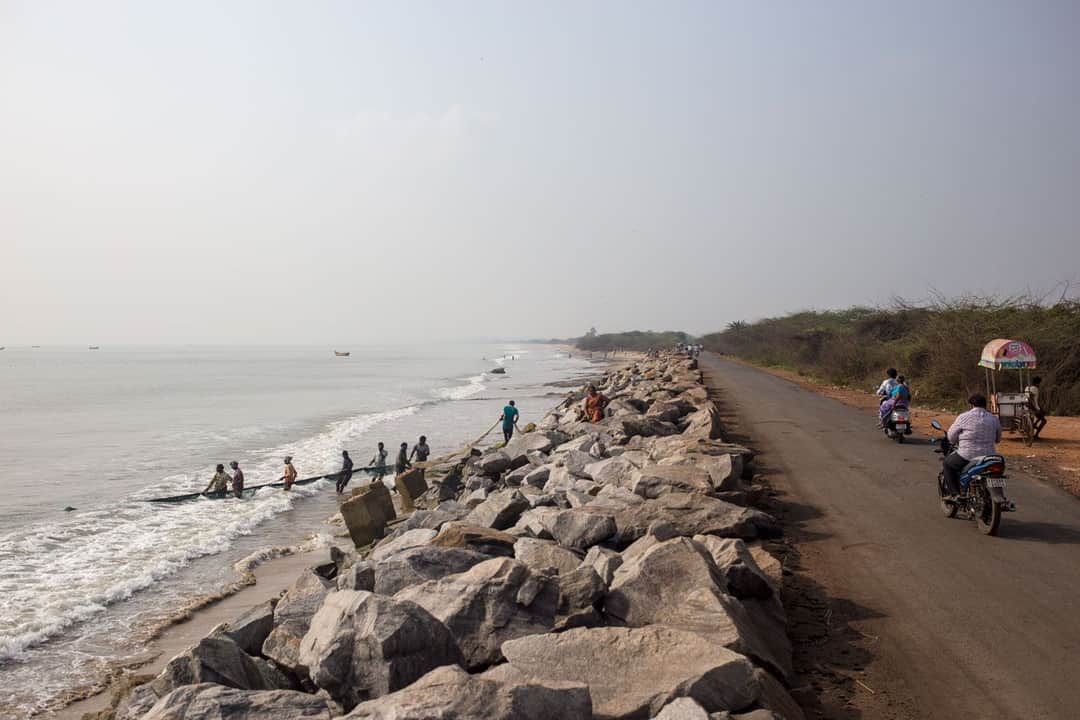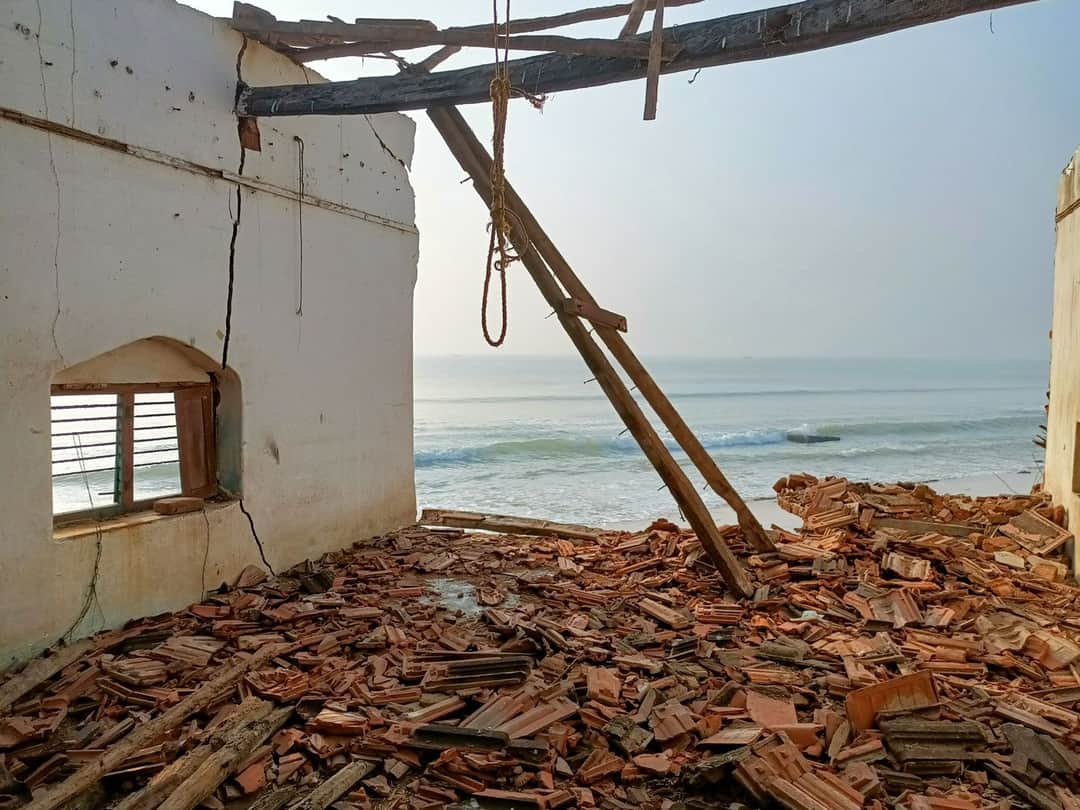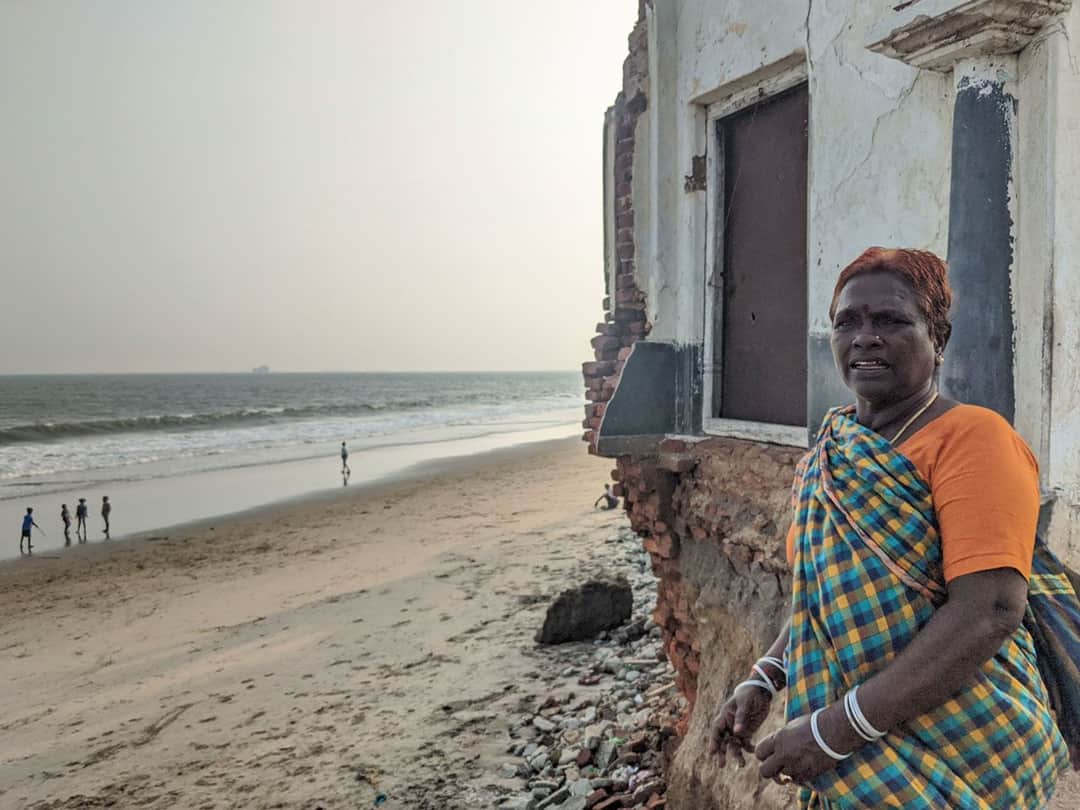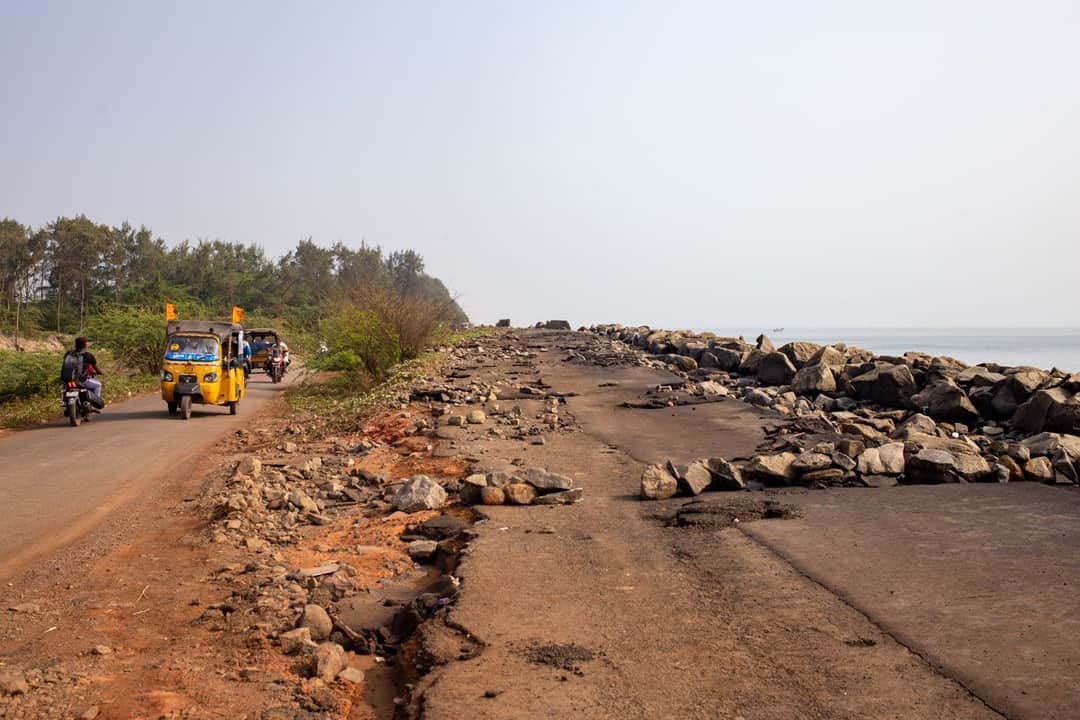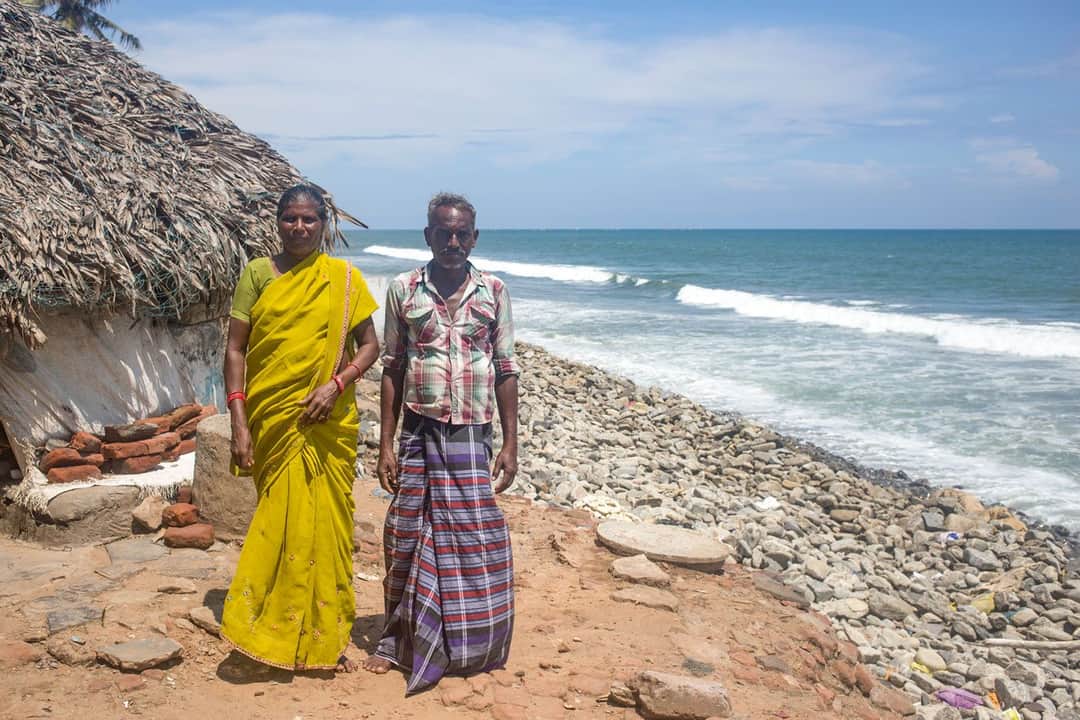


Google Maps tells me I am approaching my destination. But the neighbourhood appears a bit altered from what I remember of it. There’s no sign of the crumbling old house by the sea, whose coordinates I had saved on my phone the last time I visited Uppada. “Oh, that house? It is in the sea now – there!” says T. Maramma, casually pointing to a wave gushing in from the Bay of Bengal.
I vividly remember the old structure that had offered a stunning, yet sombre, backdrop as I photographed Maramma and her family members a few weeks before the nationwide lockdown of March 2020. Perched perilously on a narrow beach, it was the only portion remaining of what used to be a large home where Maramma’s joint family lived until the early years of this century.
“It was a building with eight rooms and three sheds [for animals]. Around a hundred people used to live here,” says Maramma, a small-time local politician in her 50s, who once ran a fish business. A cyclone that hit Uppada just before the 2004 tsunami took away a big chunk of the building, forcing the joint family to move into different houses. Maramma continued to use the old structure for a few more years before shifting to a house nearby.
Maramma and her family are not alone; nearly everyone in Uppada seems to have moved home at least once because of the encroaching sea. Their calculations on when to quit a house are based on lived experience and the local community’s instinctive reading of the seas. “We can sense that the house will go into the sea when the waves start to bulge forward. Then we move our utensils and everything to one side [and start searching for a temporary house to rent]. The old house usually goes [into the sea] within a month,” explains O. Siva. At 14, he has already had to leave one house to escape the sea.