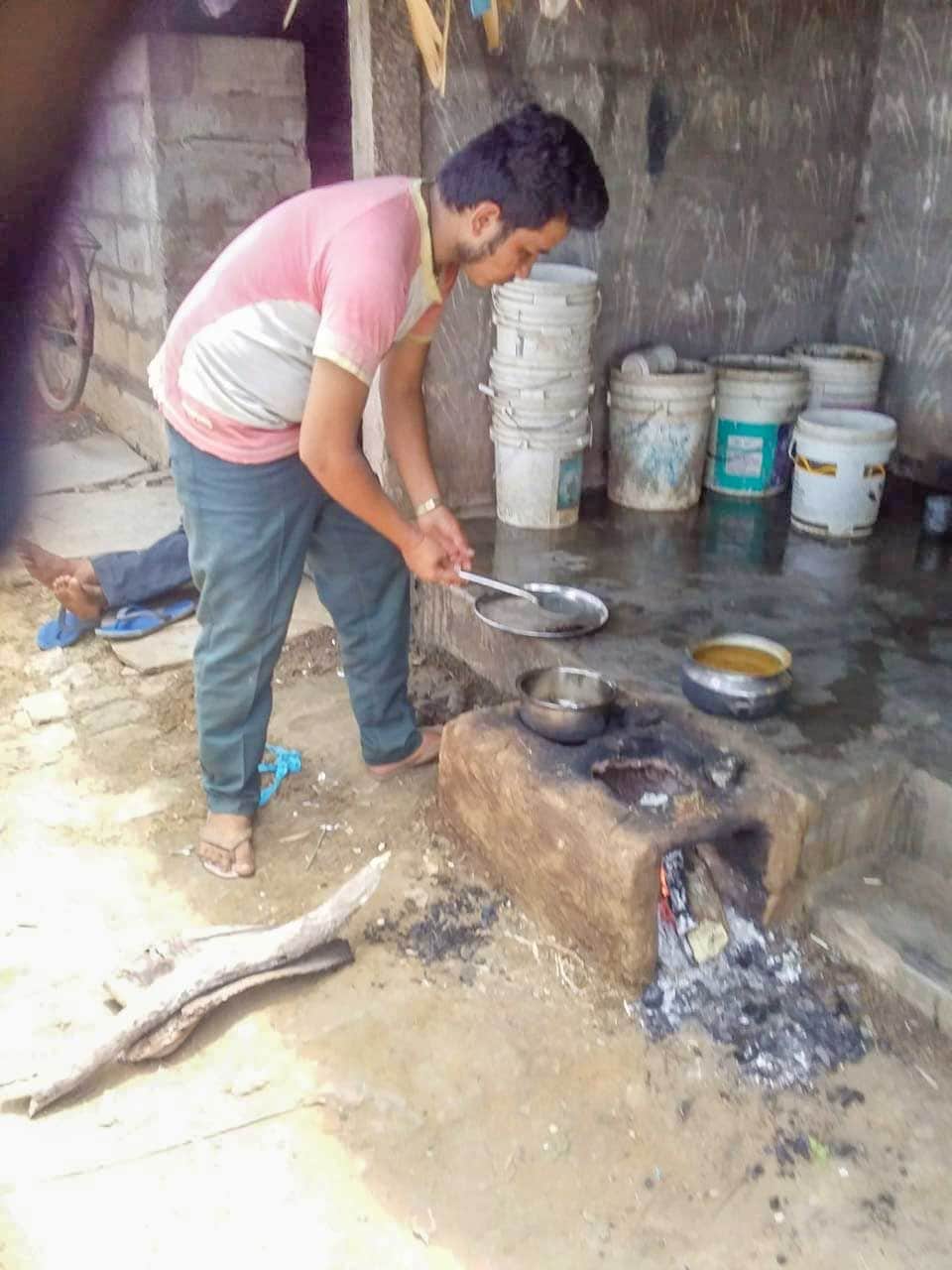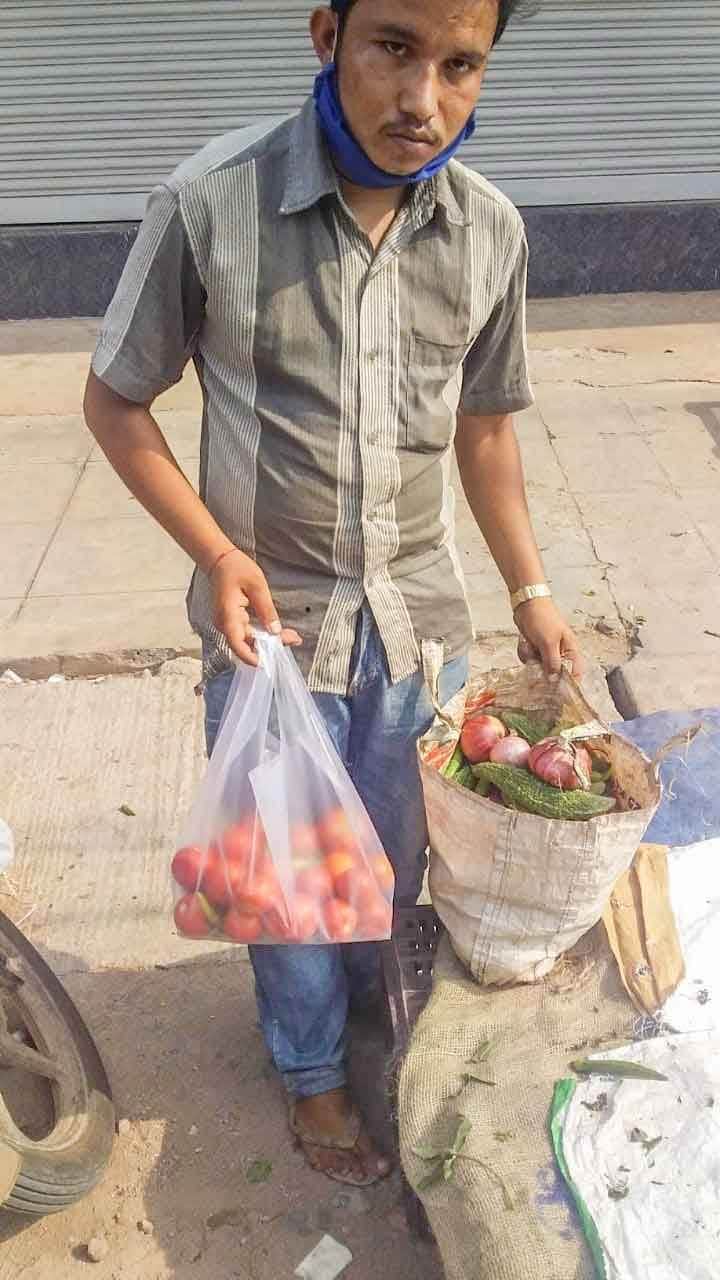


“The medicines are also over, the money is also over and the gas is also over,” Suresh Bahadur had told me in mid-April.
For four years, armed with a seeti and a lathi, Suresh used to spend his nights making rounds on a bicycle, guarding houses and shops. He and his father, Ram Bahadur, worked as neighbourhood security guards in Bhimavaram town of Andhra Pradesh’s West Godavari district.
After March 22, once the lockdown began, the bicycle got put aside, and Suresh began spending his time scrolling on his phone looking for news reports on Covid-19, and in procuring food, cooking gas and water.
Suresh, 23, stayed in a rented room in the Tammi Raju Nagar locality with Shubham Bahadur, around 43, and 21-year-old Rajendra Bahadur – all friends from back home in Dikla village in Nepal’s Bajhang district. Ram Bahadur, who rented a room in another part of Bhimavaram, moved in with them soon after the lockdown began.
Until then, in the first two weeks of every month, Ram and Suresh would collect wages – Rs 10-20 from each house, Rs. 30-40 from shops – going door to door. Each earned between Rs. 7,000 and Rs. 9,000. It was an informal arrangement, so their earnings varied “sometimes going as low as Rs. 5,000,” said Ram Bahadur when we spoke in April. “Now it has stopped.”