
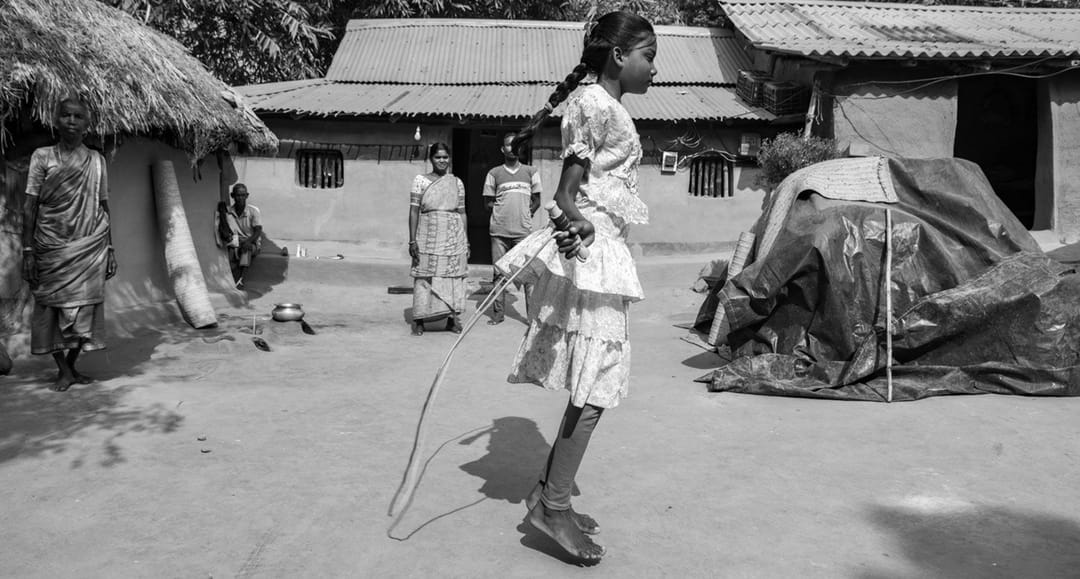
Minati Mardi lives in picturesque surroundings – the Ajoy river rushes past her home and only lotus ponds separate her from the whistling train in the distance.
But born with tuberculosis of the spine and legs, the five-year-old girl could only watch from afar – she was unable to walk or move around her village Mahula in West Bengal’s Birbhum district.
“Her spine was badly deformed,” recalls her grandmother, Jaba Mardi. “She was struggling so much that we didn't think she would live.”
Santhal (also spelt Santal) make up almost half the Adivasi population in the state, and they live almost entirely in rural areas, and rely on local physicians. Healthcare facilities like primary health centres (PHC), are heavily understaffed in this state (Rural Health Statistics 2021-22).
When the baby Minati began to have serious respiratory issues, her family took her to a local doctor. They are unsure if he was a certified medical practitioner. In this remote part of Birbhum district' Suri-I block, it was impossible for them to know. Jaba says they had no idea where to look for qualified medical professionals.


