

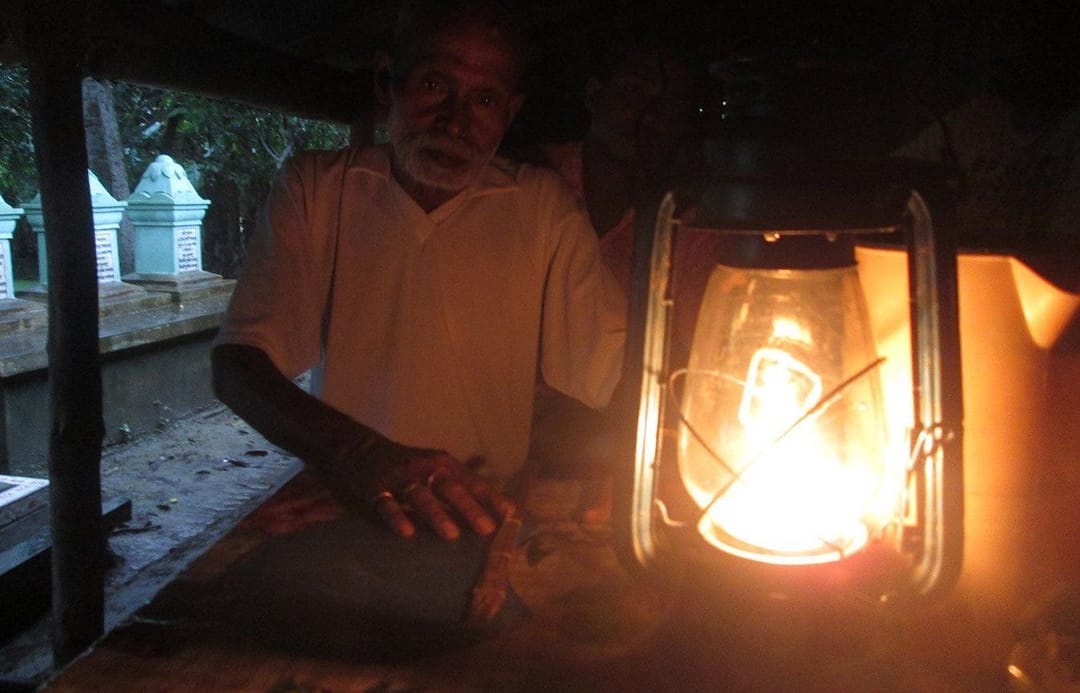
The year was 1949. Jiban Krishna Poddar, 14 years old, fled from his home in Barisal district to West Bengal, along with his parents and grandmother. The Noakhali riots of 1946 had sparked off waves of migration which would continue for many years. Two years after their flight, the family made their way to the Sundarbans.
Now over 80 and seated in the verandah of his home on a rainy evening, he reminisces about the journey that brought him to Krishnadaspur village in Patharpratima block, the place he calls home: “There was violence, so we had to leave. My mother, Usha Rani Poddar, packed all our belongings into 14 bags. We reached Khulna city [then in East Bengal] by ship. A train took us to Benapole. We hid our money and ornaments in clothes and belongings.”
Jiban recalls that the family was taken to a refugee camp in Nadia district of West Bengal, where they lived for 11 months with more than 20,000 others. The refugees were asked to settle in Dandakaranya (the forested Bastar region of central India), the Andaman islands or the Sundarbans in West Bengal.
“My father, Sarat Chandra Poddar, chose the Sundarbans," Jiban says. "He wanted to own and farm land. Maach and chaash (Bengali for fish and agriculture) were the two main attractions. He felt that the Dandakaranya and Andamans were uninhabited jungles where it would have been difficult to live.”

