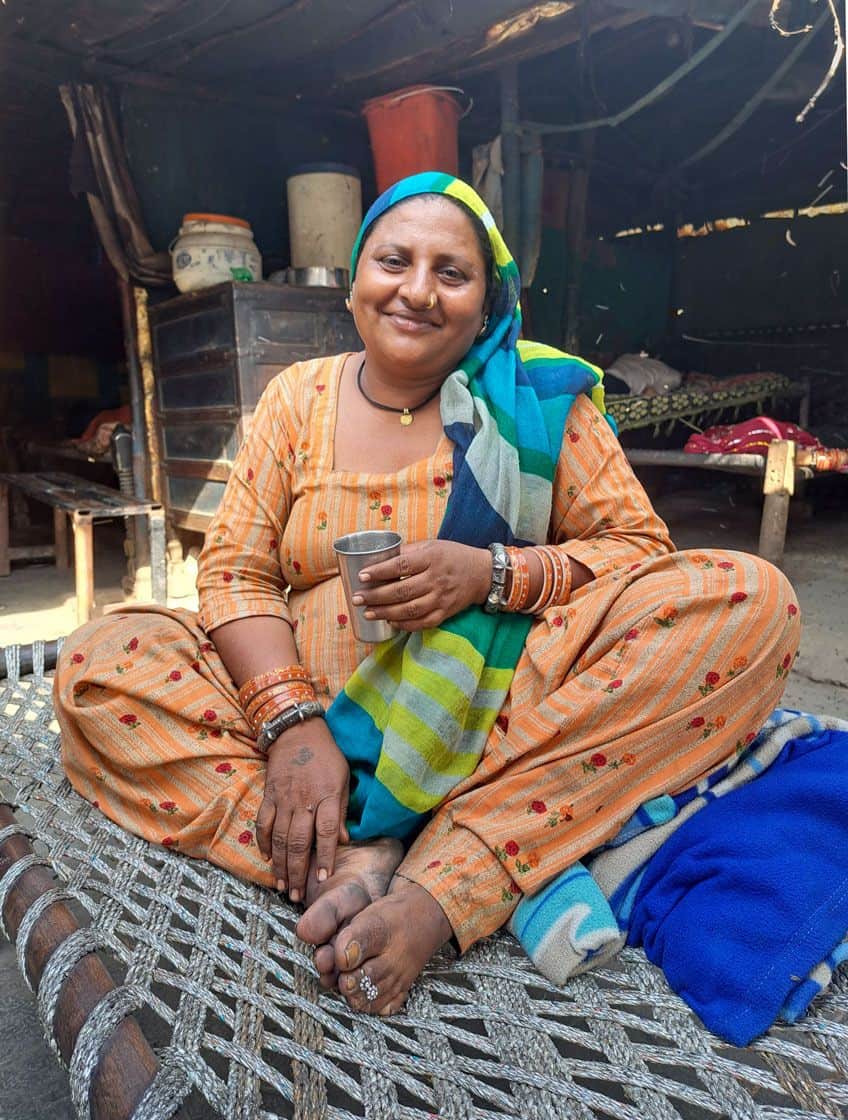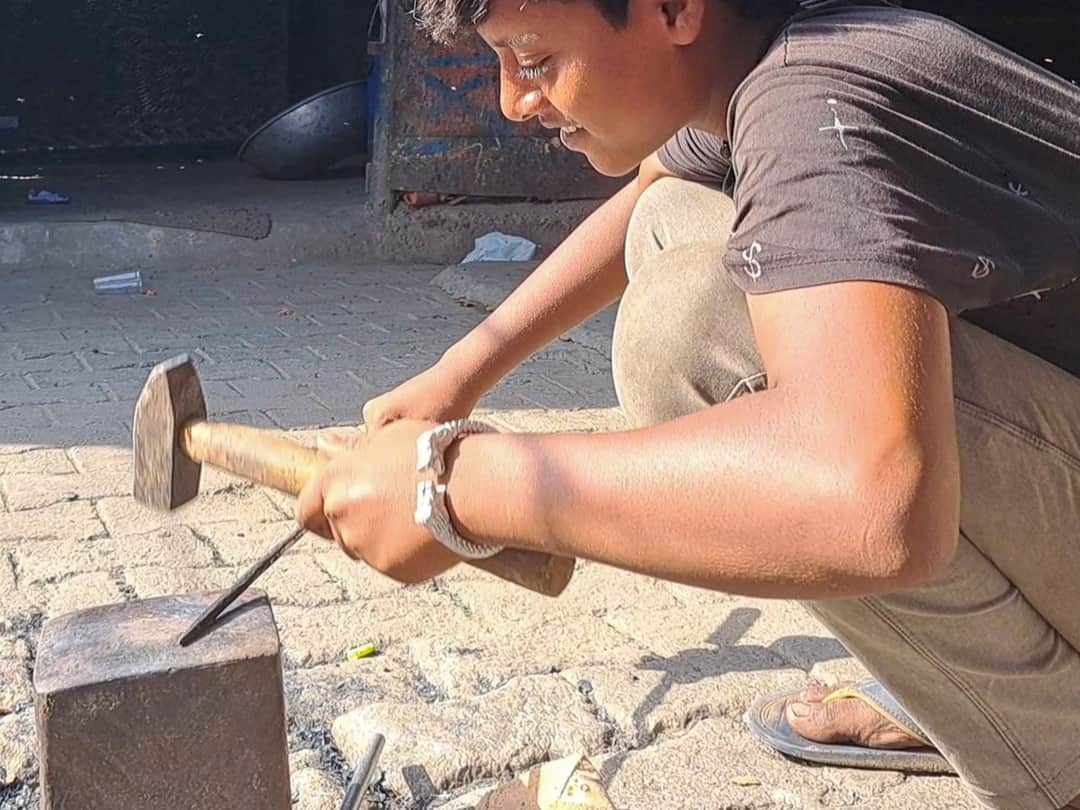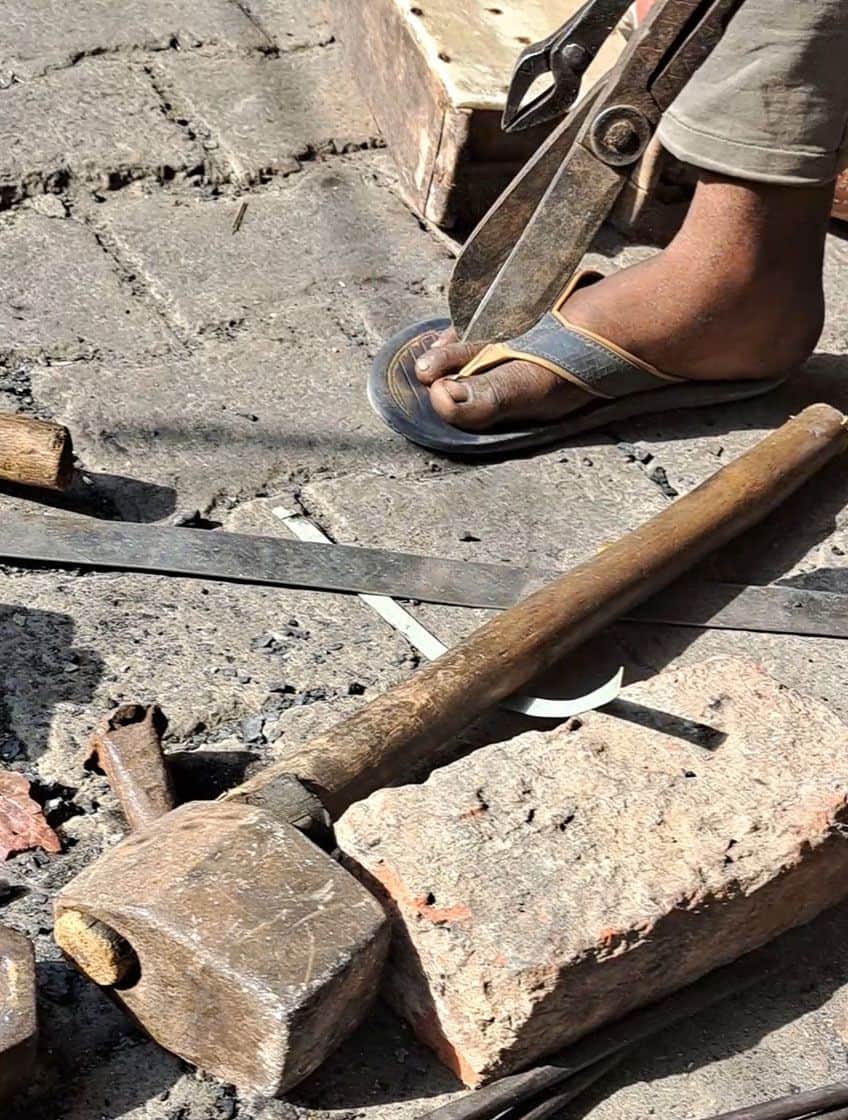


“Every time the bhatti [furnace] is lit, I injure myself.”
Salma Lohar’s knuckles are scarred and two on her left hand are split open. She picks a handful of ash from the furnace and rubs it in to speed up the healing.
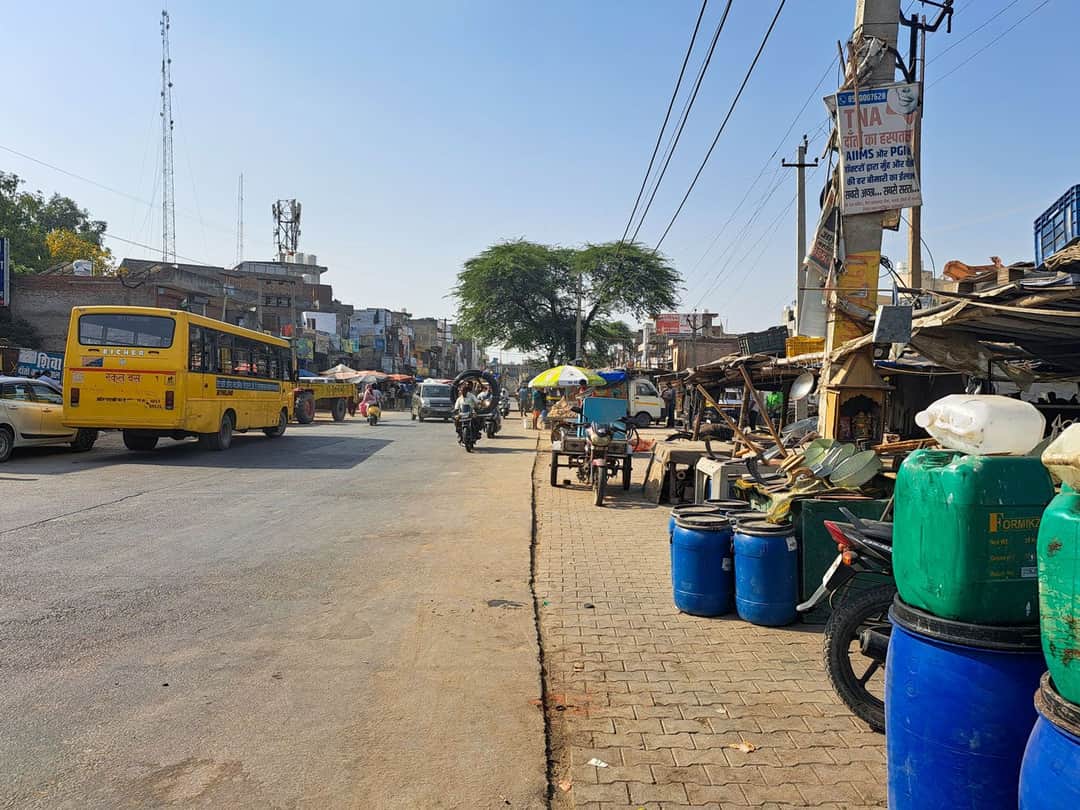
The 41-year-old’s family is one of six Lohar families who call a chain of juggis in Sonipat’s Bahalgarh market their home. On one side is the busy market road and on the other is a municipal garbage dump. There is a government toilet and water tanker nearby and Salma and her family rely wholly on these facilities.
The juggis have no electricity and if it rains for more than 4-6 hours, the entire settlement floods – as it did last October (2023). At such times they have to sit on their cots with their legs drawn up, waiting for the water to recede – it takes 2-3 days. “It stinks a lot during those days,” Dilshad, Salma’s son, recalls.
“But where else will we go?” Salma asks. “I know that living here next to trash makes us ill. Flies that sit there come and sit on our food too. But where else will we go?”
The Gadia, Gadiya or Gaduliya Lohars are listed as a Nomadic Tribe (NT) as well as a Backward Class in Rajasthan. People belonging to this community also live in Delhi and Haryana but while they’re recognised as a Nomadic Tribe in the former, they are termed a Backward Class in Haryana.
The market where they live is next to state highway 11 and attracts vendors selling fresh produce, sweets, kitchen condiments, electrical devices and much more. Many set up stalls and leave once the market closes.