

“They had to bring elephants to demolish our houses,” says Bharatjoy Reang.
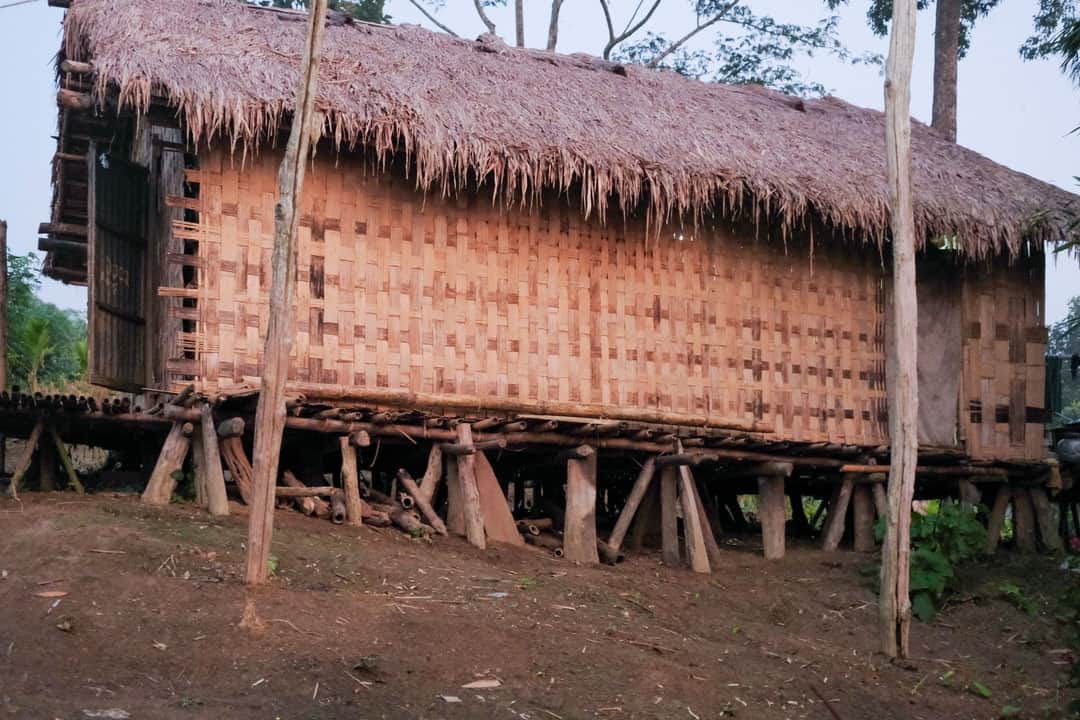
“Even with that [the elephants] they would not be able to crush it. They would eventually resort to burning our tongs." This 75-year-old Reang Adivasi remembers a time when forest officers forcibly evicted and displaced him along with his wife and children from their home in Assam’s Sribhumi district (formerly Karimganj). That was in the early 1980s. The houses that he is referring to are known as tong ghar or gairing nok as the locals would say – a traditional dwelling common among many tribal communities in Tripura, including Bharatjoy’s own.
“We the people of the hill never used to live in mud or brick houses. We always preferred tongs,” he says pointing at his own house in this para (settlement) in North Tripura district. It’s a bamboo structure resting on bamboo stilts, a foot above the ground. Traditionally, they had thatched roofs but the one on Bharatjoy’s tong is made of tin. It stands next to a long and treacherous stone-paved road coming from Bagbasa and leading up to the serene Tongchera para in Zaithang village where we’re talking to him.
Bharatjoy’s is one of the first houses that you reach as you move into this settlement, resting in the arms of high mountains thickly covered in greenery and tranquil water bodies. About 25 kilometres from the city of Dharmanagar in the state of Tripura lies this rather secluded settlement of 150 families of the Reang tribe [also spelt Raing], listed as the only Particularly Vulnerable Tribal Group (PVTG) in this state.