
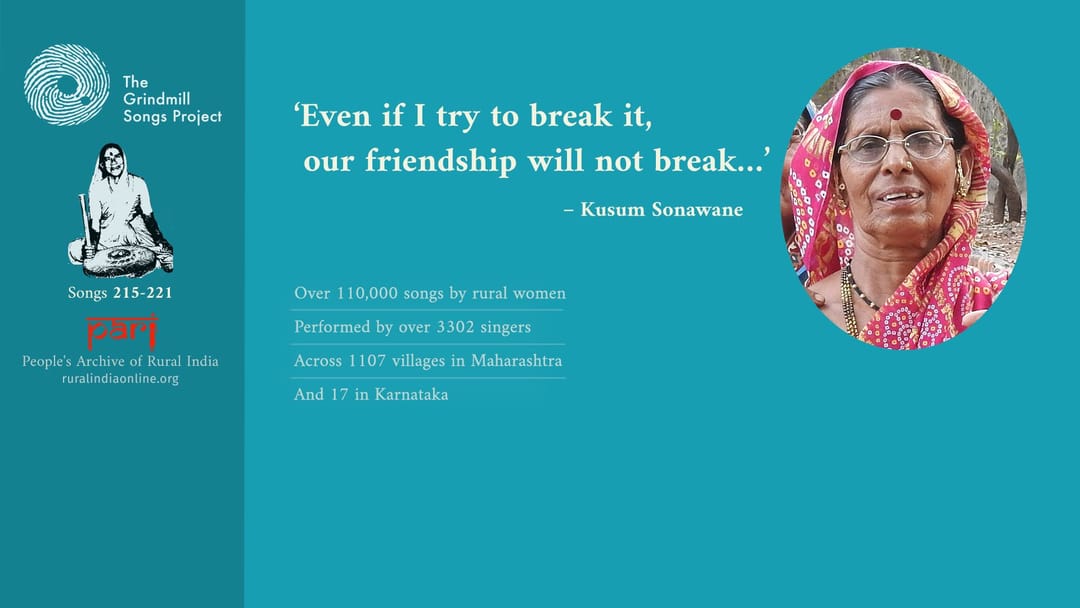
The Grindmill Songs Project presents seven ovi by Kusum Sonawane and Shahu Kamble of Nandgaon village, which speak of the strong but sometimes fragile friendship among women
You and I, our friendship will not break
It is like a knot in a silk thread that cannot be untied
They were sisters-in-law, but their friendship was stronger than any bond forged by marriage could be.
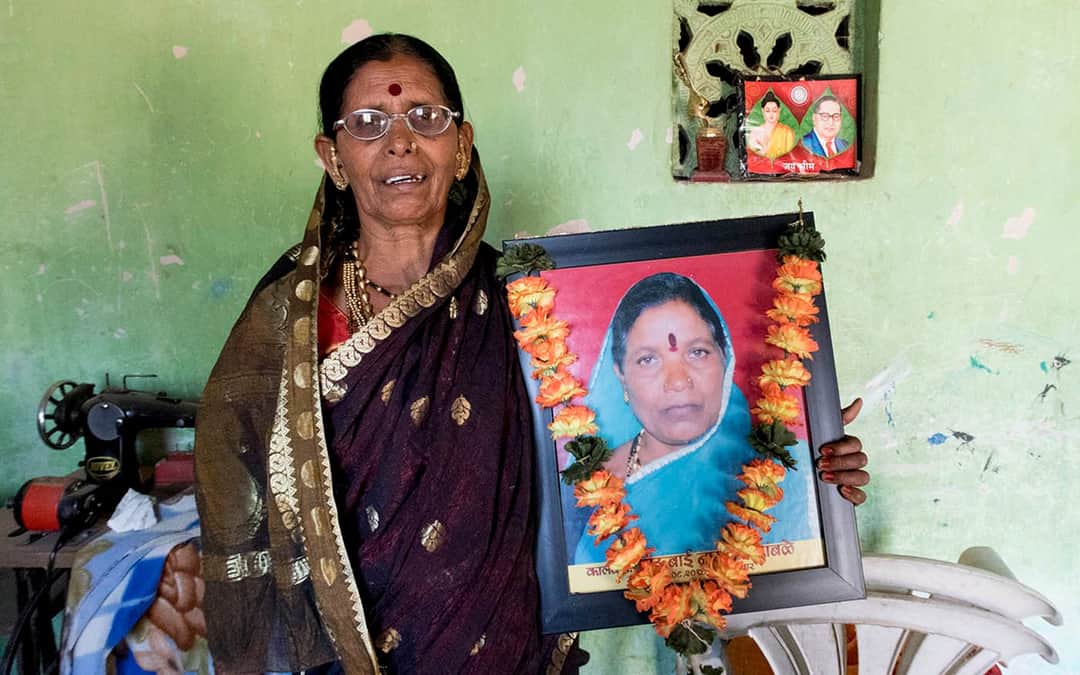
“Our songs were very popular. People from other villages in Mulshi would invite us to sing Ambedkar ovi for his birth anniversary celebrations.” That’s Kusumbai Sonawane, 70, speaking about her friendship with sister grindmill singer Shahubai Kamble. The two would work together pounding grain with a pestle in a wooden container to remove the husk and, while at it, they would think up new tunes for grindmill songs. During the routine chore of making jowar or rice flour on the stone grindmill, they would sing and practise ovi set to these new tunes. That’s what we learned while visiting Kusumbai at her home in Nandgaon village in Pune district’s Mulshi taluka in September 2017.
During the late 1980s, when a team led by Guy Poitevin and Hema Rairkar visited villages across Maharashtra, singers like Kusumbai and Shahubai contributed ovi to the grindmill songs database. Some of these women also became members and activists of the Garib Dongri Sanghatana (GDS) – an organisation of the poor from hilly areas in Pune district. Guy Baba and Hematai, as members of this organisation still affectionately call them – both are no more – helped bring awareness through different GDS activities, including adult literacy classes.
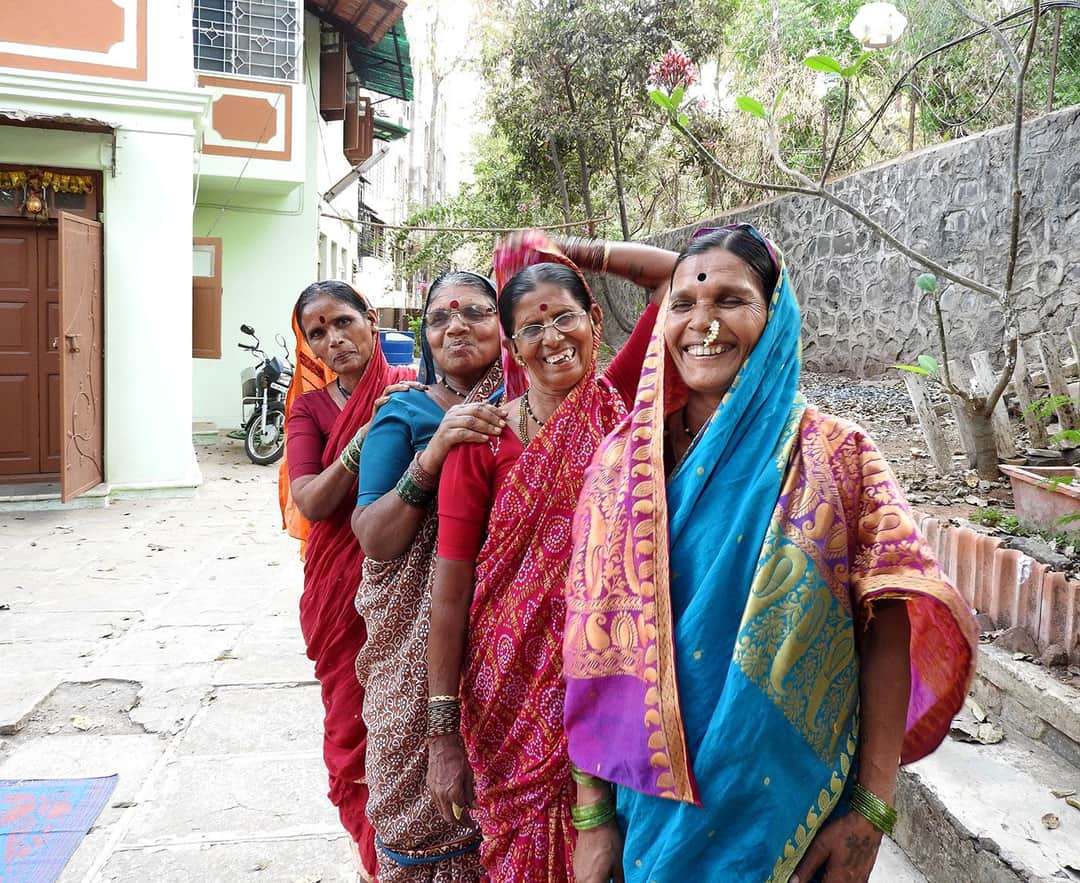
On March 25, 2017, Hema Rairkar’s death anniversary, some GDS members had gathered at her bungalow in Pune to commemorate both their leaders. Among them were Mathabai Bhalesain and Bababai Laygude from Maval taluka, and Kusumbai Sonawane and Lilabai Kamble from Mulshi taluka. These four women, who are friends and co-workers say, “We are not formally educated but our experience [in the GDS] gives us the confidence to raise issues that affect us in the gram sabha [village meetings].” Often these are about the scarcity of water and the need for tankers.
They’re quite amused when we try to get them to smile on camera.