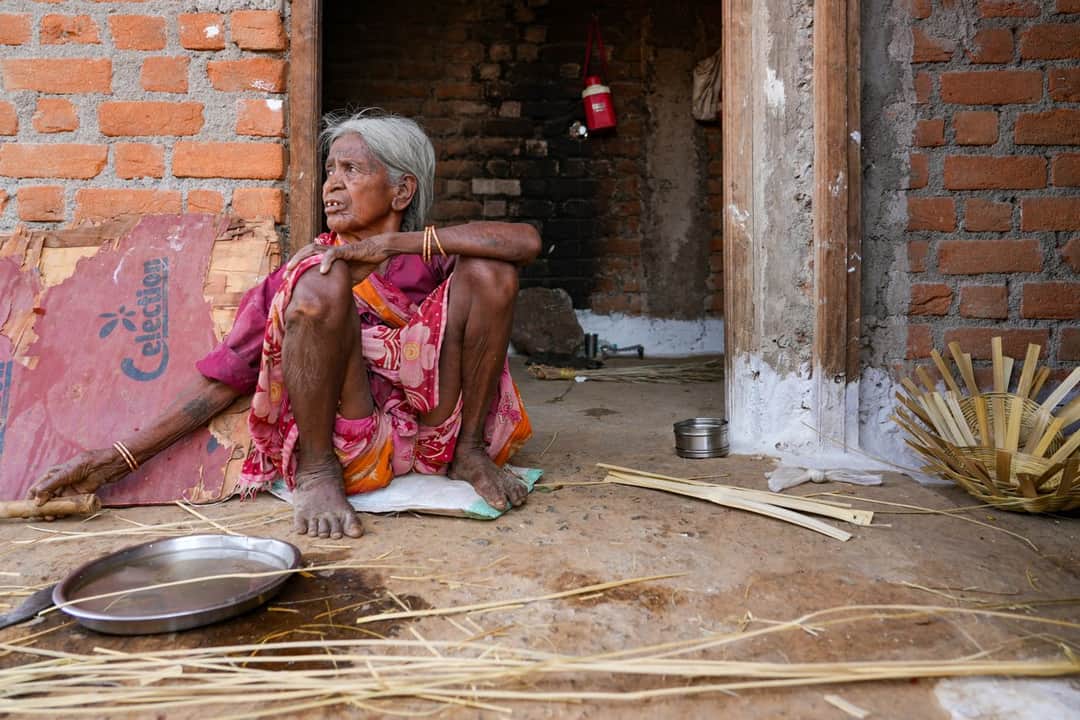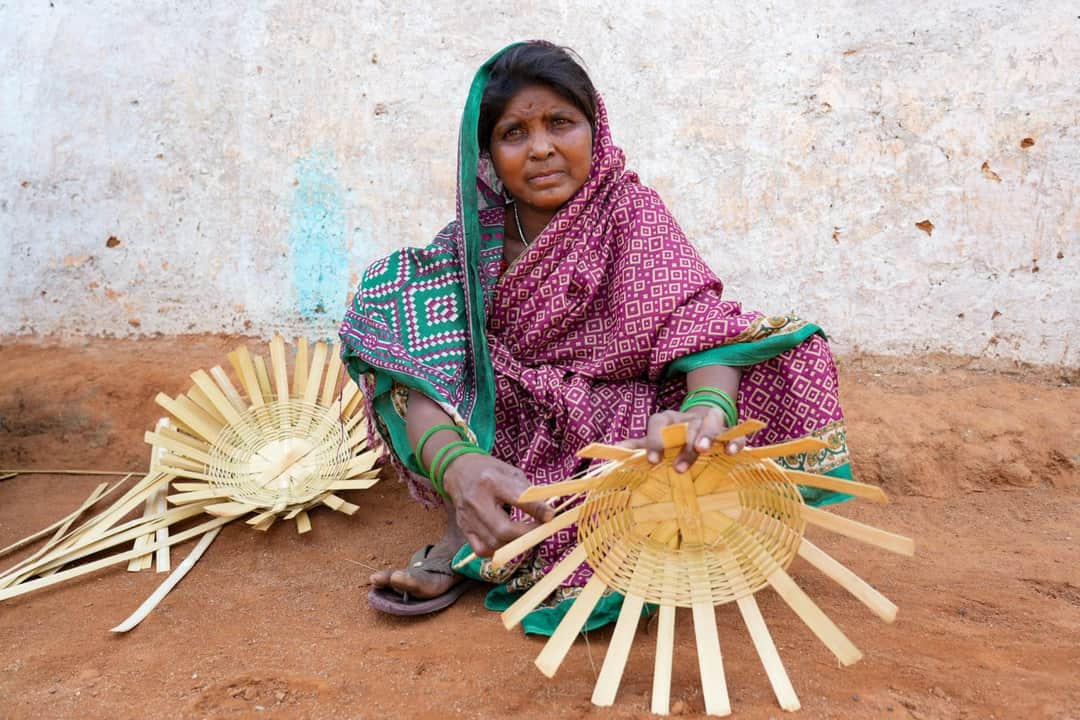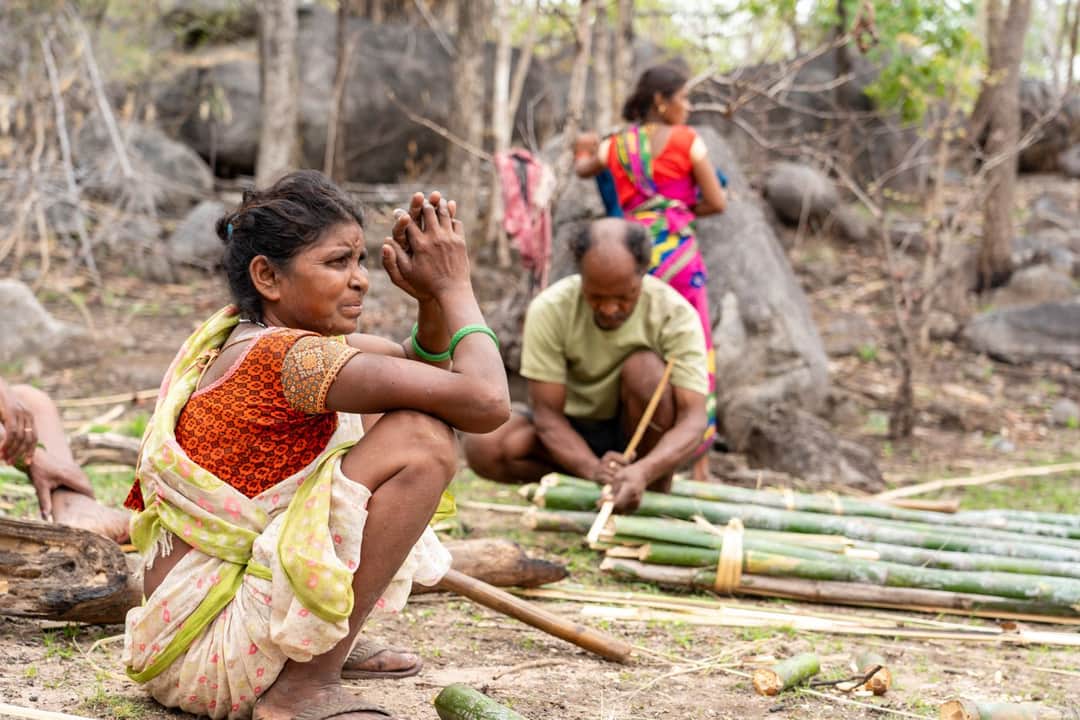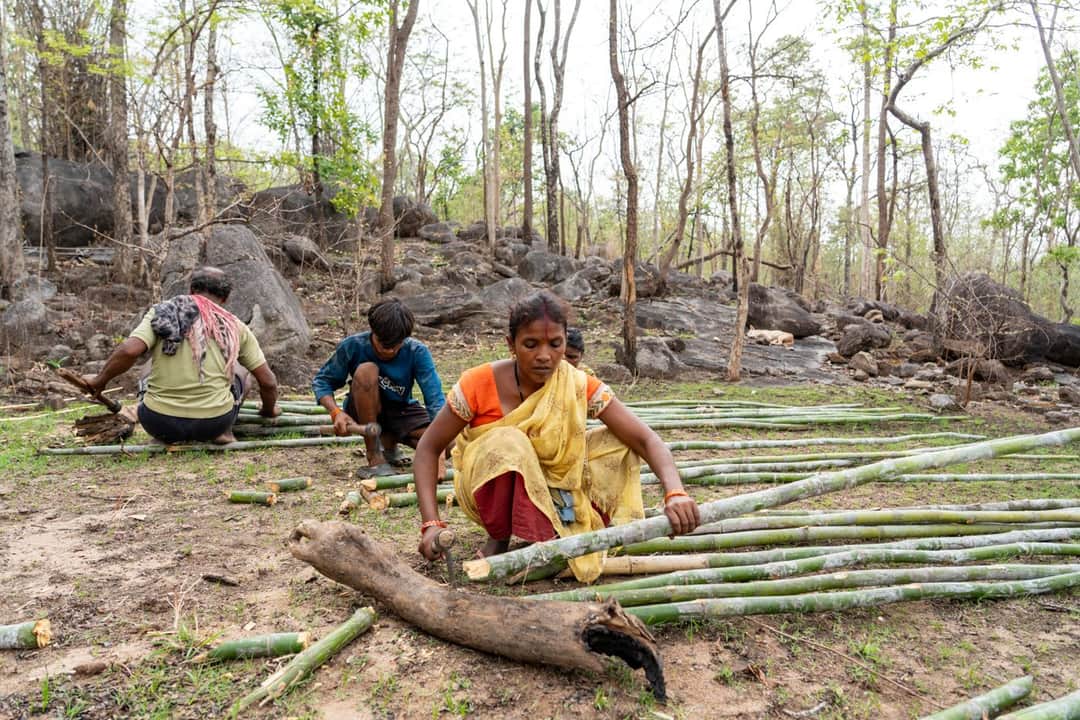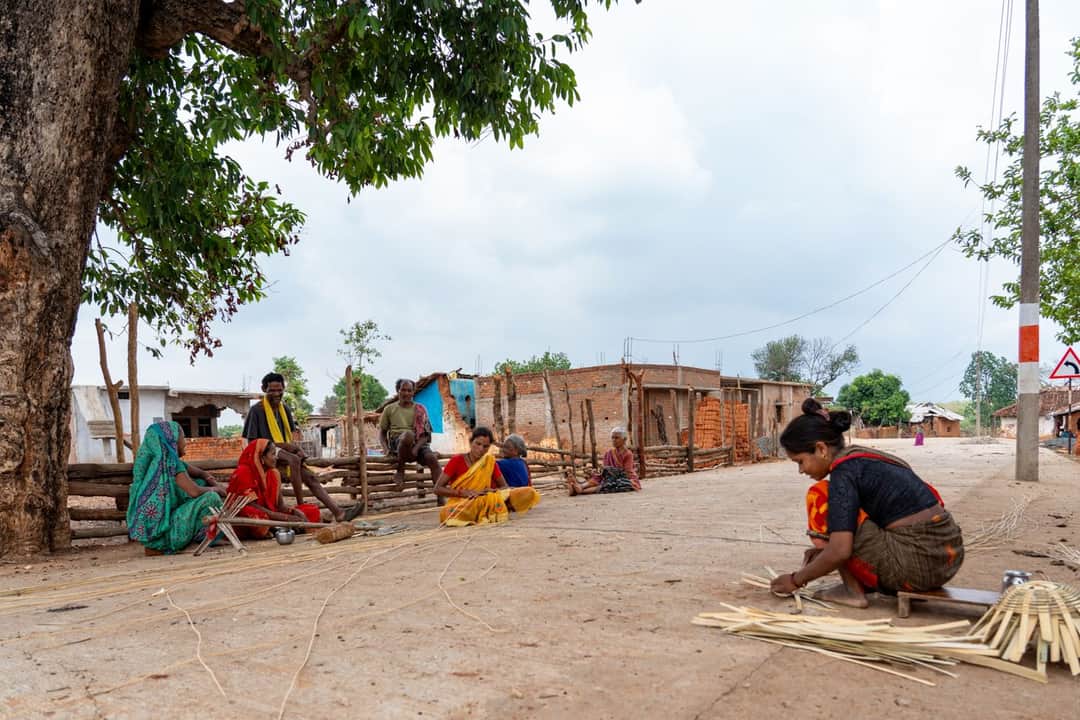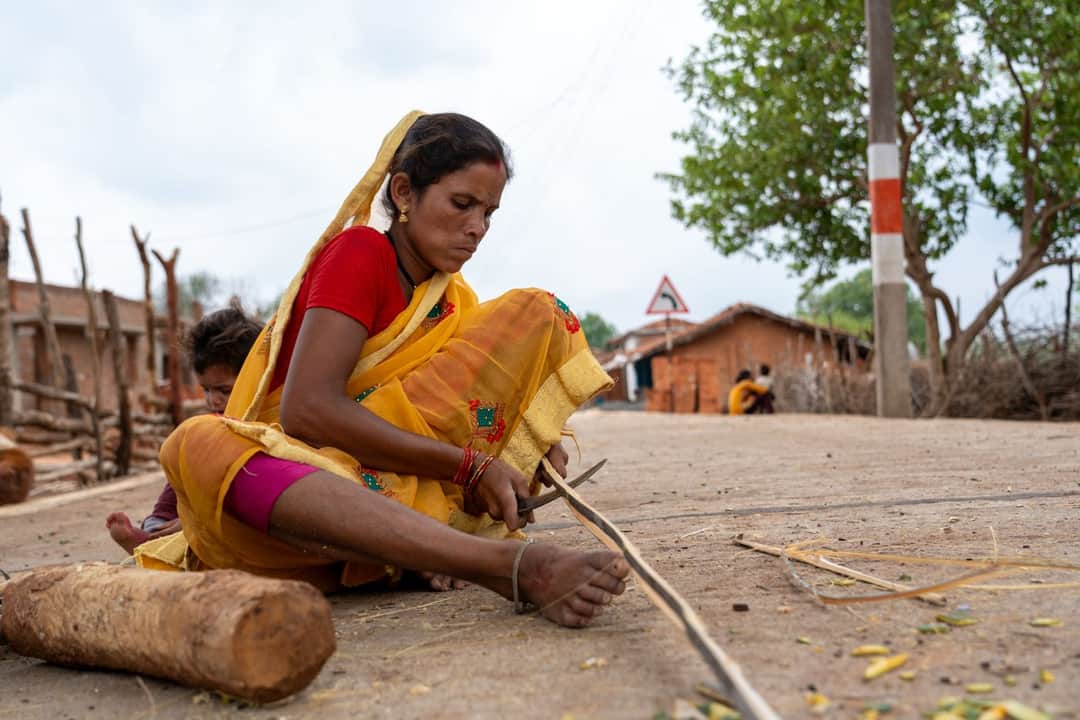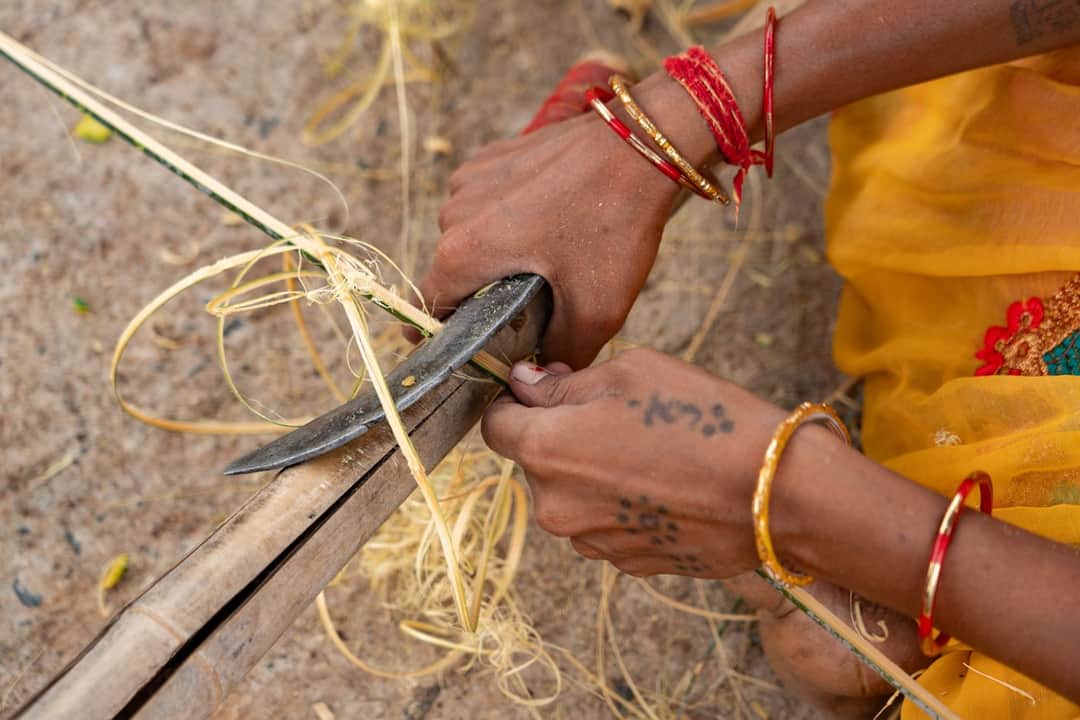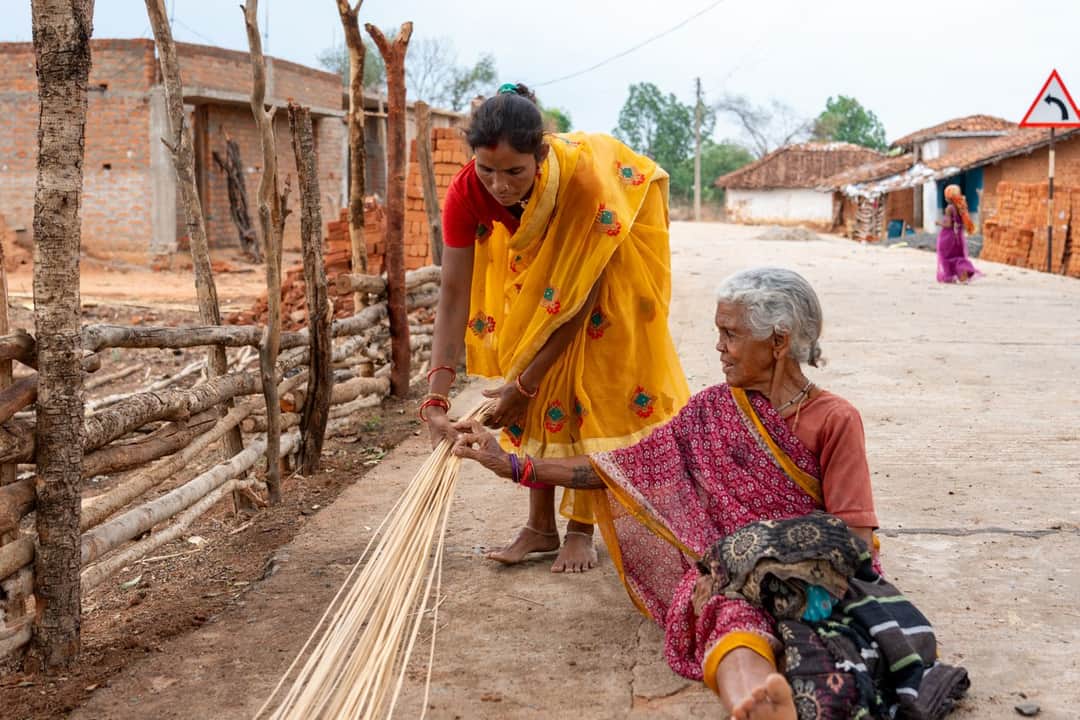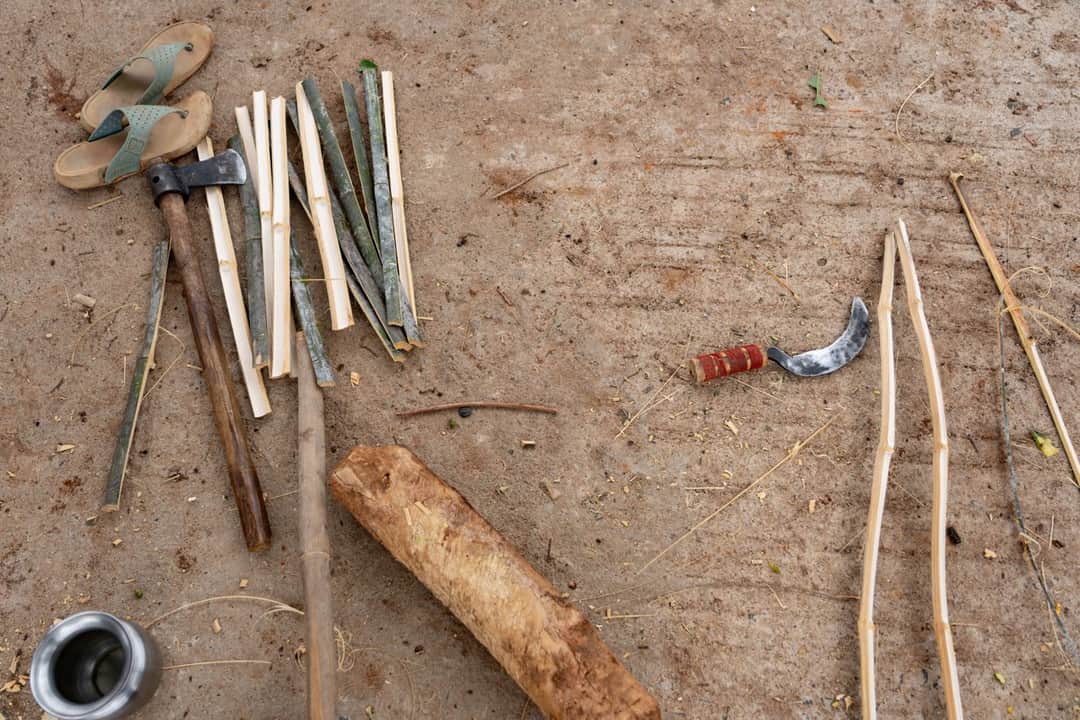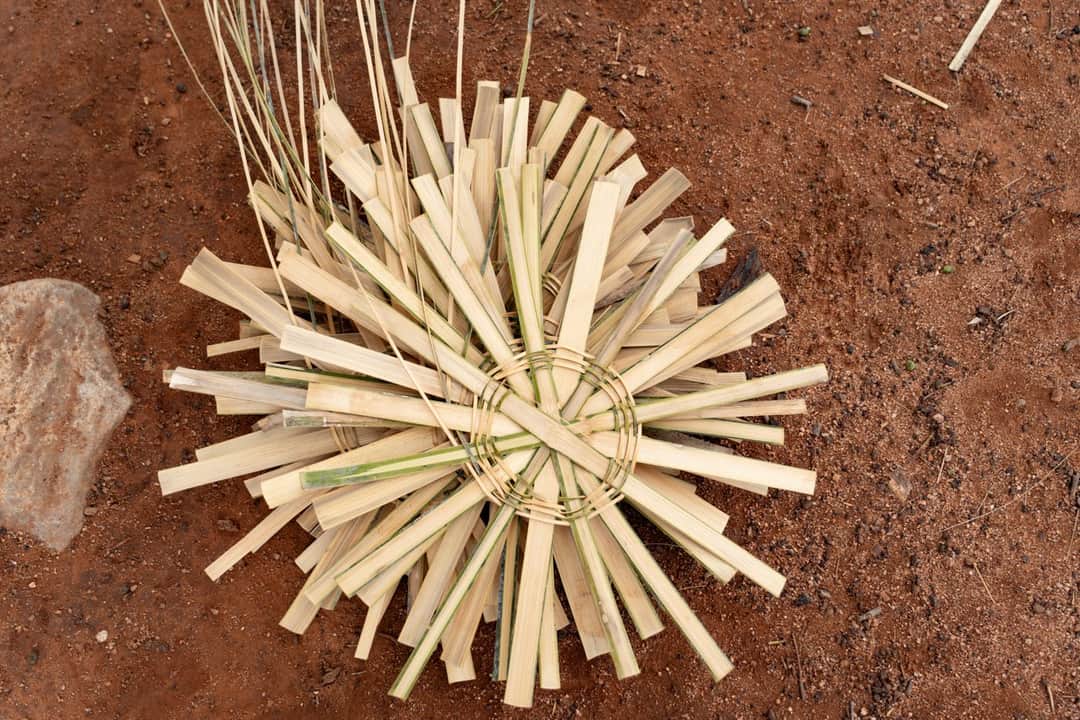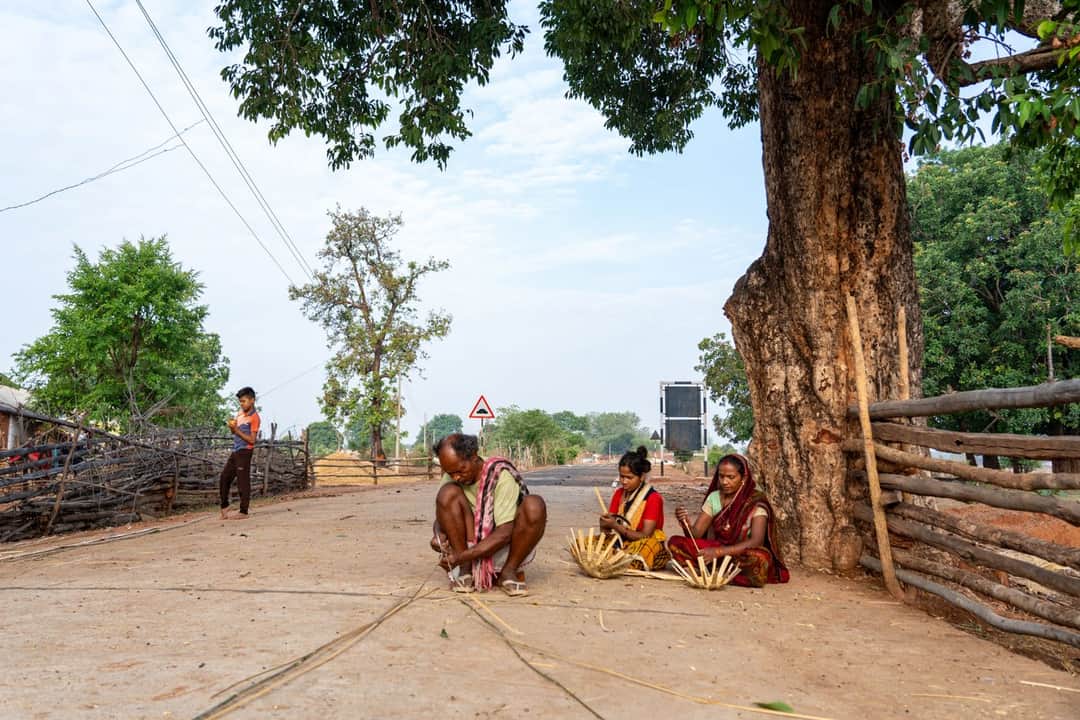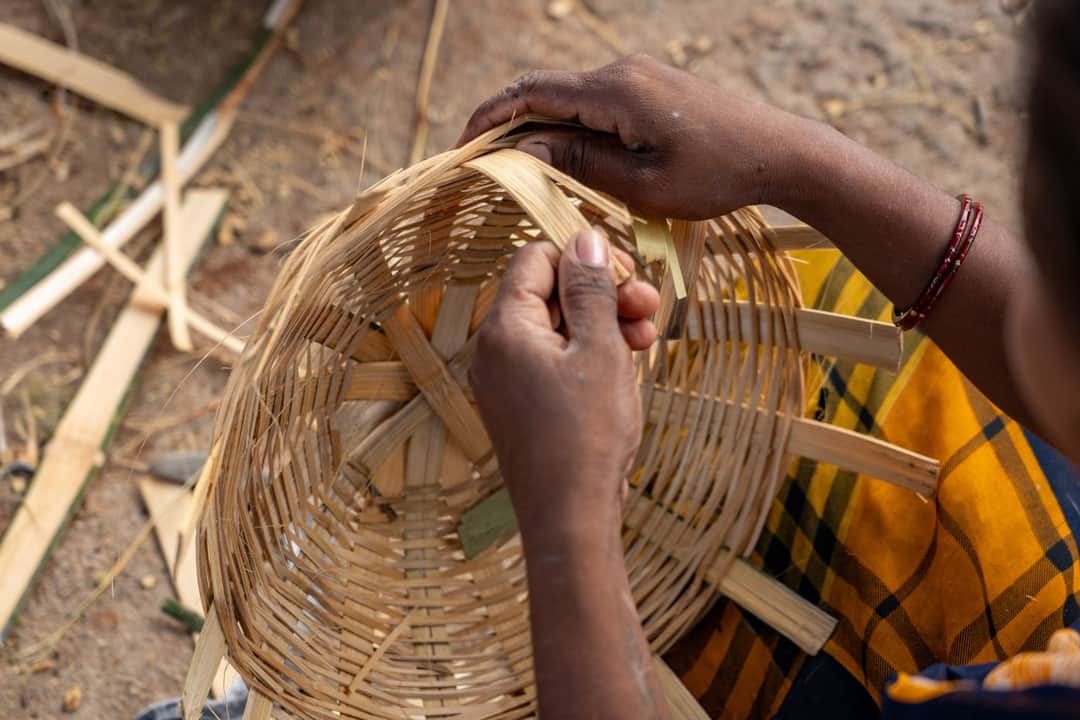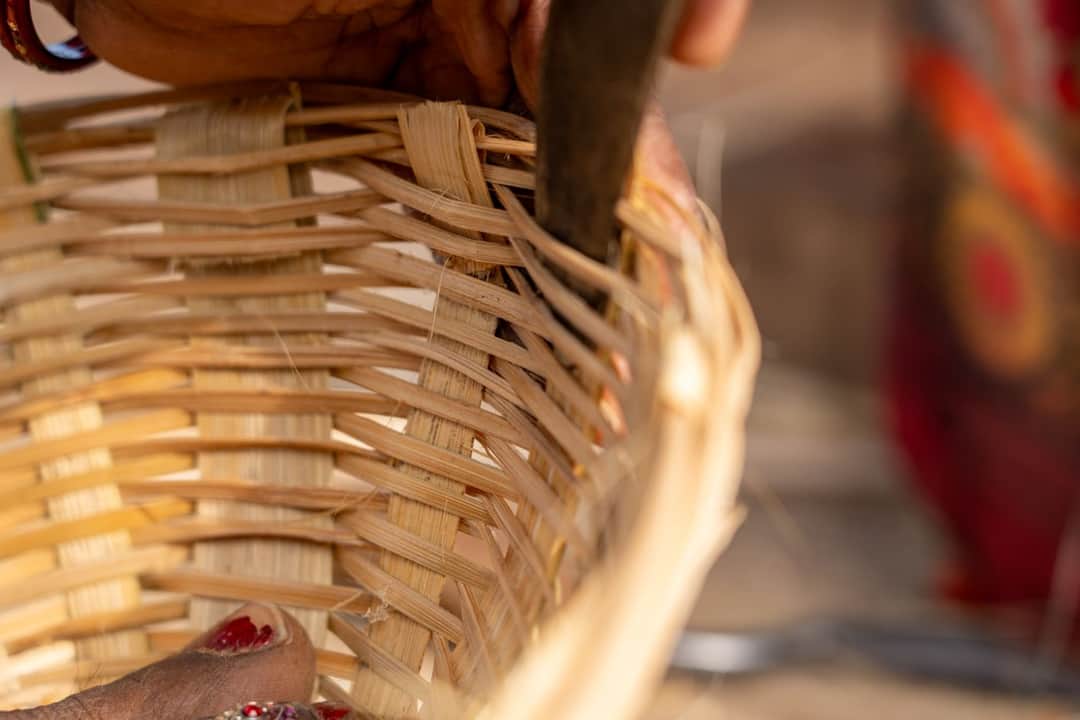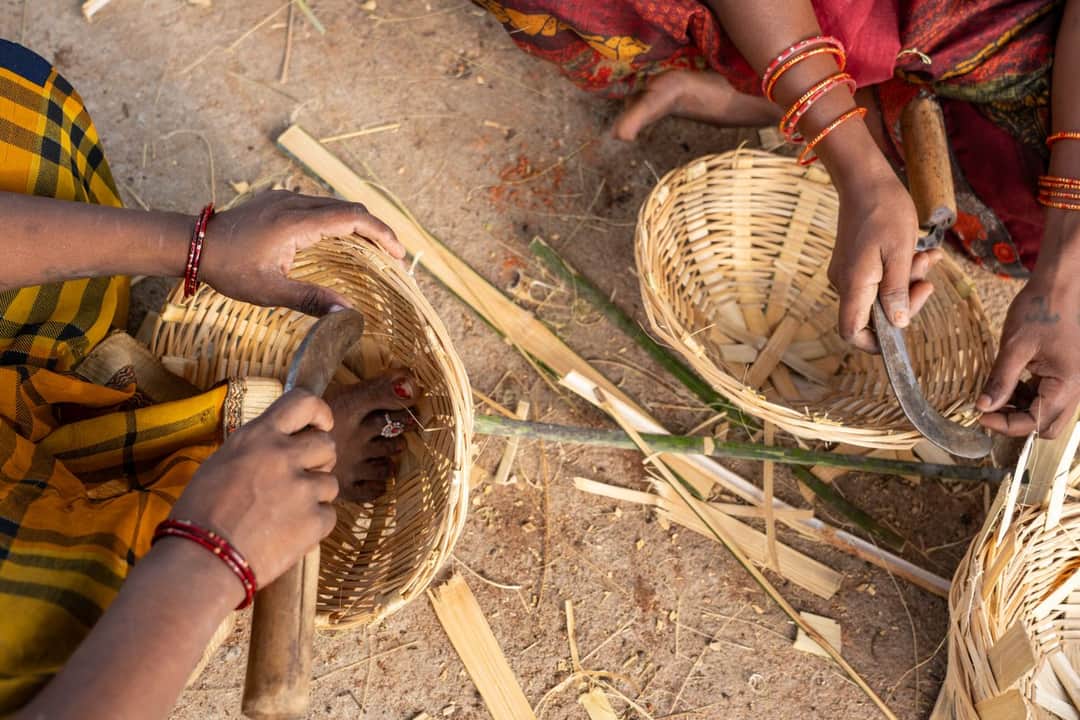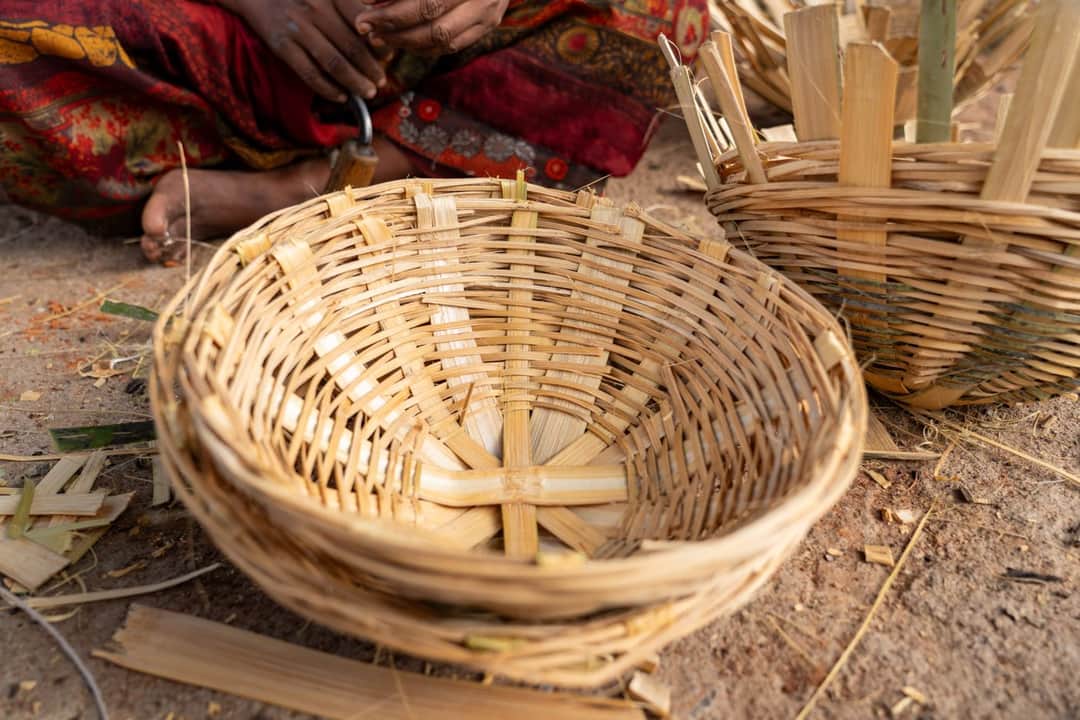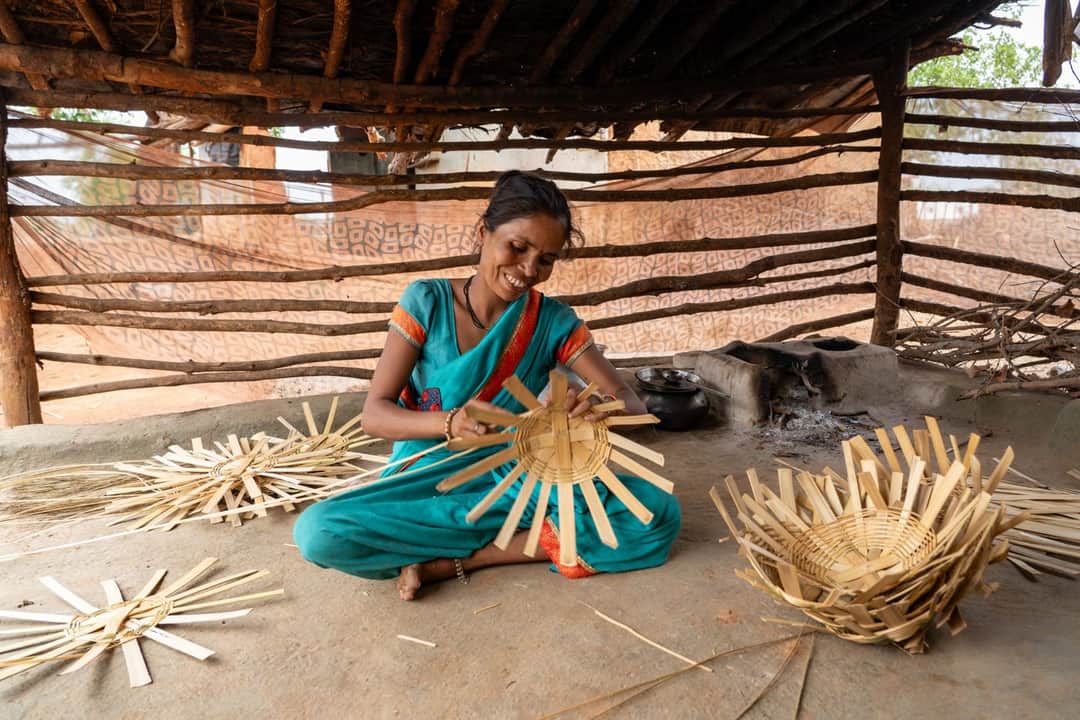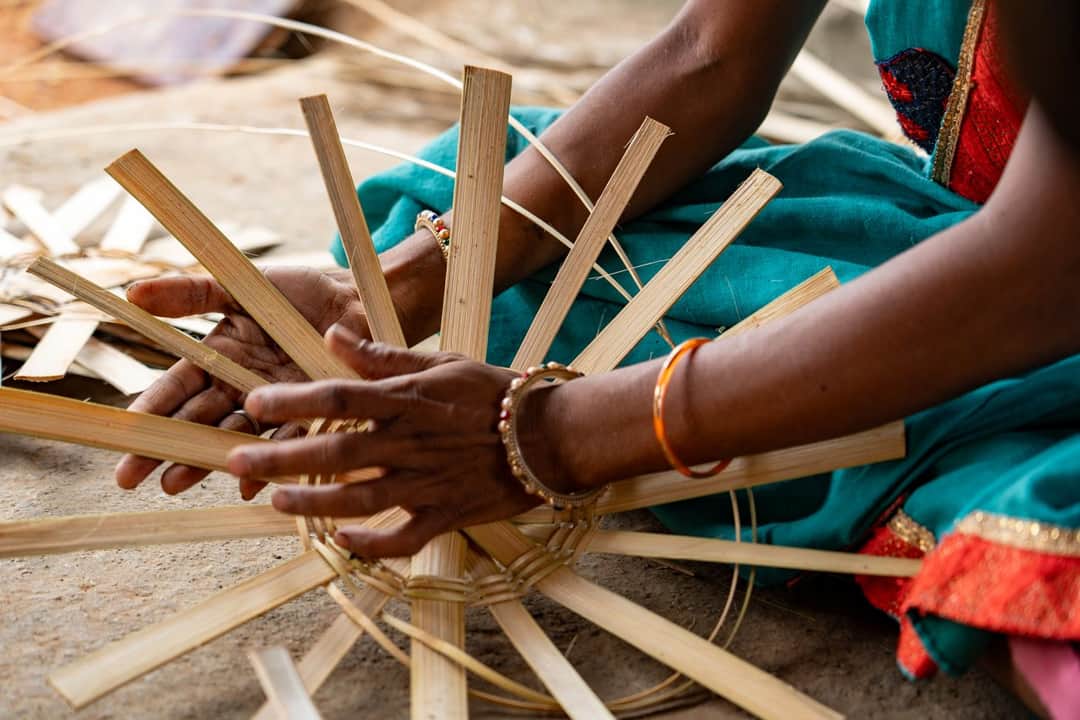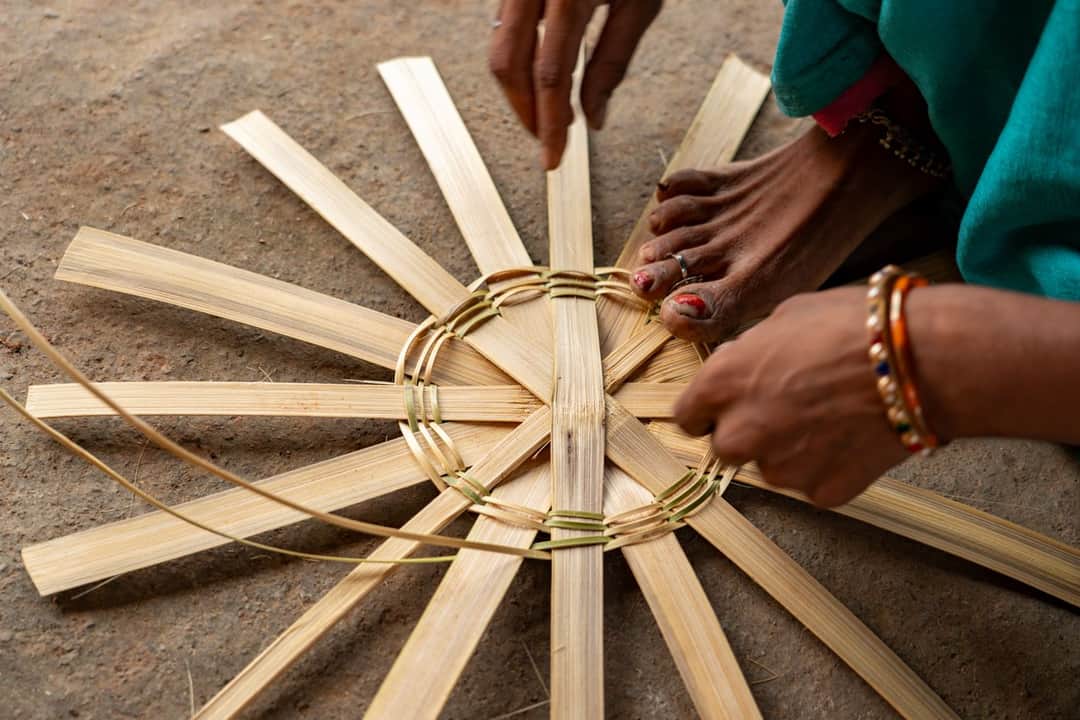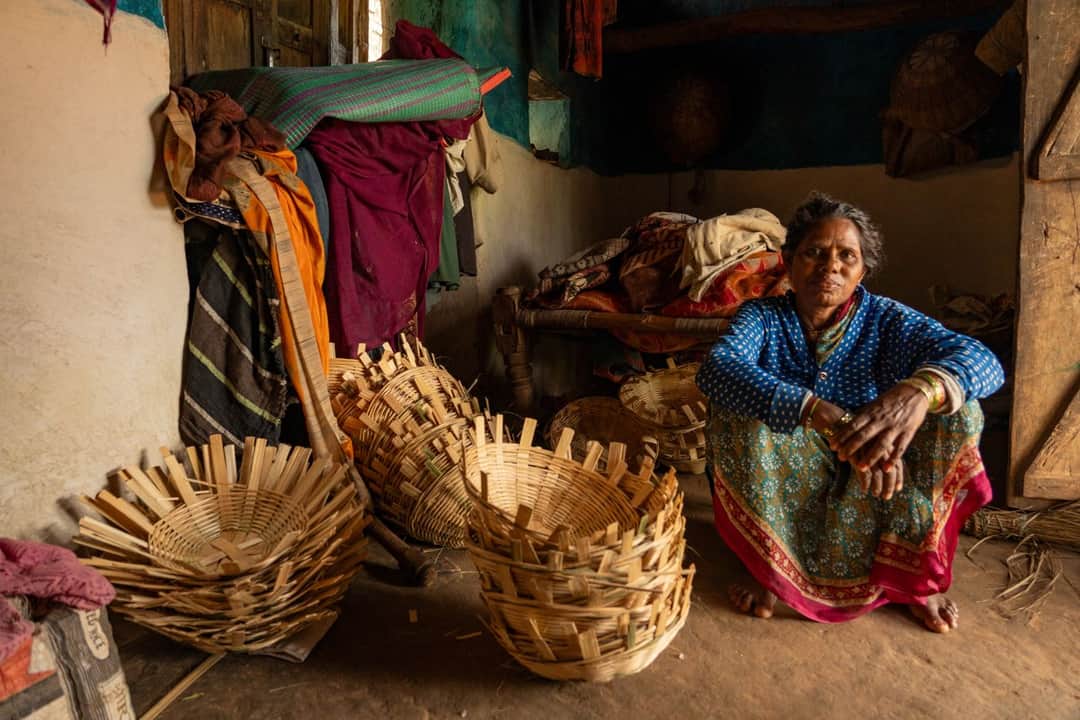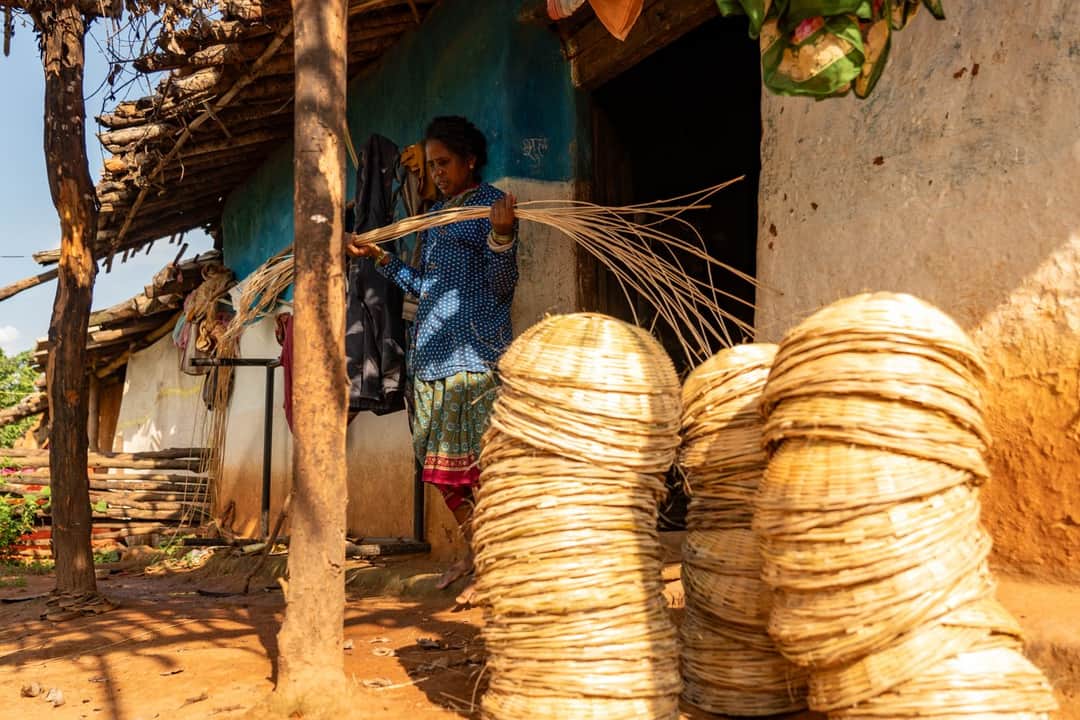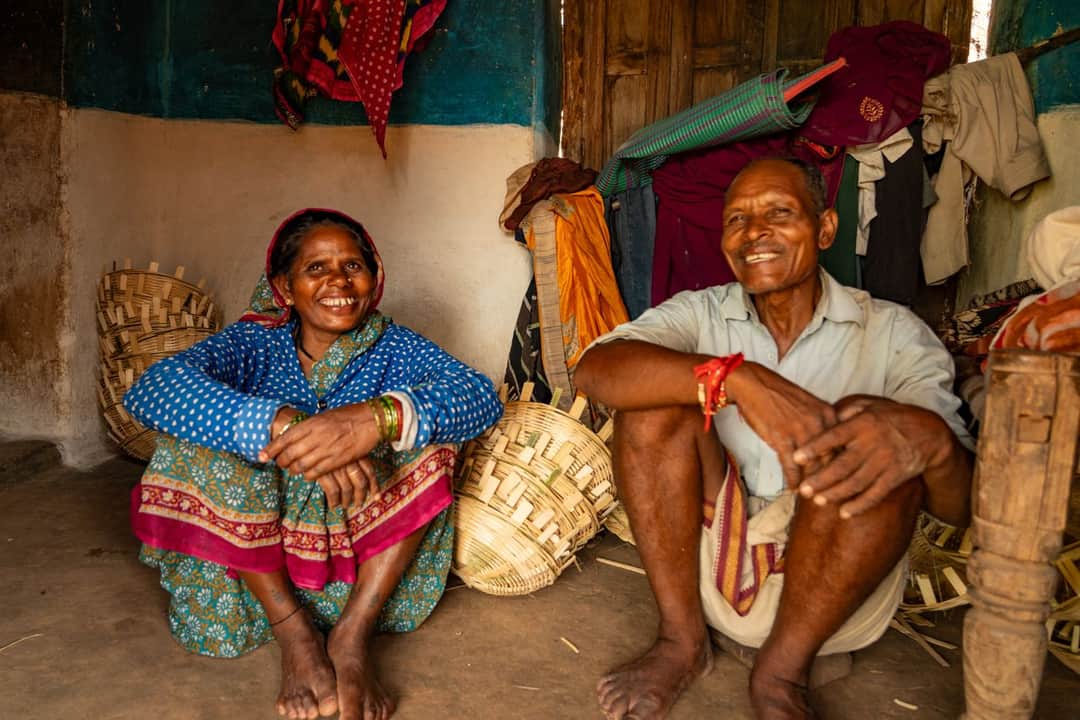

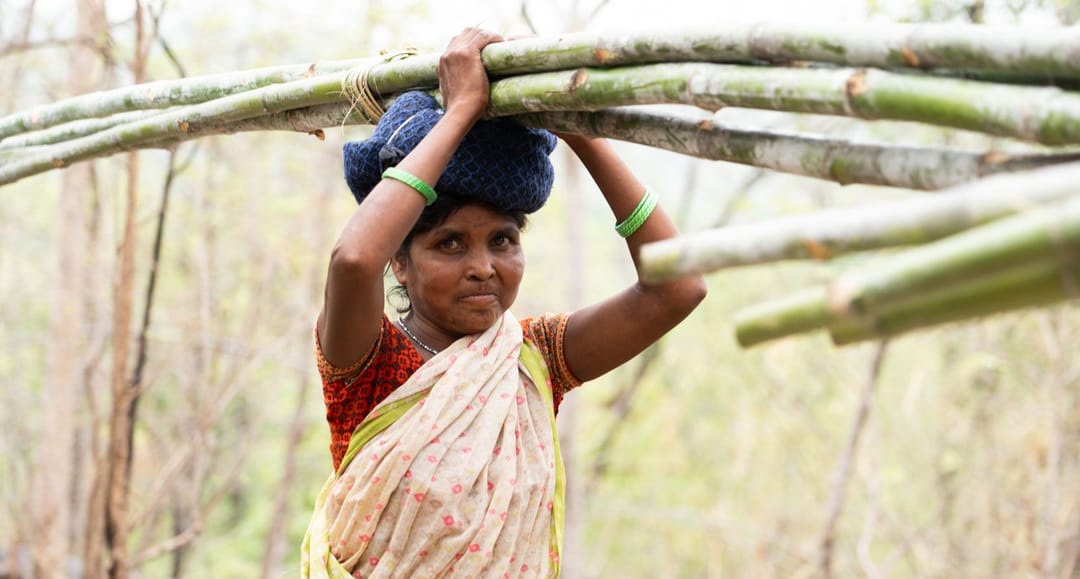
“If anyone in our community were to make a parara [a flat plate used for drying things], or a soopa [a winnowing basket] from bamboo, they will need to pay a fine in the form of grains and money to the other group.” Mangali Bai is explaining the livelihood code followed by subgroups of the Baiga Adivasi community, like, Binjhwar, Nahar, Narotia, Bharotiya, Rai Maina, and Kath Maina. Baigas in Madhya Pradesh are among the Particularly Vulnerable Tribal Groups (PVTGs). “Each community makes different things from bamboo.”
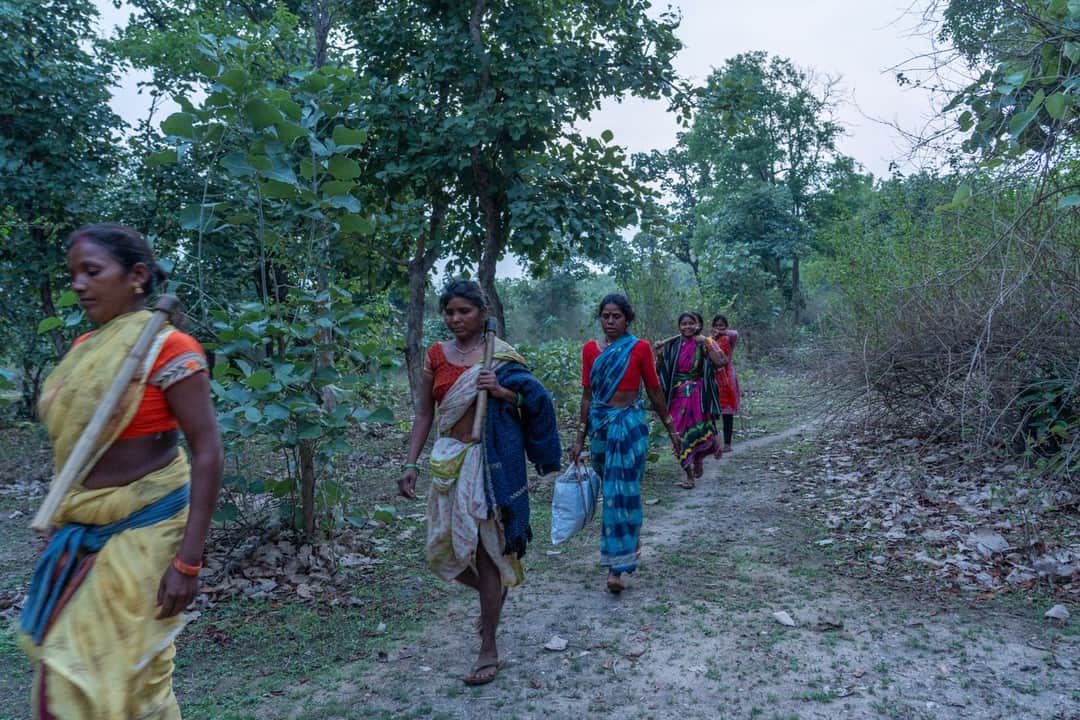
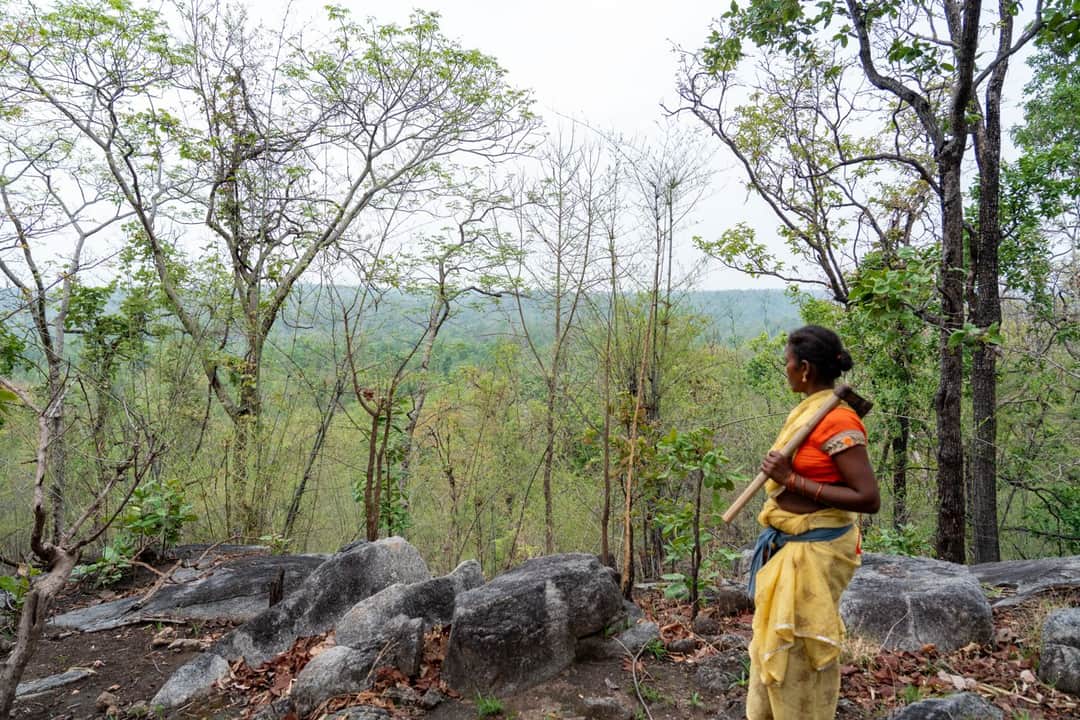
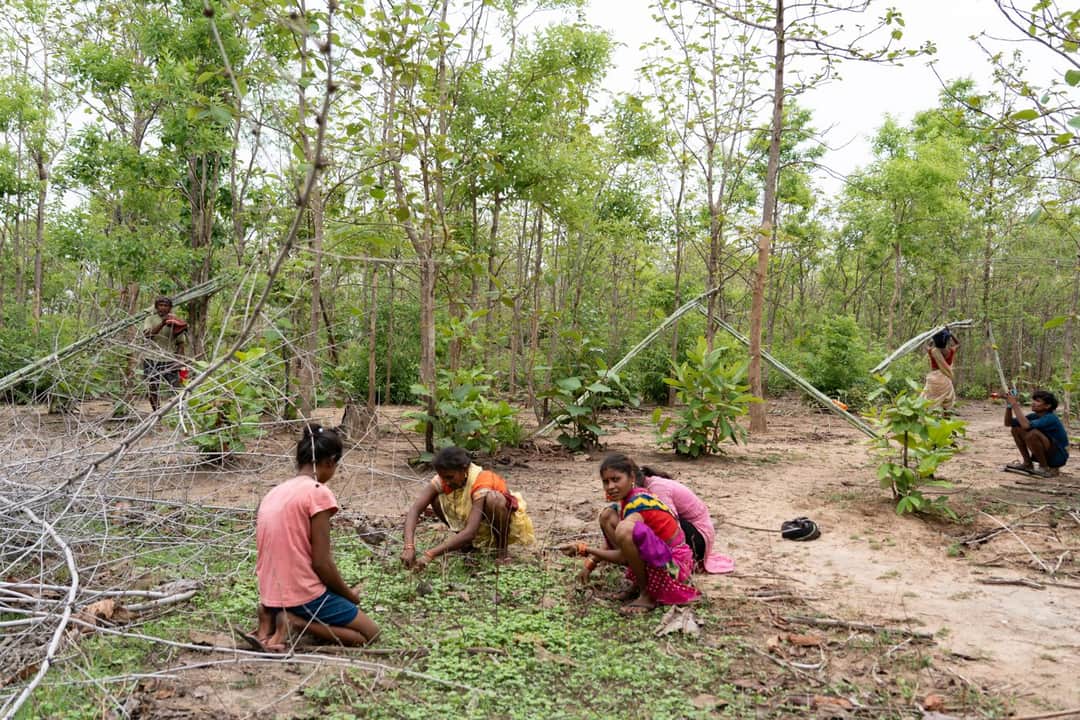
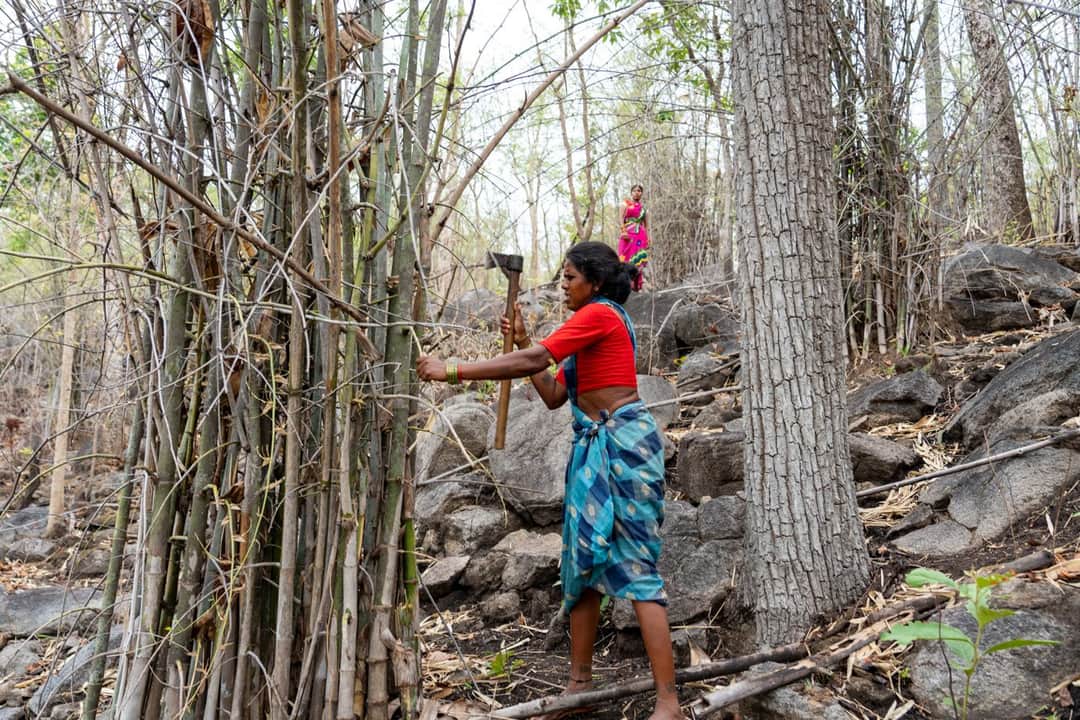
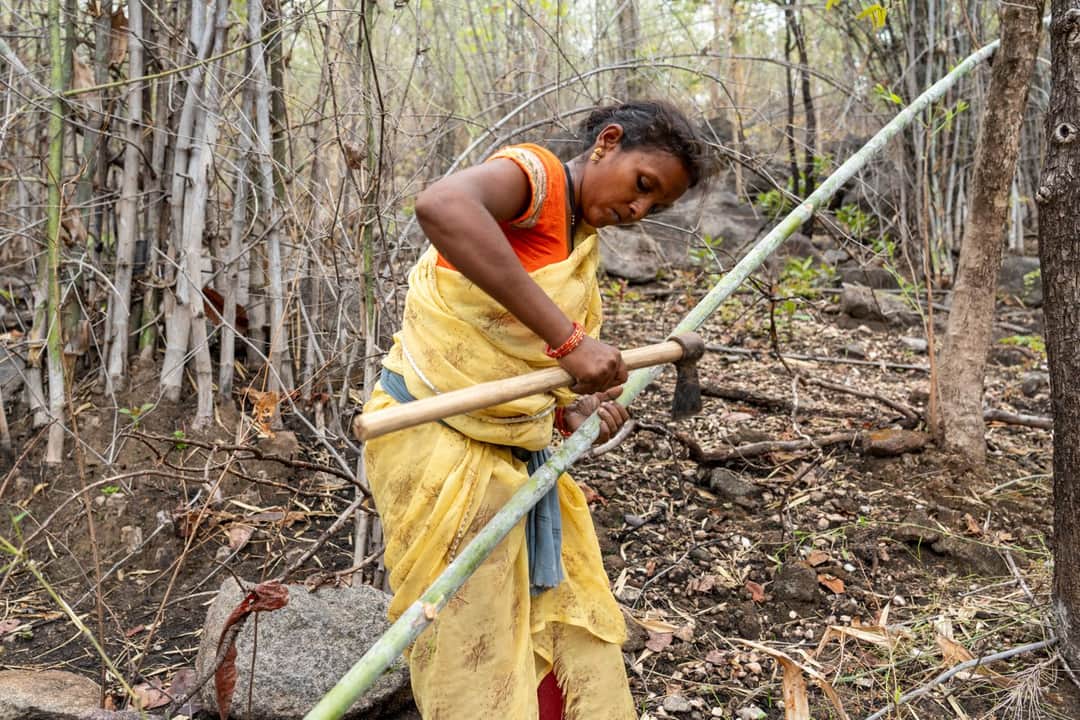
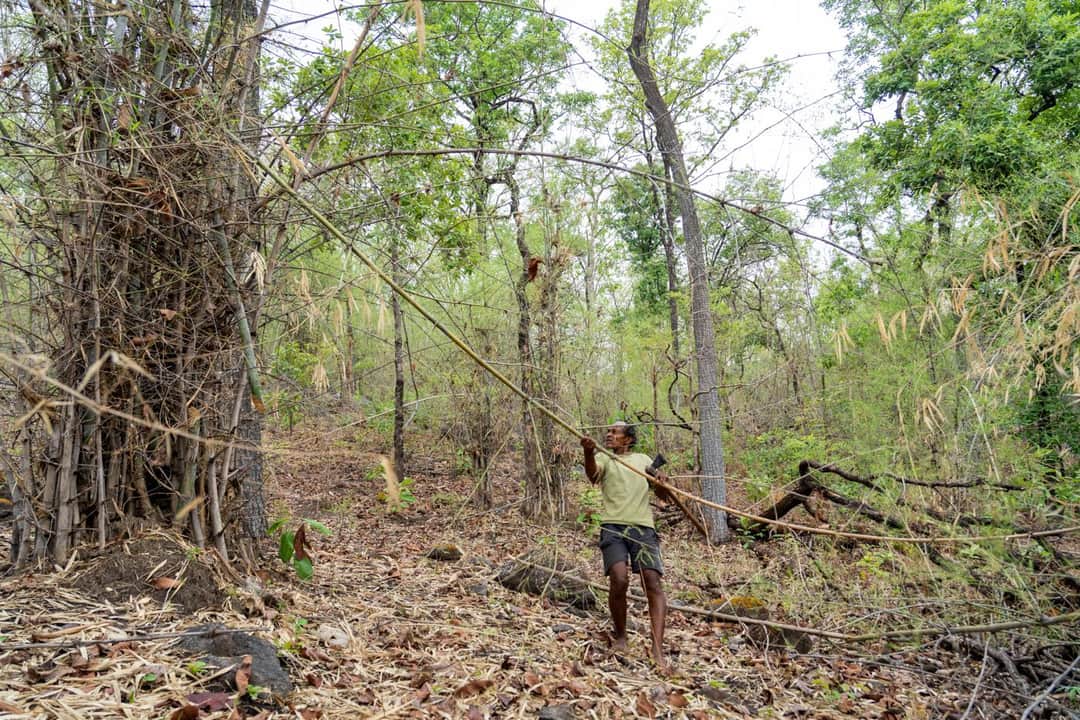
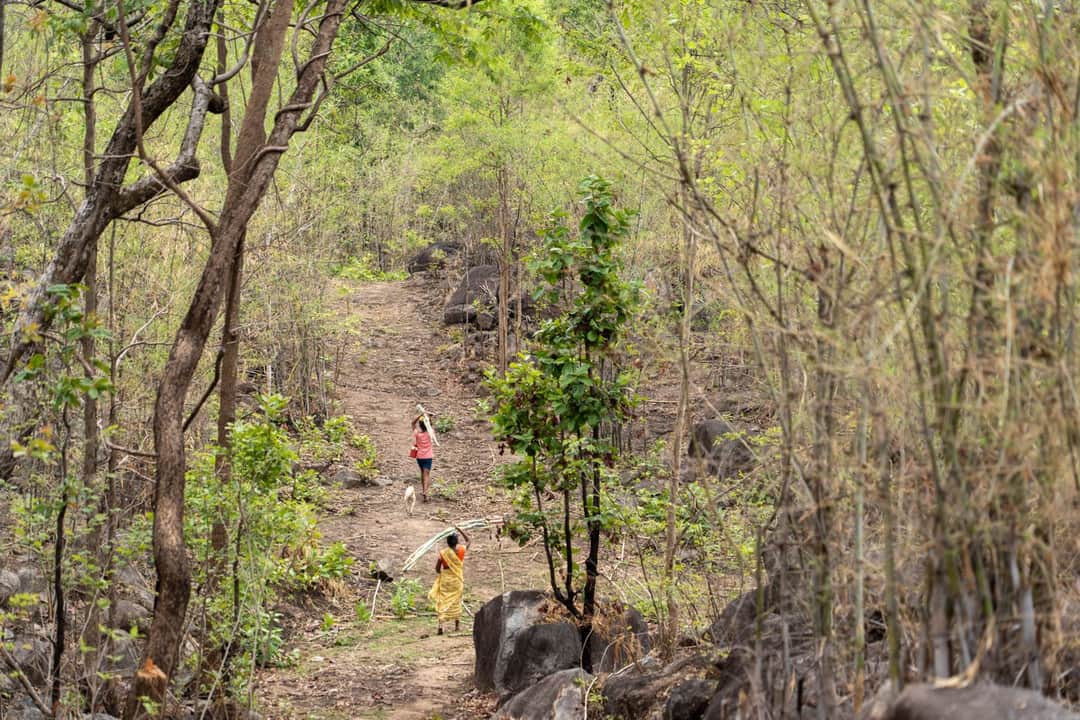
She herself is a Binjhwar Baiga Adivasi, living in Panda tola, a settlement of 10 to 12 Adivasi families in Balaghat district’s Nata village. It is Friday morning and Mangali Bai, along with others from her community, is on her way to the forest area near Maldhar village to source bamboo. It’s a little later than their usual 4 a.m. but still before the sunrise, as they wait for me to join.
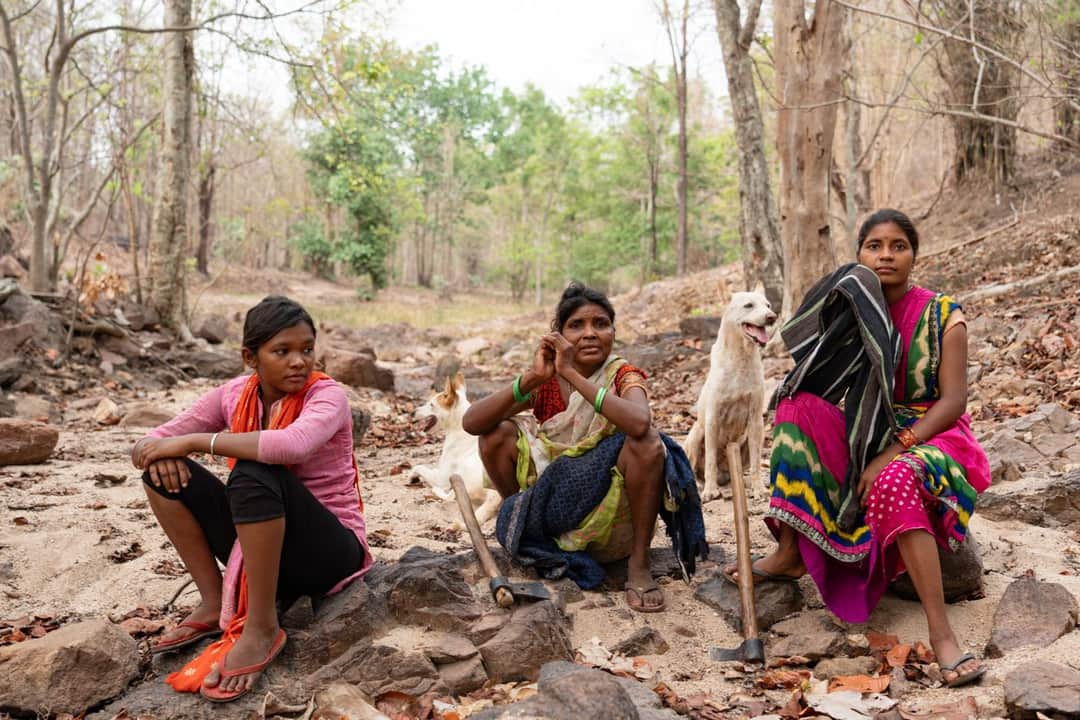
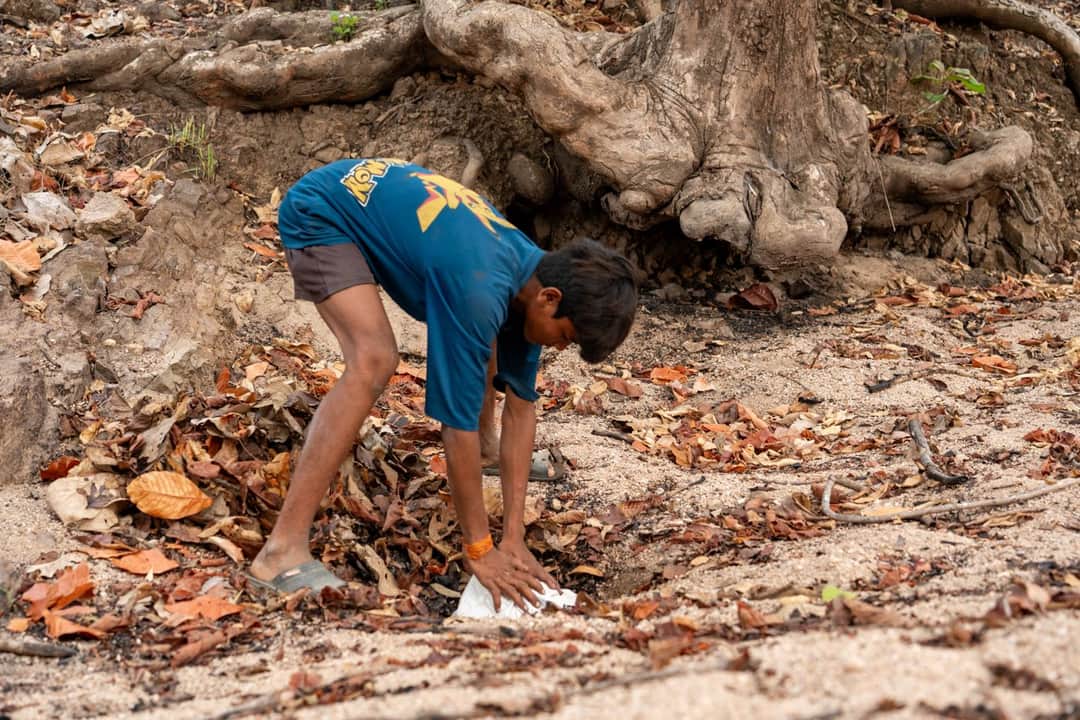
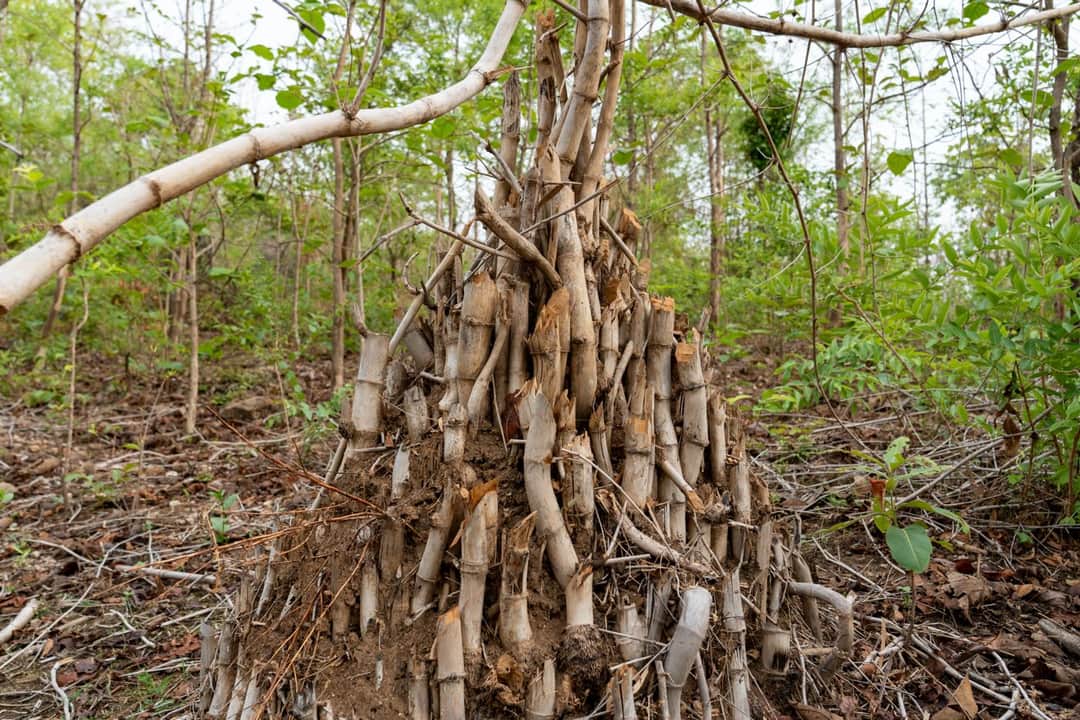
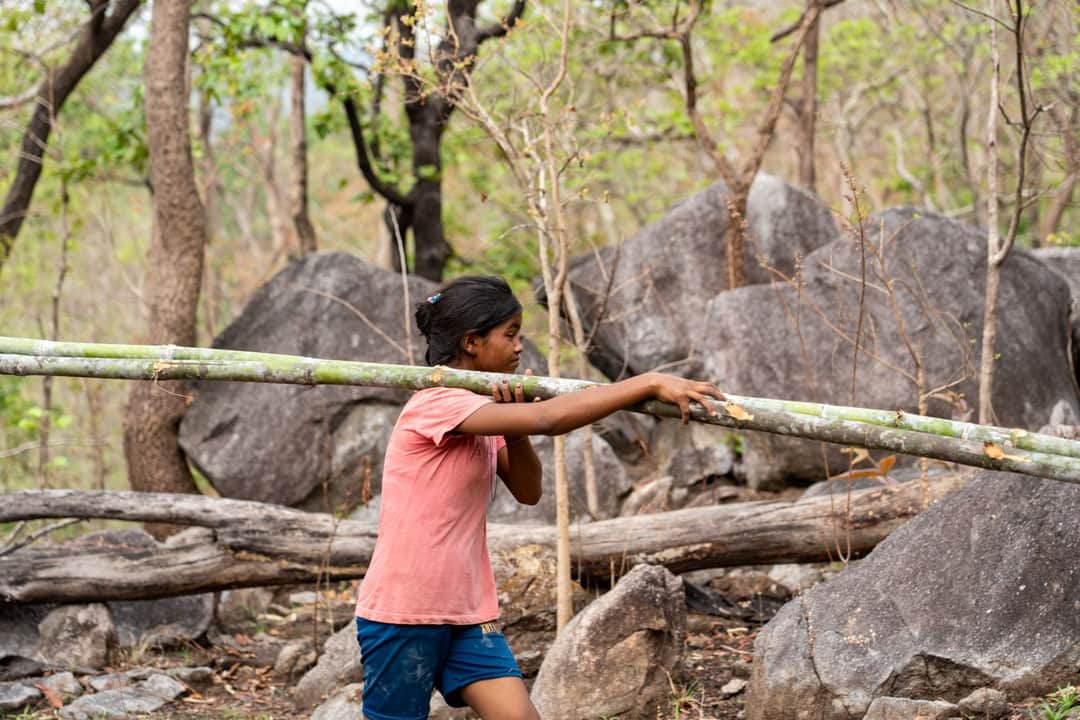
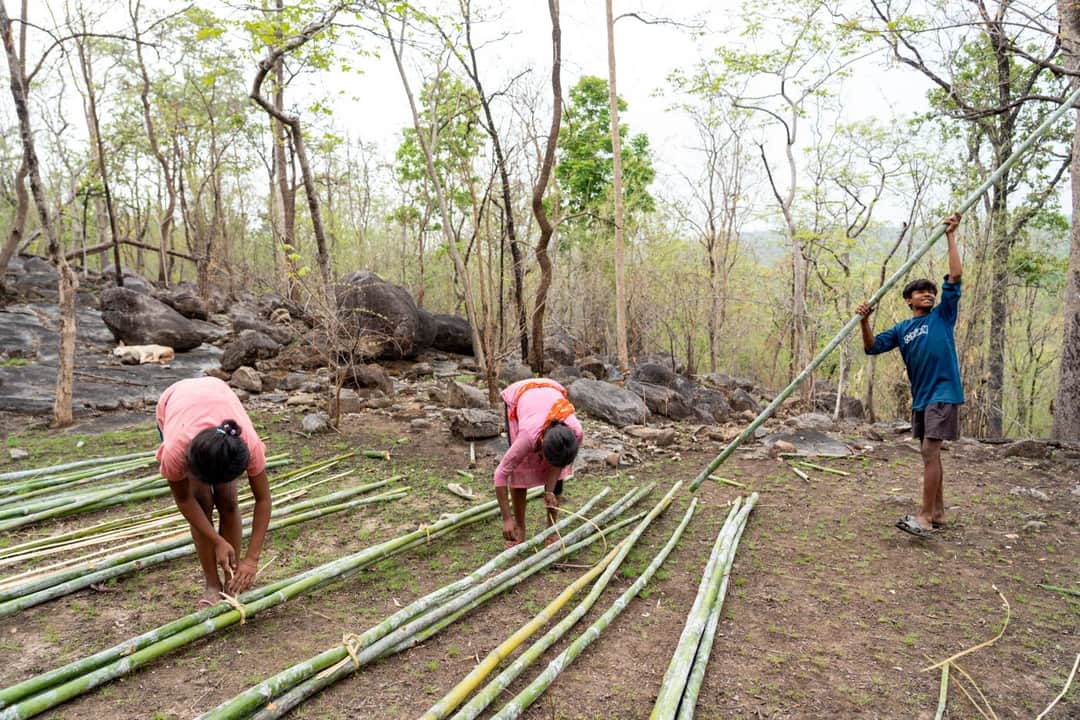
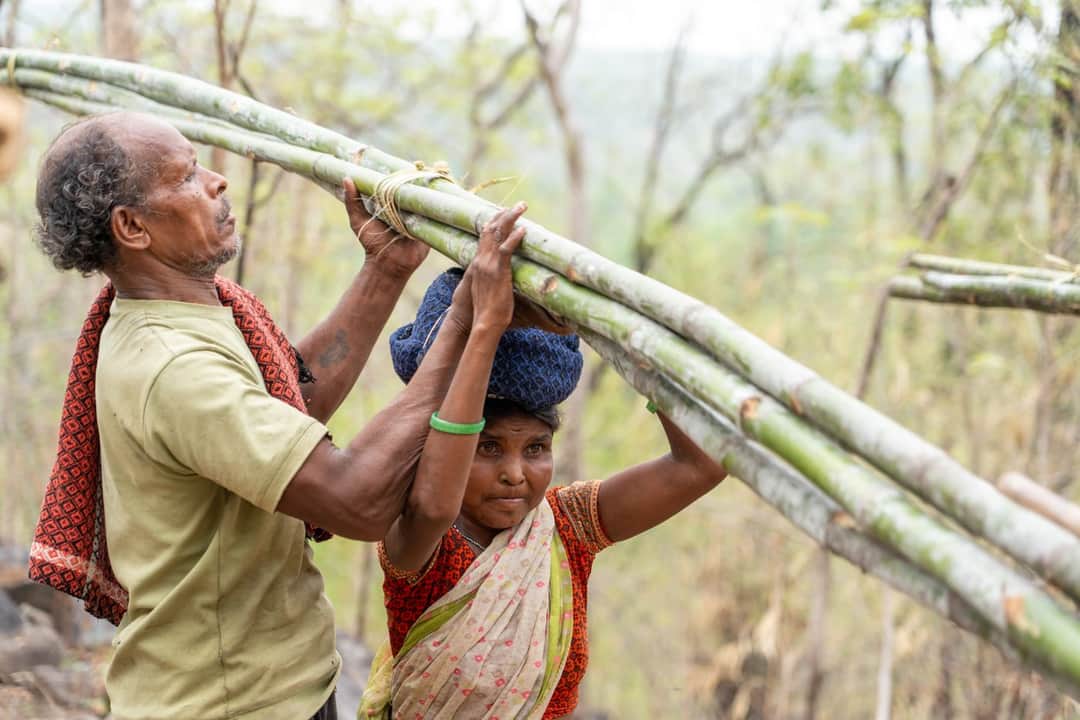
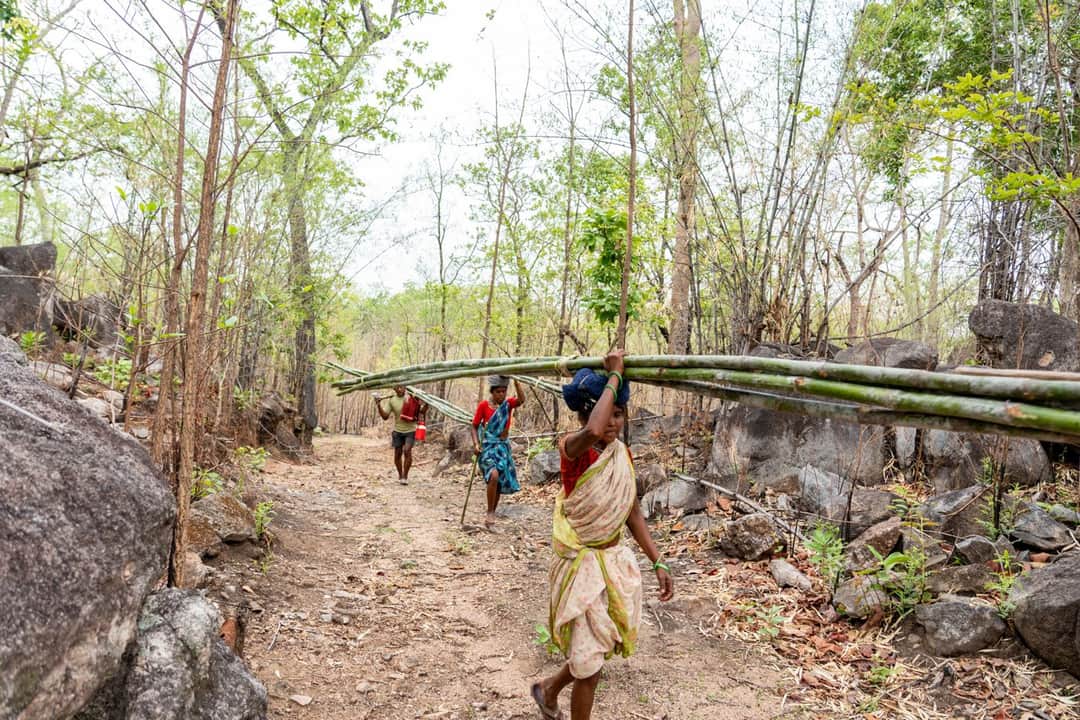
On the way they hide their food boxes under the dry bed of a river and walk carrying only a water bottle and an axe each. “It is a way to reduce the weight we are carrying,” Mangali Bai says. Past noon they will be walk the same 8 to 10 kilometres towards Panda tola. They will be carrying three to four bamboo poles on their head, weighing about 25 kilos.