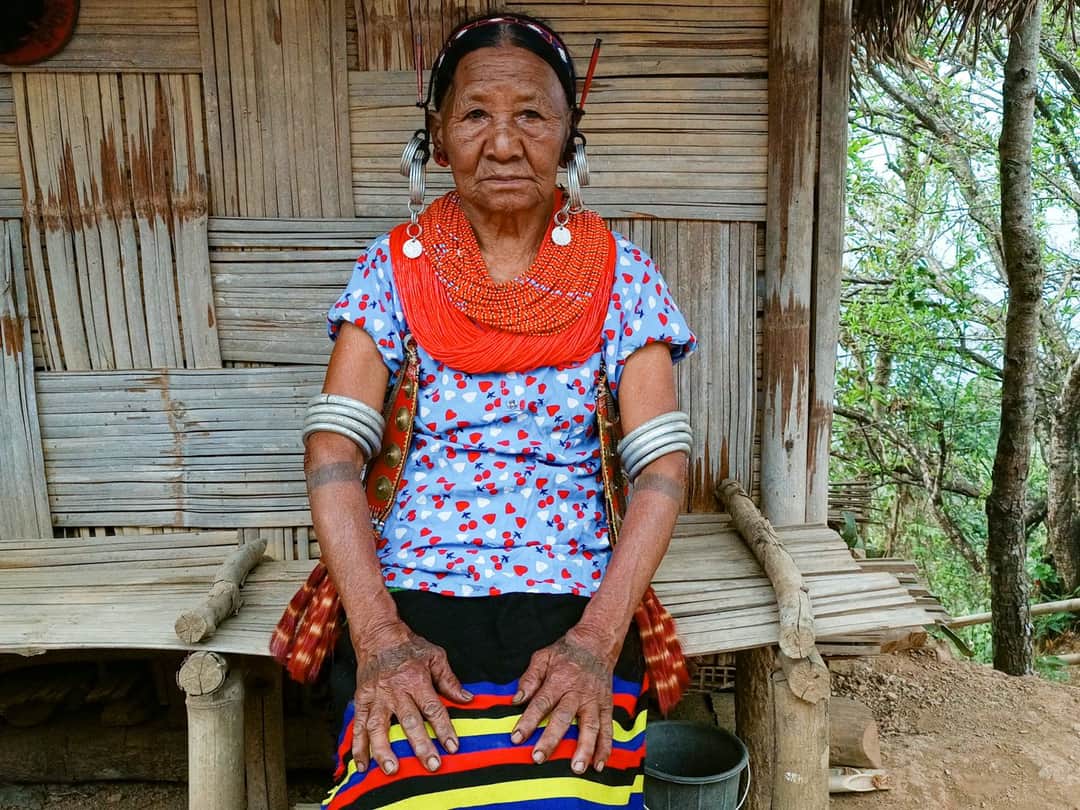
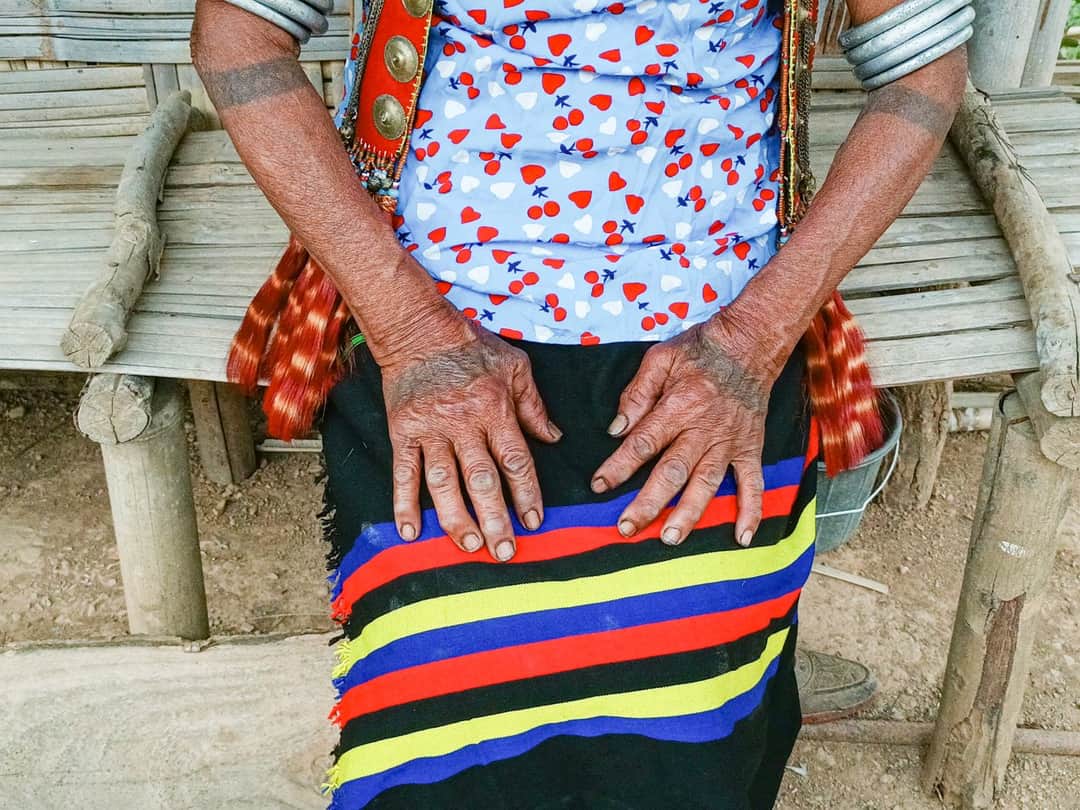
Tattoos for women and men have always been different. Women got tattooed at various phases of their life – upon reaching puberty or getting married. Some of their tattoos also commemorated the achievements of the male members of the family.
“A Konyak woman’s life passes through many changes. Born into her father’s clan, she marries into another. Yet, the tattoo she receives before marriage remains the only thing she carries throughout her life and even after death. It is the one mark that does not change, the mark that tells her who she is and where she comes from,” says Amo Konyak.
A resident of Mon, she recalls seeing tattoos on her grandparents. “As a child, I often heard stories about tattooing, how it was done, how painful it was, and how proud people felt afterwards. These stories were passed down like folktales, always told with awe and respect. To me, these tattoos were like maps of memory, carved not only on their skin but into the very essence of who they were,” the 32-year-old researcher adds fondly.
The Konyaks were traditionally headhunters, and tattoos were etched upon the skin of the men to mark victory after a successful battle. The focus on this has often left women out of the research and stories about Konyak tattoos, says Amo who recalls the tales of tattoos narrated to her by her grandmother, “She often told me how painful the process was, how the skin bled and swelled, yet how proud and beautiful she felt afterwards.”
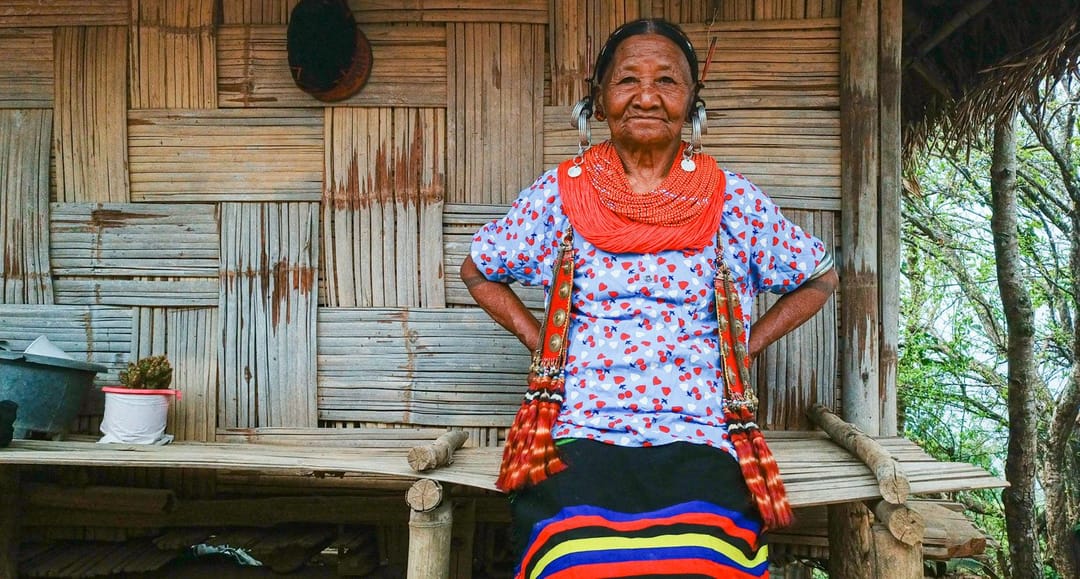
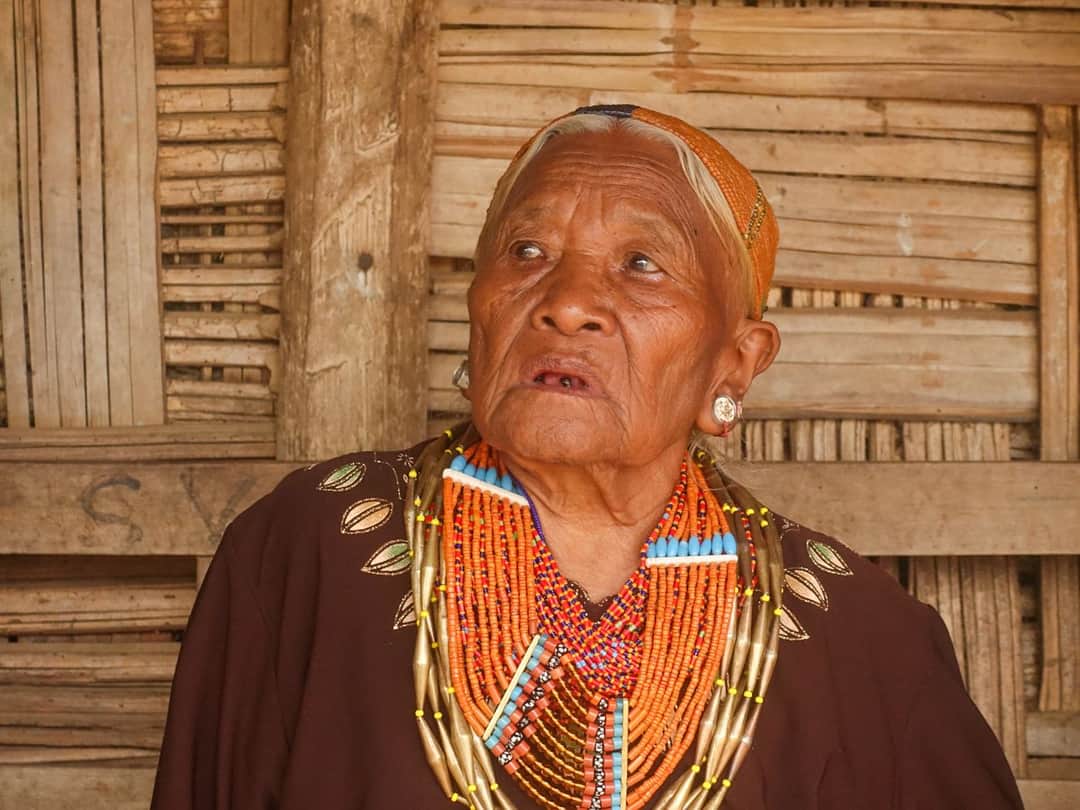
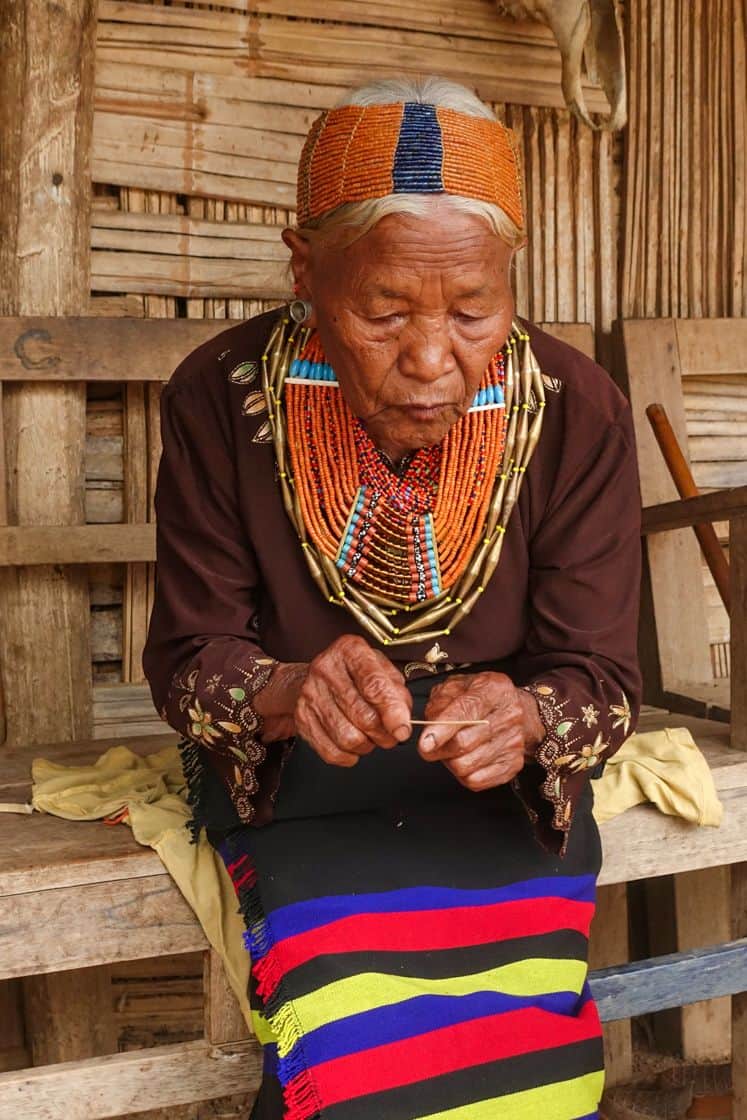
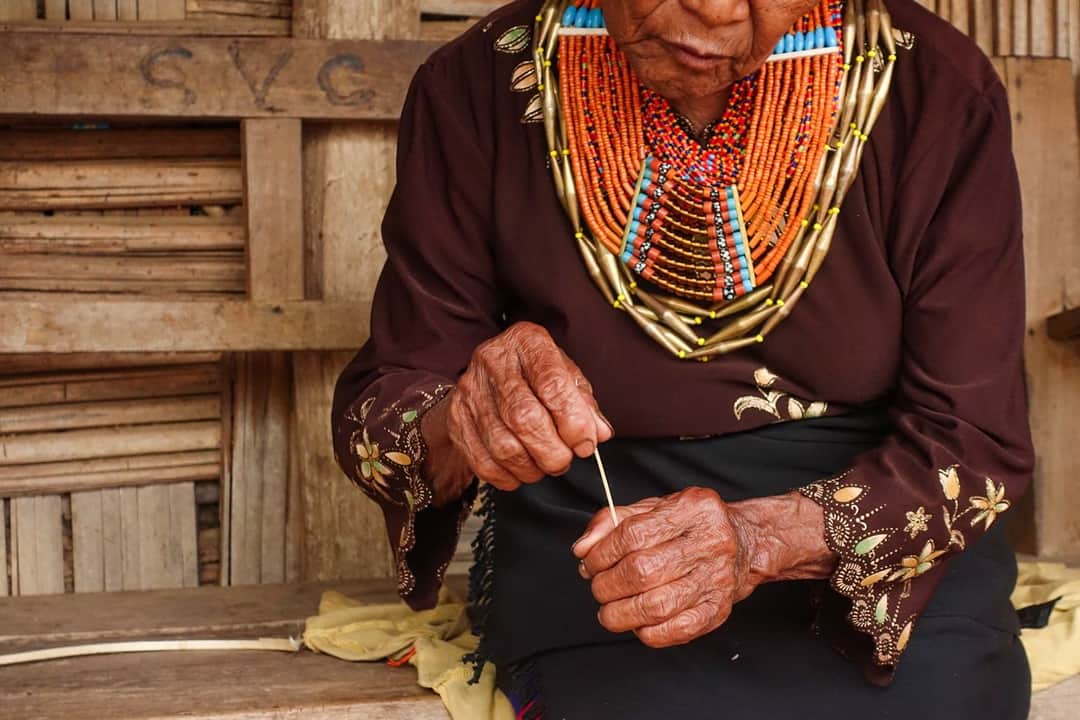
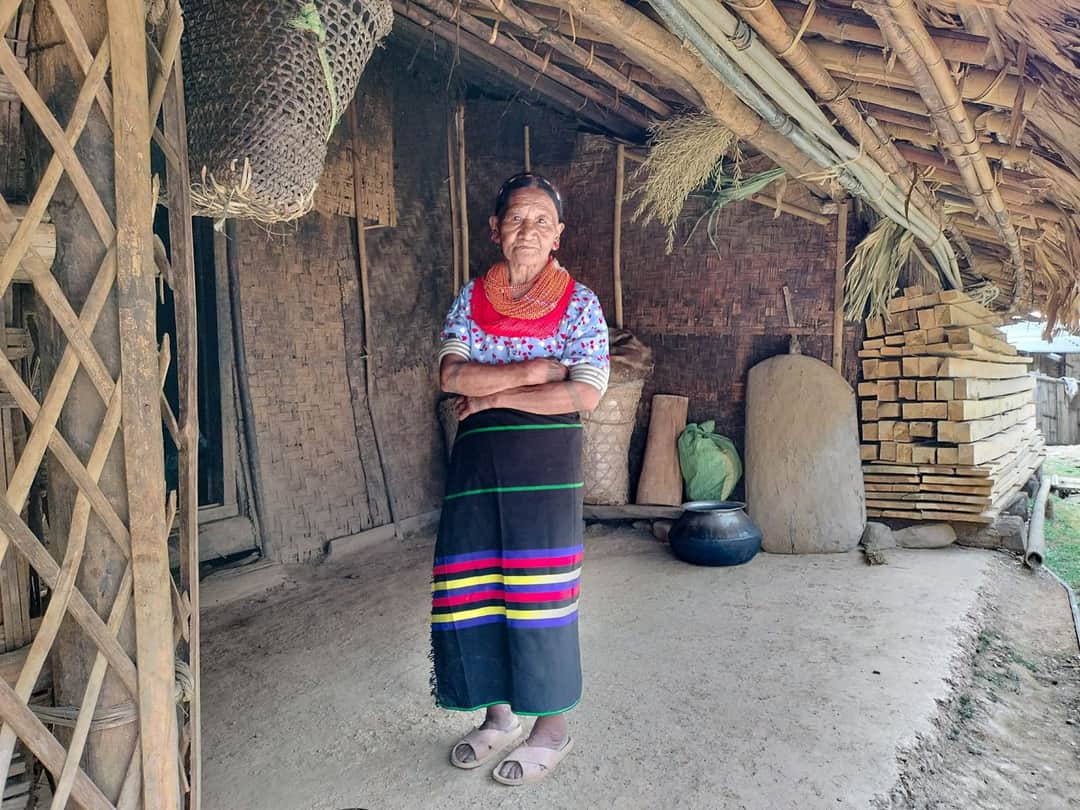
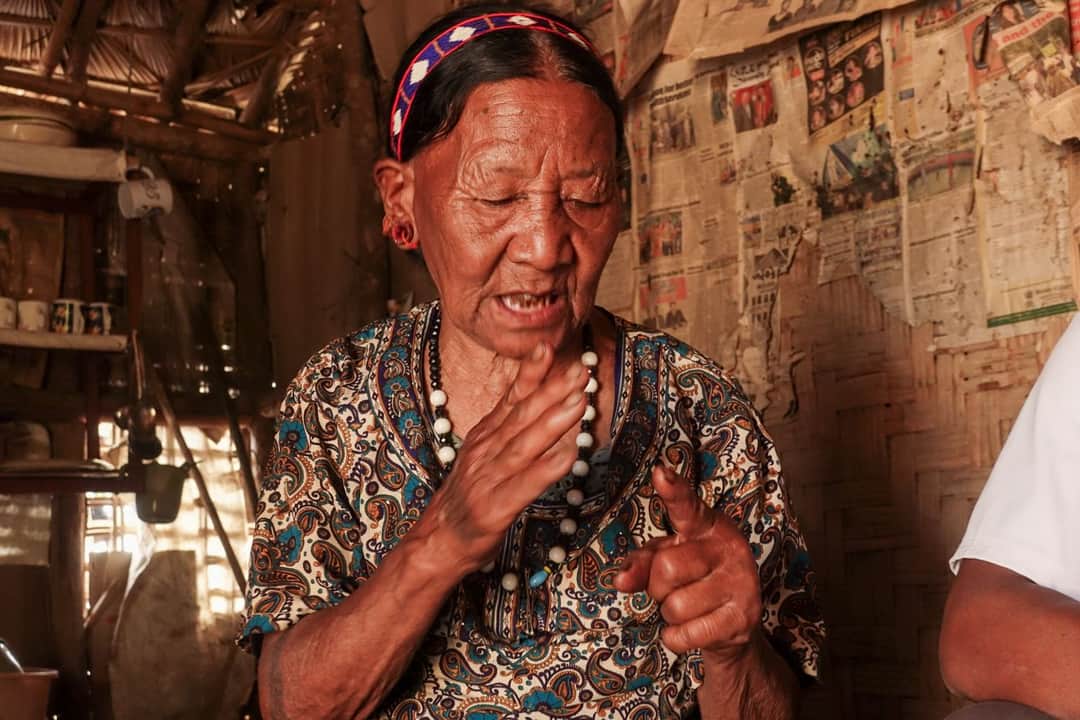
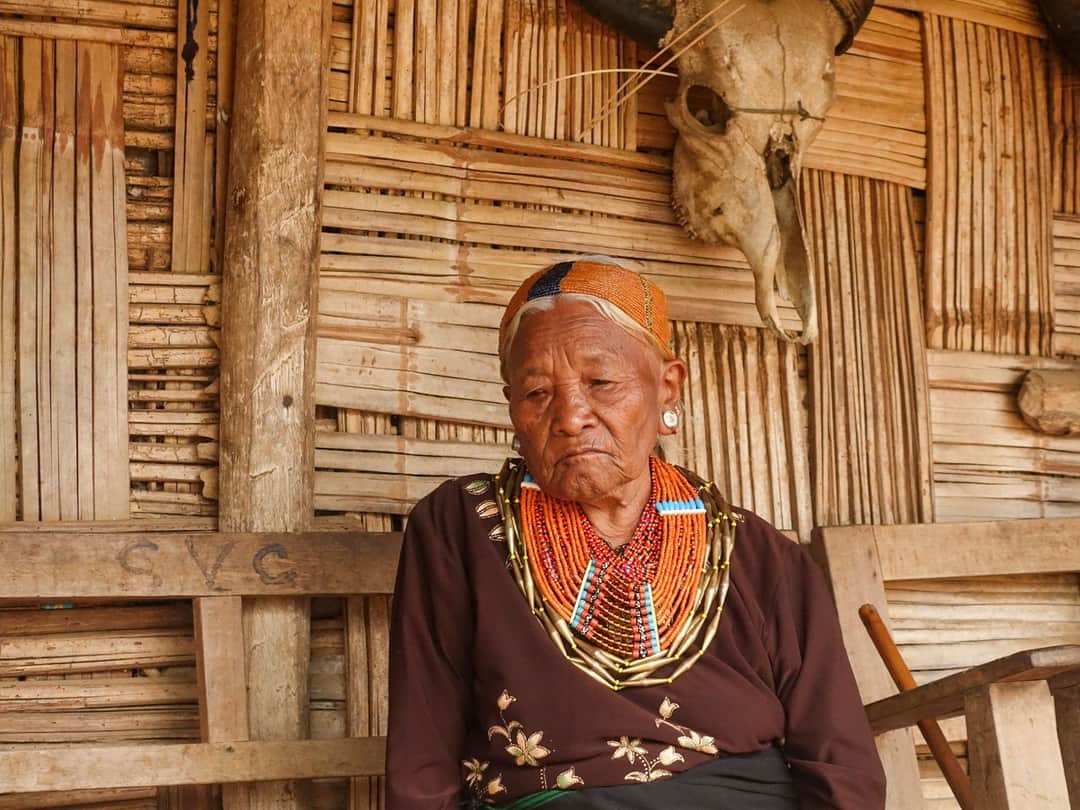
Not far away in the same village is Ngonphe, now in her seventies, who also learnt the art of tattooing from her elder sister and cousins, who in turn had learnt from their mothers. However, she would never get a chance to practice as that is a privilege only for the ‘queen’ – the first wife. Ngonphe would help the ‘queen’ with tattooing – collecting the thorn cooking for the tattoo artist and holding down the person who was getting the tattoo done, lest they move too much in pain. Ngonphe grimaces as she speaks, imitating the expression of pain. Then bursts out laughing at the now ancient memory.
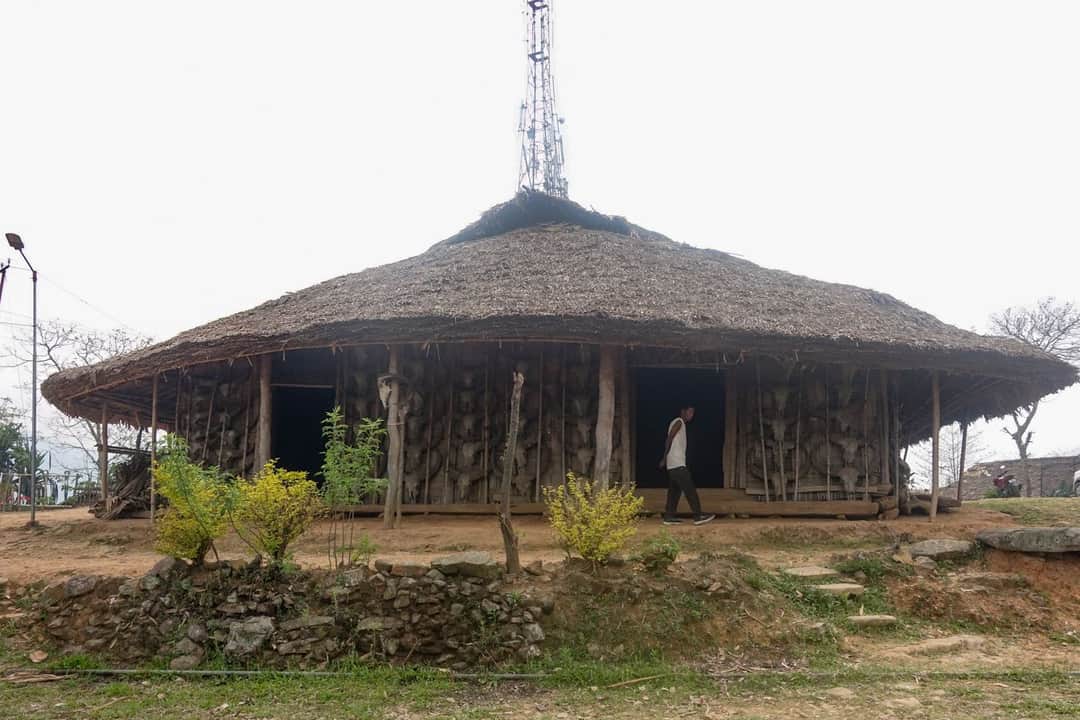
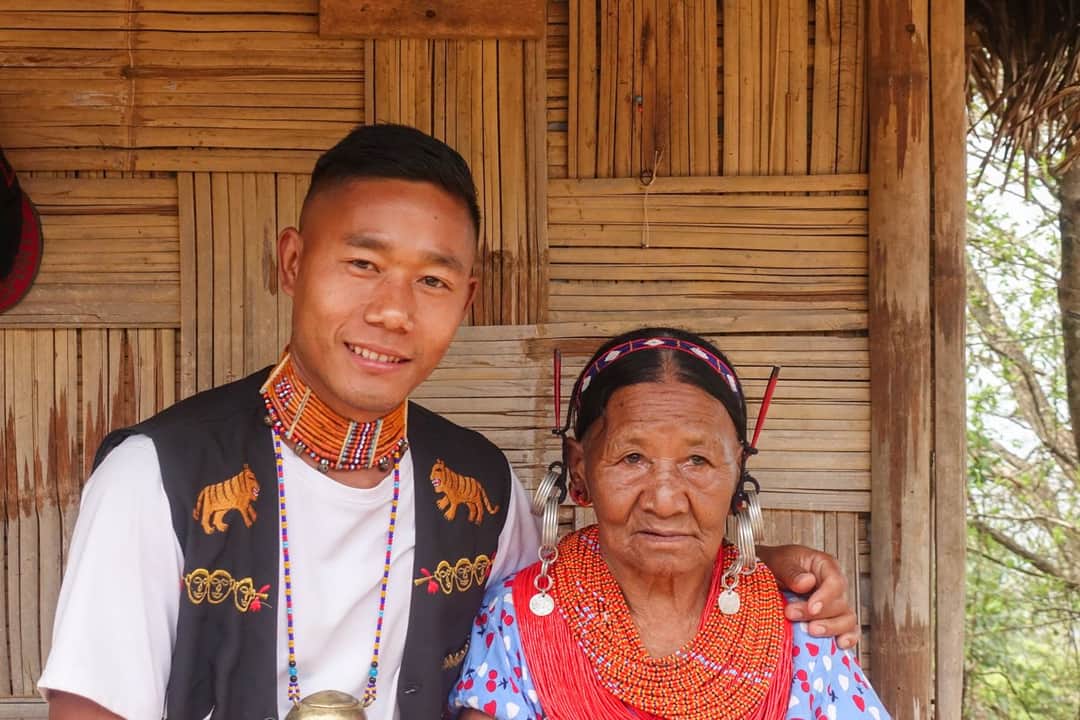
When PARI went to meet her, she was seated in a bamboo hut, one of many in the Angh’s compound. She speaks softly, her voice sometimes drowned out by the loud cheers coming from the festival grounds. When we asked to take her photos, she happily got up and went off to change into more formal and traditional dress and jewellery.