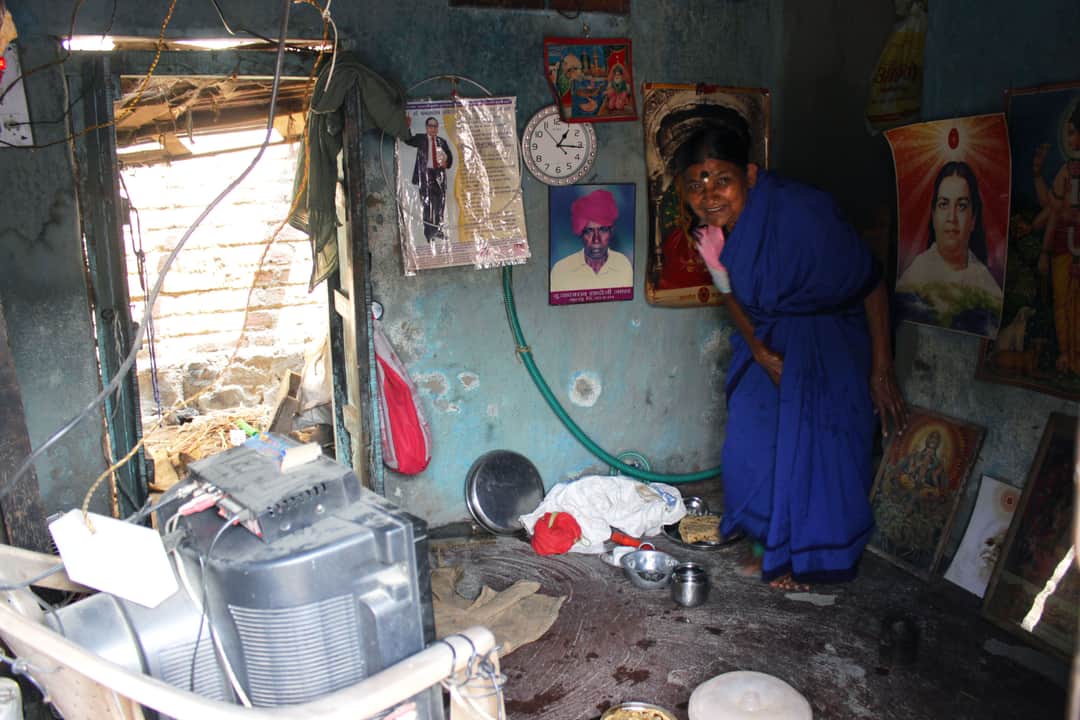

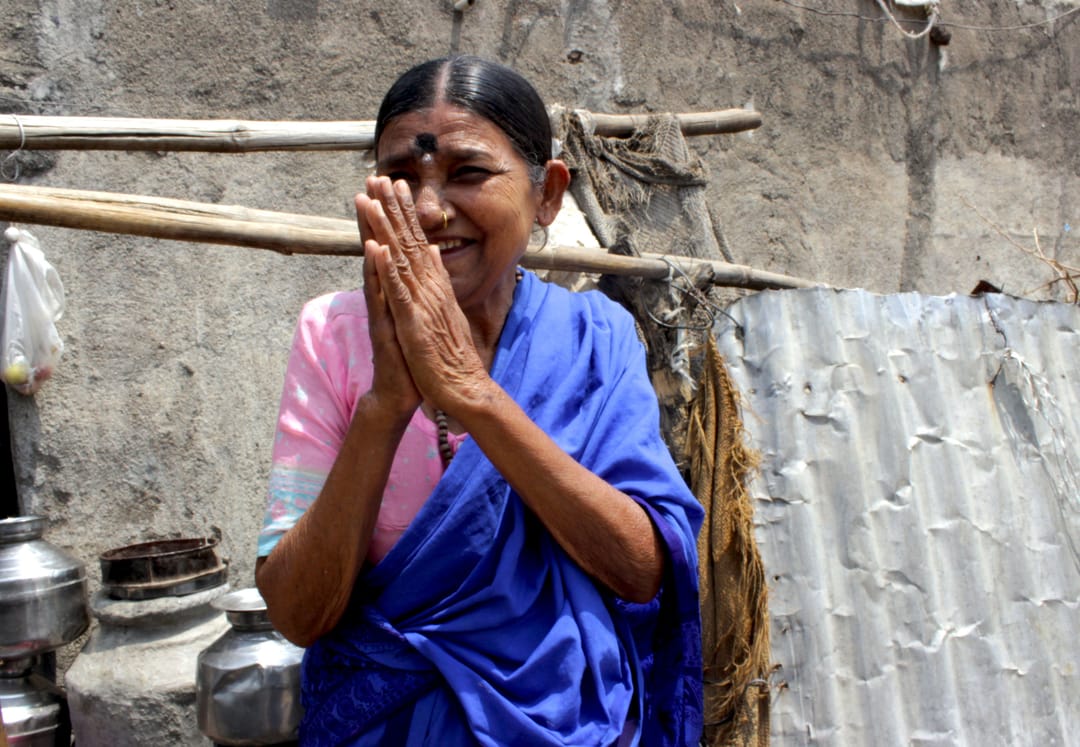
In Muktabai Jadhav's sparse home, Dr. Ambedkar, who rejected Hinduism and god, stands steady among numerous deities. She had recited a few ovi for the Grindmill Songs Project in 1996. In April 2017, we revisited her home in Bhim Nagar, Beed district
“Where is Muktabai’s house?” we asked. A woman pointed to a small room, around 10 by 15 feet, fenced on one side with pieces of tin sheets. From a gap in the fence, we saw an open door. An elderly woman peeped out.
In April 1996, we had visited Bhim Nagar in Majalgaon taluka and listened to Muktabai Jadhav’s ovi . In a few hours, we had recorded several grindmill songs by women living in this hamlet.
Now, exactly 21 years later, I was back in Bhim Nagar, in early April 2017. Muktabai gently opened the door and let us in: “Ya deva [welcome god]!” She was wearing a blue saree, a string of large beads around her neck, black and white vermillion on her forehead, and had still-black hair that defied her age. Muktabai, probably in her 60s, bowed down and once again welcomed us: “Come, god!”
There were two pits adjacent to the entrance to her tin shed, possibly to store water. We carefully stepped over an open sewer that ran along the house and went inside. Muktabai’s tiny home was crowded with things. A photograph of Babasaheb Ambedkar was placed next to a television that was playing the devotional Astha channel. Another photograph of Dr. Ambedkar along with his 22 oaths (see explanatory note) was on one wall. Adjacent to that was the goddess Tulja Bhavani’s image. The wall was adorned with countless photos and posters of other deities and religious leaders, including Sailani Baba and Prajapita Brahma Kumari. As if that was not enough, many deities had also found a place in her small household shrine. Muktabai generously accommodated four of us in this melee of gods and goddesses.