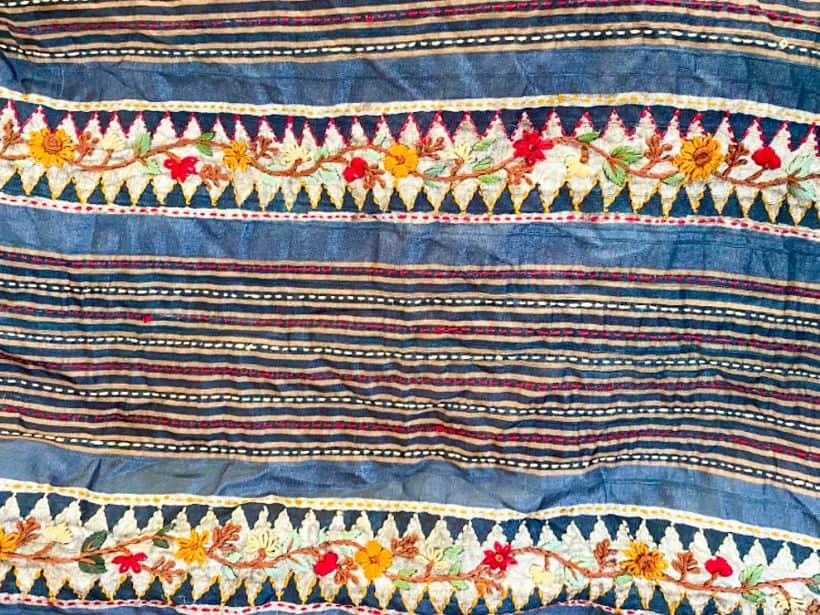


Arjina Bibi’s fondest memories of her baaper bari (father’s house) in West Bengal’s North 24 Parganas district are about her mother and grandmother. “I can see my grandmother's style reflected in my kantha work – the way she cross-layered stitches and filled in embroidered flowers,” she says of the needlecraft she inherited. “Whatever I know, I have learnt by observing them. I still stitch the way they did,” Arjina adds.
A kantha craftsperson for three decades now, Arjina says this skill has helped her contribute substantially to her family’s finances. Now in her late-forties, she leads an all-woman group of six kantha artisans who are commissioned work by local traders.
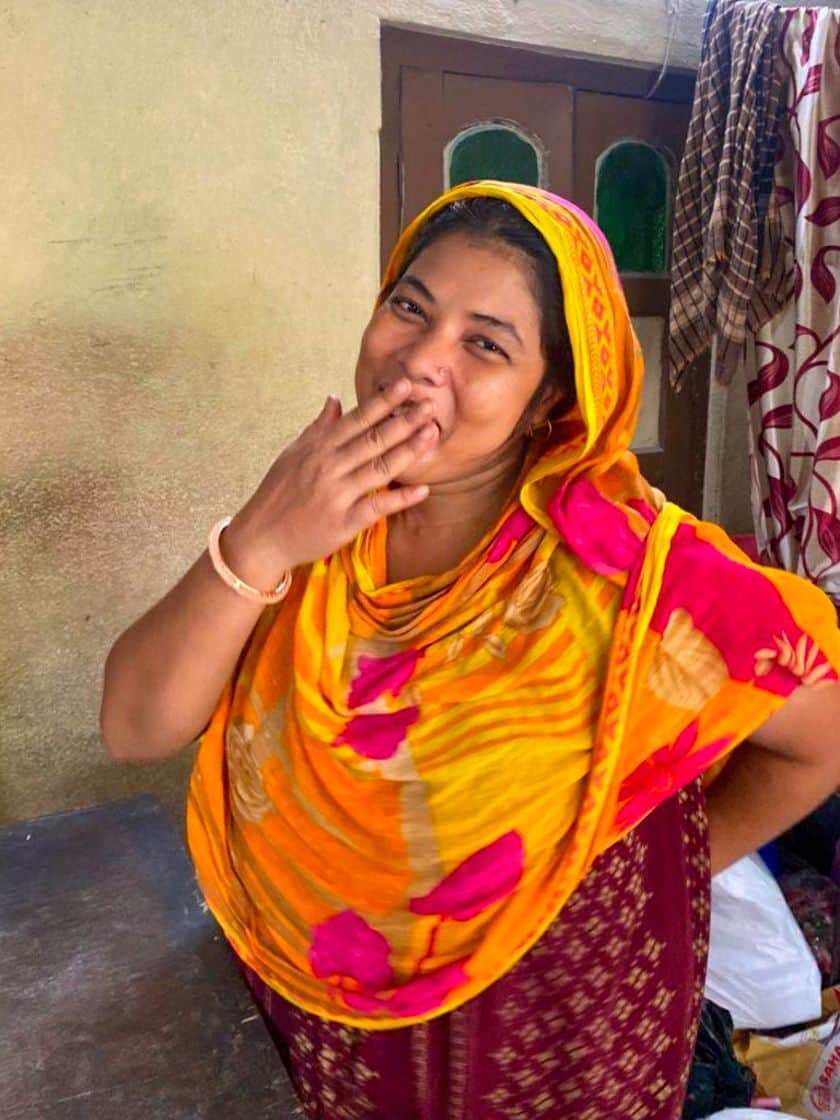
It is a hot July afternoon in the outskirts of Barasat city in West Bengal’s North 24 Parganas district when we meet Arjina at her workplace. Boxes of threads, scissors and tracing papers lie scattered across a makeshift karkhana (workshop) set up in the living room of her neighbour and colleague Nooranahar Bibi. The women are embroidering on fabrics using a running stitch typical to the craft of kantha.
“My husband works as a distributor of kantha items,” says 35-year-old Nooranahar. “I help him by taking up some of the embroidery work.” Her husband Mohammad Jalaluddin, 43, and his family have been engaged in the kantha trade for three generations. “He is a skilled kantha artisan and quite good at the embroidery,” adds Nooranahar with a small smile.
Teasing Jalaluddin who is within earshot, Arjina says, “Meye’ra beshi bhalo banaye, kyaeno ki amra mon diye shikhechi, ar mon diye kantha banayi. Chele’ra toh ei shob ke kaaj mene chole [Women stitch better kanthas because we have an emotional link to the craft. Men see it only as an occupation].”