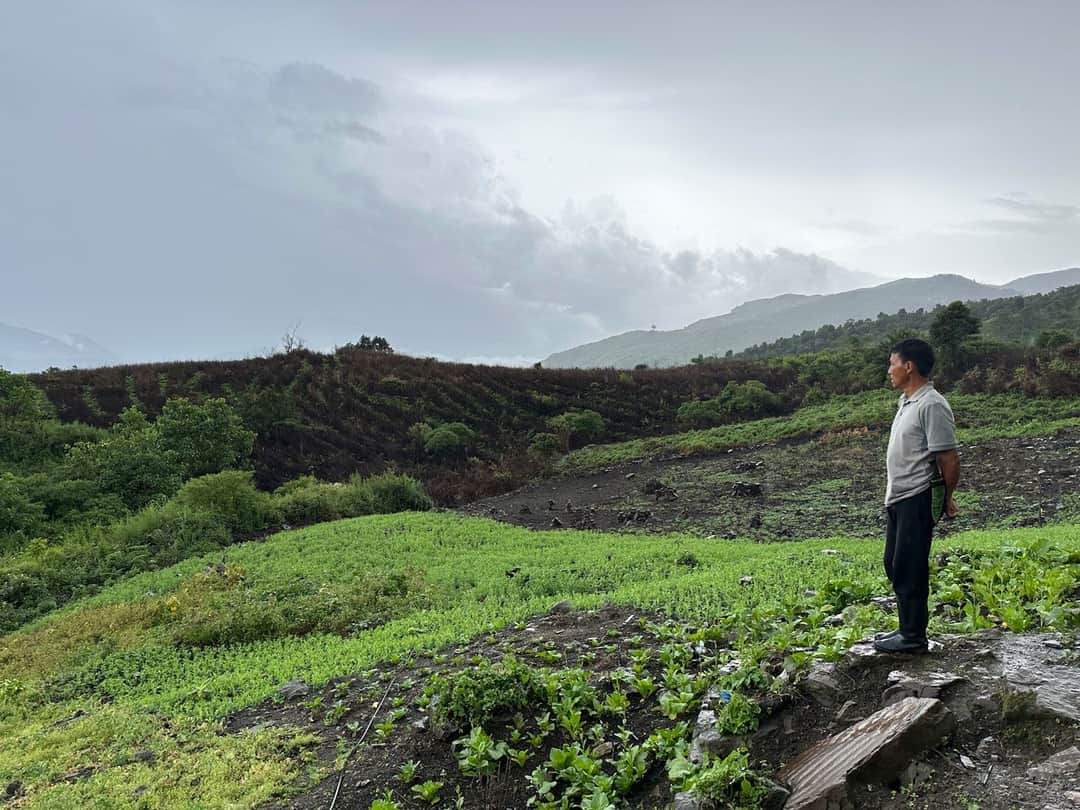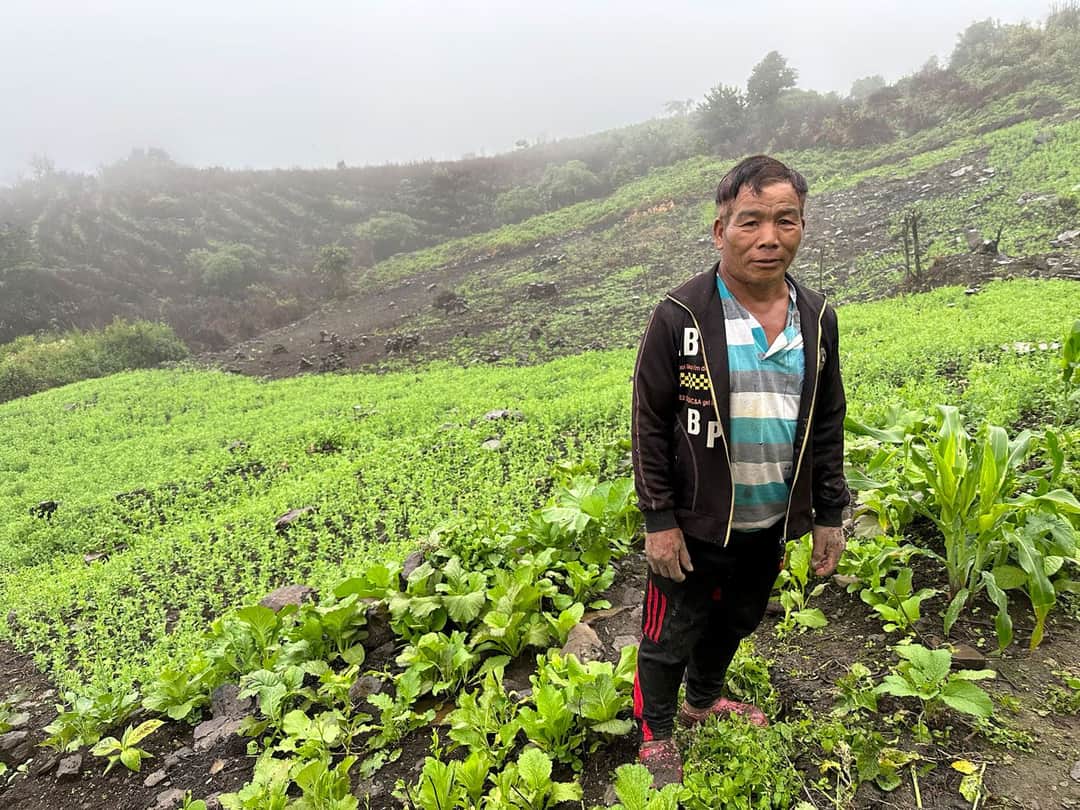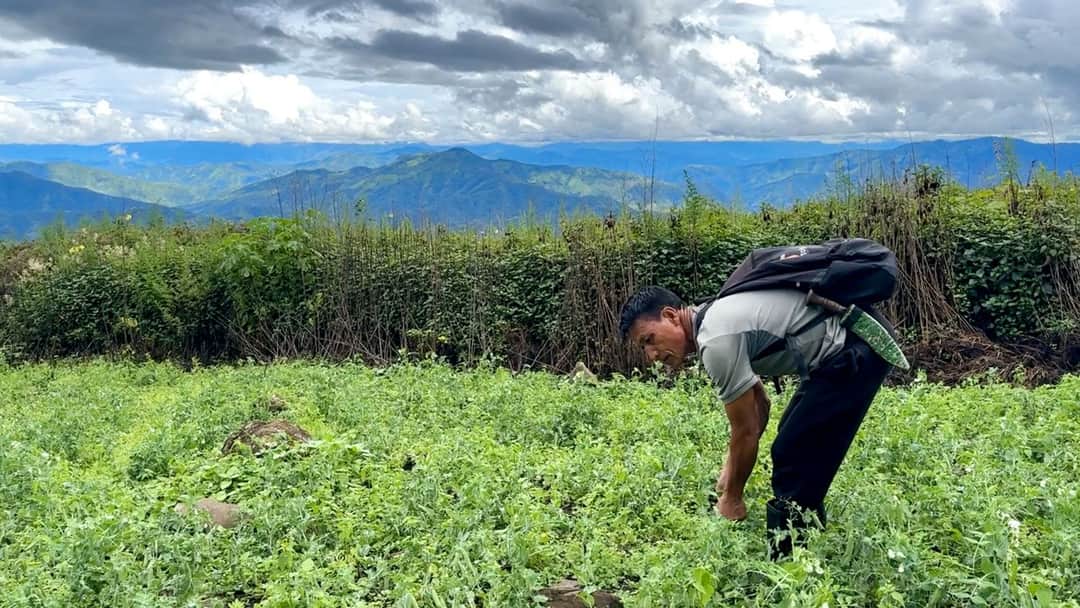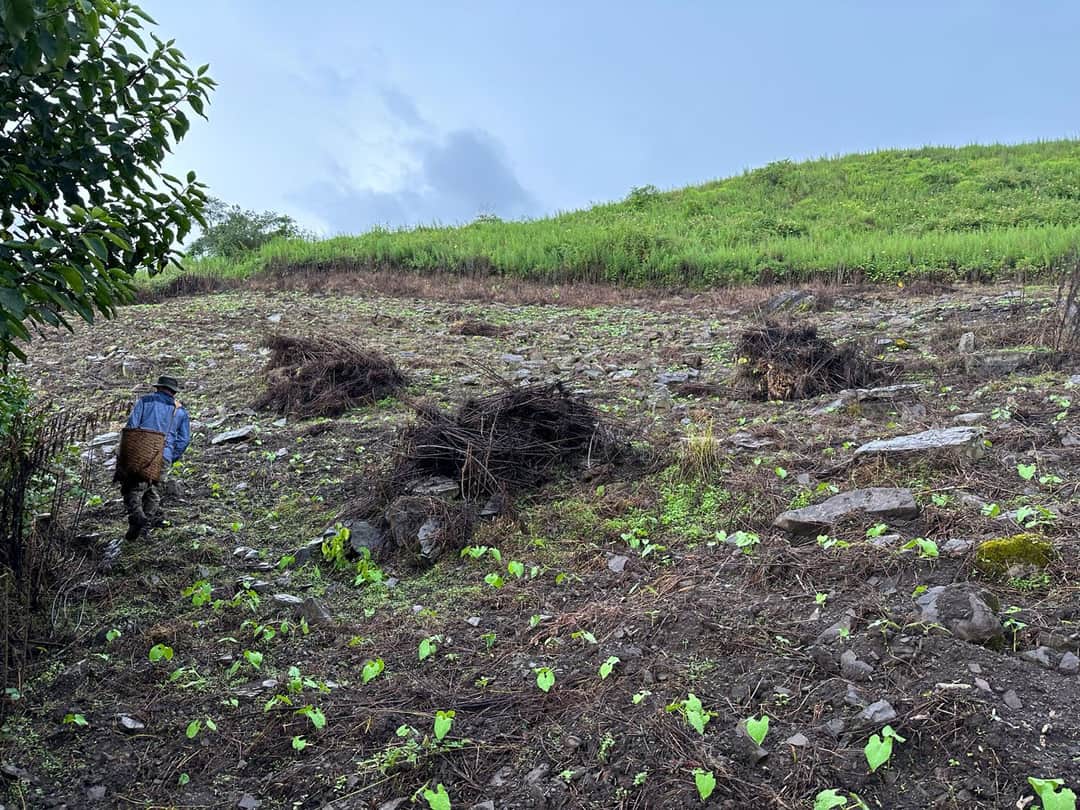

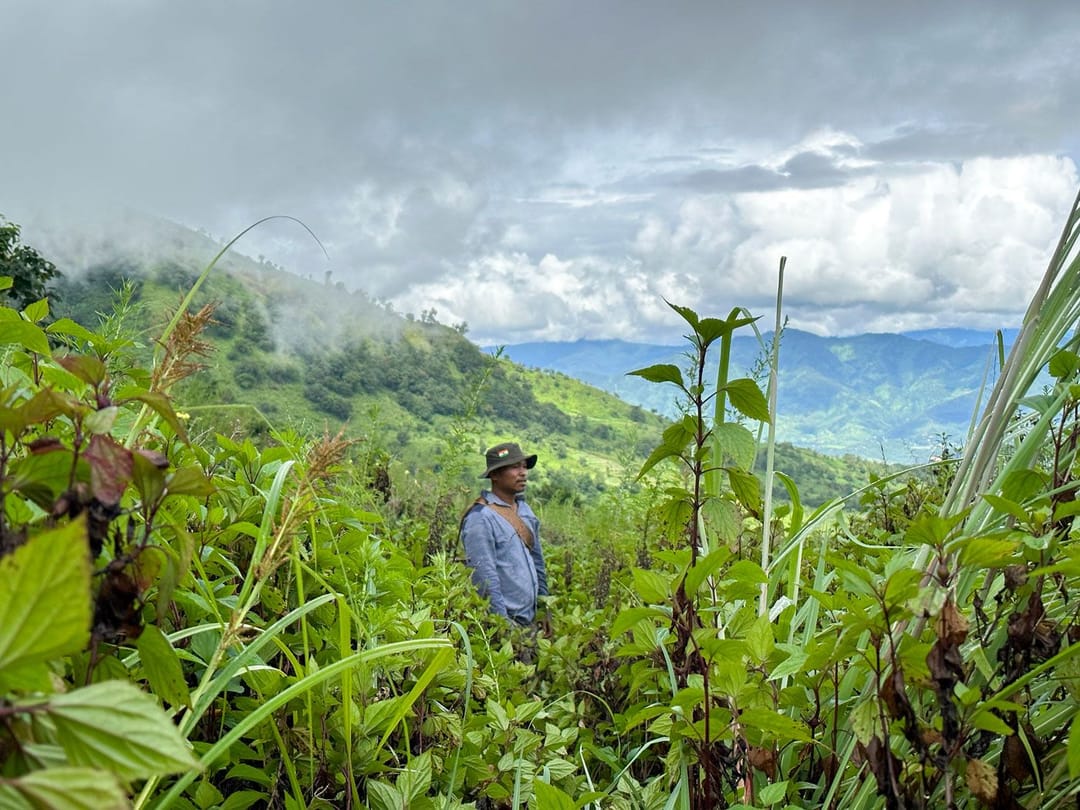
Two men are making their way up a hill, cutting through dense thickets as they trek towards their farms in Ngahmun Gunphaijang, a small village of 40 Kuki-Zo tribal households in Manipur's Kangpokpi district. The sky is overcast on this September day in 2023, and all around them is a hillscape overrun with wild shrubbery.
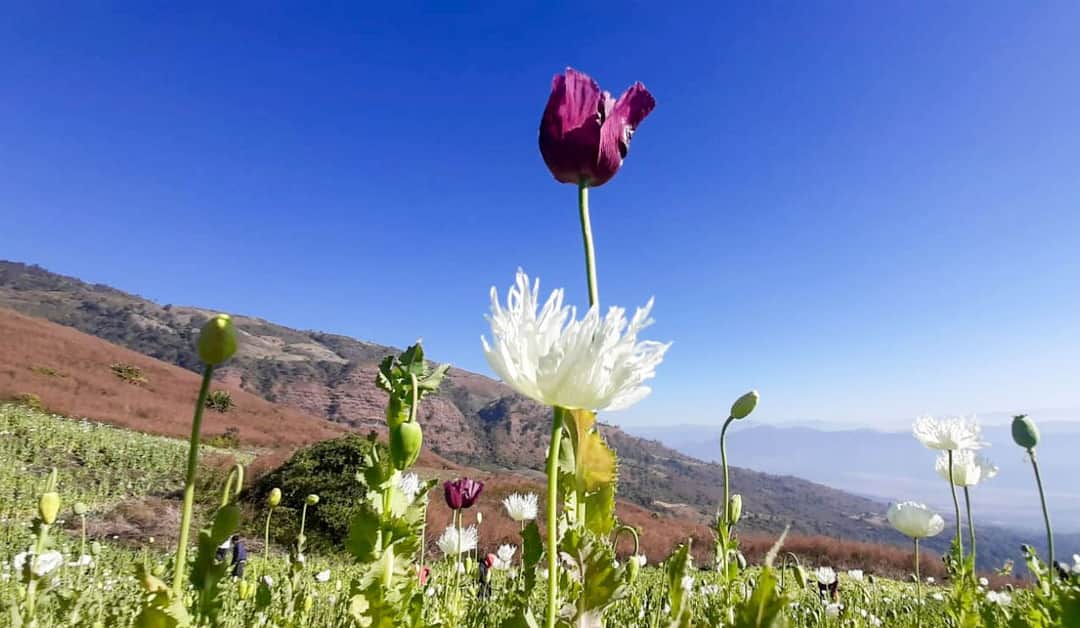
Just a few years ago, though, these hills were covered with striking white, mauve, and pink flowers belonging to the poppy plant (Papaver somniferum).
“I used to grow ganja (Cannabis sativa) in the early 1990s, but back then, it did not yield much money,” says Paolal, a farmer and one of the men making this journey. “In the early 2000s, people started cultivating kaani [poppy] in these hills. I grew it too,” he says, “up until it was banned some years ago.”
Paolal is referring to the winter of 2020, when S.T. Thangboi Kipgen, the chieftain of Ngahmun Gunphaijang, called for the eradication of poppy farms in the village and urged farmers to cease cultivation altogether. His decision wasn't an isolated one but made in support of the state BJP government’s aggressive ‘War on Drugs’ campaign.
Poppy, from which the highly addictive narcotic opium is made, is cultivated primarily in Manipur's hill districts such as Churachandpur, Ukhrul, Kamjong, Senapati, Tamenglong, Chandel, Tengnoupal as well as Kangpokpi; most of the people living in Kangpokpi are from the Kuki-Zo tribe.
It was five years ago, in November 2018, that the BJP state government under Chief Minister Biren Singh launched the 'War on Drugs'. Singh appealed to village chiefs and churches in the hill districts to stop poppy cultivation in those areas.