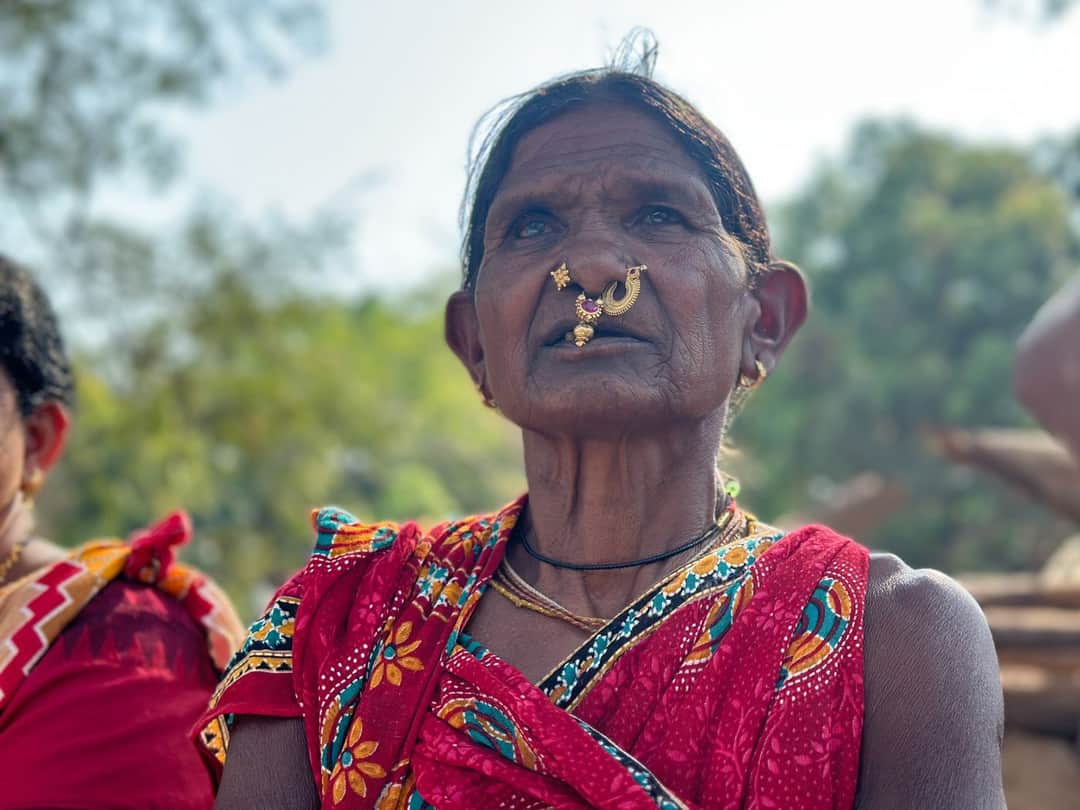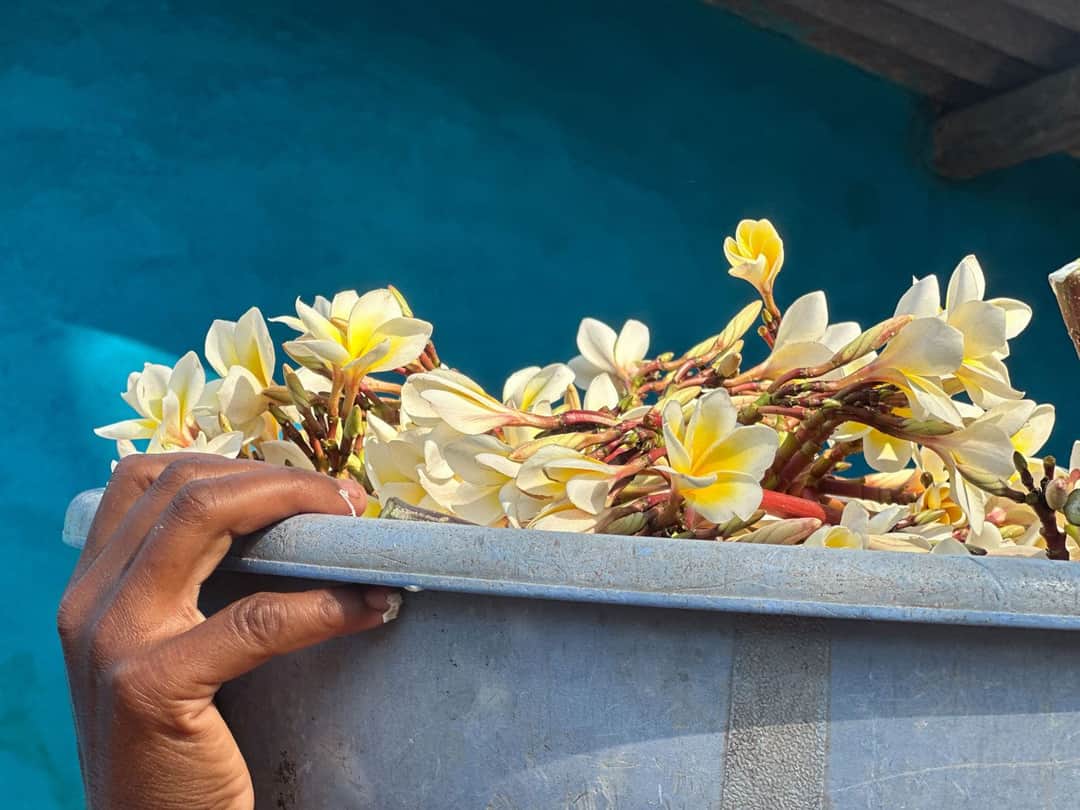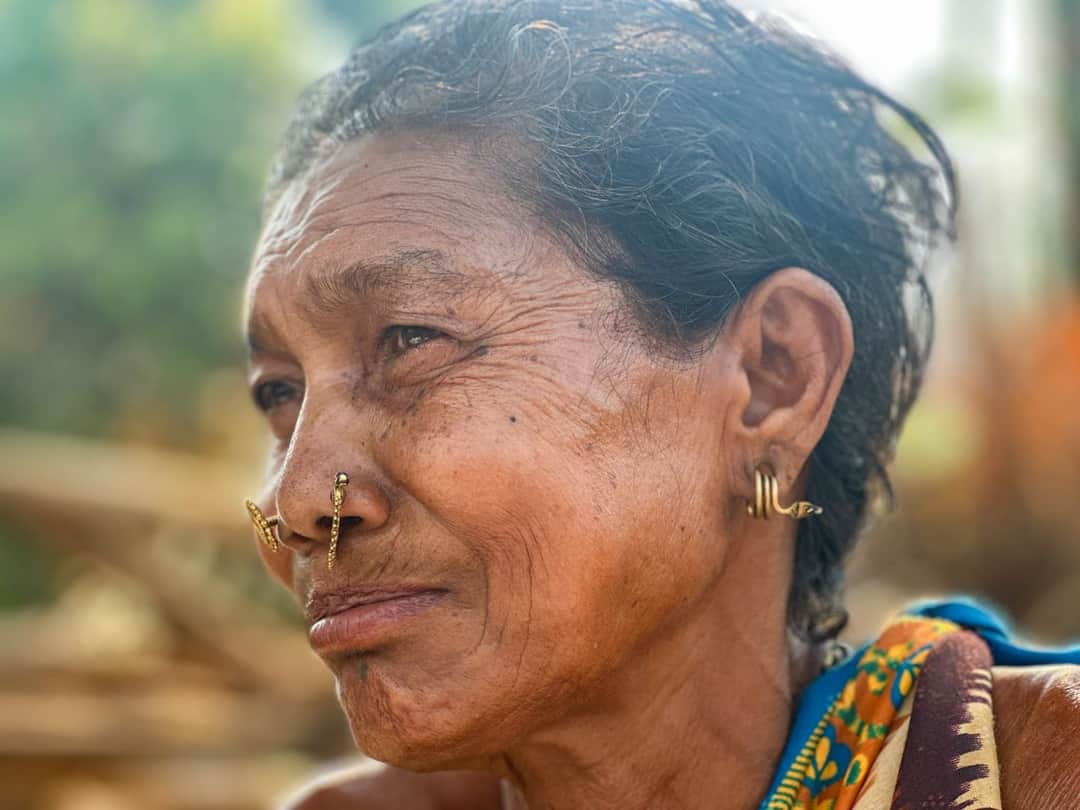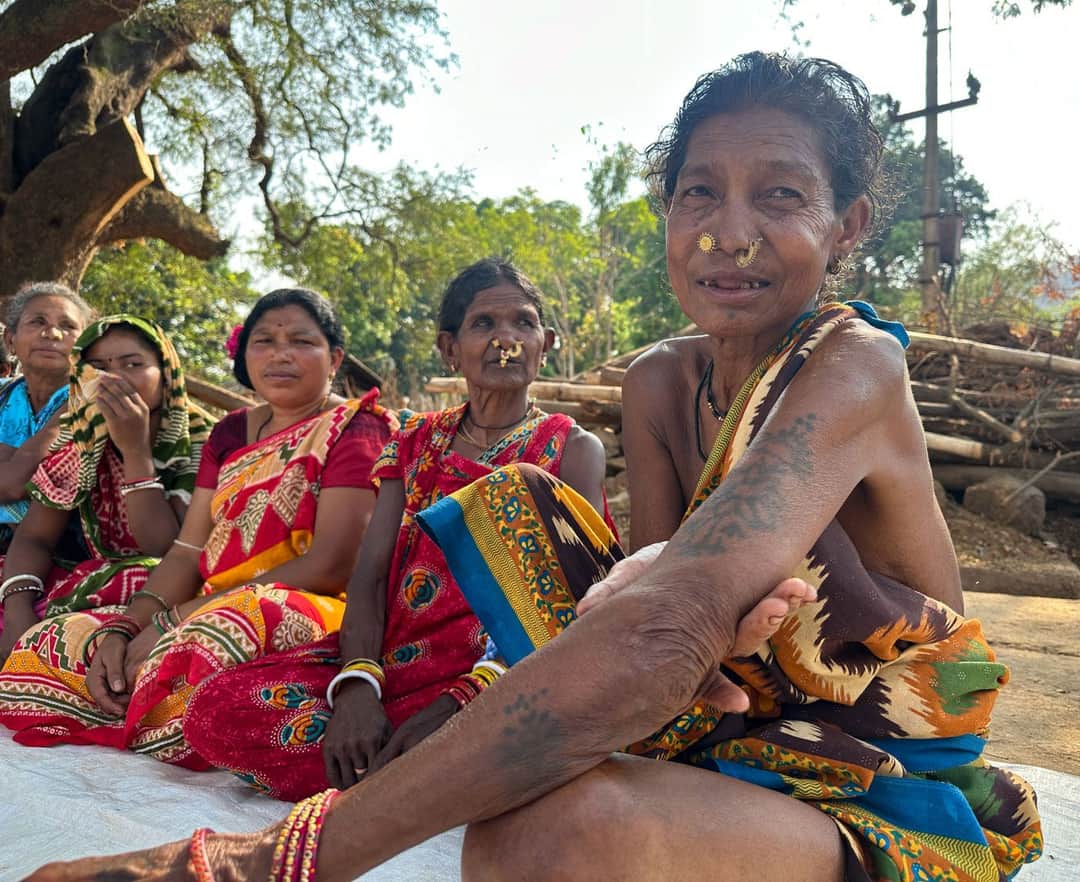

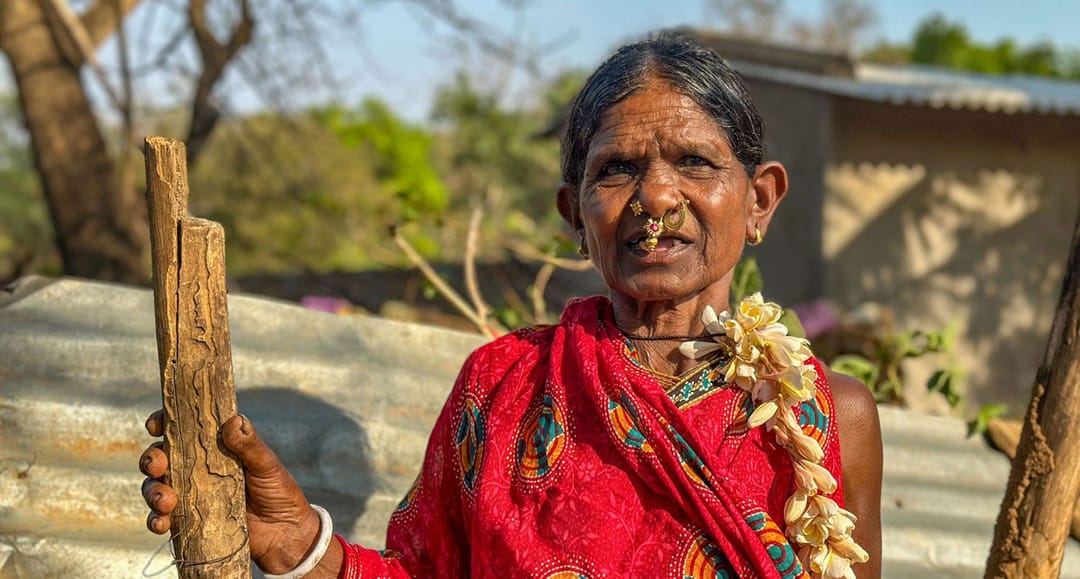
Chandrama is stringing the fragrant creamy white and yellow flowers of kathgolap (frangipani, or Plumeria rubra) into a long garland. Her elaborate golden nose rings – three to be precise – outshine the vibrant yellow sun of this April afternoon as well as the deep yellow centre of the beautiful frangipani flowers in her hands. She and twenty other women from her Gadaba Adivasi community are all busy weaving garlands in an open space right outside Putpandi village of Koraput district in Odisha. All of them wear two or three nose rings.
“This nose ring on the right we call besri, the middle one is dondi, and on the left is natto. I have been wearing these for ever. Maybe, I was born with these,” 70-year-old Chandrama Gadaba says with a laugh. Her dondi lifts a little upwards, showing her lower lip otherwise hidden by the bells of gold hanging from the septum of her nose.
“Earlier in our Gadaba tribe, they used to make girls wear all three when they were really babies. But now they do the piercing late – after they are five or ten years old. And sometimes the young girls don’t like to get their nose pierced at all,” she says. With each sentence, her deft fingers tie a handful of freshly plucked flowers into a garland that will be used to greet the men in the evening when they return from their hunting expedition. It is Chait Parab (also called Chaitra Parva).
A 14-day-long agricultural festival celebrated by many Adivasi communities across Odisha and Jharkhand, Chait Parab marks the beginning of Chaitra, the first month of the Hindu calendar. The time of the festival, mid-April, is also traditionally the time of rest from work in the fields, when the air is filled with summer songs and the bounty of fruits and flowers that the season brings. Young and old women of the Gadaba community sing, dance, drink, offer raw mangoes to the village deities, and weave garlands to welcome men returning from hunting adventures.