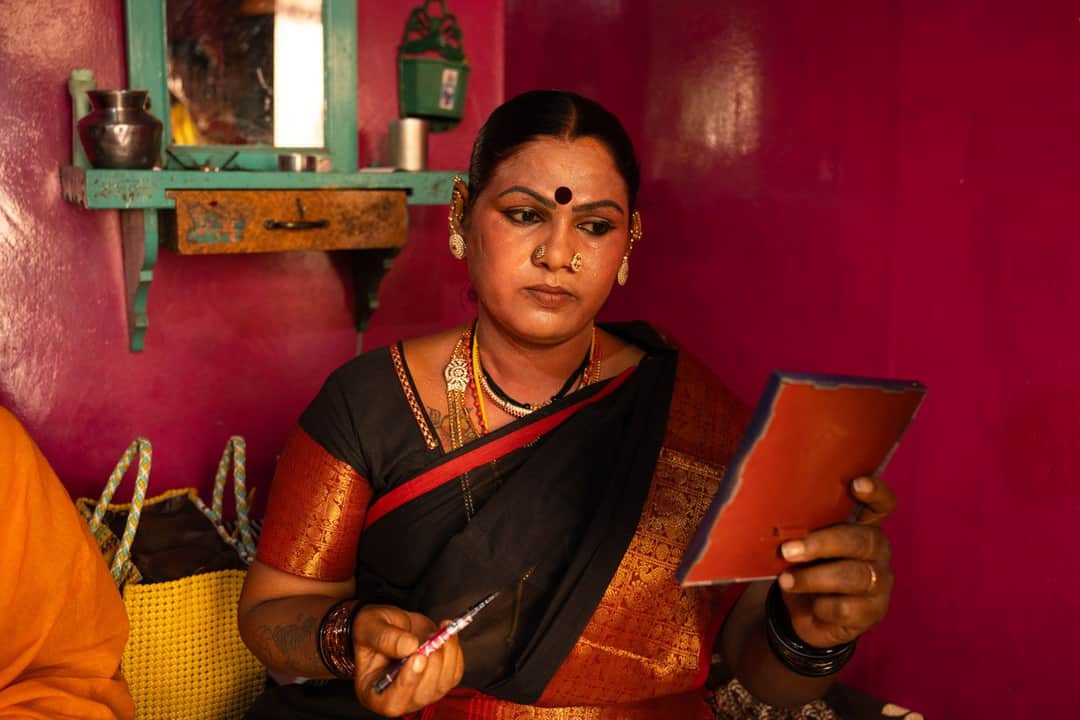

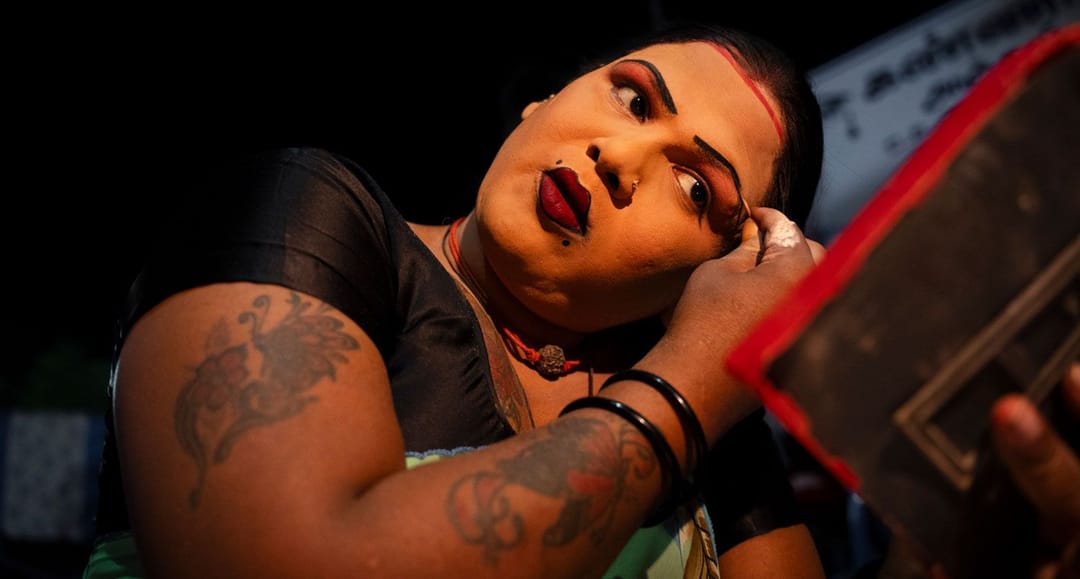
After disposing of the rooster with her teeth, a sacrifice to honour Sudalai Kali or the goddess of the graveyard, she seizes the thorappu (goat's lung) with her teeth and walks rhythmically, swirling the sickle held in her left hand. Dressed in a black saree, Iswaraya dances to the sounds of pambai and parai drums on a busy street, leading from the Devi Putru Poonkavanatthu Amman temple to the Poonai river in Thiruvalam town. The exhausted thirunangai (trans woman in Tamil) collapses as the procession she is leading reaches the dried-up riverbed. This is not just a ‘performance’, even though the 37-year-old Iswaraya runs a drama company of her own. The stage play is still hours away, at the fag end of the day.
She is at the annual Mayana Kollai festival (graveyard plunder festival) celebrated during the new moon (Amavasai) in the Tamil month of Maasi (March) by Dalit communities in this village in Vellore district of Tamil Nadu. Iswaraya, belonging to Chakkiliyar community, listed as a Scheduled Caste in the state, has been participating in the rituals at the temple festival for the last two decades.
“It wasn't me who danced in that frenzy,” she says later, “I have no memory of it. It was Amman who possessed me." Amman, seen as the manifestation of Kali, is the folk goddess her community worships. When rituals are over, the final performance will begin, at 10 p.m.
The scene at night is different. Iswaraya seems to have regained her strength as she strides along the 10 x 12 feet elevated stage in the middle of the street. She is giving directions to the festival organisers about where to place the banner, identifying the right spot for placing two 500-watt lights. “Tie those two facing the stage, a little more diagonal,” she commands. She is the stage manager, costume designer, light designer, director, playwright, and the head of the drama troupe. Iswaraya is a one-woman army running a drama company that goes by the name of Ashok Nataka Mandram. The name is painted in bold letters on the cloth banner placed on the stage.