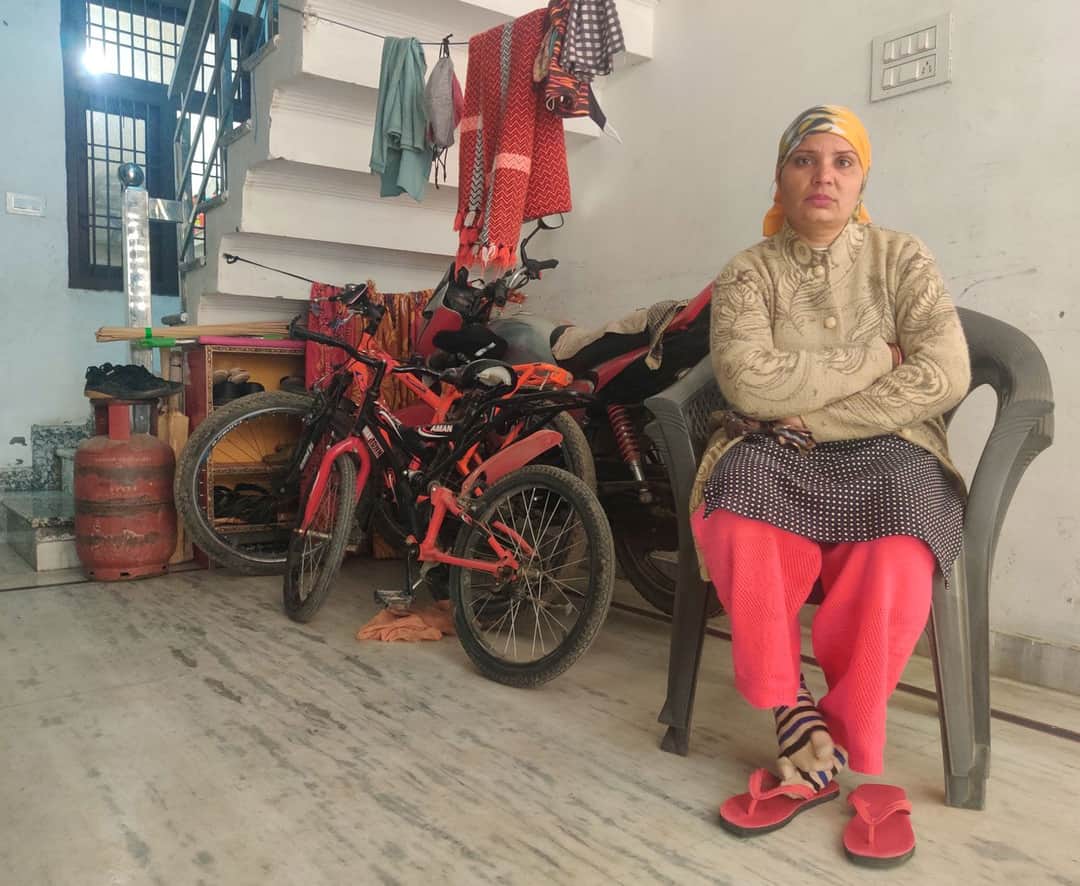

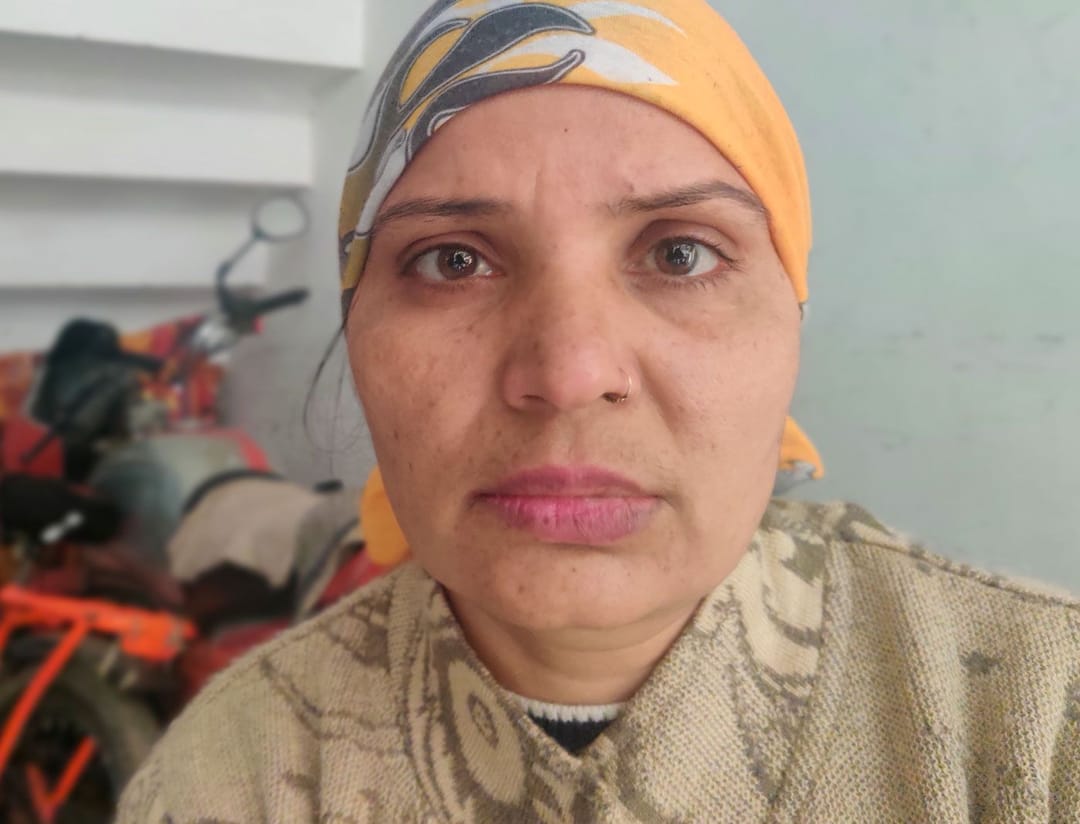
She starts to speak, but stops midway. Drawing a deep breath, she tries again. But her voice quivers. She looks down, and her chin wobbles. Anita Singh has been putting up a brave front for nearly a year. But the memory of her husband is overwhelming. “Ours was a happy little family,” says Anita, 33. “My husband was our anchor.”
Anita’s husband, 42-year-old Jaikarn Singh, was a teacher in a primary school in Lakhaoti village, 20 kilometres from Bulandshahr city in Uttar Pradesh. He started showing symptoms of Covid-19 in the first week of April 2021. “He had a cough, a cold and fever,” says Anita when we meet at her home in the city. “The teachers had been asked to go to their school even when the second wave was raging. He must have caught the infection on one of those days.”
On April 20, 2021, Jaikarn tested positive for the coronavirus. When he started gasping for breath, there was no oxygen bed available in any of the hospitals in the city. “I pleaded at several hospitals, but they just said no,” recalls Anita. “We made many phone calls because his health was deteriorating rapidly. But nothing helped. We had to treat him at home.”
A local doctor treated Jaikarn for the fever and cough. Anita’s relatives arranged an oxygen cylinder somehow. “We didn’t even know how to use it. We had to figure it out on our own,” she says. “But we kept looking for a hospital bed.”
The pandemic exposed the extent of India’s crumbling public health infrastructure, especially in the villages and small towns. Considering the country’s public expenditure on health has only been 1.02 per cent of the GDP (in 2015-16), there isn’t much for people to depend on. According to the National Health Profile 2017, there was one government allopathic doctor for 10,189 persons in the country, and only one public hospital for every 90,343 people.