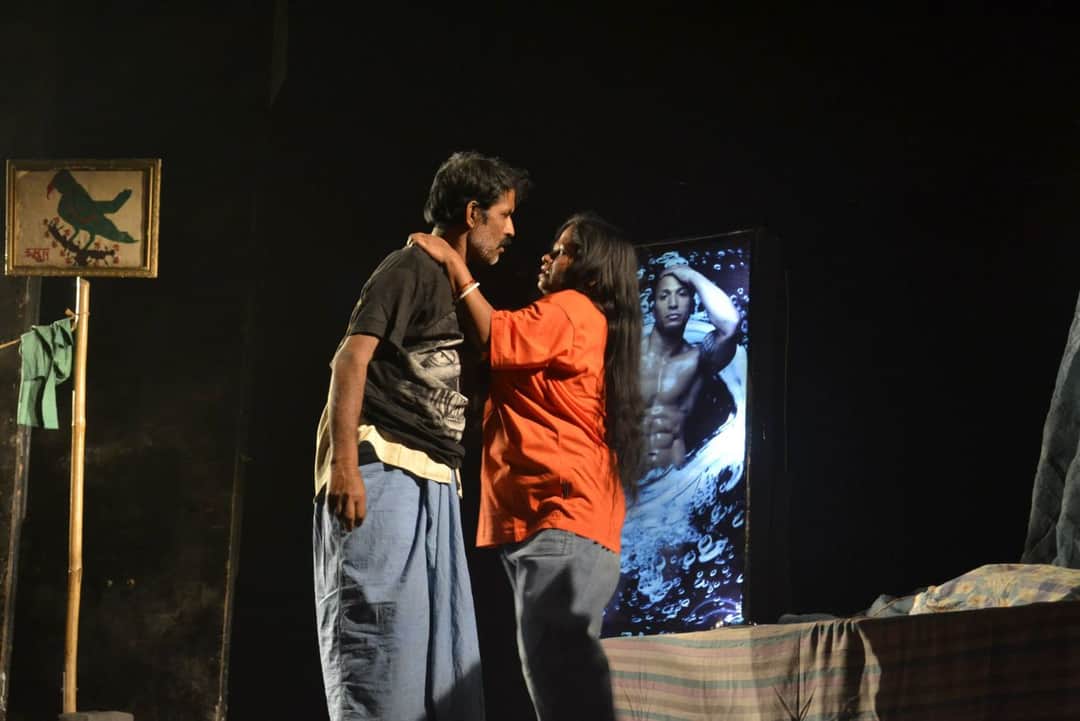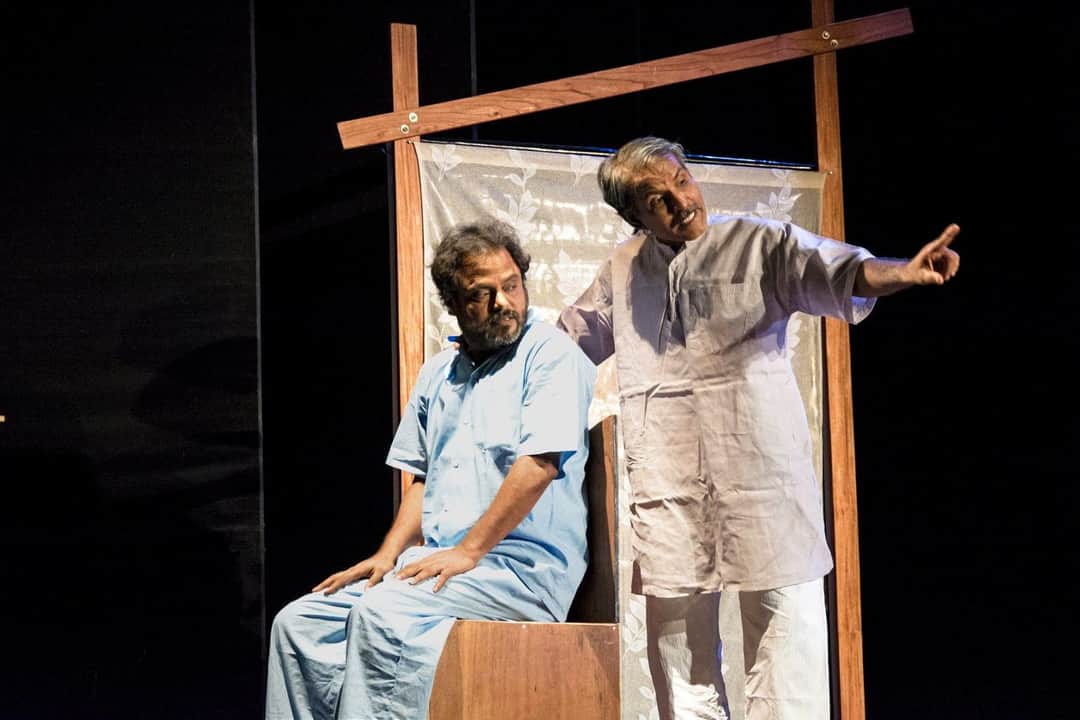

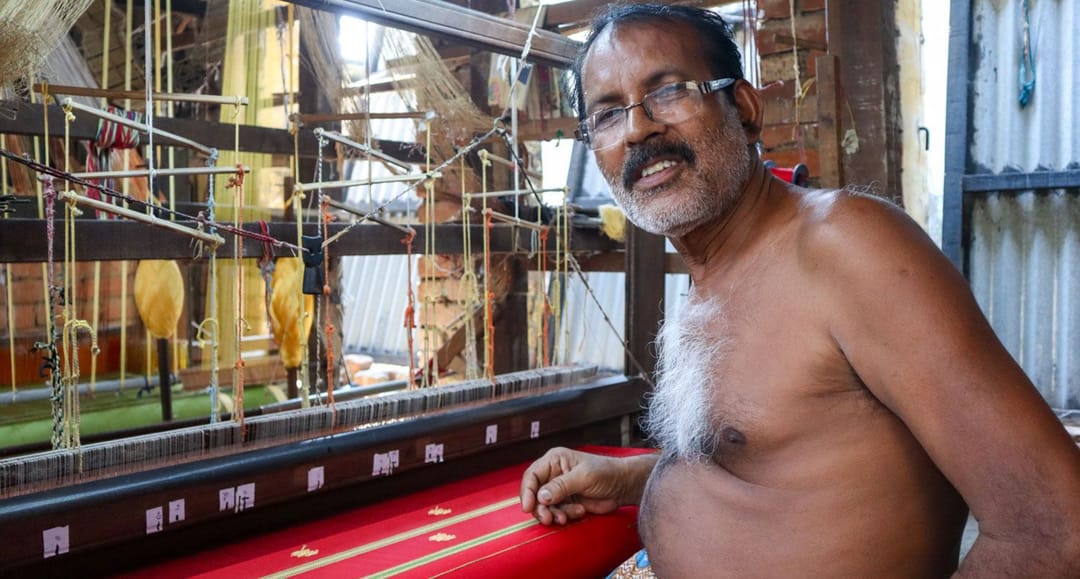
“In the play, Ichchhey Kusum, I had the role of a weaver… just like I am in real life,” says Asit Pramanik, holding in his hands the script of an old play. Rummaging through a discoloured iron almirah in his home, he has dug out copies of carefully preserved scripts of a number of plays.
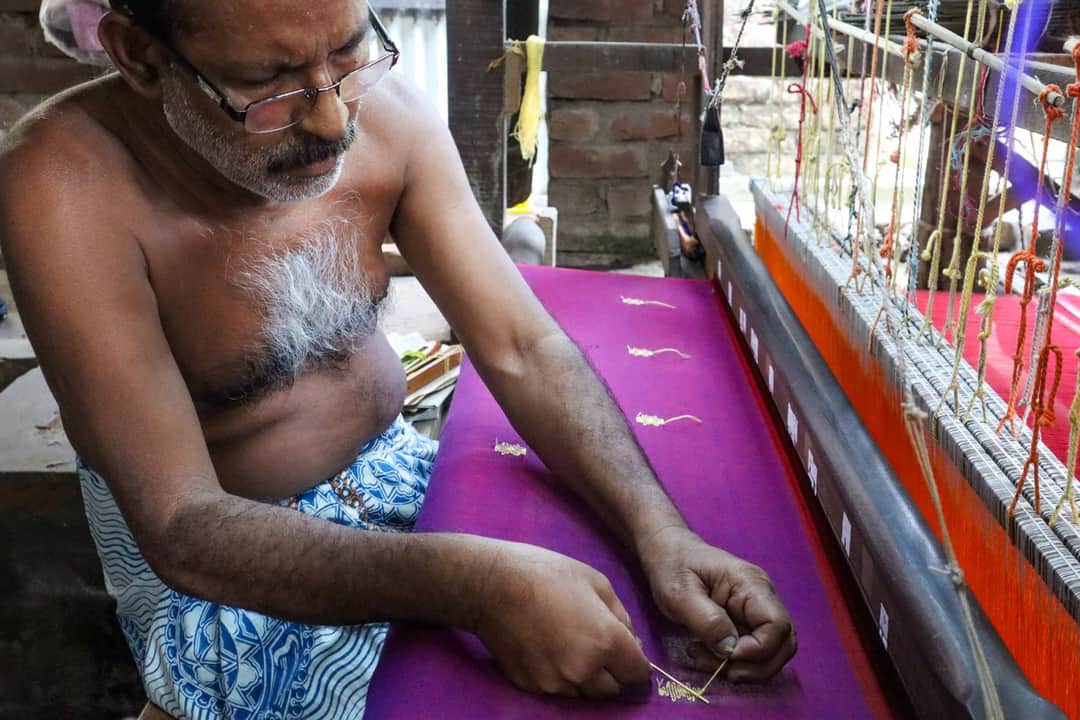
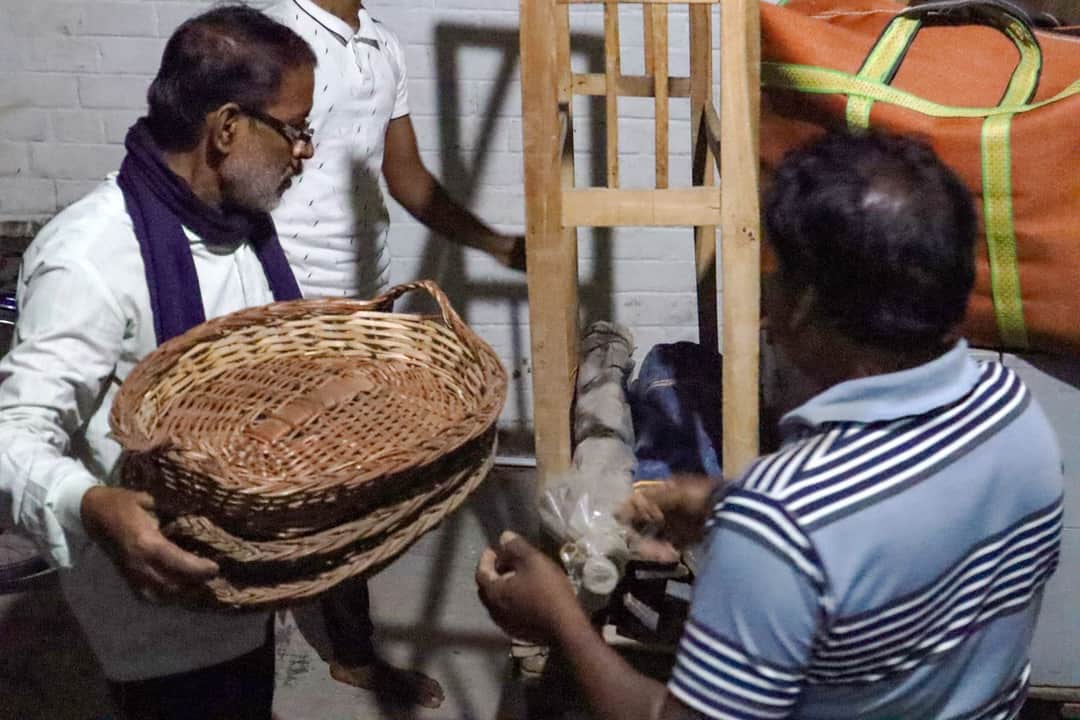
Asit da is one of those numerous weavers from Santipur handloom clusters in Nadia district acclaimed for its unique Santipuri tangail and jamdani handloom sarees. This seasoned weaver’s labour at the loom runs parallel to his labour of love for the theatre. The constant warp and weft between the tant-ghar (room with the loom) and ranga-mancha (stage) have created the dense fabric of this worker-artist’s life of six decades.
Talking about his first-ever big stage performance, Asit da’s face lights up with unbridled joy. “The play was staged somewhere around Sealdah station. While I was acting [in the role of] a judge, the truth is, I was trembling in fear,” he says laughing heartily, as he goes on to share with us his experience of facing the audience for the first time, that too for a big drama club in a public space.
With equal enthusiasm Asit da tells us about his initiation into the world of weaving: “I studied up to Class five. From young children to the men and women of the house, everyone in a weaver’s family is involved in various tasks related to loom work.” Chores such as spinning the yarn, dyeing it, winding the yarn into a tube using a spinning wheel, then rolling it from that tube into a drum and then finally setting it onto the loom, are done by family members of different ages. “And like any other tanti [weaver] family, in our home too, we had to engage in this work from a very young age,” he adds.