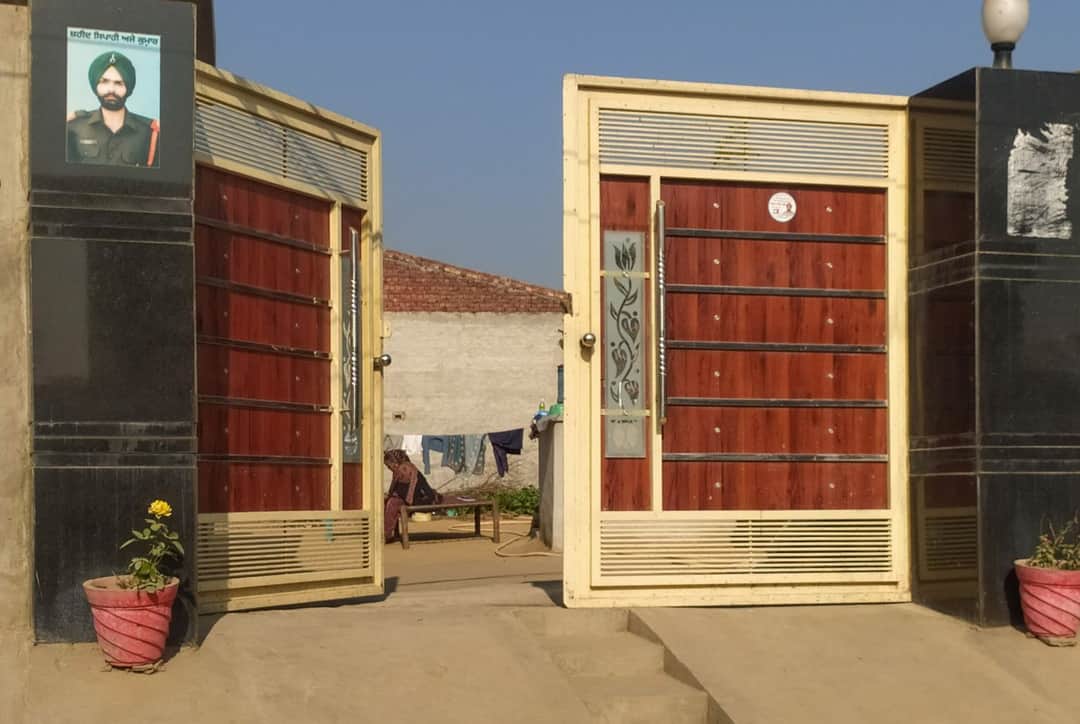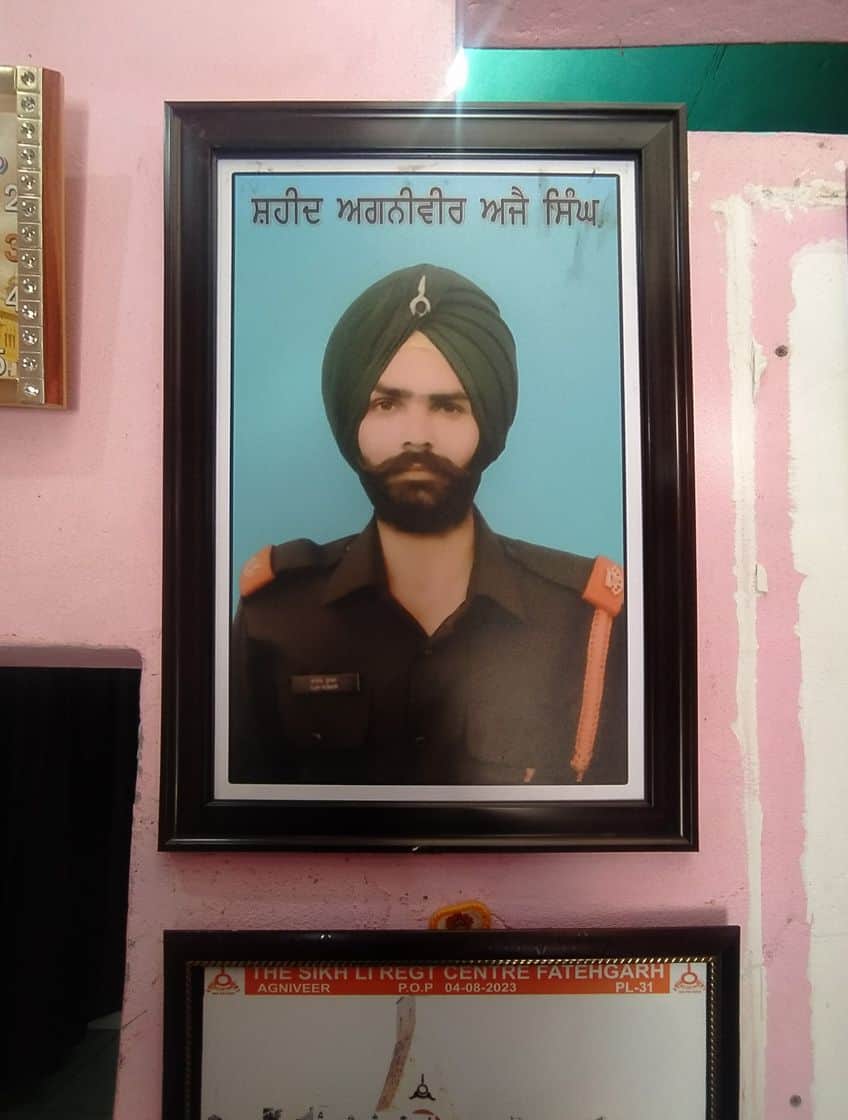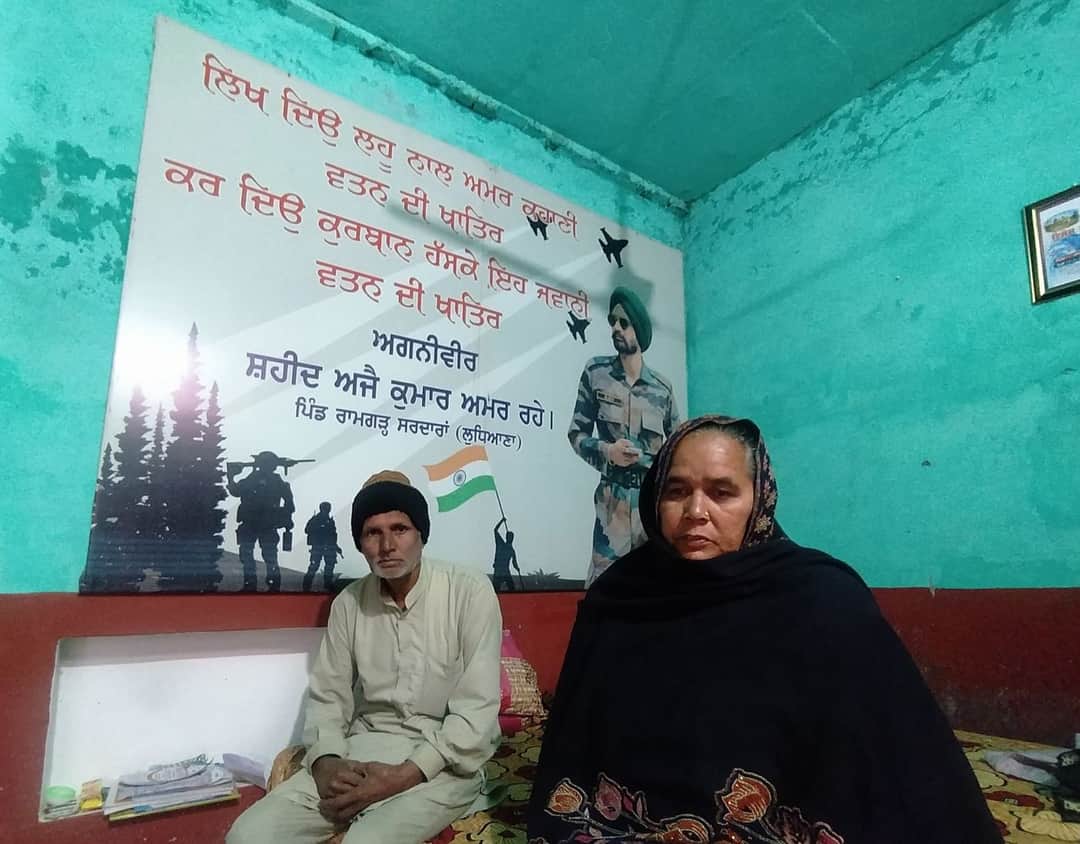


“Take the first left turn. A little further down, you will see the fauji’s photo on a black pillar. That is his house.” An elderly bicycle mechanic in Ramgarh Sardaran points towards a curve on the periphery. People in the village refer to Ajay Kumar as either a fauji (soldier) or a martyr.
In the eyes of the government of India, he is neither.
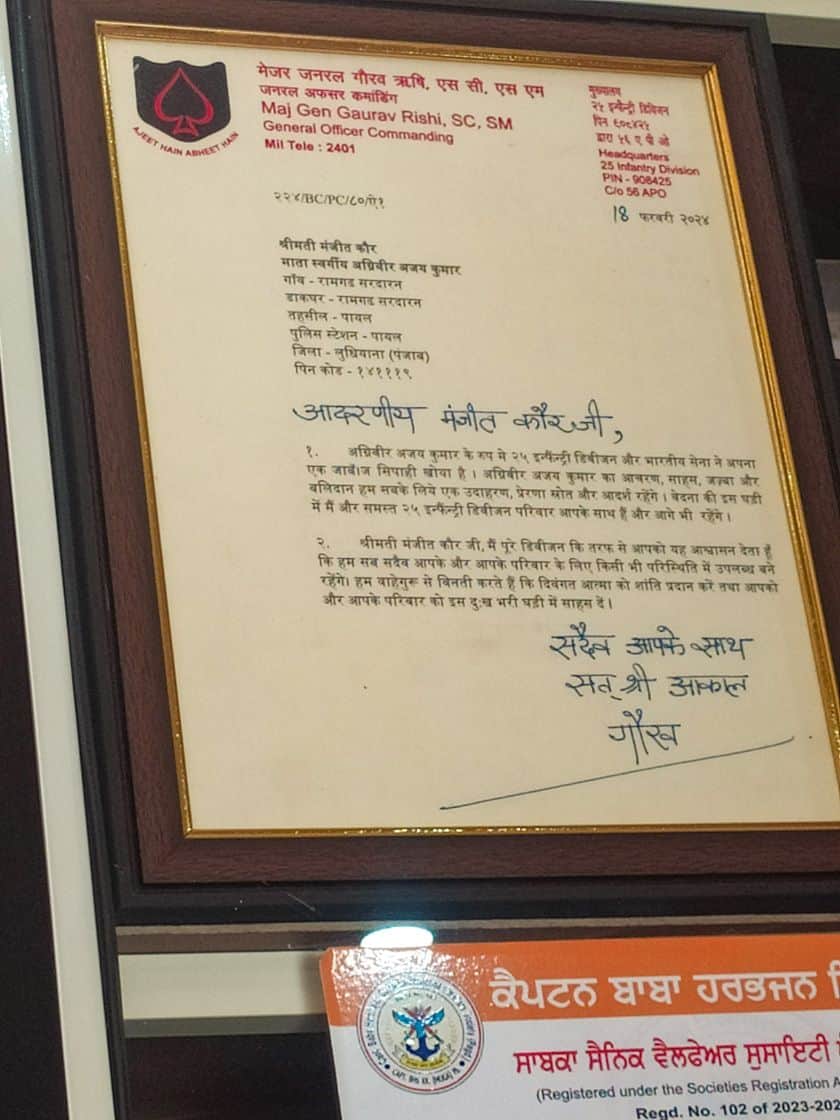
It doesn’t matter that the 23-year-old defended the borders of this country to the last drop of his blood in anti-insurgency operations in Jammu & Kashmir. His old, landless, Dalit parents cannot even dream of a pension, or martyr status for their son. They are not eligible for any benefits under the Ex-Servicemen Contributory Health Scheme, or even the Canteen Stores Department discounts. For, in official records, Ajay Kumar was neither soldier nor martyr.
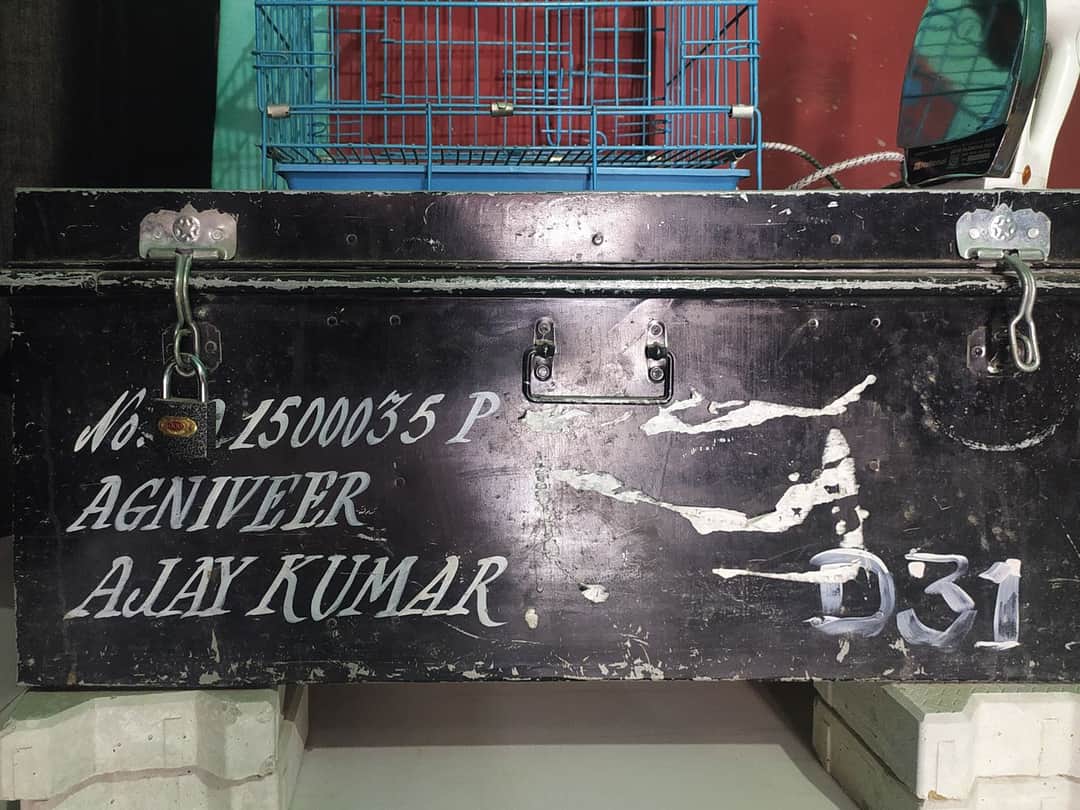
He was just an Agniveer.
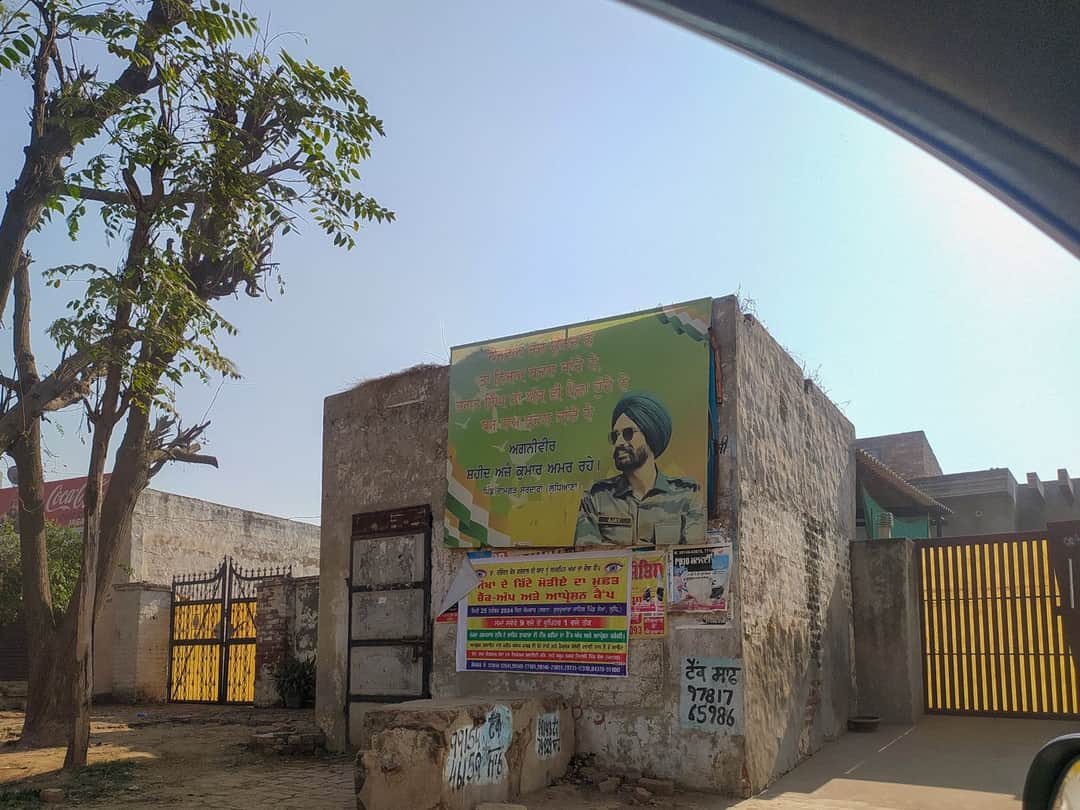
In this village of Ludhiana district, though, the government record carries little weight. A 45-minute drive from Grand Trunk Road, beautiful fields blooming with mustard flowers take you to Ramgarh Sardaran, where the walls seem to have already written their own record. Dotted with hoardings carrying a handsome Ajay’s photos in olive green, they position him in seamless continuity to martyr Bhagat Singh, who, along with his comrades, walked to the gallows over nine decades ago, but is yet to be given the status of martyr by successive governments.
One of the hoardings in the village reads:
Naujwan jad uthde ne
Taan nizaam badal jande ne,
Bhagat Singh ajj vi paida hunde ne,
Bas naam badal jaande ne…
[When the youngsters arise,
The crowns are cast aside.
Bhagat Singh is born with each new day
But under different names the world may say…]