

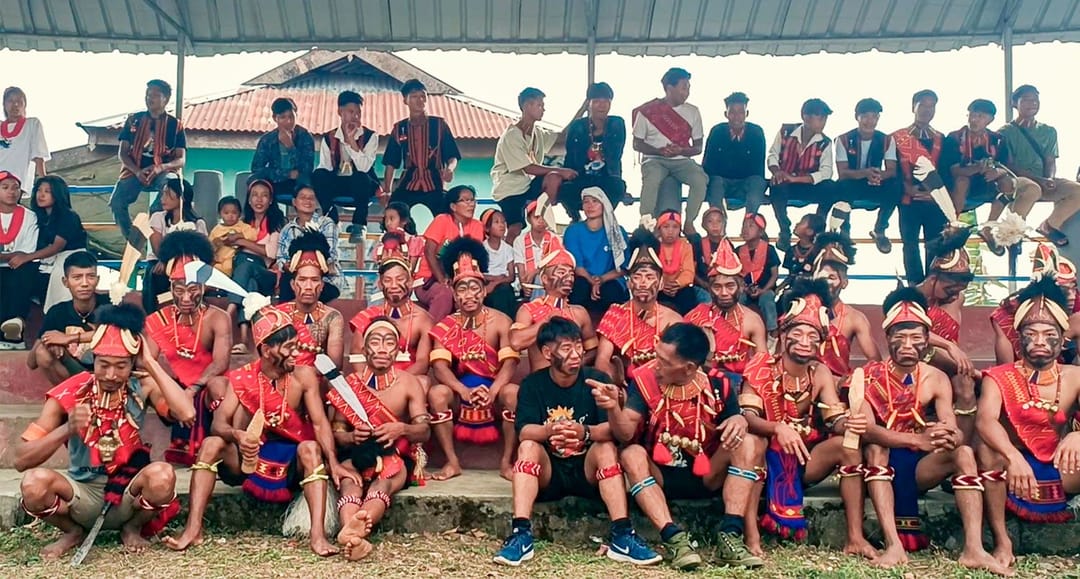
The coral tree (Erythrina variegata) is in bloom. In the village of Mon in Nagaland, the fiery red flowers signal the arrival of spring, and with it the annual festival of Aoleang.
Nyelei Konyak, 62, is here with her grandson. Sitting on the verandah of the Konyak Student Union building, she smiles and says, “I am very excited to be here and see all the events.” But what she is looking forward to the most is the feast. “I will have the most delicious food,” Nyalei says, “sticky rice, meat, chutney and fruits.”
The celebrations will include song, dance and traditional games and events including kong-kei-ham-ajak mek (bamboo stilt race), kham tut (log drum beating) and ven khen mek (fire-making).
Celebrated by the Konyak tribe, Aoleang spreads over six days. Held in the spring months of March-April, the community gathers to seek blessings from gods after sowing seeds on new jhum fields, praying for a good harvest. The main crop in these parts is paddy and shifting cultivation is still largely the norm.
The Konyaks still set store by hereditary village chiefs or Anghs, and in recent times, a village council with elected members. It is in the field next to the Angh’s house that families have gathered for the annual celebration of Aoleang or Oya as the locals call it.