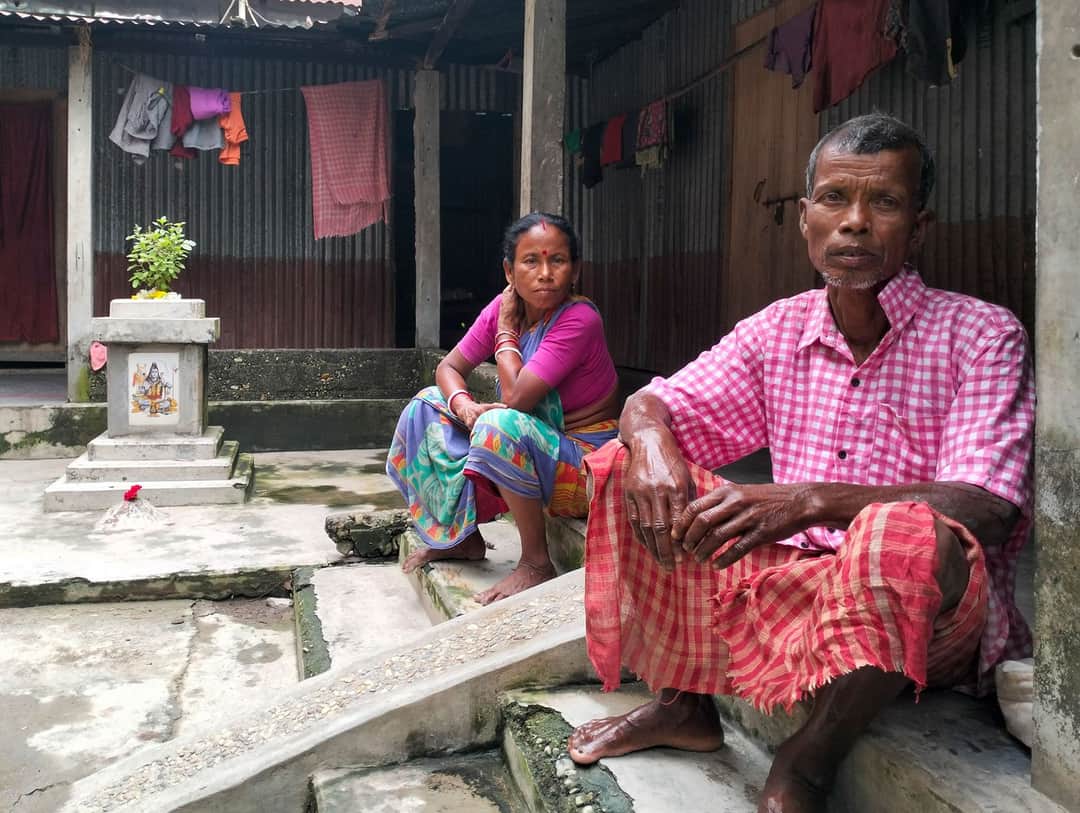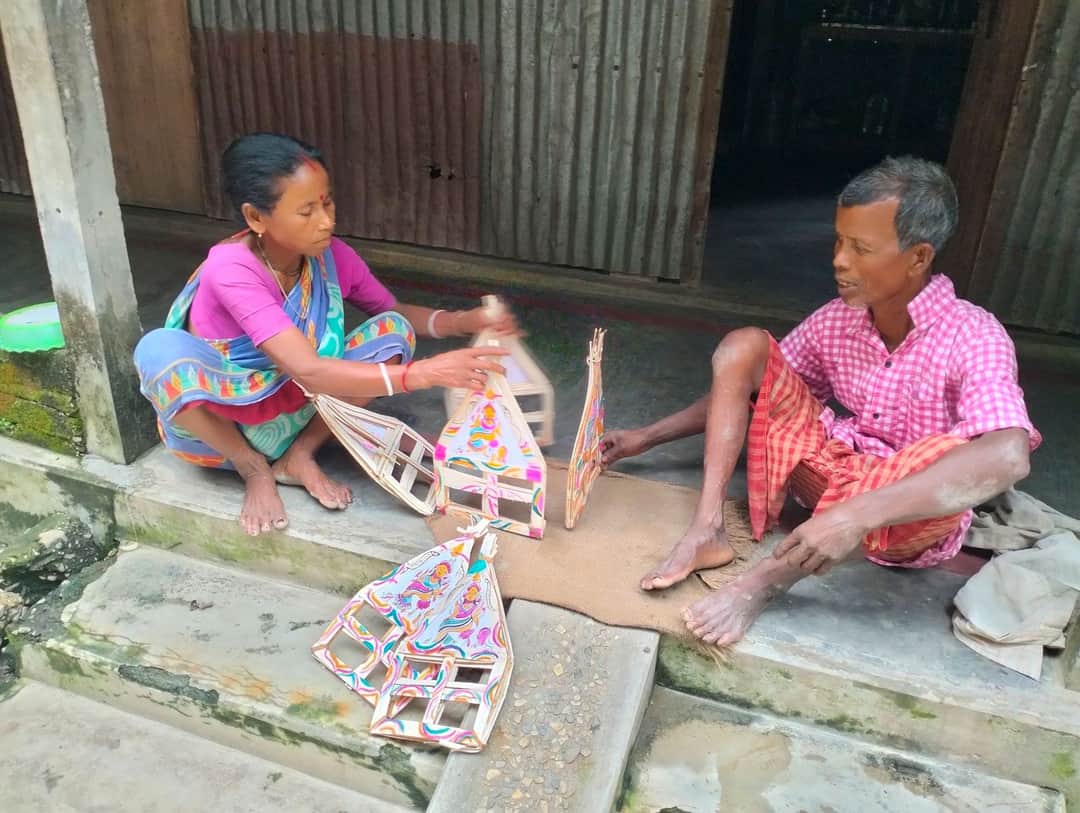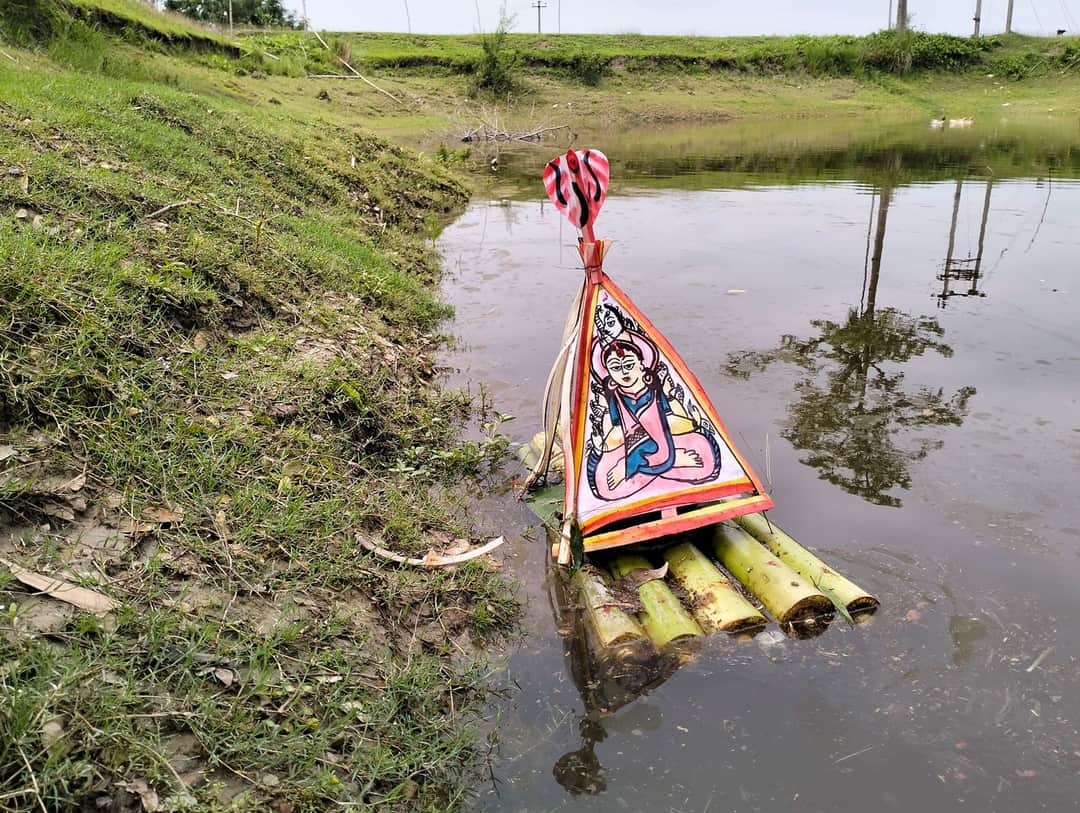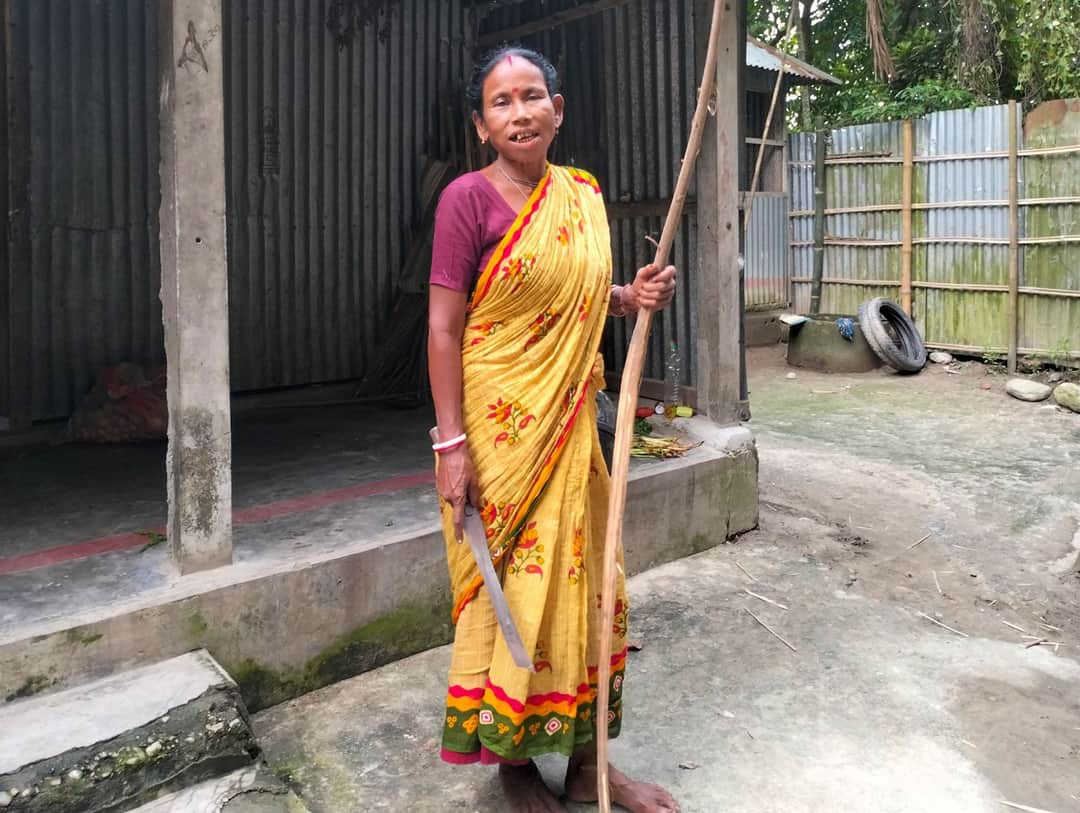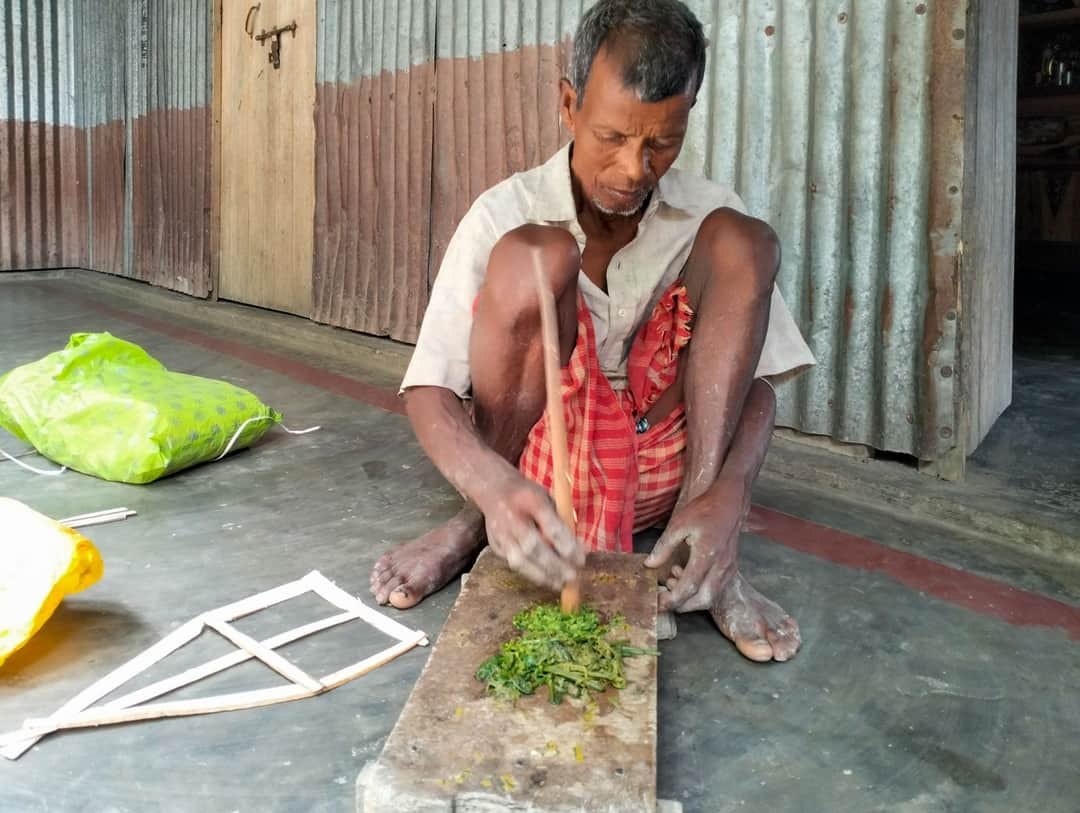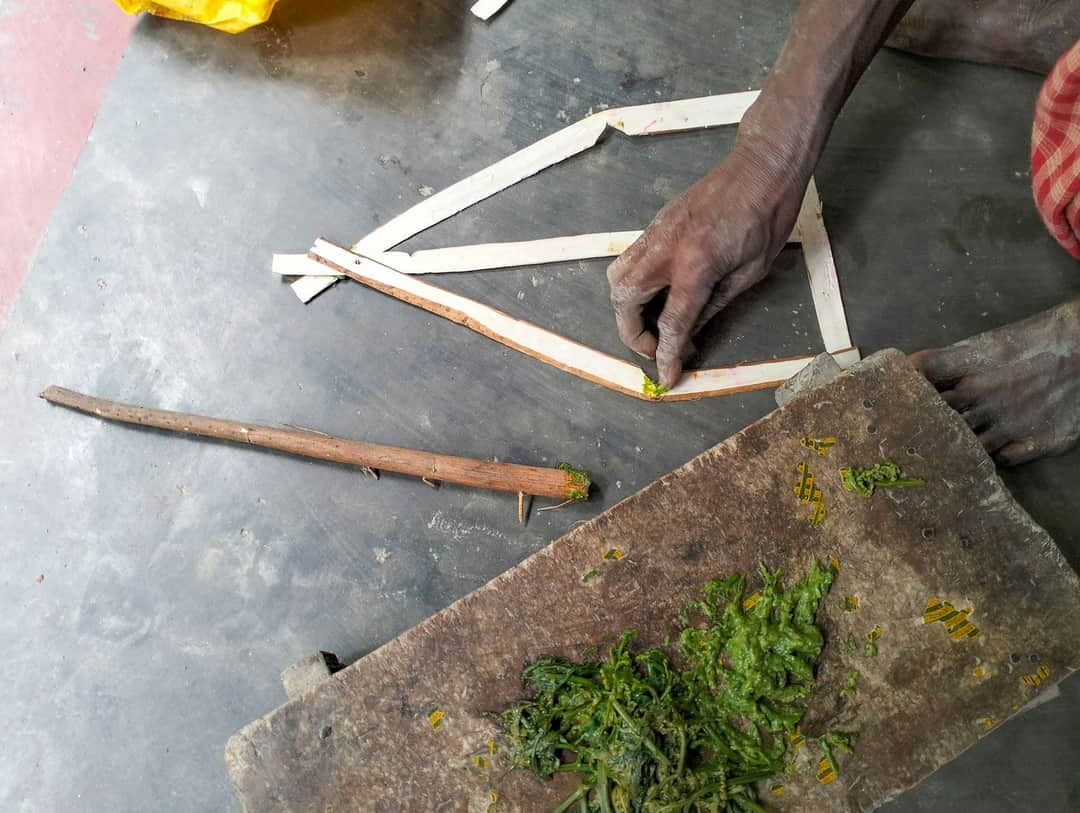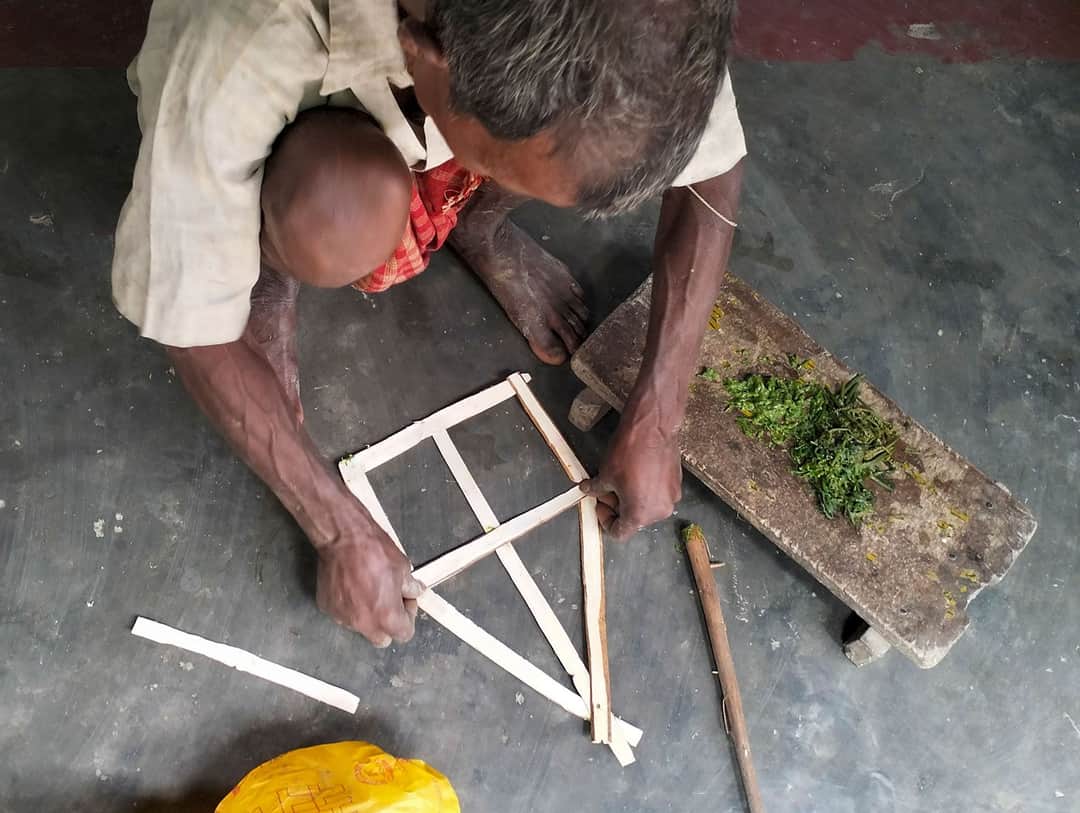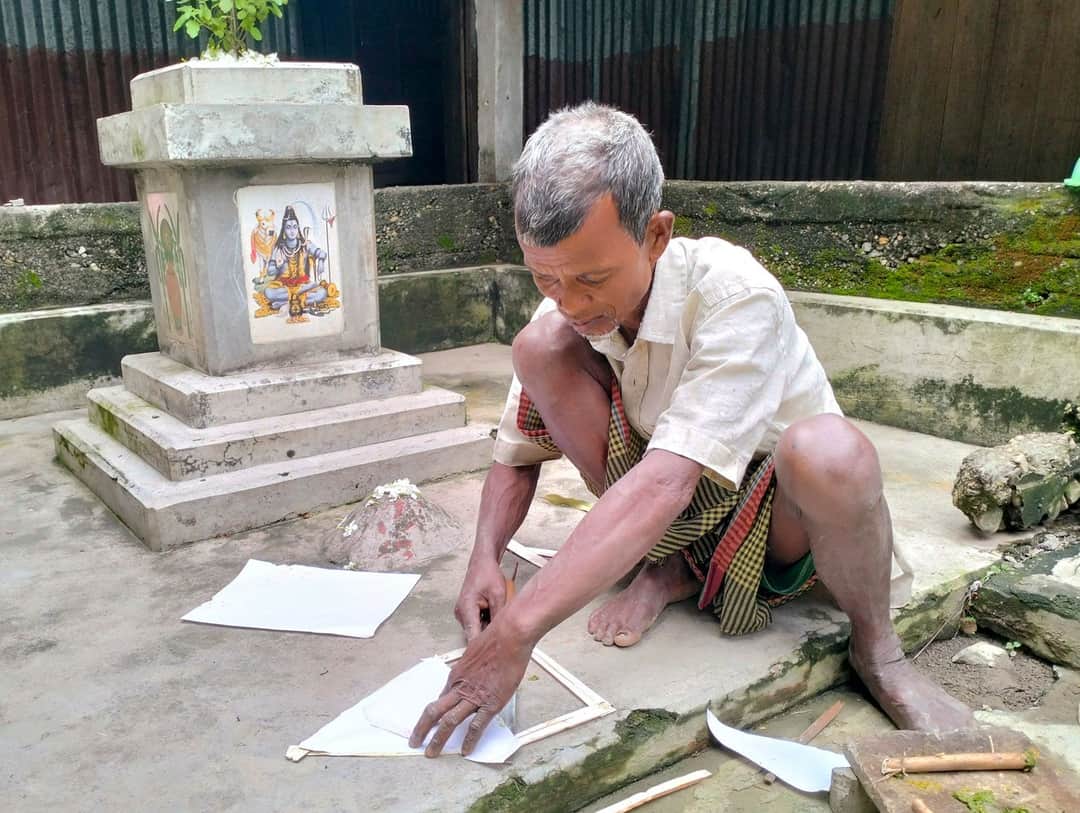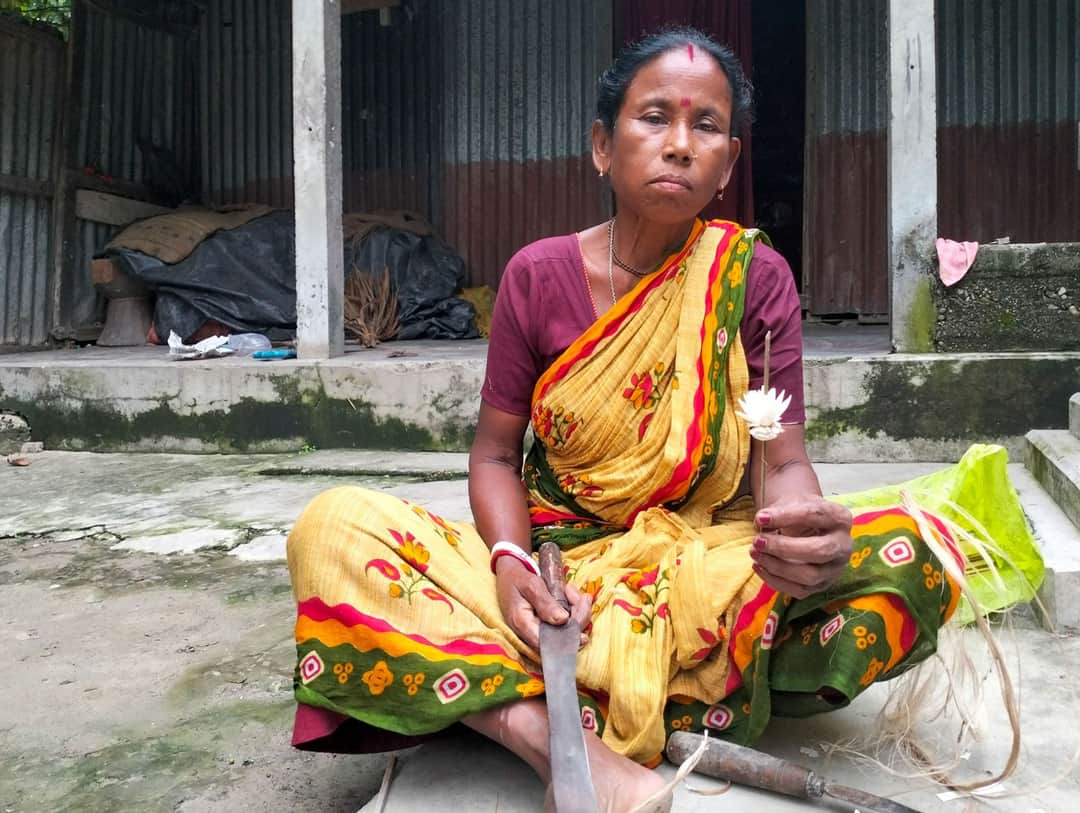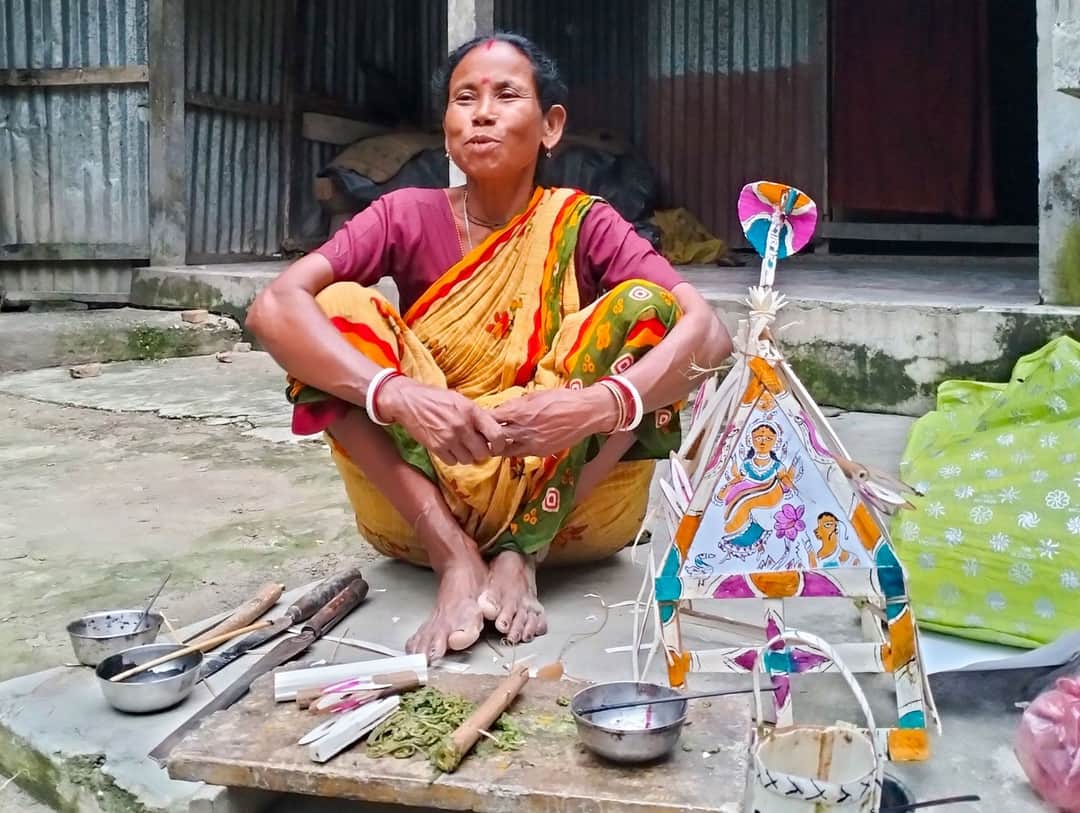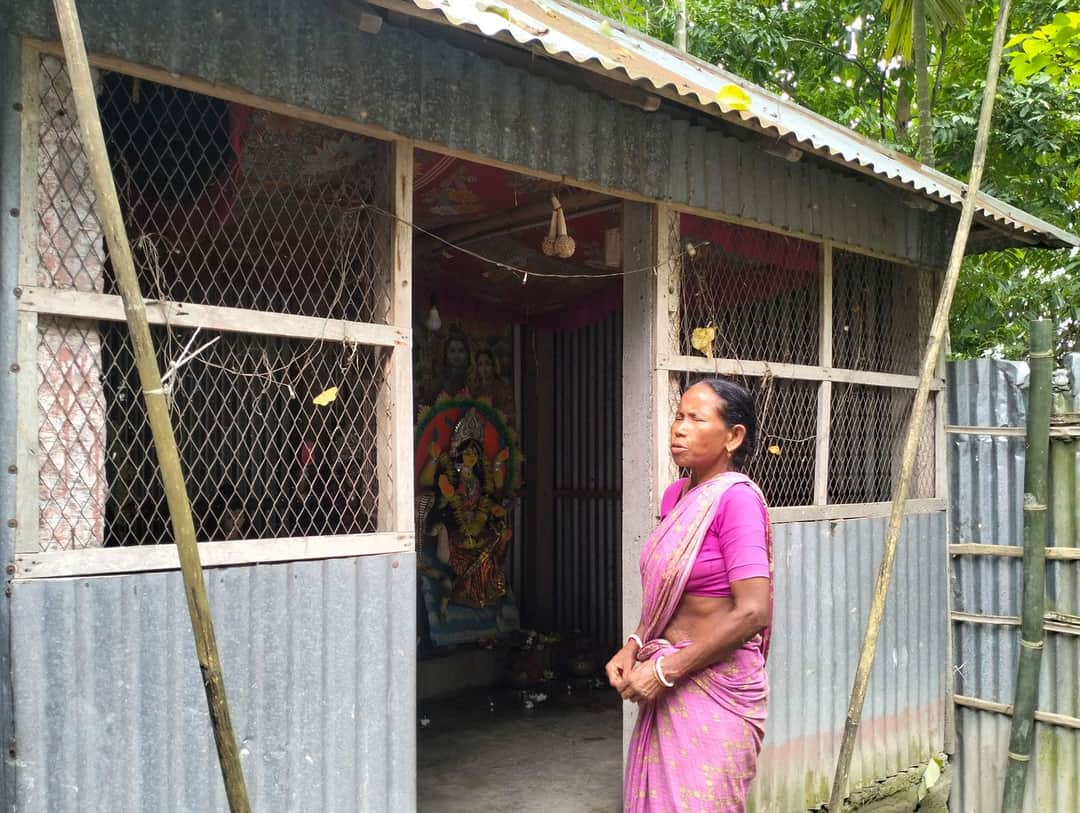

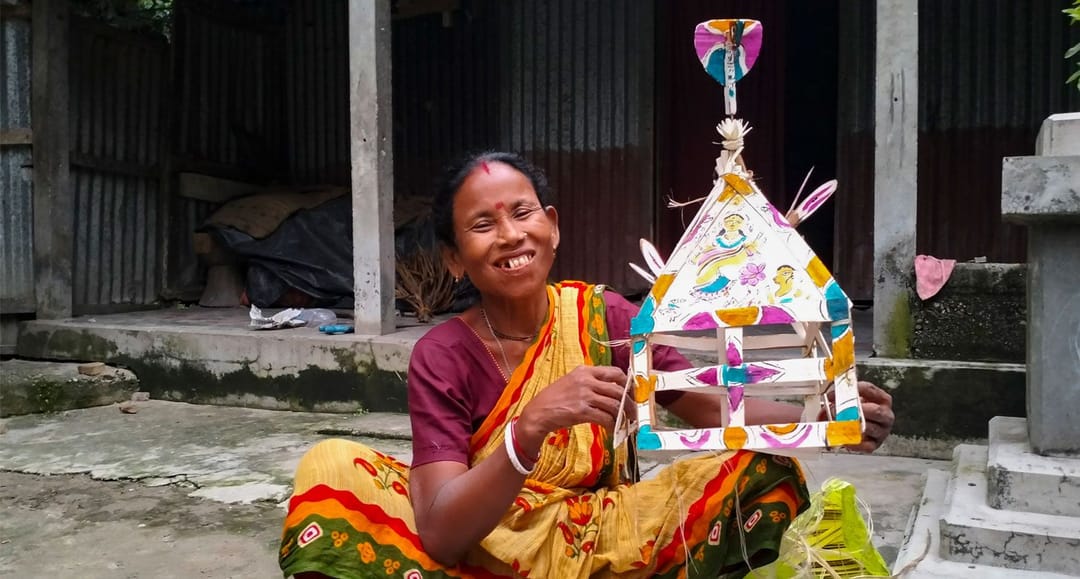
“Bhogol sobai baner pai, monosar dyala sudu amrai banai [Anyone can craft kadam flowers from shola, but only we make Manasa's dyala]," Aneshwari Barman smiles as she speaks, packing a betel leaf in her mouth.
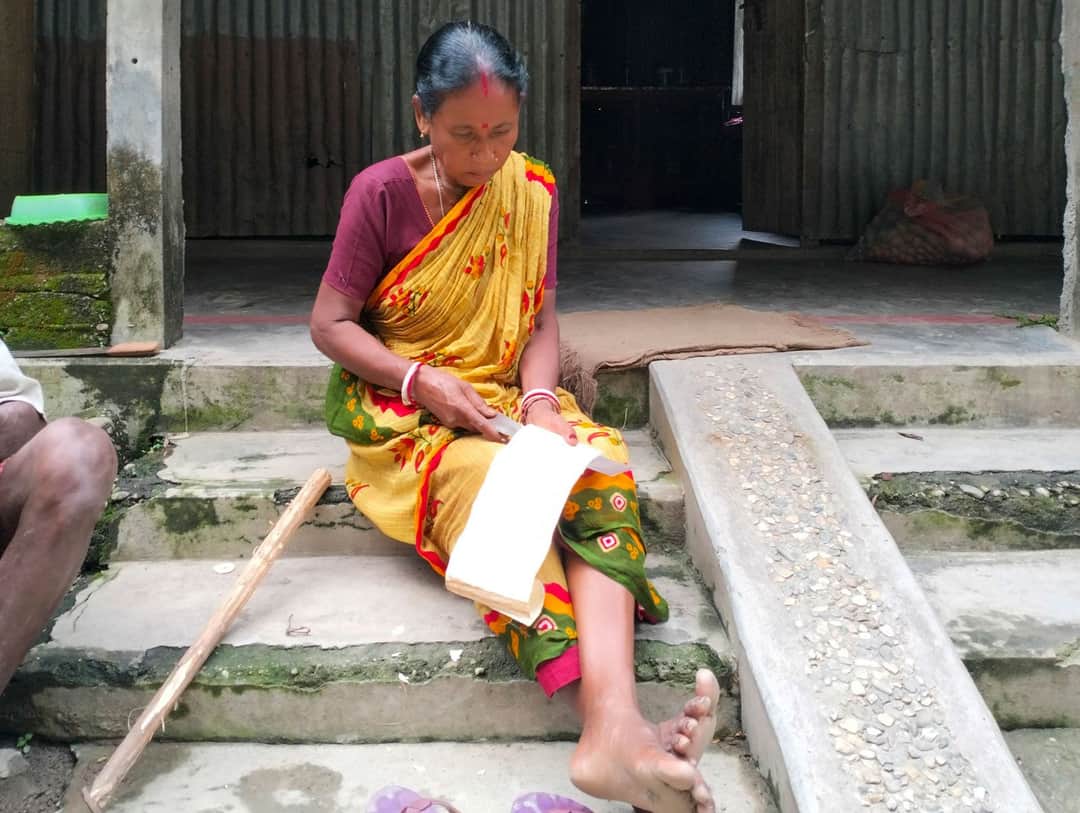
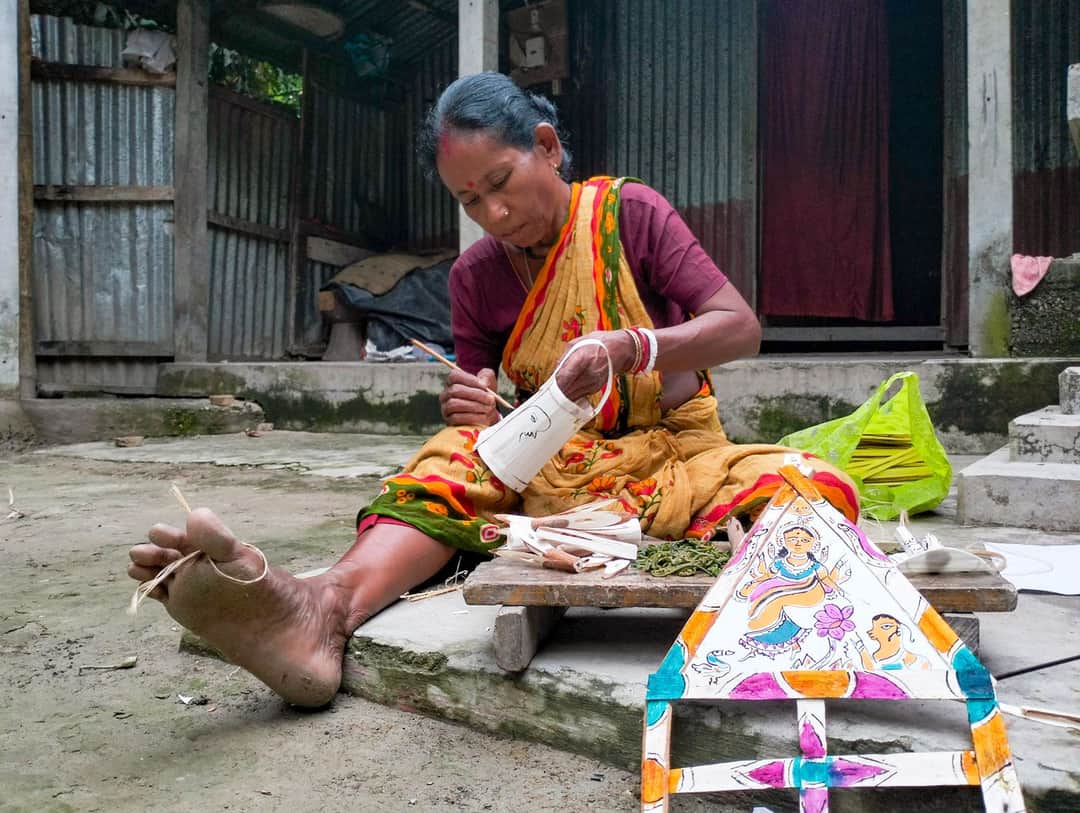
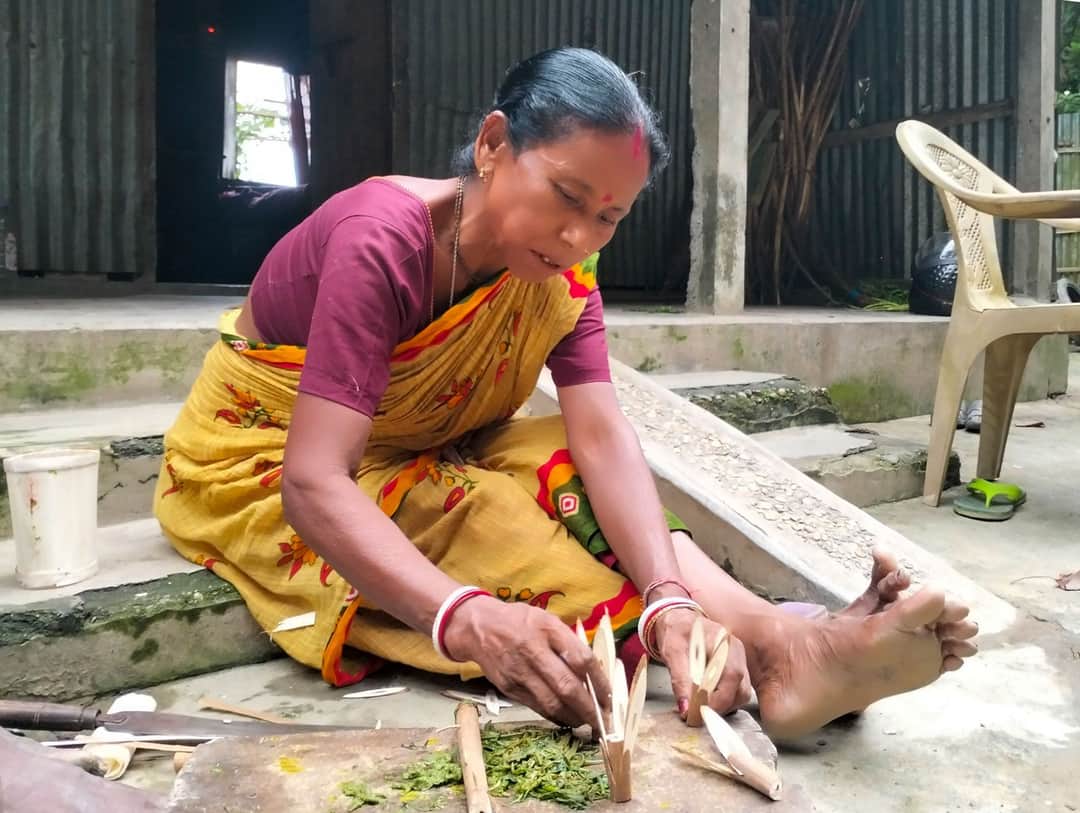
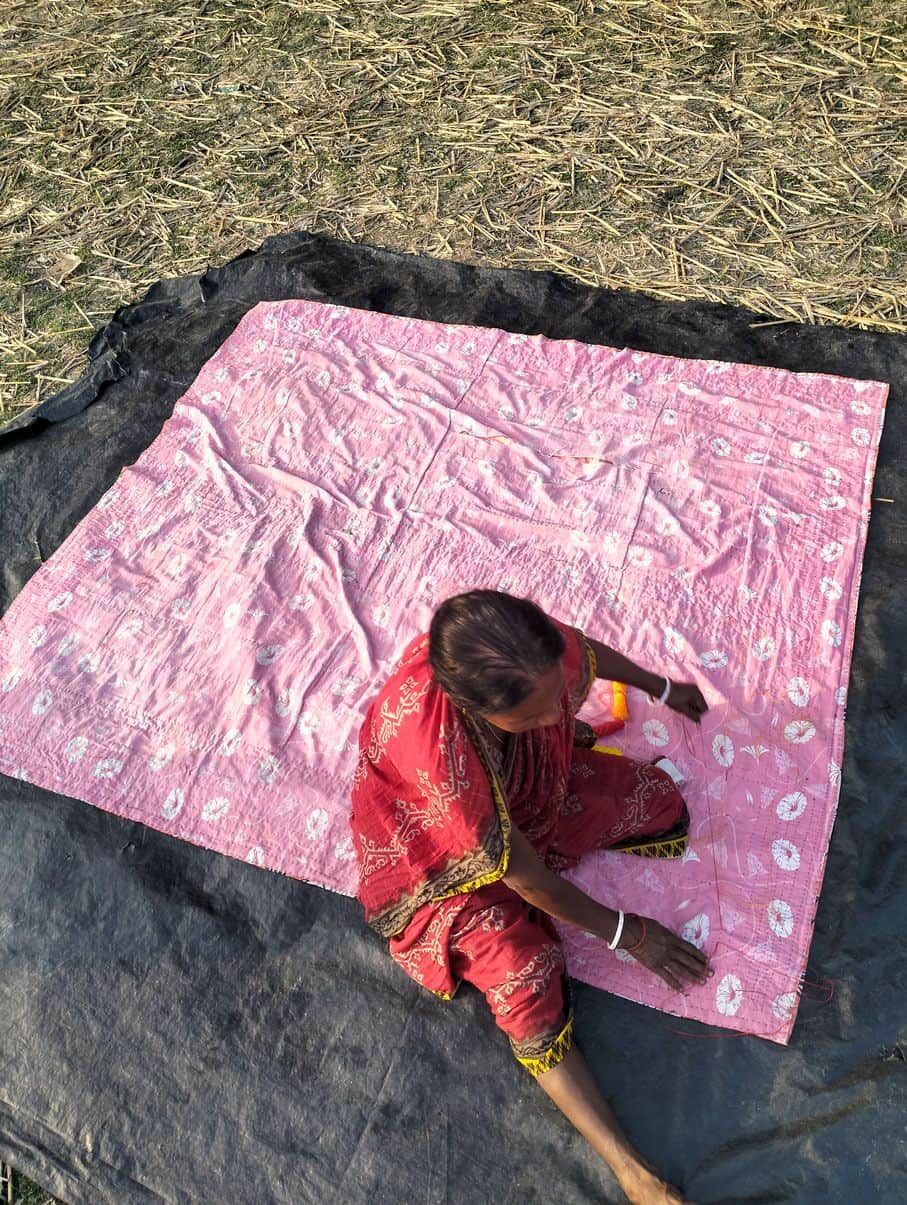
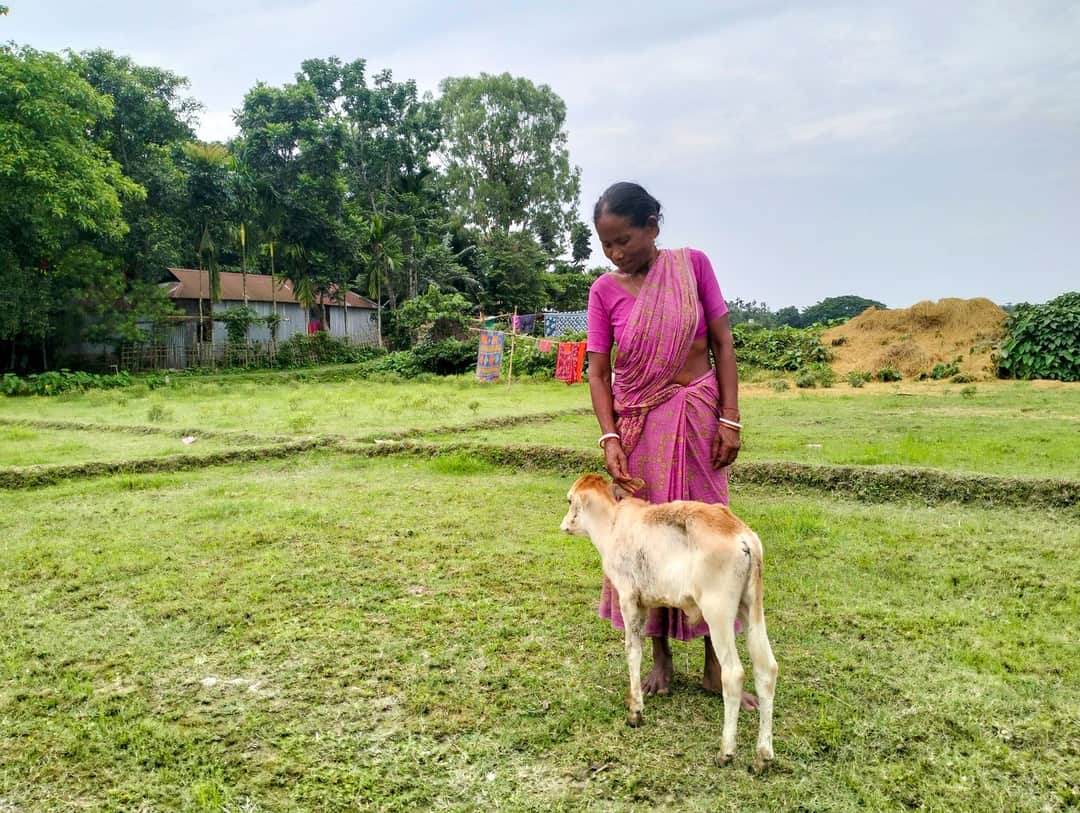
Saree worn high on her knees, hair bundled in a tight bun, 58-year-old Aneshwari wipes her hands and face with her anchal (end of her saree), and settles down on a cemented portion of the courtyard that she has just swept clean. Yet another long day of juggling household duties and craft work awaits the skilled shola artisan.
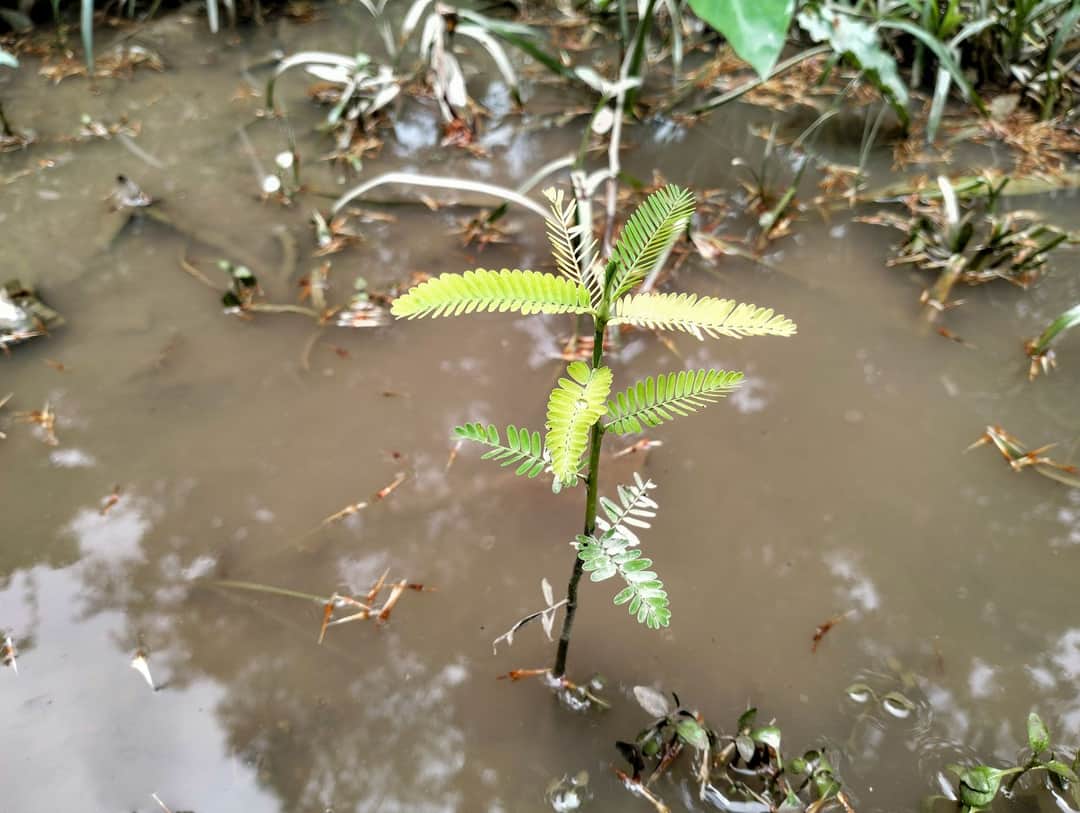
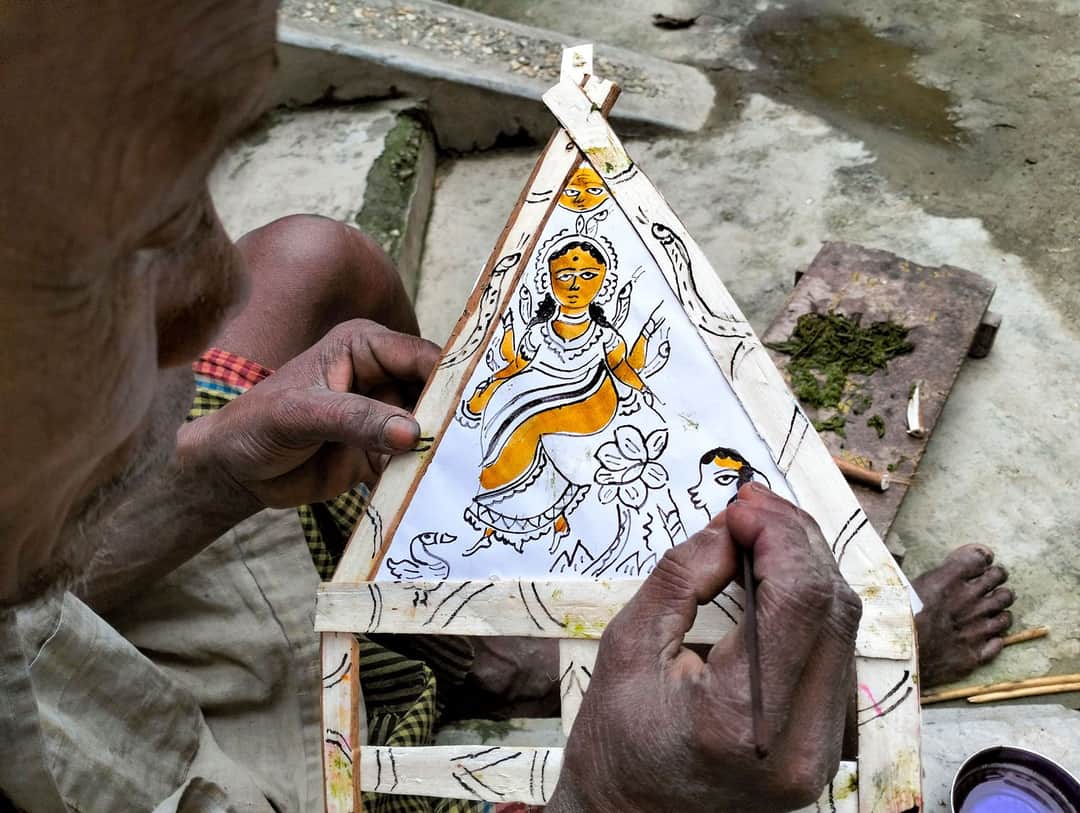
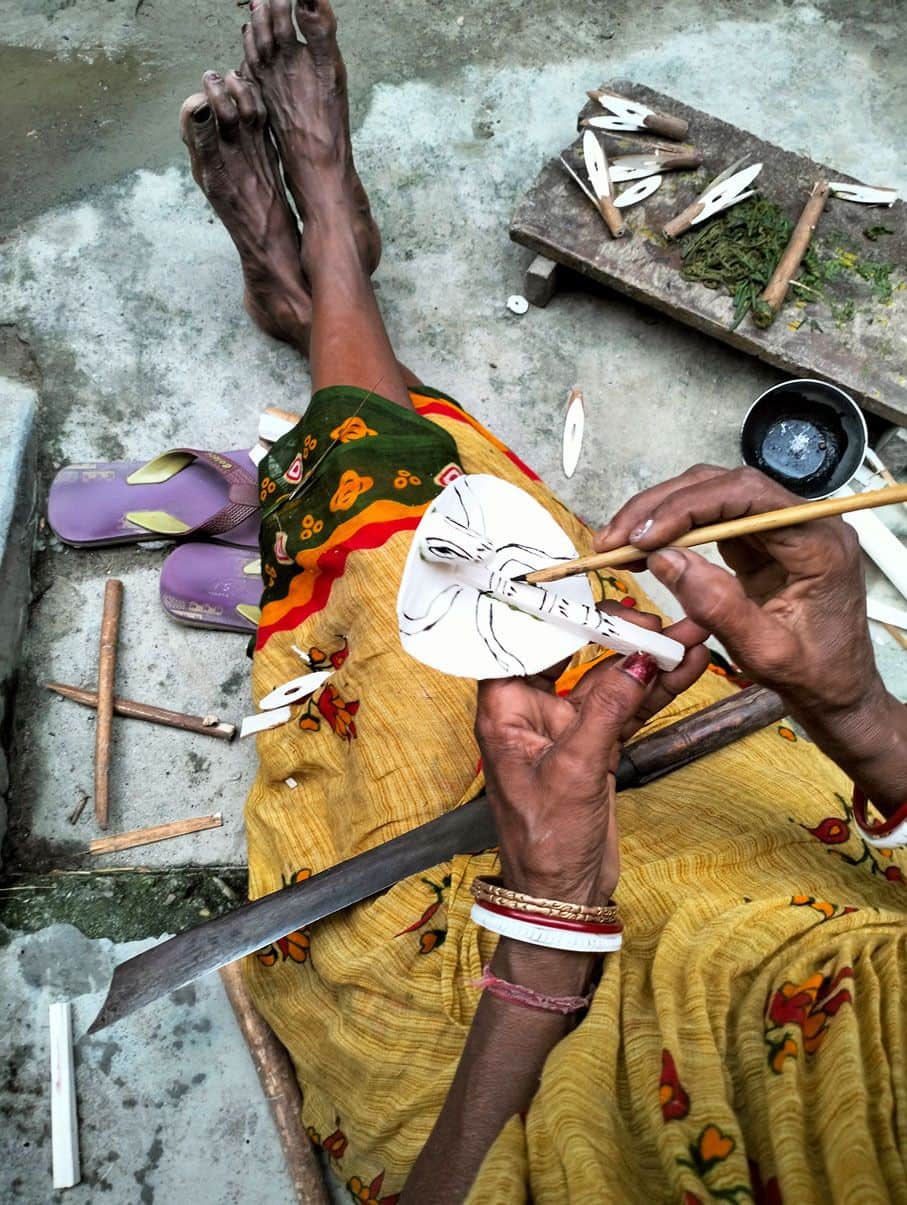
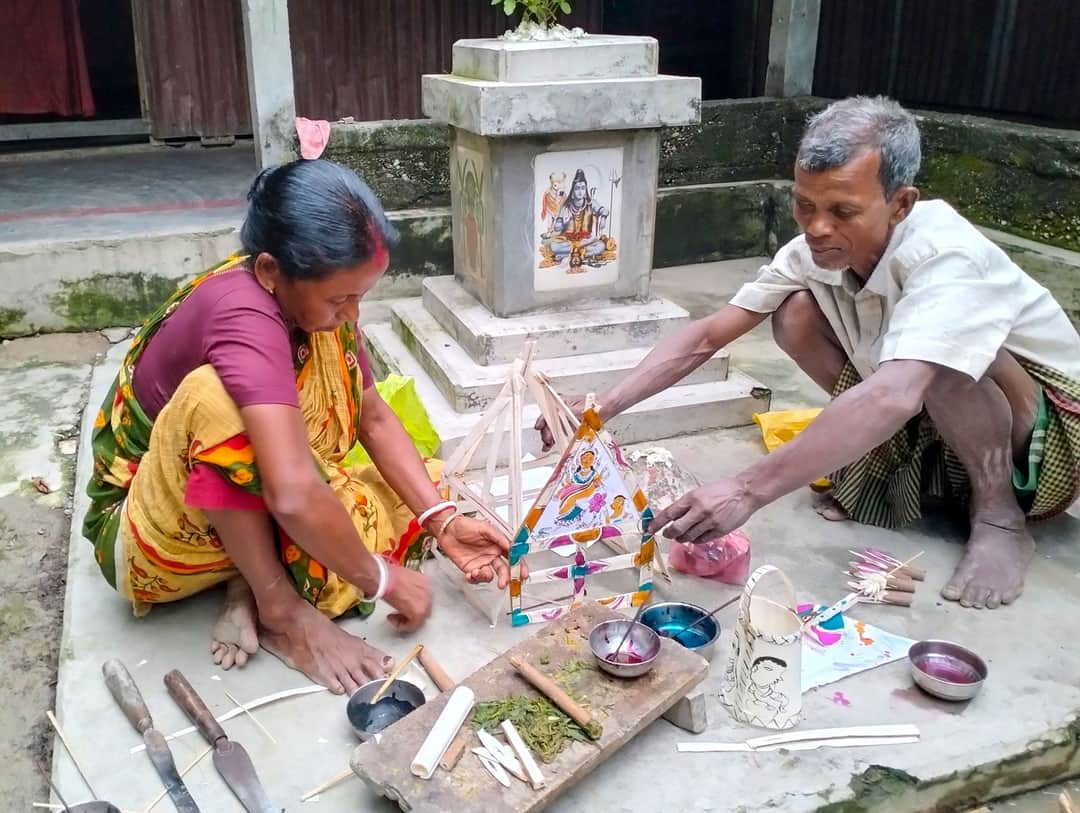
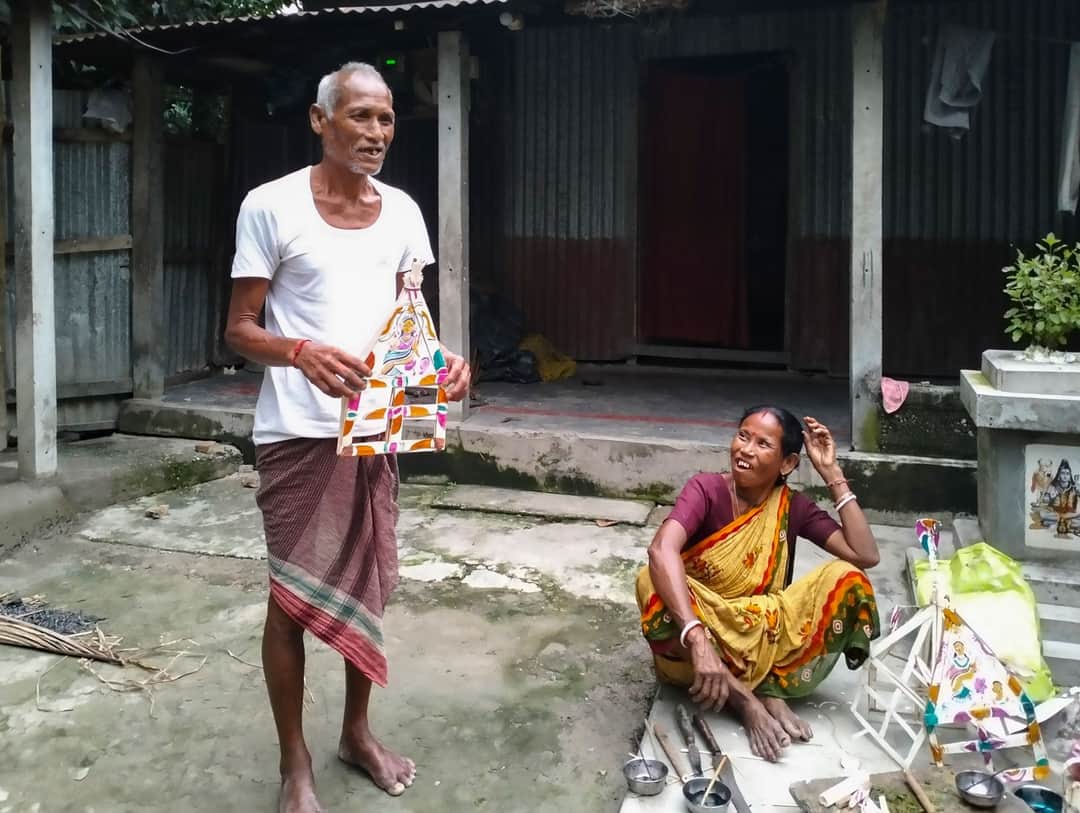
Ritual and decorative items are made from shola (Aeschynomene aspera L), a stem found in water bodies. The craft is one of the many famous handicraft traditions of West Bengal. Sidheswari, a village of 4,467 people (2011 Census) in the northern district of Koch Bihar, has a number of families that depend on shola craft for their livelihood. However, only a handful like Aneshwari’s family in this village of Cooch Behar-II Block have inherited the skill of making Manasa's dyala —a structure made from the soft and porous core of the shola stem that carries a painted image of the snake goddess, Manasa.
"If this tradition isn't there in your family, you are not allowed to craft it. But we can make these. This is in our family," she says with much pride about the ritual that has been passed down in her husband’s family who belong to the Rajbanshi community (listed under the Scheduled Castes in West Bengal).