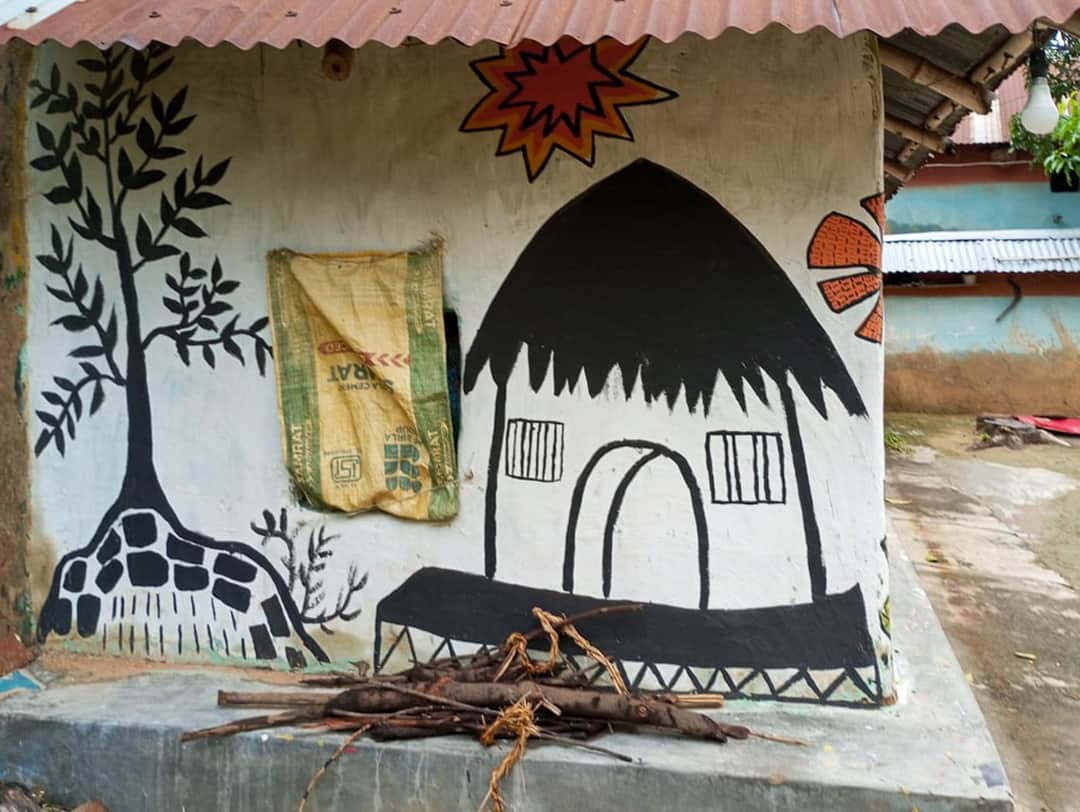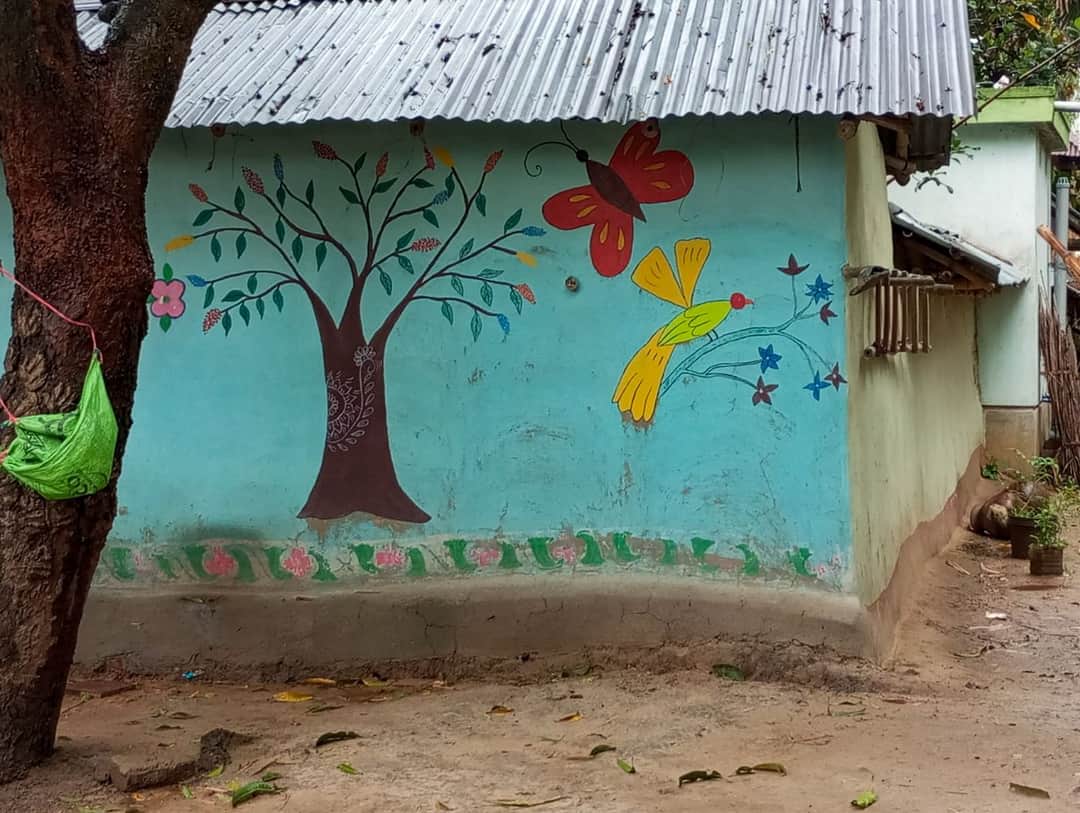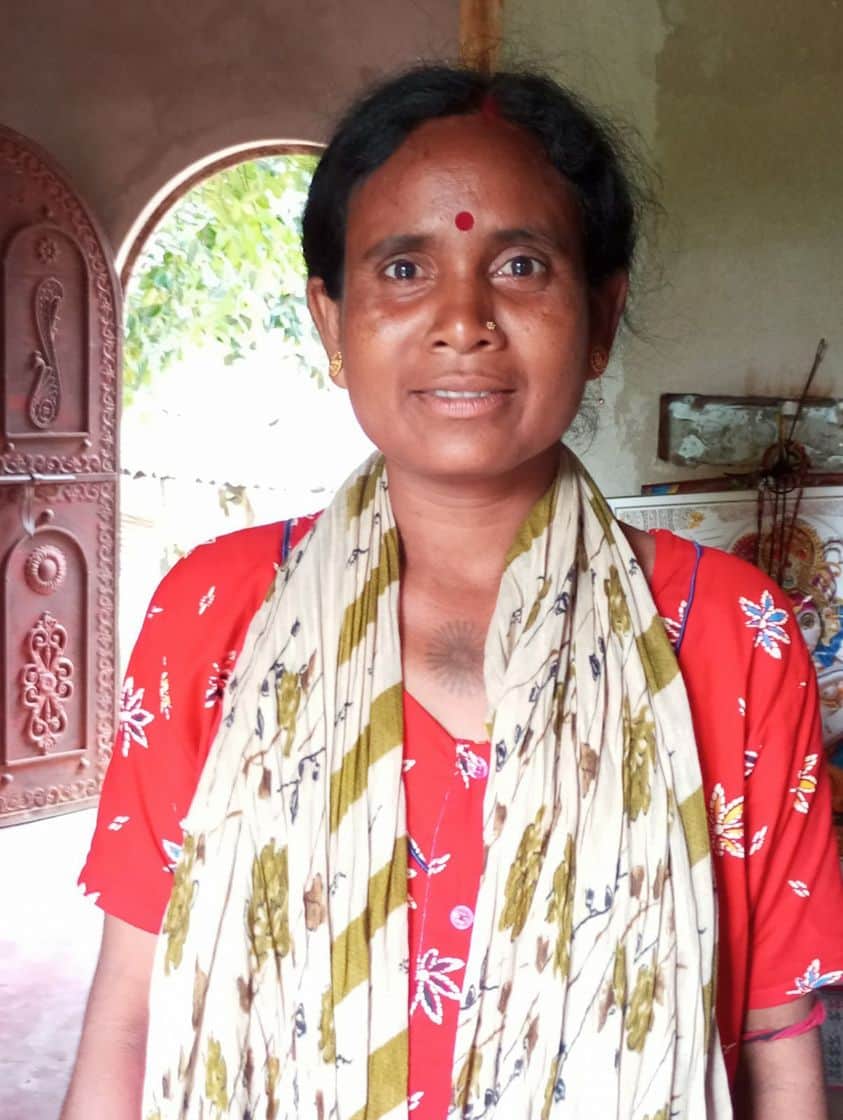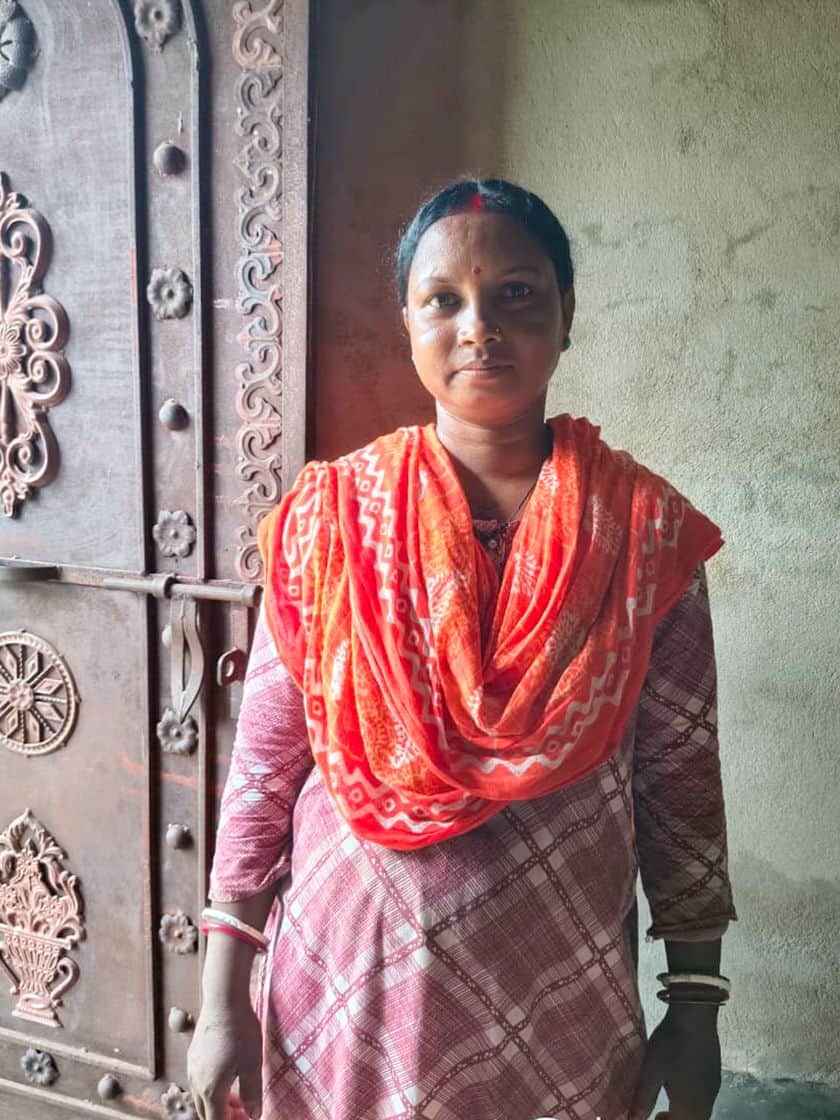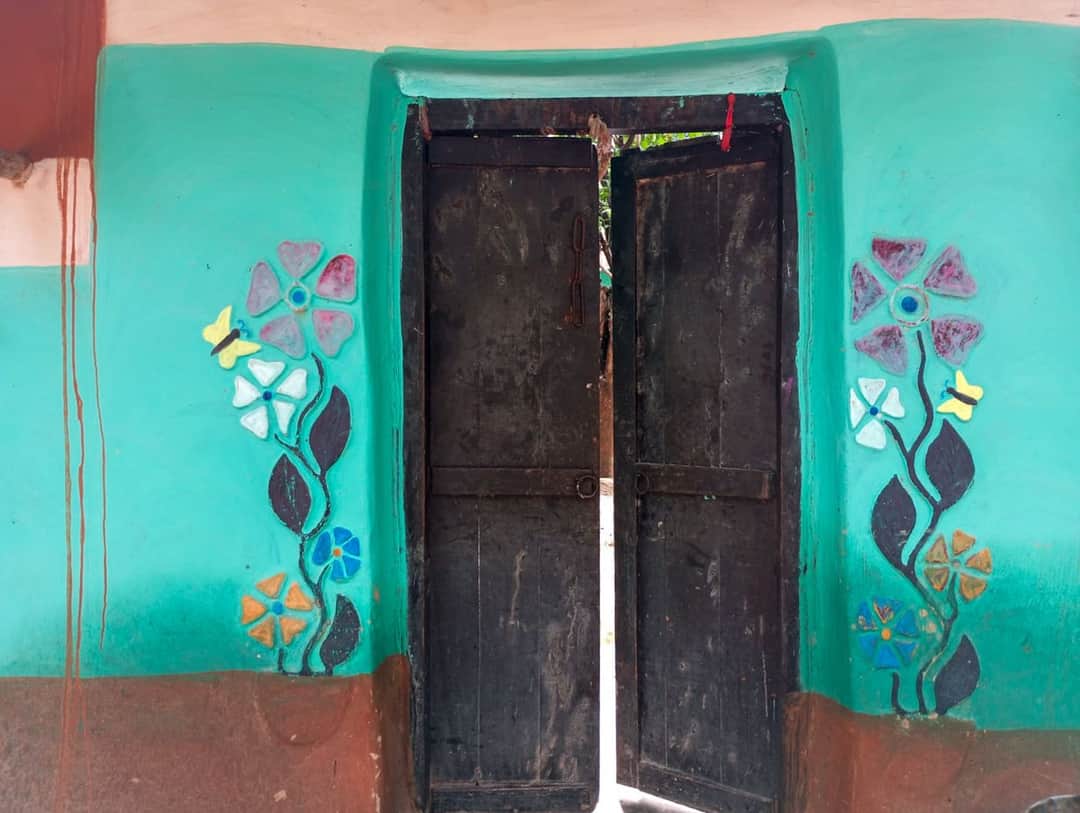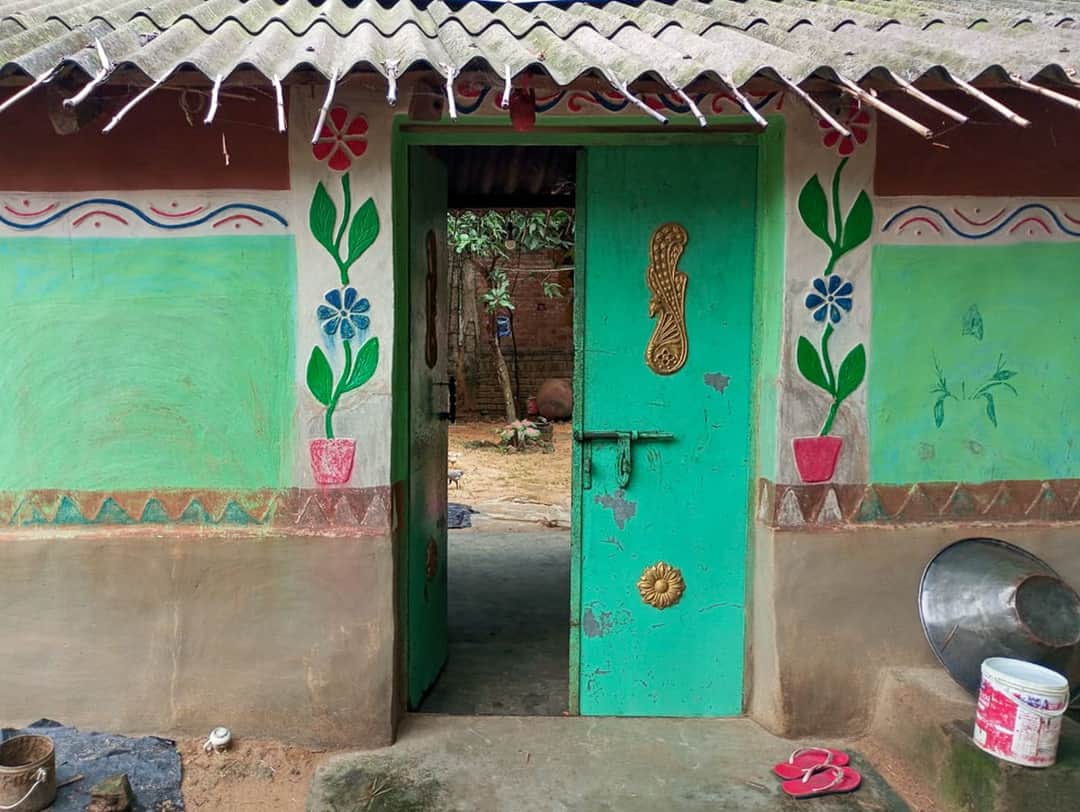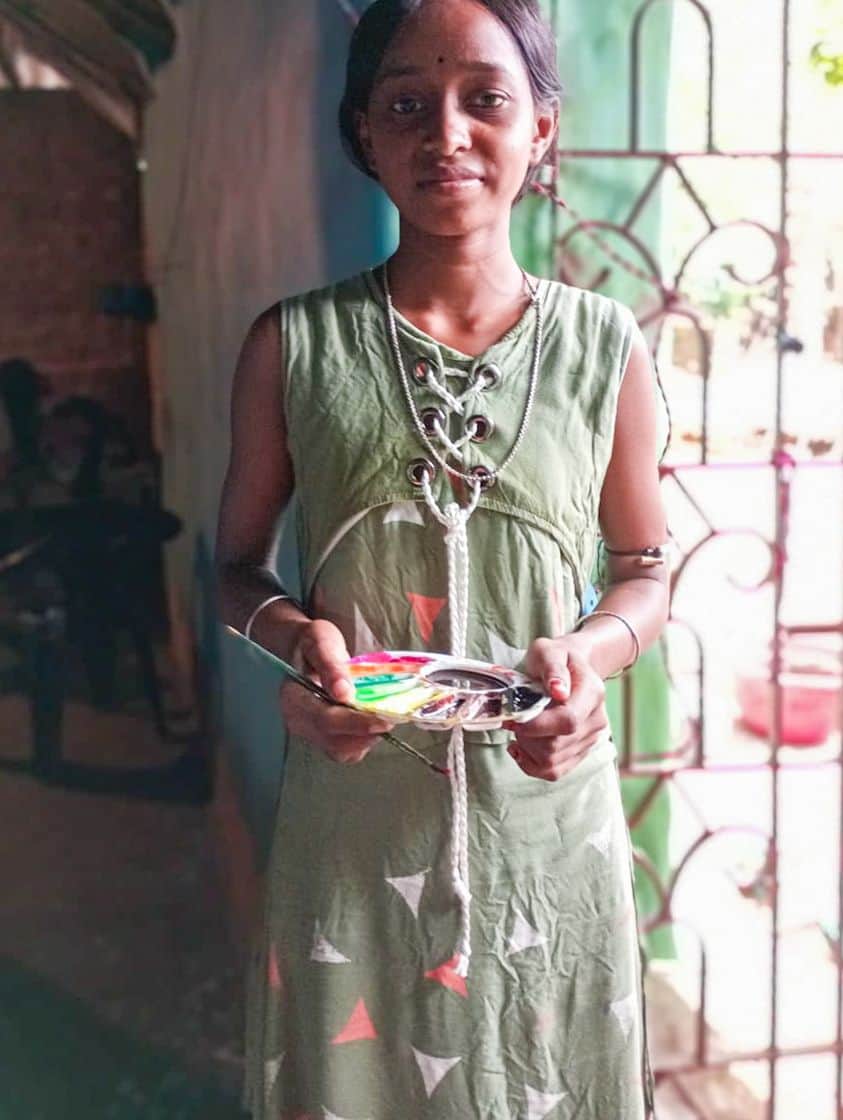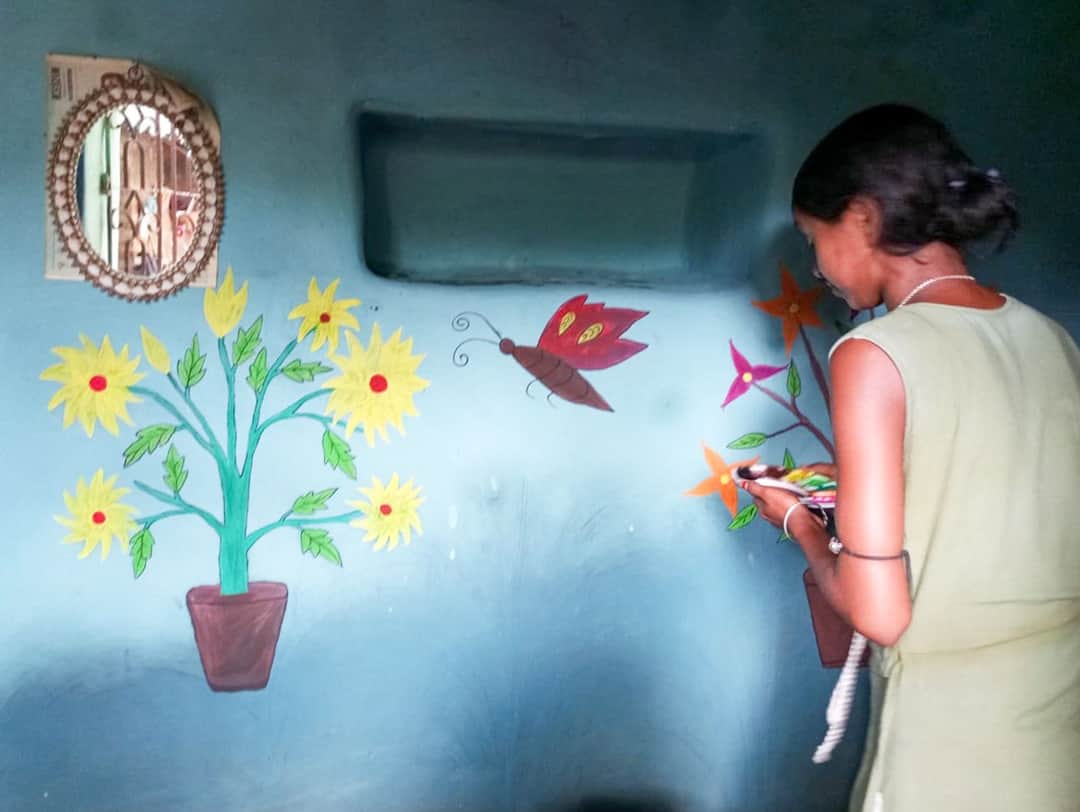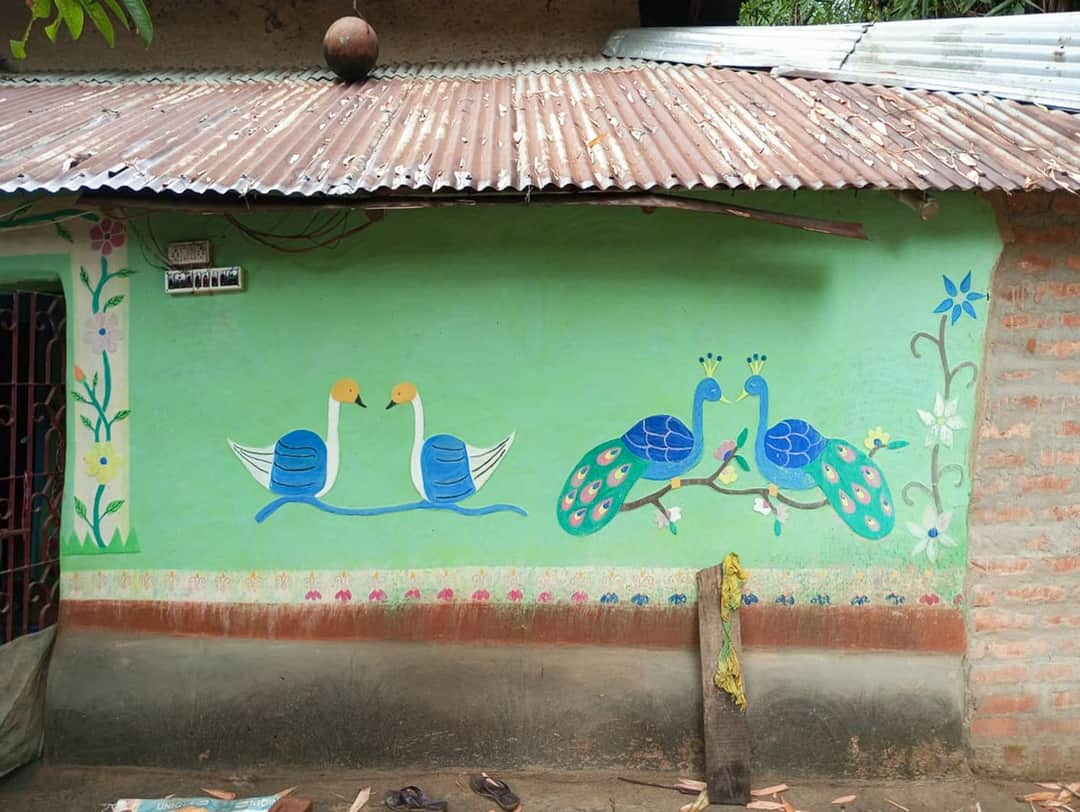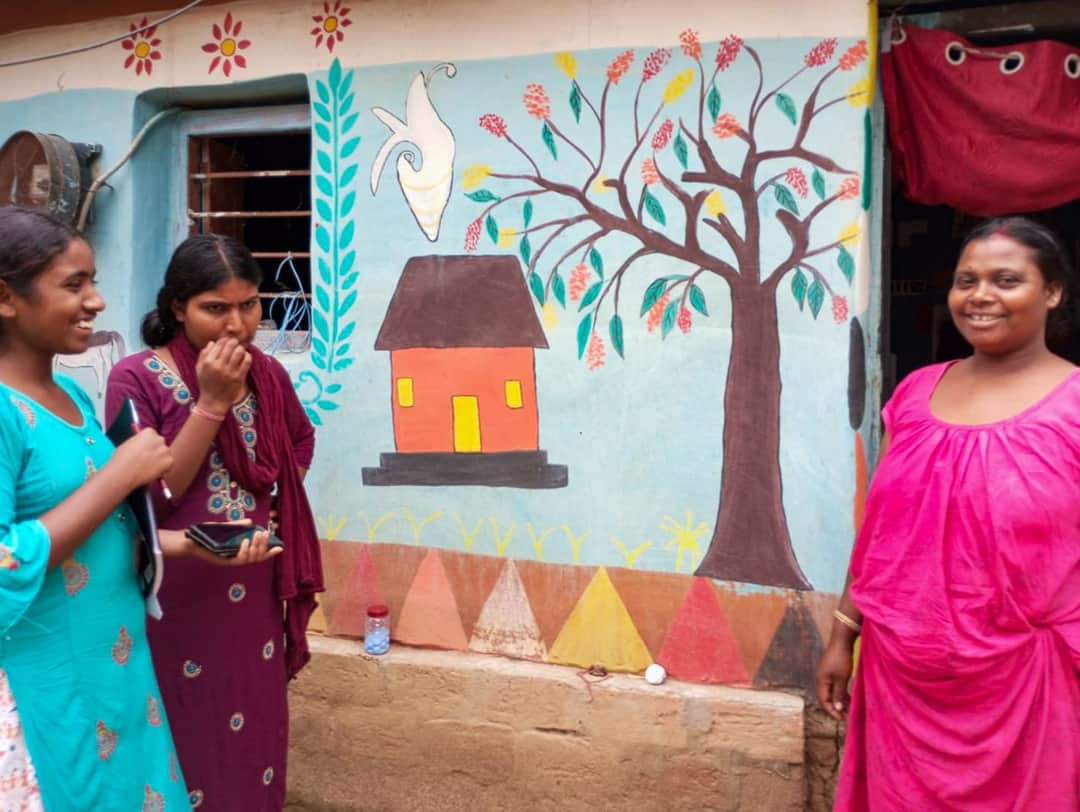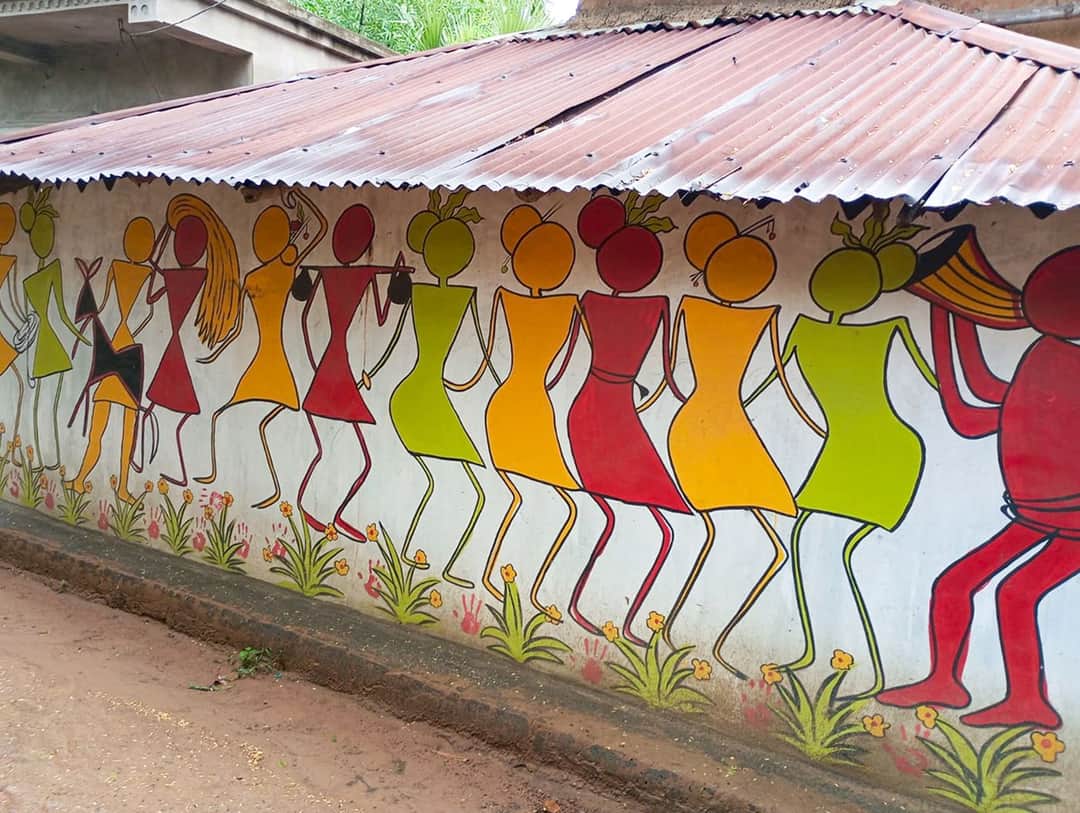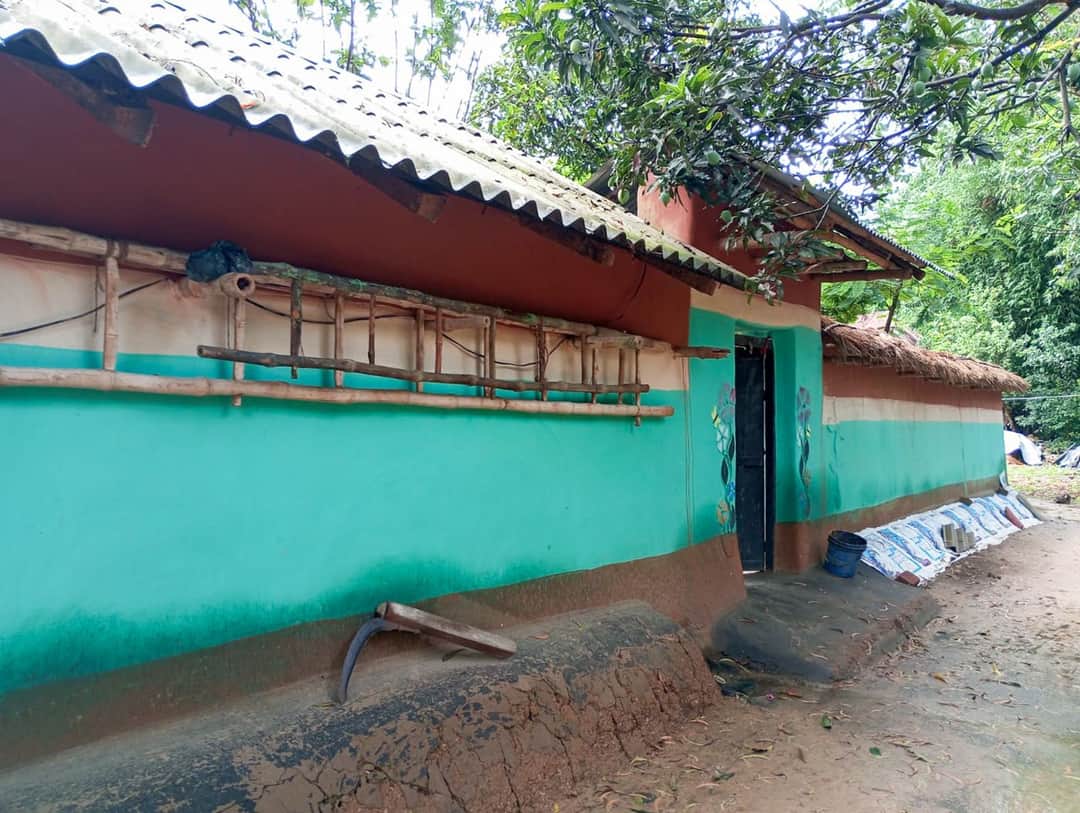

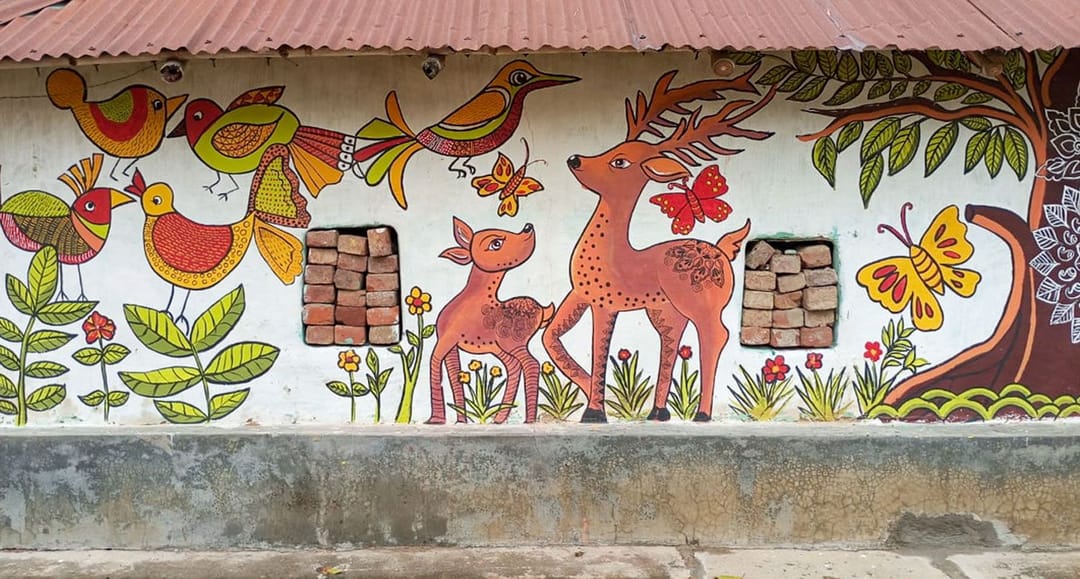
A forest is growing on the mud walls of a small Santal house in Gopalnagar. Trees rising through the roof merge with the umbrella of the neem tree growing beside it. The path on which a male spotted deer with its fawn amble along, is lined with tiny flowers and rather giant butterflies. Bright colours fill the decorated wings of these larger-than-life versions of bulbuls, babblers, barbets and parakeets. These avian creatures of the near-by Illambazar forest, flutter against the dull white of the wall.
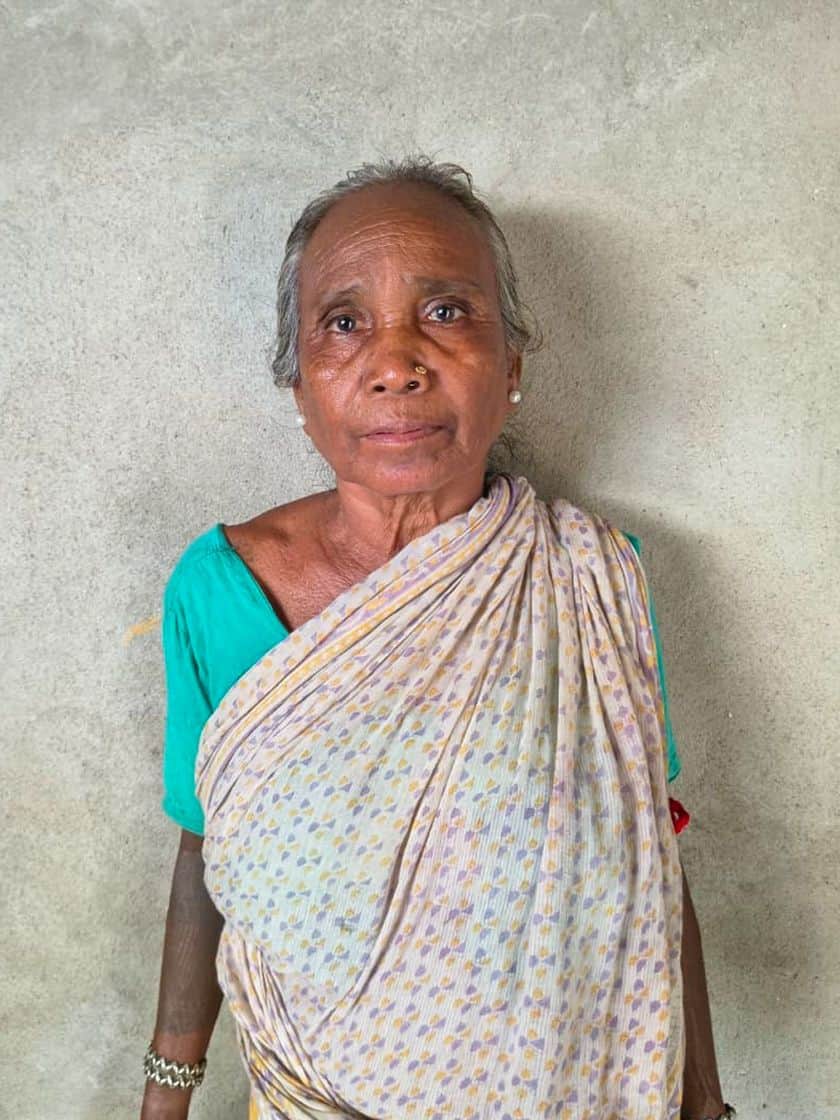
It is not the movement of these creatures on the wall, or the illusion of it, that alerts 75-year-old Churki Tudu. Nor does the music of the unseasonal showers on her tin roof on this afternoon in May. But the sound of our footsteps as we walk alongside this painting on the outer wall of the house, spreading like kantha-in-clay.
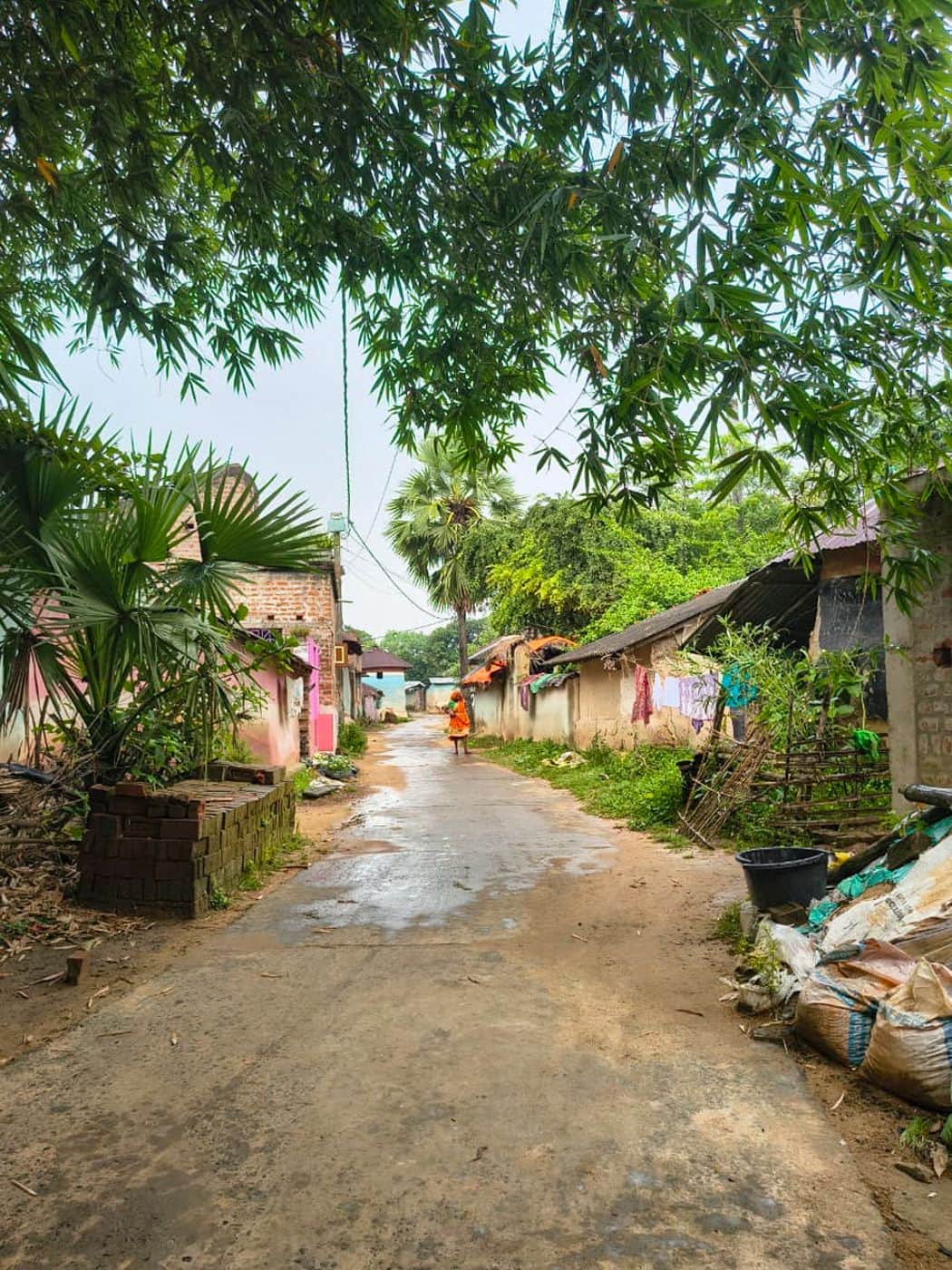
A pitch road that cuts across this village in Ilambazar block is dotted with many such close-knit Santal mud huts on either side. The colourful murals on the outer walls of the homes catch our attention as we pass through.
“Kids these days do new designs from phones and newspapers. Where was such variety in our times? We’d simply get some mud from the field and splash colours on the walls,” says Churki Tudu as she steps out of her room and reaches the entrance of her house. The ease in her voice with which she starts speaking, tells us that she is used to curious visitors who frequent the village to photograph the decorated walls of her house.
She doesn’t wait for us to ask, but rather dives straight into the subject she assumes we are interested in. “White mud, red mud, black mud [colour] made with hnarir tel [burnt oil residue scraped from cooking utensil] – these were the colours.” A momentary pause, and she continues: “First the old clay layer would be scraped off the wall. Then a fresh layer of mud would be plastered and then we would apply another coat. Finally, we would colour the border with kharimati [limestone or chalk].”
Churki is nostalgic about her childhood days in her birth home at Purba Barddhaman’s Akulia village. But she is aware of the Santal community’s rapidly changing ways, and the manner in which the new generation is adapting to the changes. She is currently living with her daughter in Gopalnagar. Their home is one of the 304 households in this village situated on the left of the Sriniketan Road, on the way to Ilambazar forest from Bolpur.