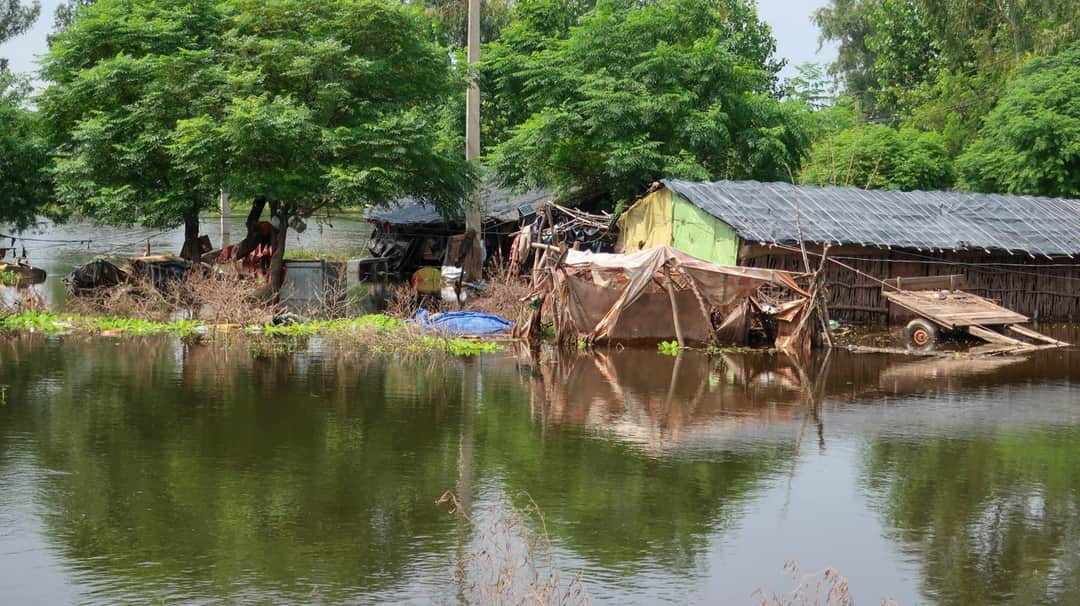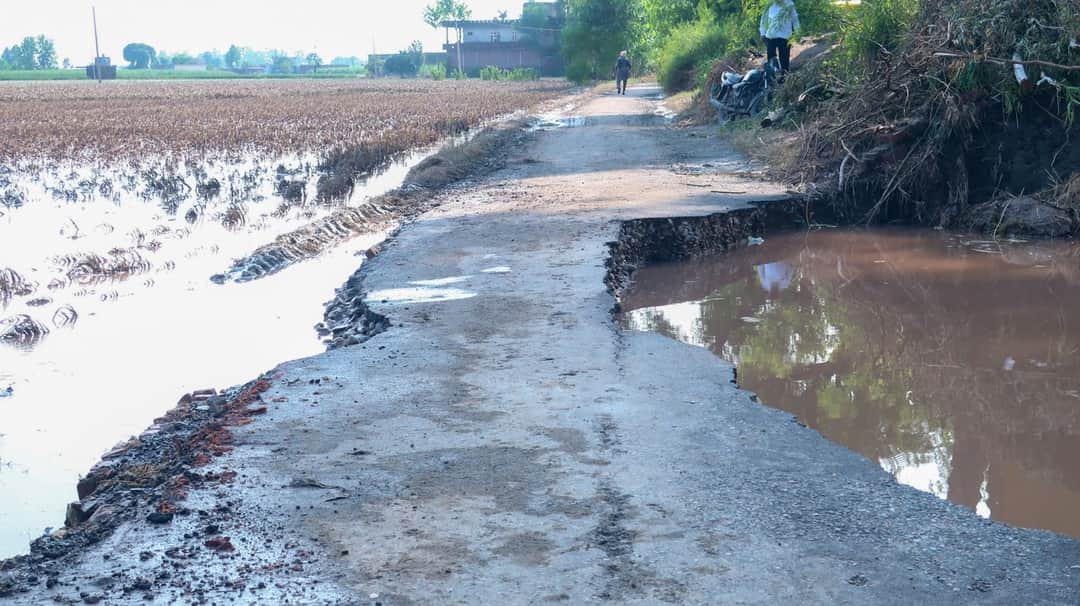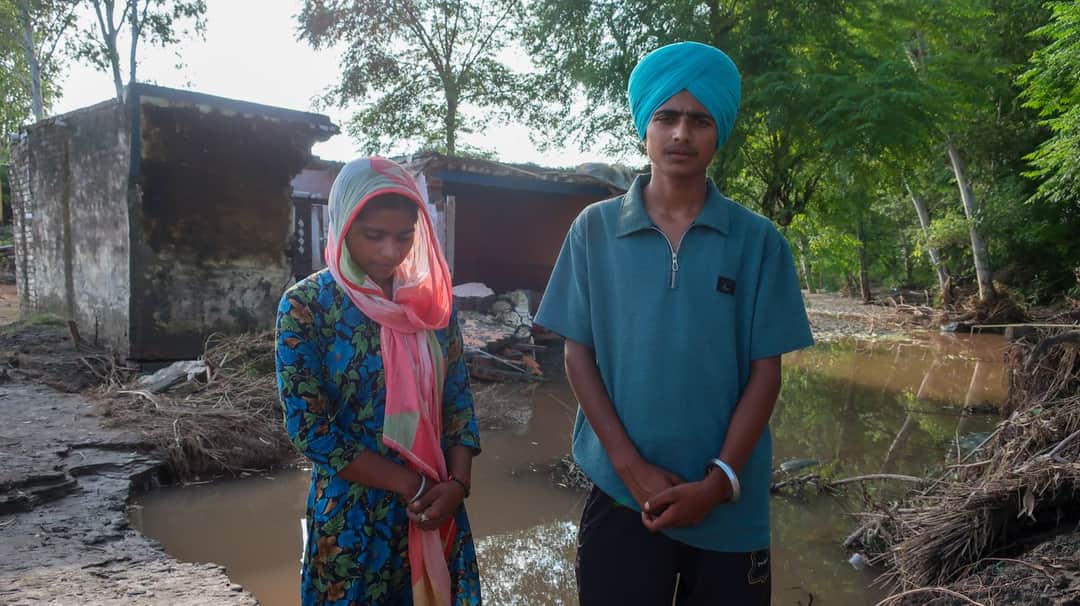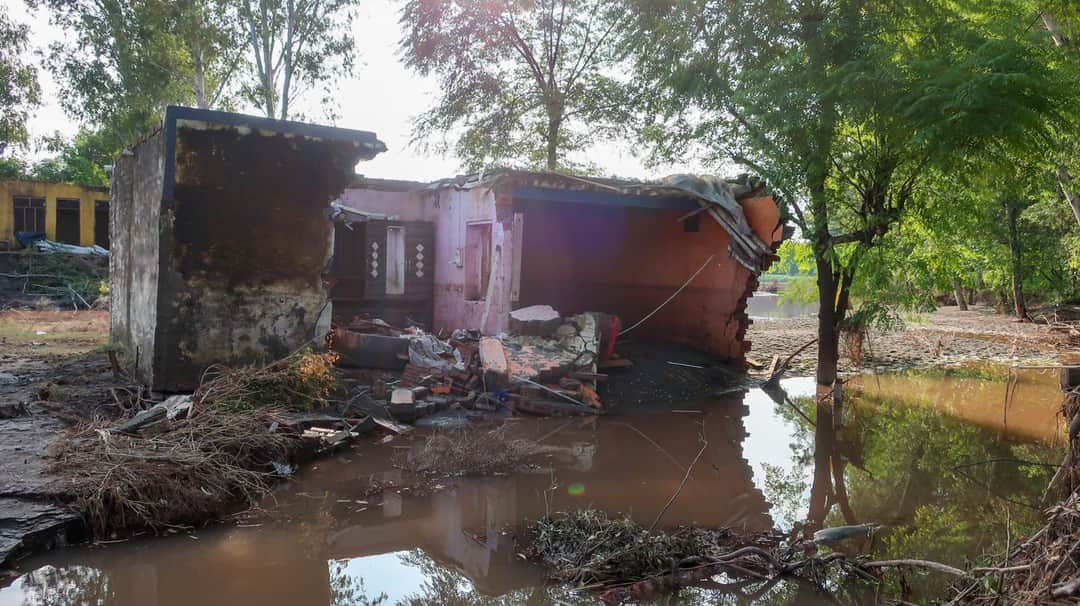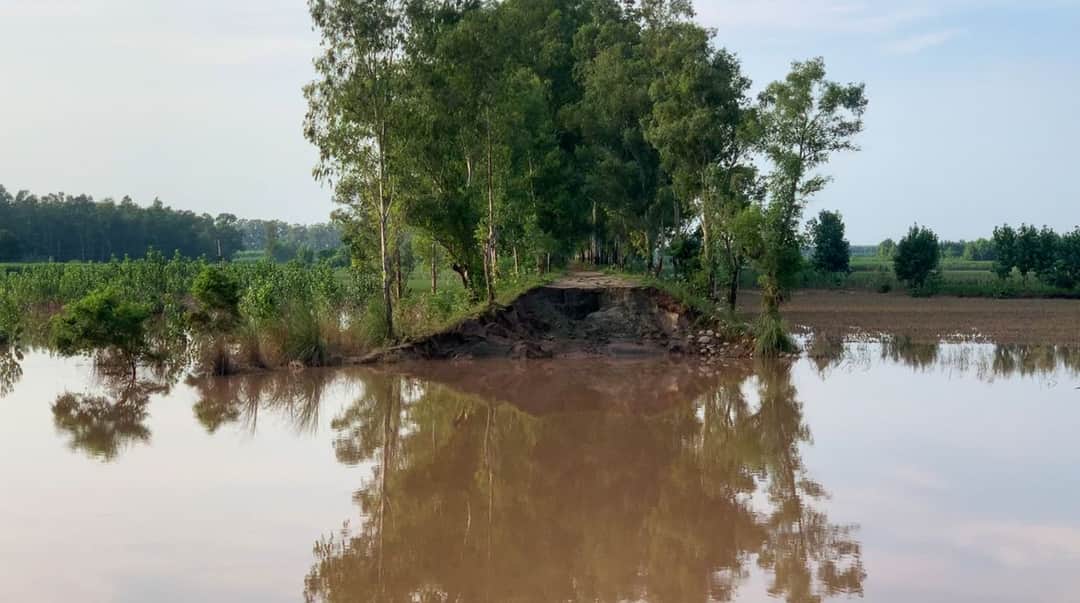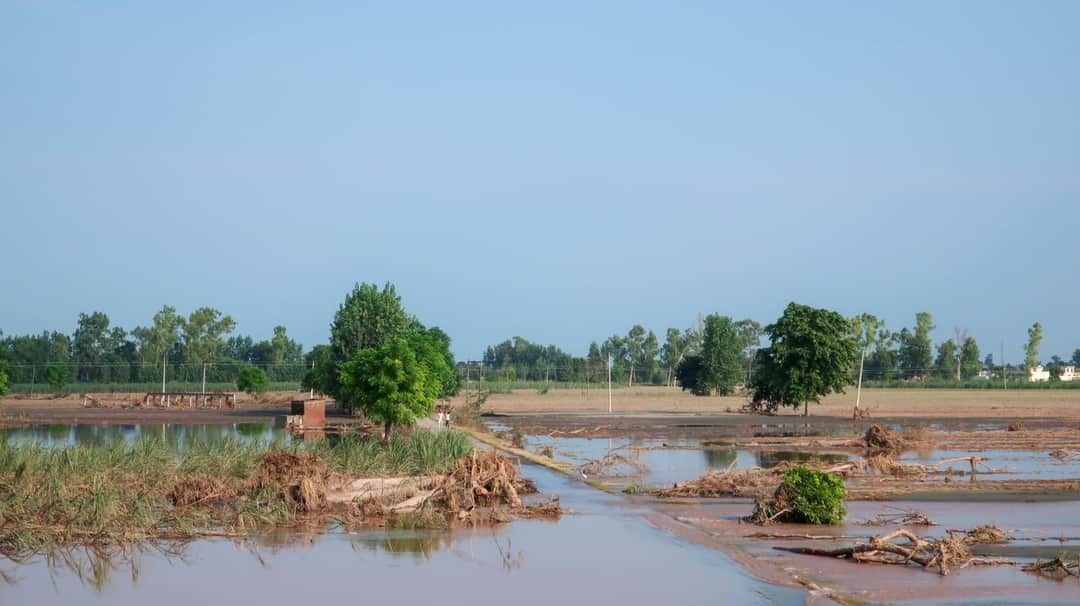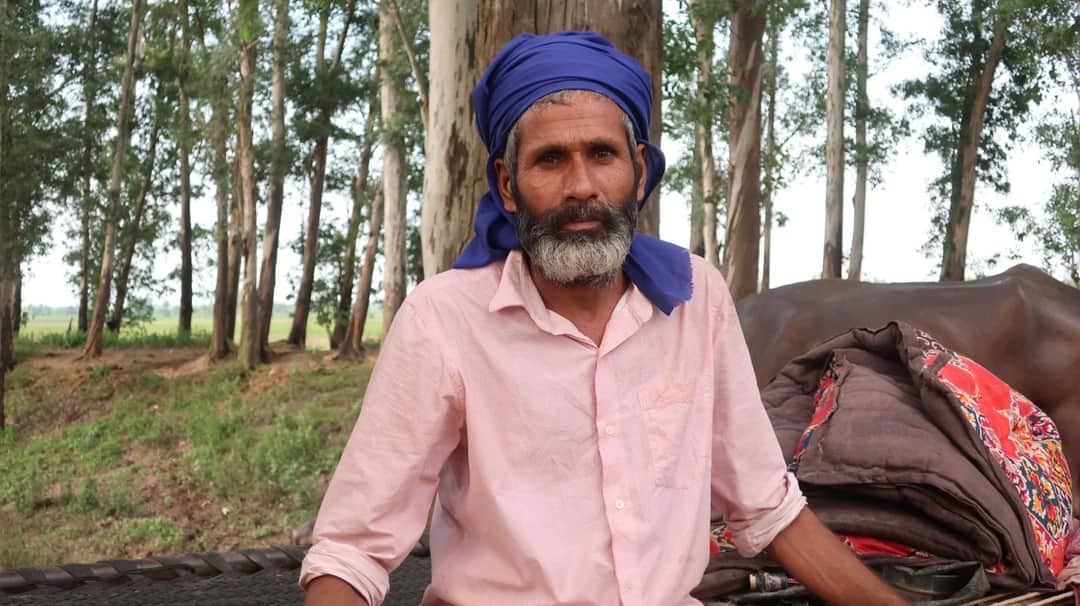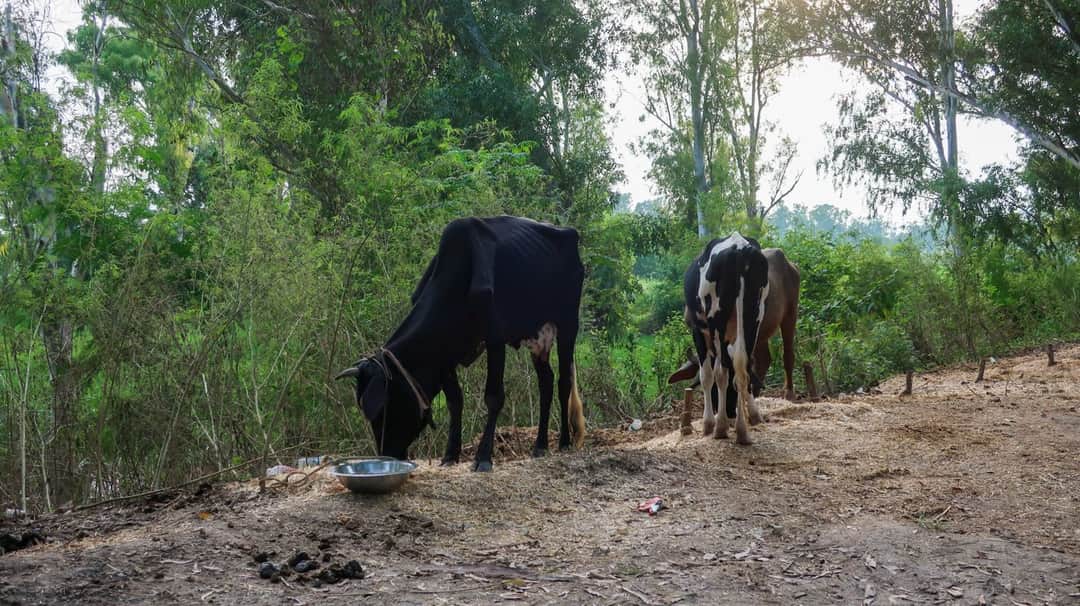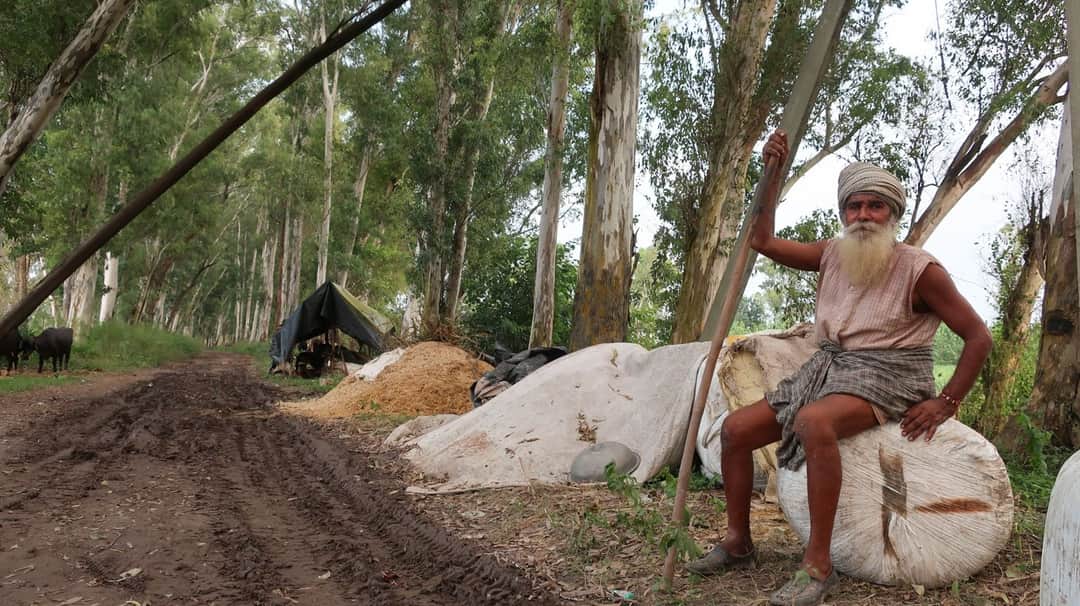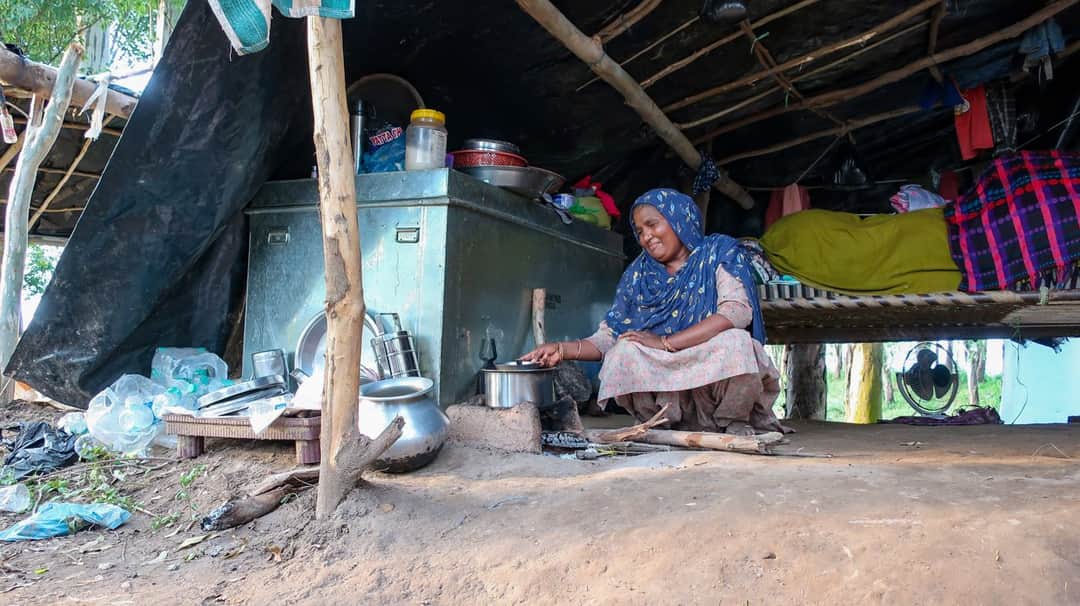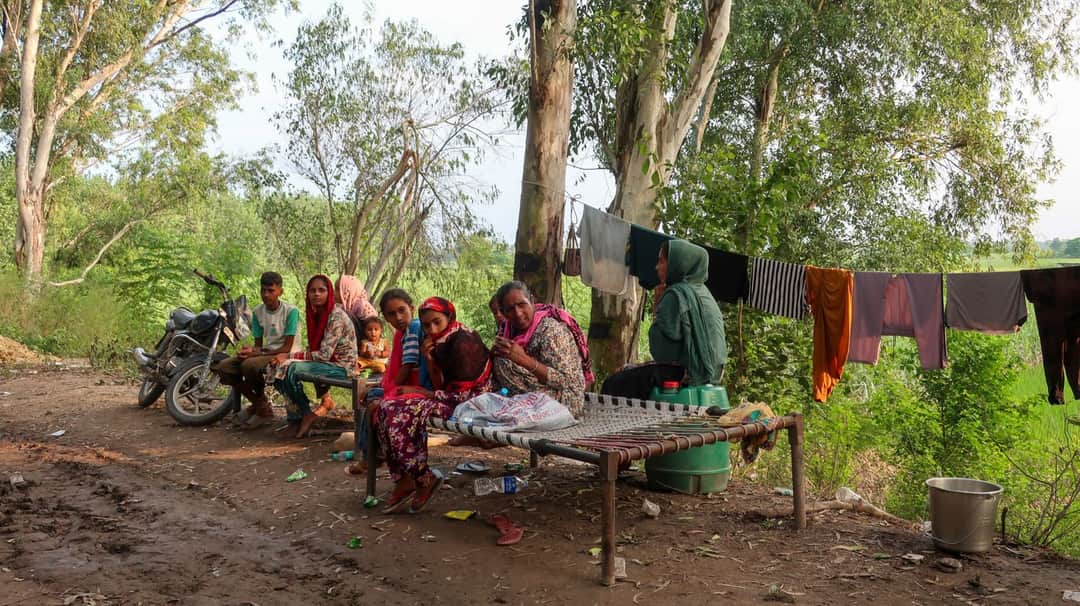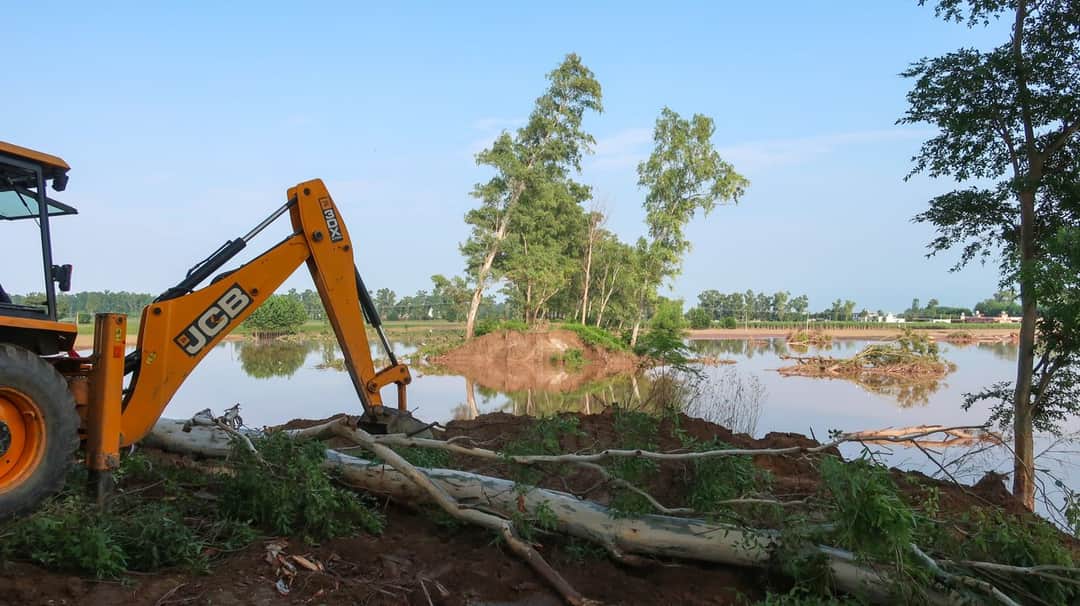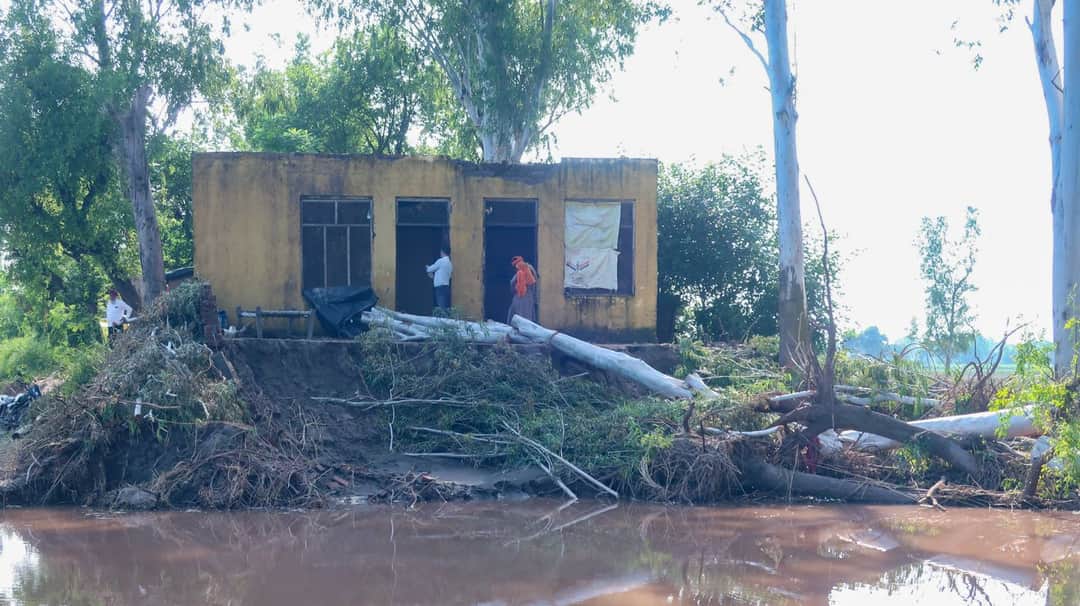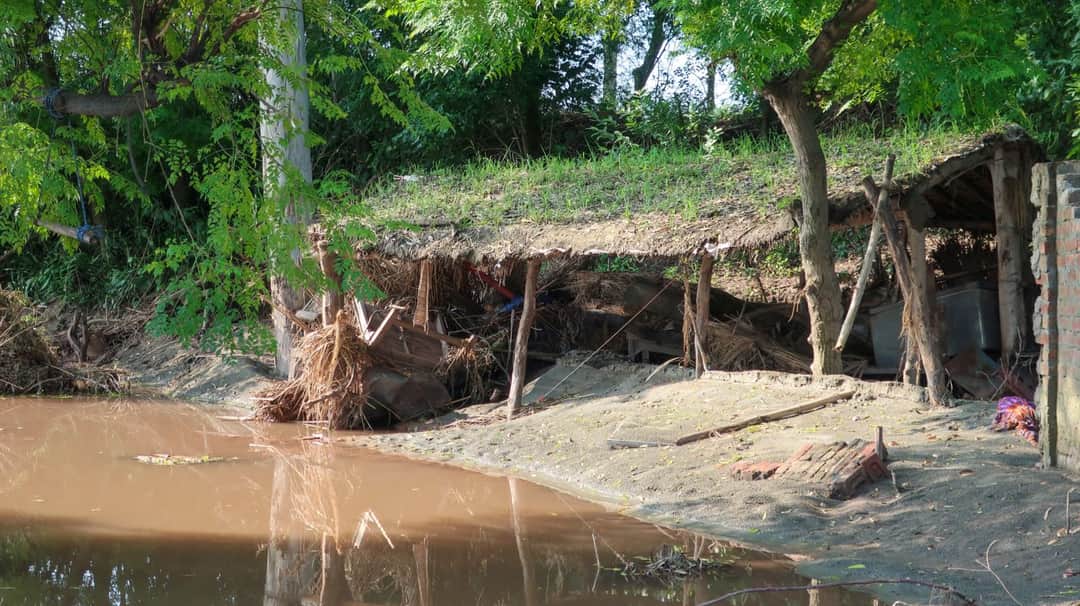

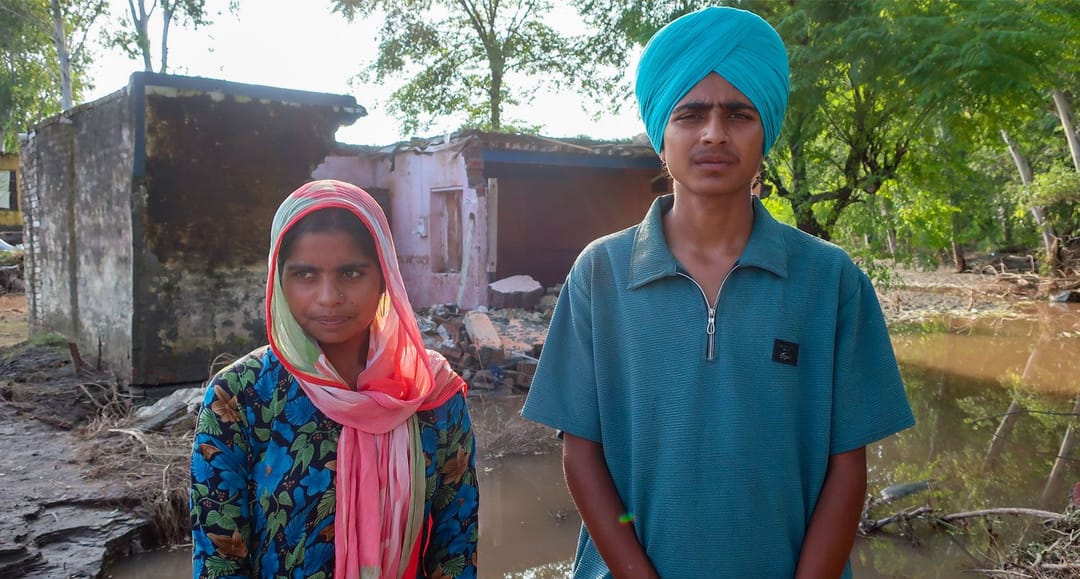
People in Machhiwala village offered this reporter a cup of tea, the ingredients for which came from relief material disbursed during disasters. The widespread floods caused by the Ravi bursting its banks, destroyed their homes, filled their fields with silt and water, and left them marooned, living in makeshift tents.
They lost almost everything in the August flood.
Sarabjit Kaur is sitting in a jhuggi (makeshift house) outside Machhiwala village in Ramdas block, near what used to be her home before the Ravi river washed it away. Kaur manages an awkward smile even while detailing the terrible turn her life has taken.
“We were trying to strengthen the bundh [man-made banks] all night,” the 18-year-old tells PARI. “At 6 a.m. on August 27 [2025] there was an announcement on a loudspeaker in the gurudwara – which was heard and passed around in the village – that the dhussi [an embankment made with soil] had broken. We all ran to take shelter on higher ground.”
Machhiwala is a small village in Amritsar district with a population of around 1,186 people (Census 2011), mostly from the Jatt Sikh and Rai Sikh communities, the latter listed as Scheduled Caste in Punjab. The Dalit families survive mainly on farming small parcels of land, and doing agricultural work in the fields of others.
Sarabjit’s family are landless Rai Sikhs and do agricultural labour to get by. Her mother, who also worked as a farm labourer, died six months ago; her father suffers from epilepsy and cannot work. The family of two brothers and a sister, all work as labour to run their household.
The floods submerged the village for three to four days, water levels reaching upto eight feet. It destroyed the modest homes of farm workers, completely damaged the kharif paddy crop on the verge of ripening, and filled the fields with silt. Huge eucalyptus trees were uprooted.