
E bera beti iyam tany maarchi baari te, bera beti iyam tany
Dhany se dadaa jo denaam re, biha gote ni
man majoor dena laa re, biha gote ni,
maarchi baari te, bera beti iyam tany
Dhany se dadaa jo denaam re, biha gote ni
[Our daughter weeps in the green chilli fields
Father, go fix the match for me, she says, tie the knot for me
We’ve found each other, dada, get him married to me.
Our daughter weeps in the green chilli fields.
Father go fix the match for me, she says, tie the knot for me.]
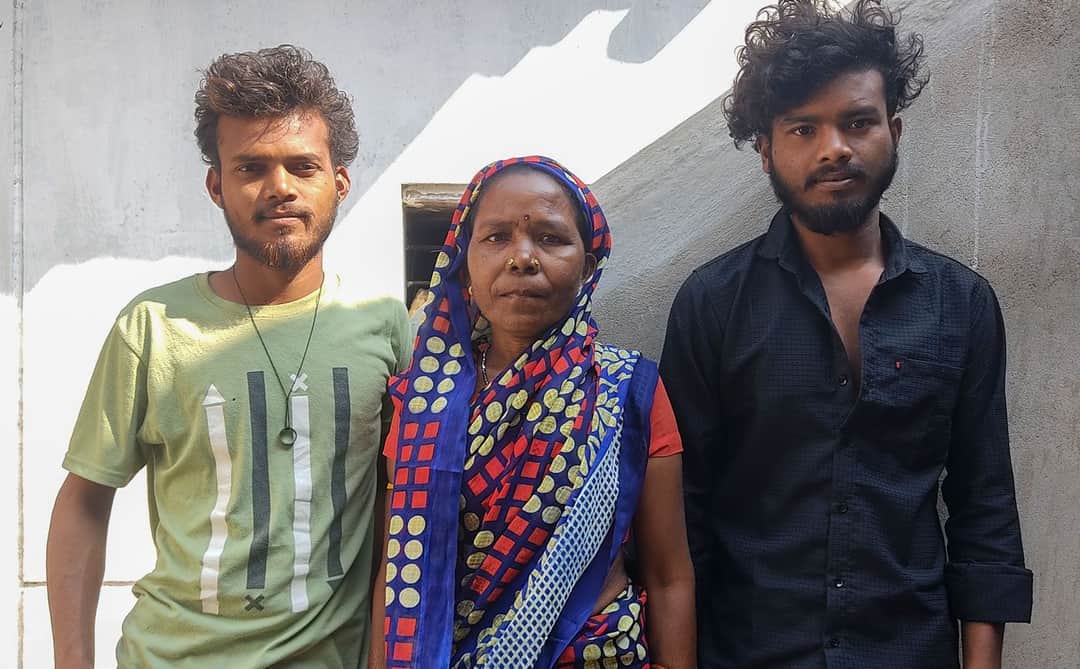
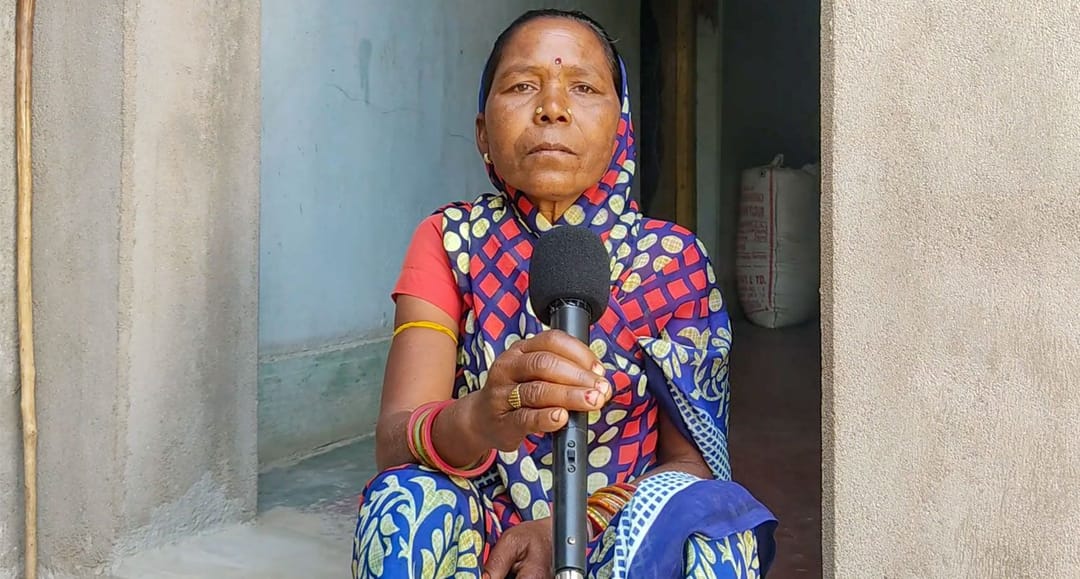
Lakheshwari Bai Kharia is transported to another world as she sings, her eyes cast down, staring at the microphone she is holding in her hand. It is an unusual moment for her. Few around Lakheshwari are interested in listening to her sing or speak in the tongue we are recording her in. But with each word, her mind travels 160 kilometres in a millisecond to Raigarh, where these very sounds had filled her childhood years.
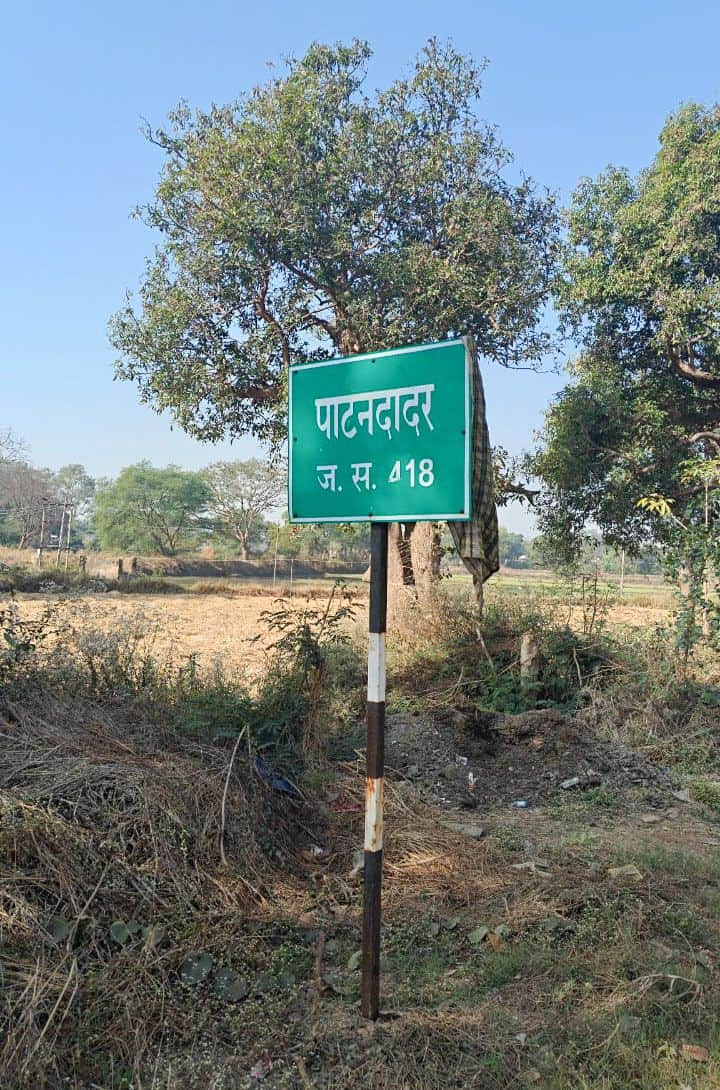
“Who should I talk to now? My in-laws are not there any more. I tell the children, ‘talk to me in your mother tongue and learn it from me.’ But where do these children listen? Forget the grandchildren, I am the only one left in this entire village who speaks Kharia,” says the 55-year-old Adivasi woman from Patandadar, in a pained voice.
Known by the name ‘Juna’ in this village in Mahasamund district, Lakheshwari Bai settled here after she got married to Budhuwa Kharia, now in his sixties. A couple of acres of land that they got from the state government is not enough to make ends meet and so both husband and wife also work as agricultural labourers. “When I came here from Raigarh I spoke in Kharia to my in-laws. Now they are gone and I have no one to speak the language to,” says Lakheshwari. “I can’t pronounce the words right and so I refrain from using it,” explains her husband Budhuwa. “Here Chhattaisgarhi rules. Who will understand this language?”