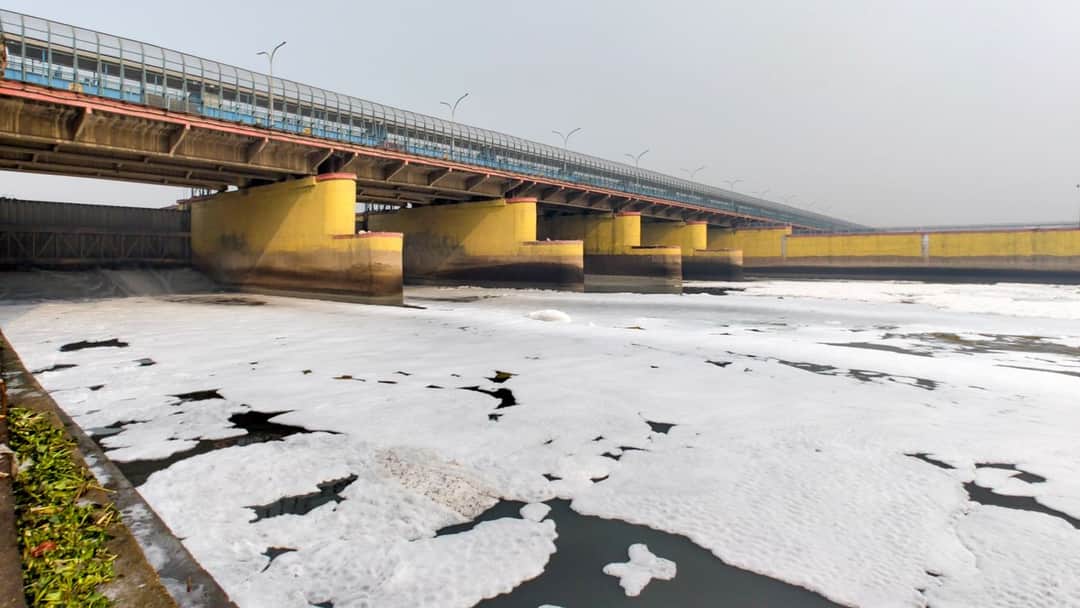
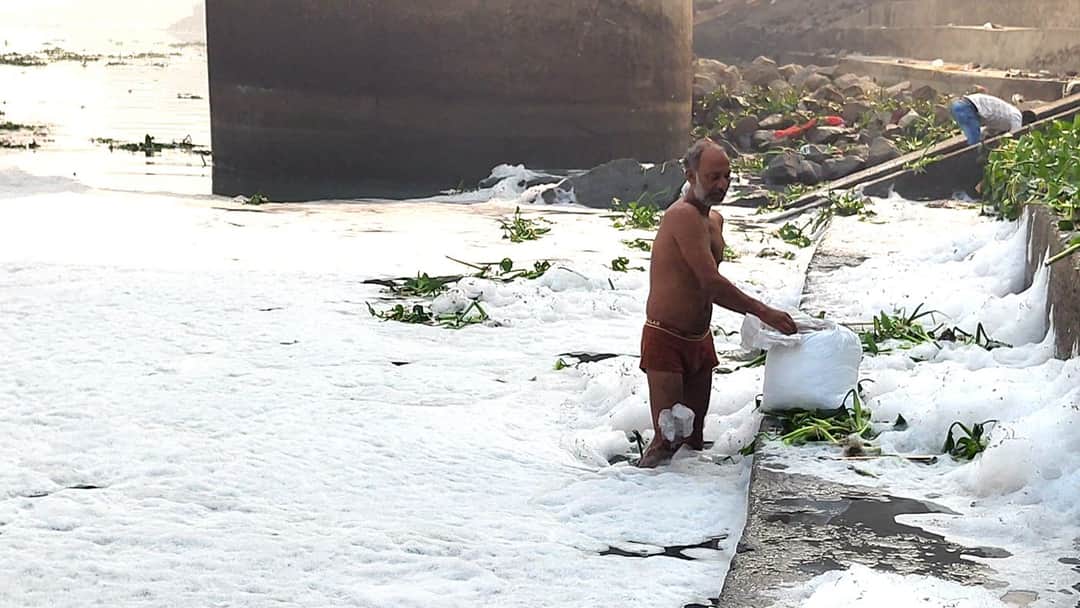
Further south at Kalindi Kunj ghat, the river widens and the air thickens with a chemical smell. A layer of dense white foam floats on its surface and the air burns the throat.
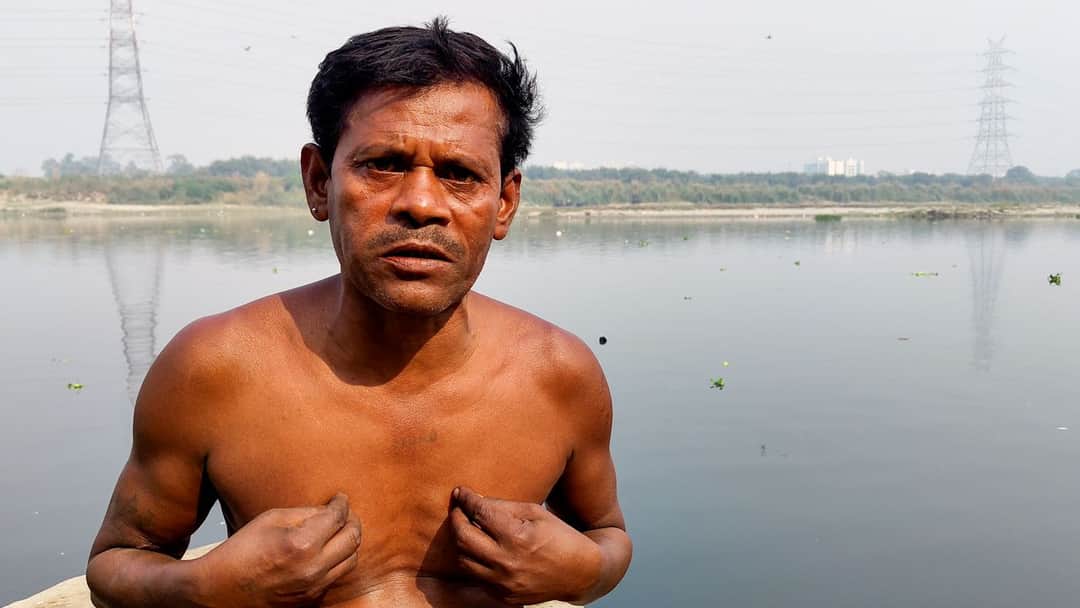
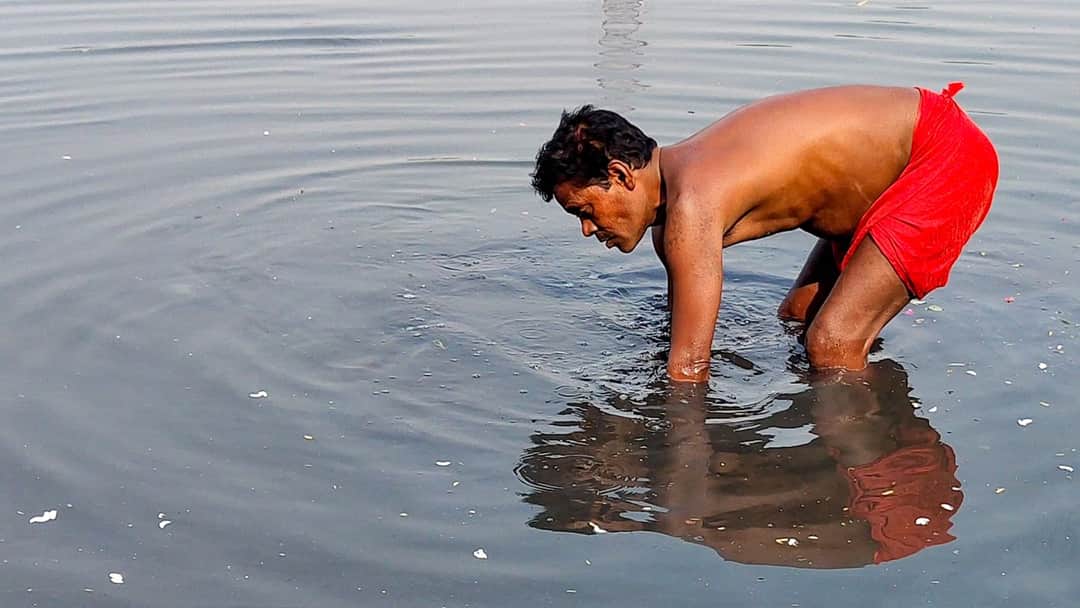
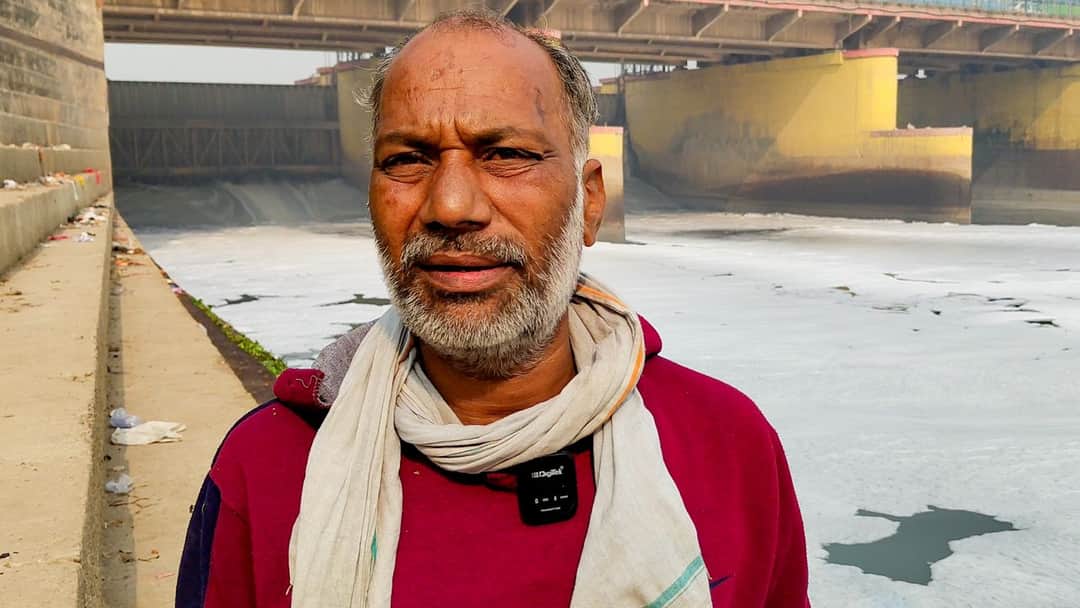
Here, Feroz Malik, 41, performs another kind of service. He immerses ashes in the Yamuna (a ritual act of faith carried out by Hindus) even when the water is heavy with waste, “I cannot breathe inside it, if someone gets trapped [below the surface for long], they won't survive," he says. Yet, for Feroz, submerging himself completely in that water is a daily practice.
The Yamuna in Delhi survives only in fragments, a choked avatar. Similar to the choked livelihoods of those who rely on it, divers like Banarsi and Feroz who need the daily wages they get from this hazardous work.
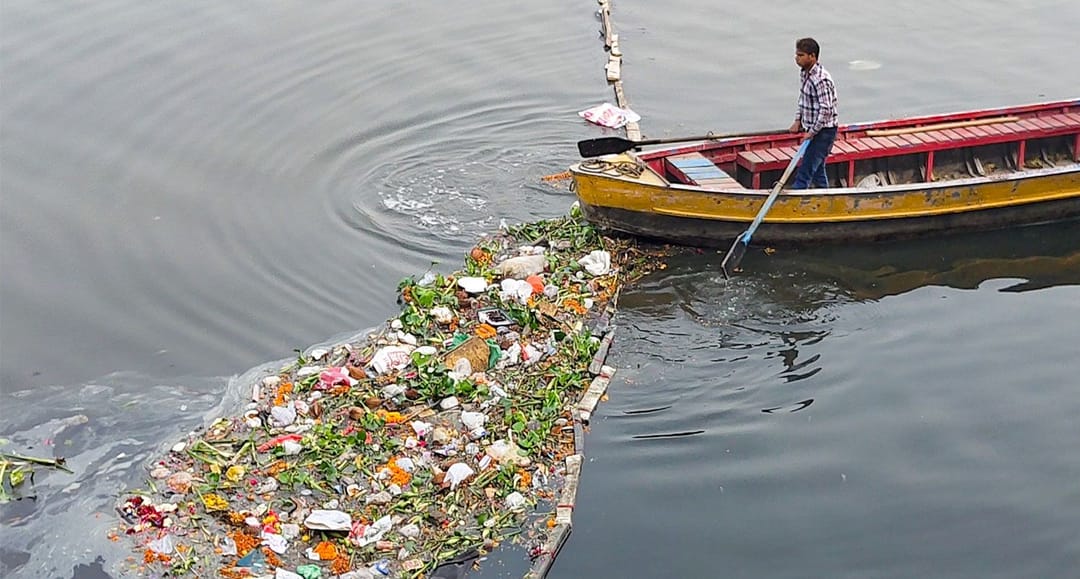
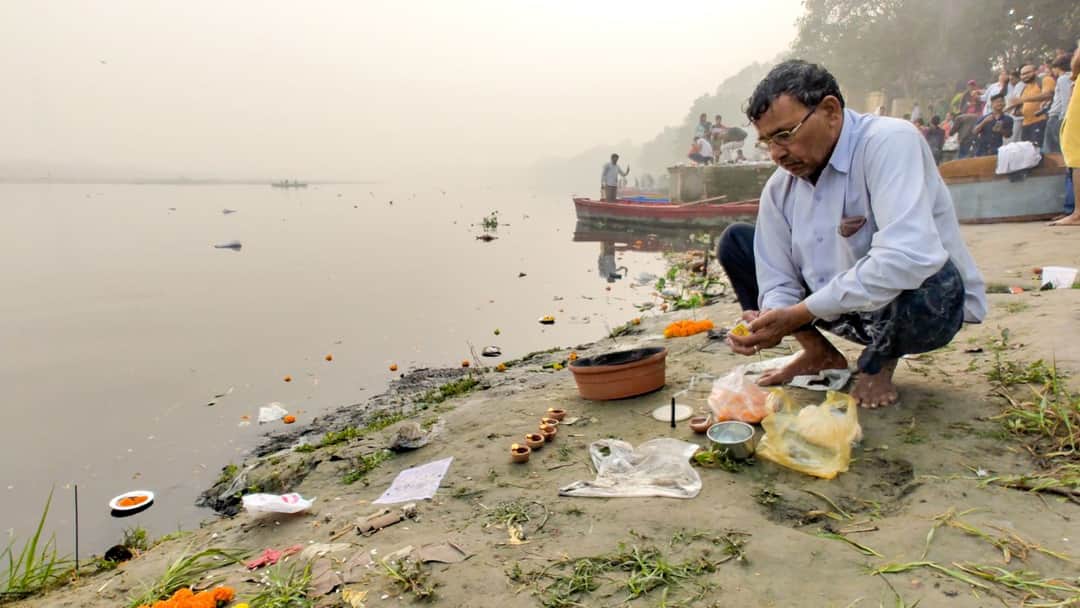
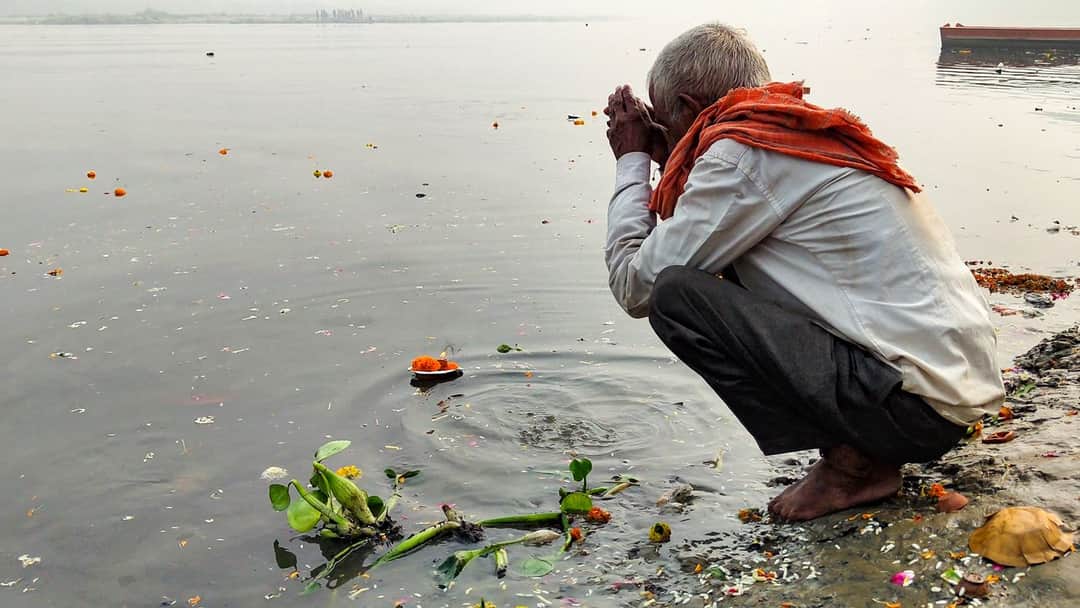
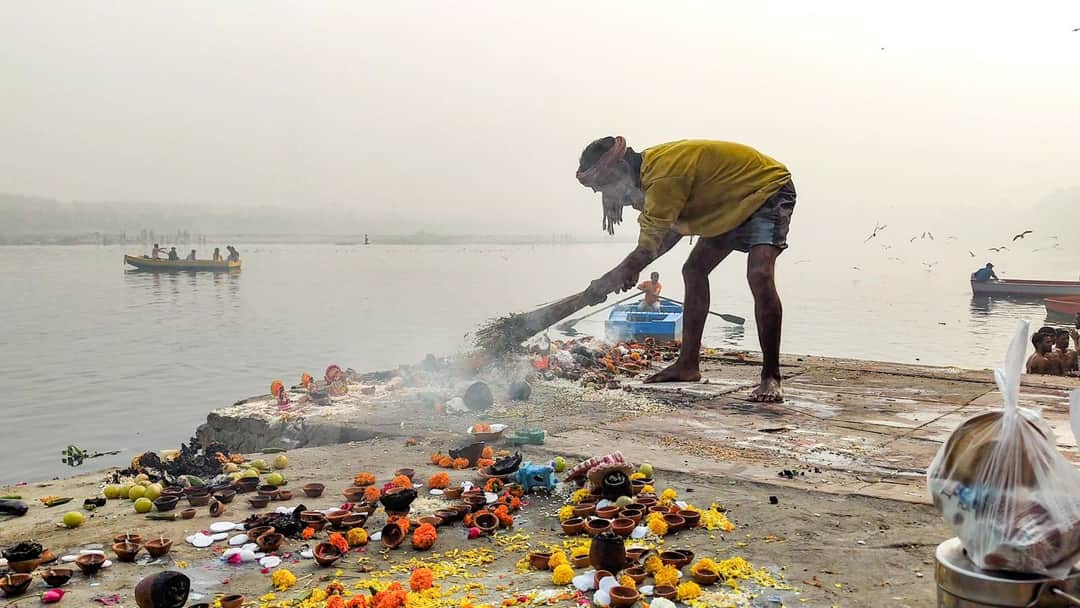
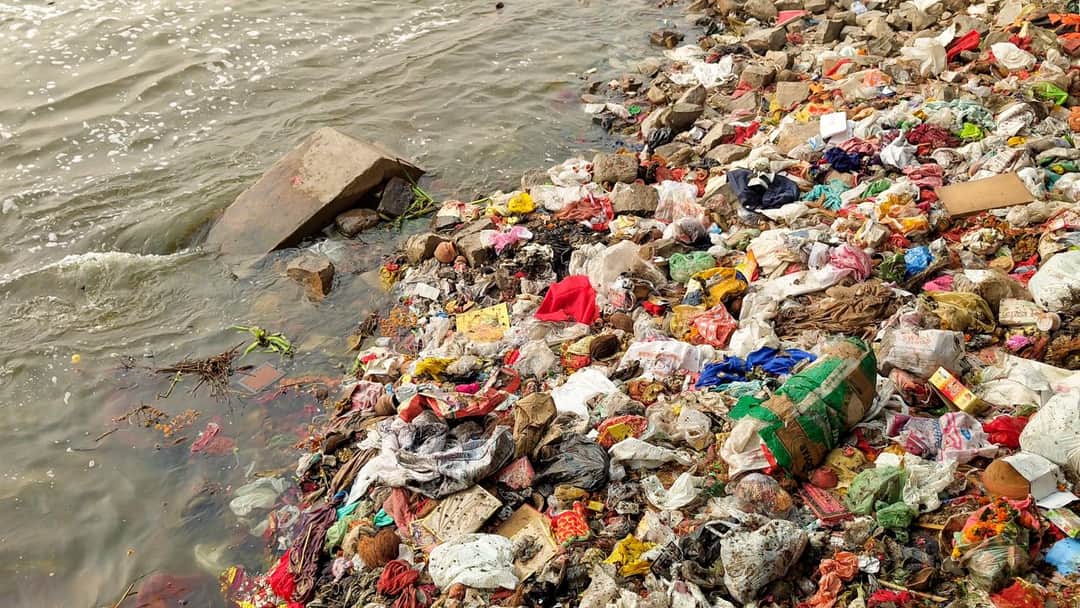
The river suffers silently. So do the people who rely on it. Divers must plunge into the chemical-laden waters to save drowning strangers and retrieve the dead. Boatmen like Abhinandan witness the daily contradictions: devotees who worship the river yet leave it polluted. They are the humans of the Yamuna, bearing witness to both destruction and endurance at the water's edge, guardians of a river long abused.