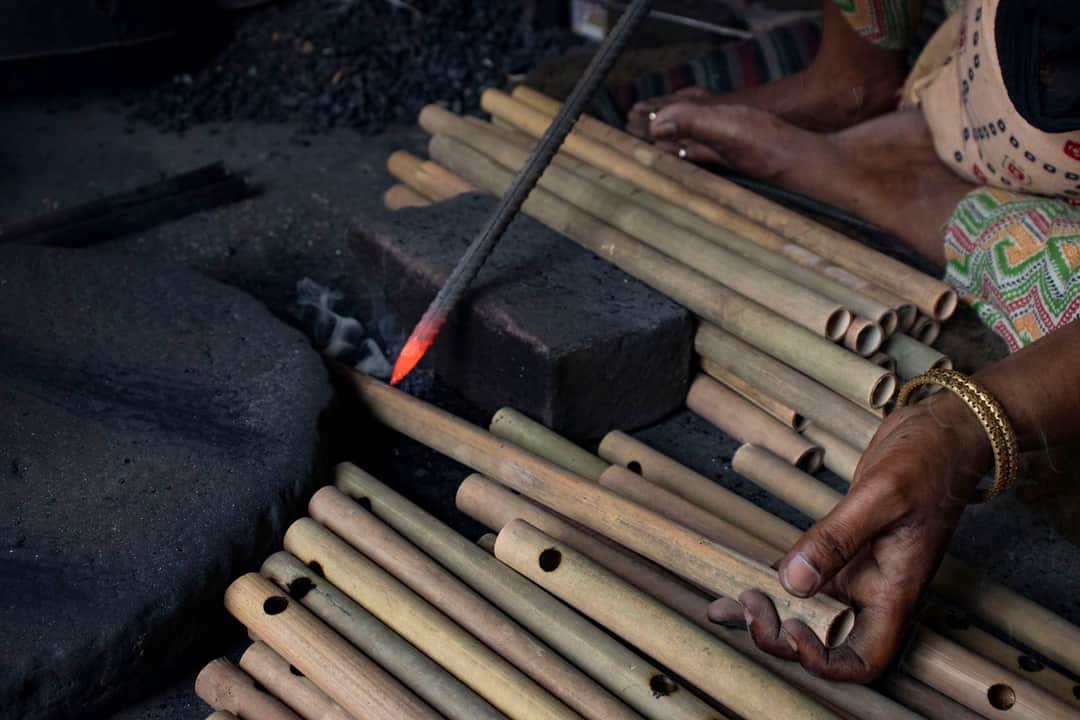

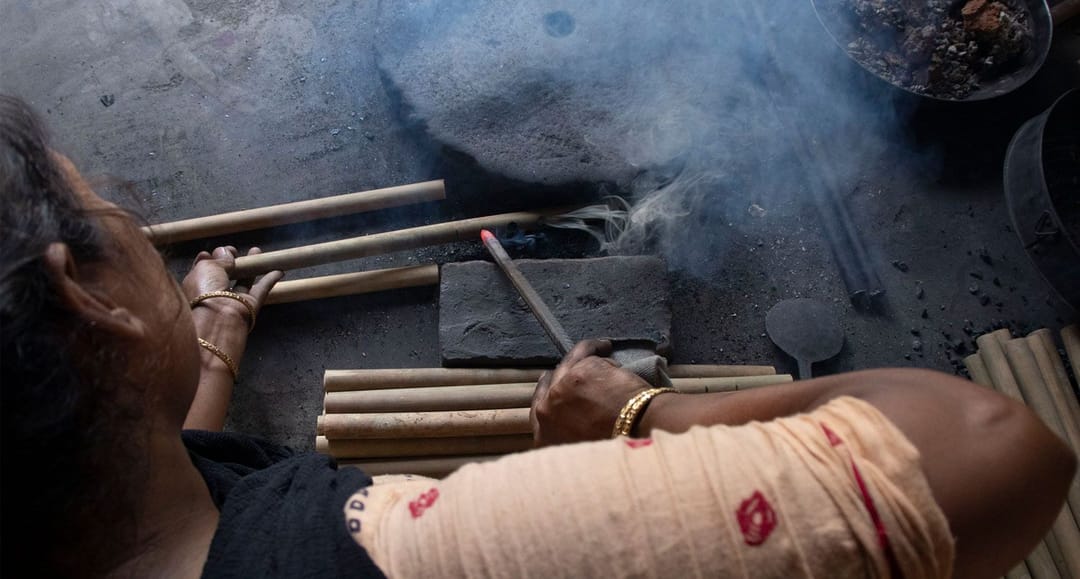
Mona’s eyes are closed. In one hand, she holds a heated rod, in the other a hollow bamboo stick. Smoke fills the room. Her eyes still shut, she punches a hole in the bamboo with the rod, then another, and another. Six in total.
Opening her eyes, she says, “to make a bansuri requires skill and to make more pieces requires speed.” And then she laughs and adds, “men can’t do this. It’s a tough task!”
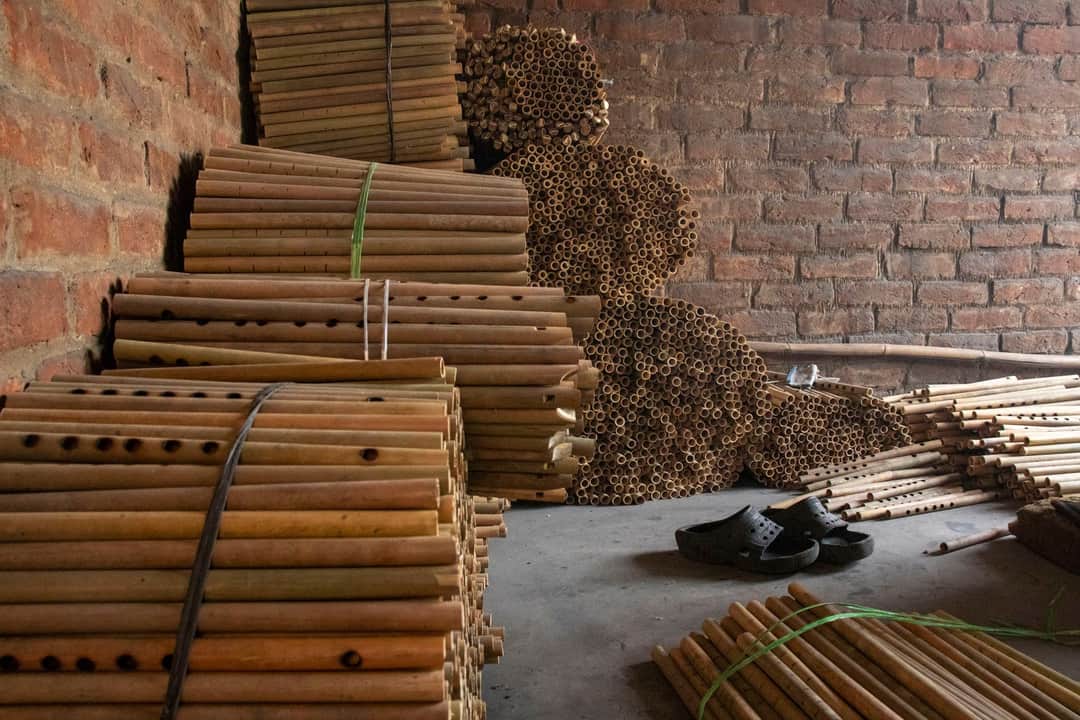
Mona (she prefers to use this name) is a third-generation bansuri-maker. “A bansuri is a simple yet an intricate instrument,” says the 35-year-old. “without the holes it is just a bamboo stick, but with the right holes, it has all the melodies, it is a symbol of Kanha ji [Lord Krishna].”
She is sitting in the middle of an unplastered room next to a mud stove with blazing coal. Sunlight spills in through the only window in this room on the roof; outside, kites hover in the sky.