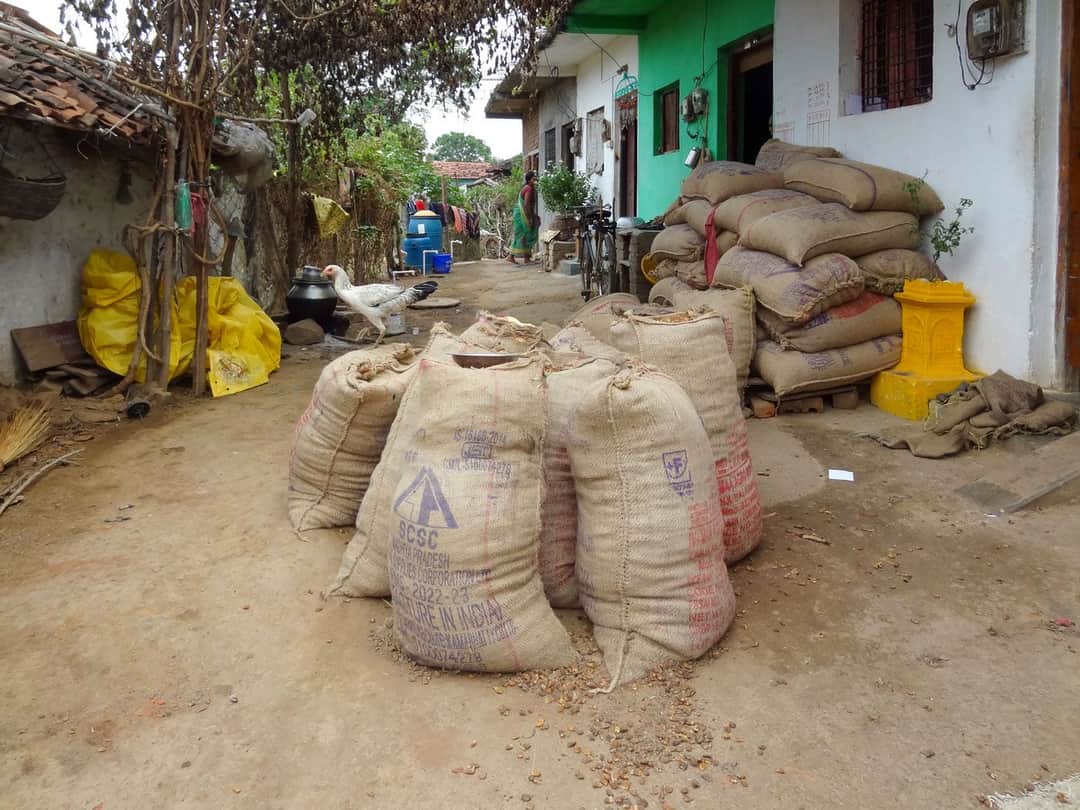

A sweet, nutty, intoxicating fragrance wafts across the narrow alleys of Arattondi village.
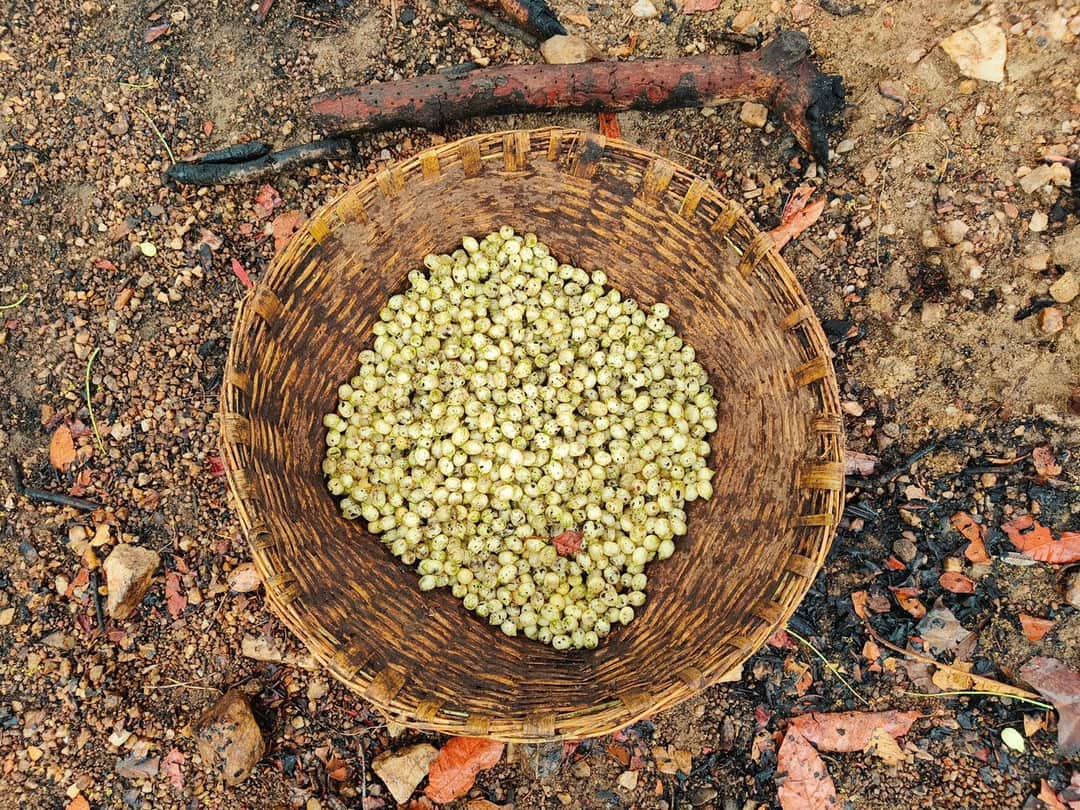
In the front yard of every house, a magnificent hue of yellow, green and brown mahua flowers are drying on bamboo mats, soft rugs and mud floors. Brown flowers are the hardened, sun-dried version of freshly plucked yellow and green flowers.
Elections are round the corner, and mahua is in season in Gondia, Maharashtra.
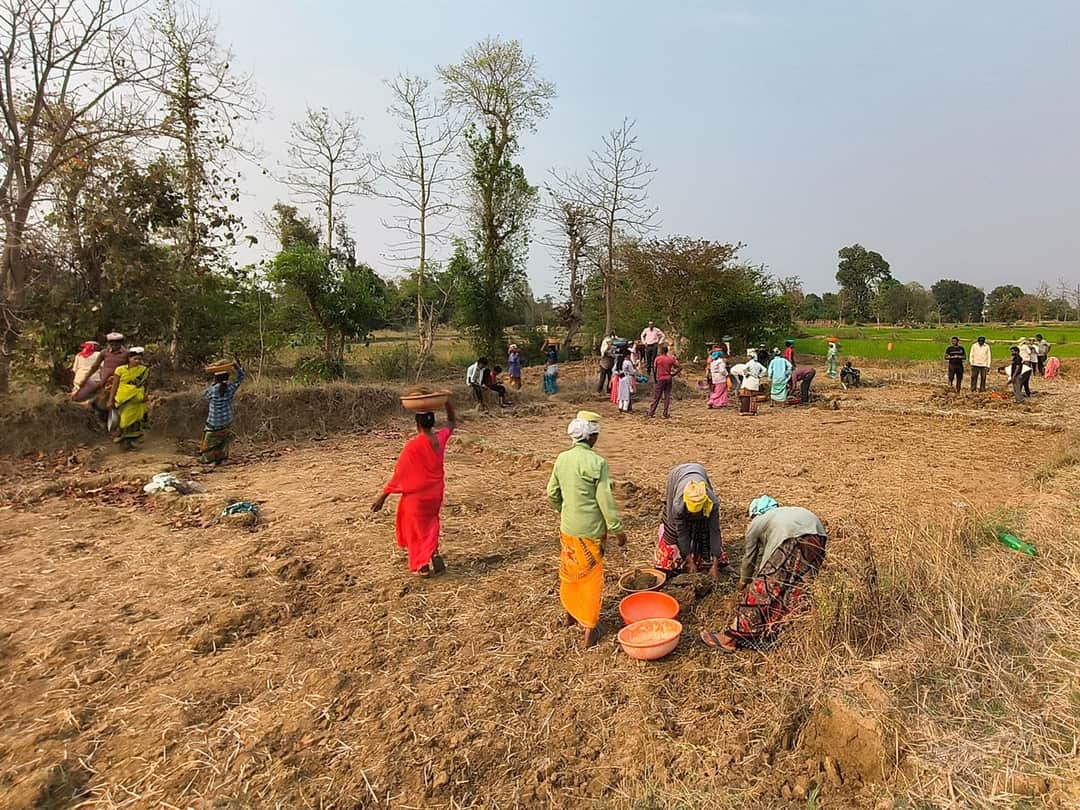
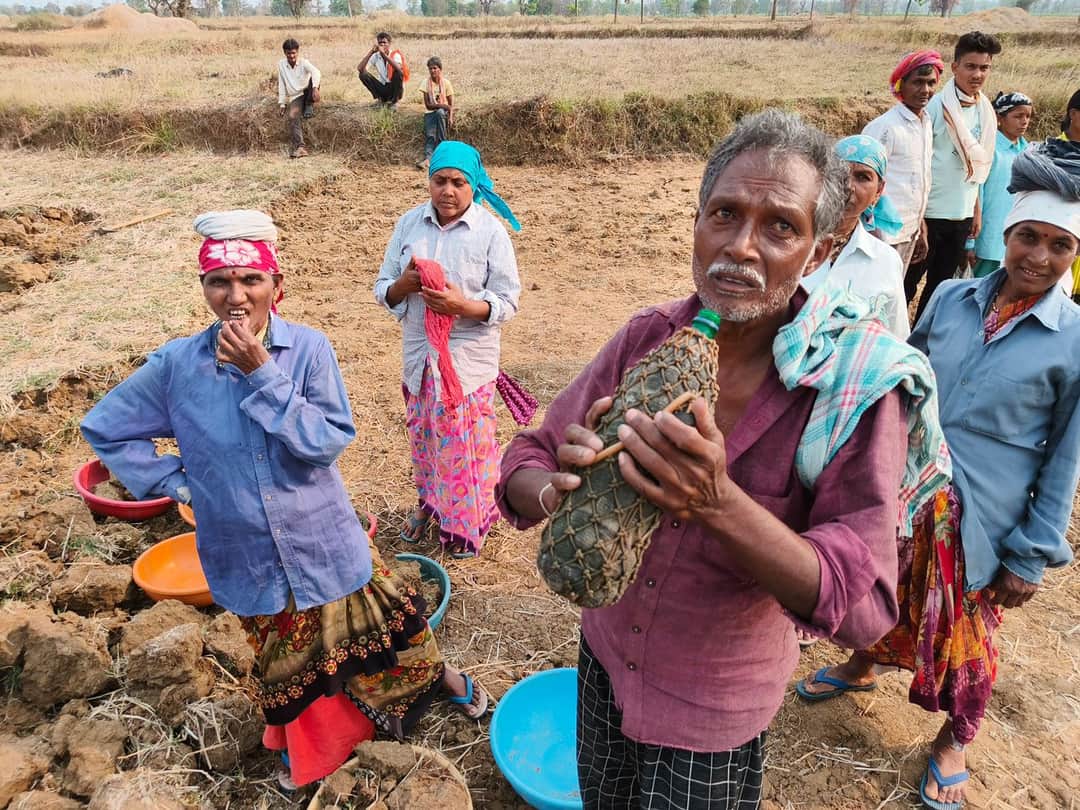
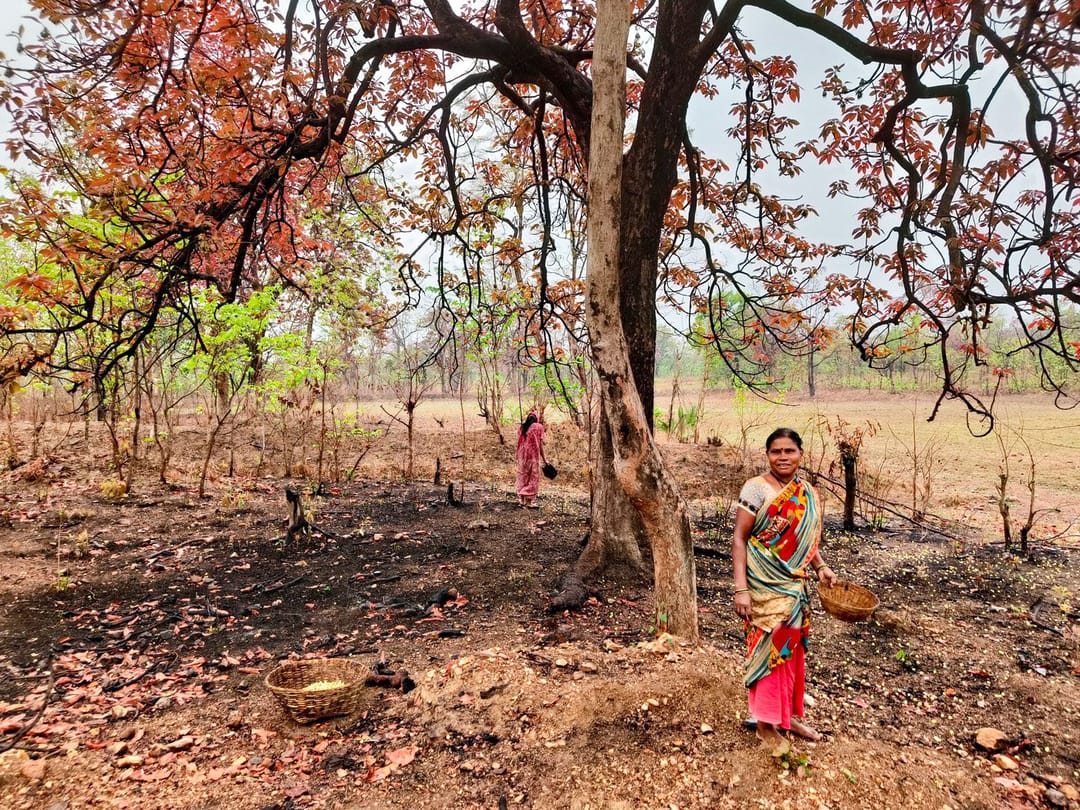
“Mahua in April, tendu leaves in May,” Sarthika Kailash Aade quips. “This is what we have here.” Every morning, the 35-year-old and other villagers belonging to the Mana and Gond tribe spend 4-5 hours in the surrounding forests, collecting the soft flowers that fall from the tall mahua trees, their leaves now in shades of red. By noon, the mercury is at 41 degrees Celsius, and the heat is enervating.
Each mahua tree yields an average 4-6 kilograms of flowers. People from Arattondi village (also called Araktondi by locals) collect it in bamboo cans or plastic sacks and bring it home to dry in the sun. A kilo of dried mahua earns them Rs. 35-40 a kilogram and each person can collect an average 5-7 kilos every day.